

Why Big Orders Can Kill Small Businesses
4min read
|
Apr 01, 2026
For many small businesses, landing a big order feels like a dream come true. Larger invoices, bigger contracts - it can seem like success is finally knocking. But the reality is more complicated. Without the right cash flow and payment systems in place, that big order can strain finances, delay growth, and even threaten survival.
Here's a clear breakdown of why big orders can hurt more than help, especially when tied to extended payment terms like Net 30 or Net 60.
Big Orders Increase Exposure Before They Increase Profit
Offering net payment terms, especially Net 30 or Net 60, does often lead to larger orders. In fact:
- An independent survey indicates that businesses offering extended payment terms often see larger average invoice sizes, as buyers place bigger orders when payment is delayed.
- B2B payment terms statistics show that over 50% of B2B sellers set payment terms of 30 days or more, making extended terms a standard competitive practice.
That sounds great - until you realize the real cost of waiting for that money.
Bigger Orders Mean Bigger Upfront Costs
A $100,000 order looks fantastic on paper, but as a small business, you typically have to:
- Buy materials upfront
- Hire or schedule labor
- Pay shipping, warehousing, or subcontractors
- Cover overhead while the work is done
These costs hit your cash reserves before you see a cent from the customer. And when payment terms stretch...

Net 30/60 Delays Cash Realization
"Net 30" or "Net 60" simply means a customer has 30 or 60 days to pay from the invoice date. But in real life:
- Although contracts may specify Net 30, actual average payment periods frequently stretch beyond 50 days.
- More than half of small businesses regularly experience late payments, with many invoices paid after the original due date.
Case Study: A $100,000 Order with Net 60 Terms
That's revenue that's recognized in your books, but not actually in your bank account.
Imagine Sarah, a small business owner running a custom furniture shop. One day, she lands a $100,000 contract with a local office chain - her biggest order ever. Excited, she accepts Net 60 payment terms, believing this will be a major revenue boost.
Here's how the cash flow plays out:
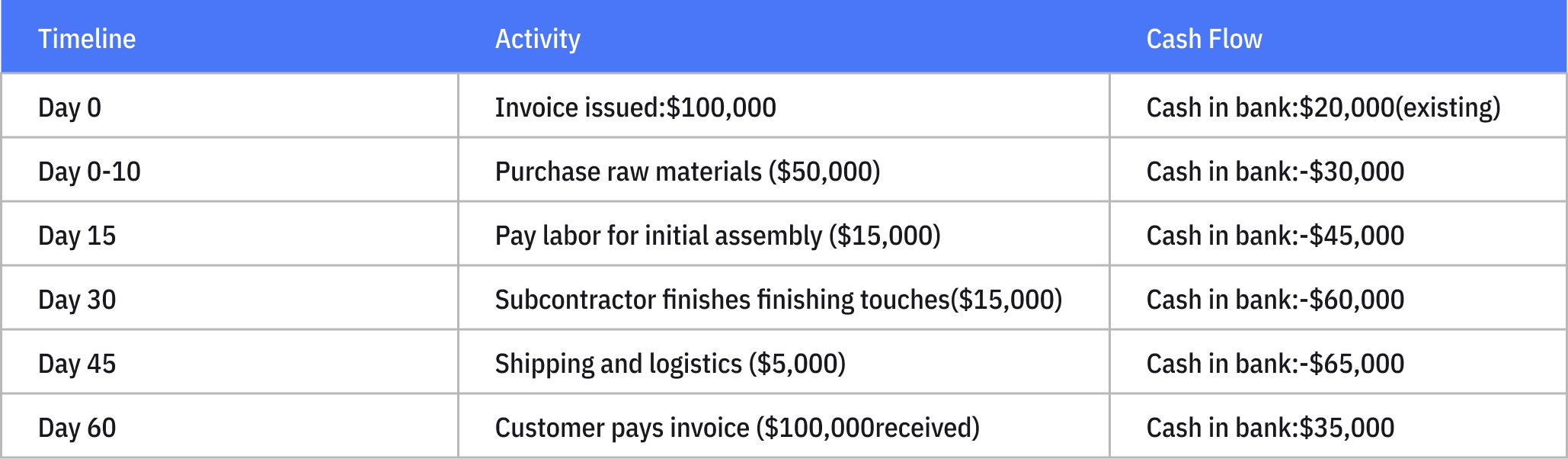
Key insights:
- Even though Sarah earns $100,000 revenue, she is effectively negative in cash for the first two months.
- If any unexpected expense arises, such as equipment repair or an urgent supplier payment, she could have no buffer.
- Without tracking accounts receivable proactively, Sarah might not realize the severity of the cash gap until it causes operational stress.
This scenario illustrates why big orders with extended payment terms can stress small businesses - not because they are unprofitable, but because the timing of cash inflows lags significantly behind outflows.
With proper tools like invoice software with payment tracking, Sarah could have:
- Requested a 50% upfront deposit to cover material costs
- Scheduled milestone payments tied to production stages
- Monitored invoice aging to anticipate the cash gap
By planning ahead, she could convert a risky $100,000 order into a smooth, manageable growth opportunity.
The Cash Gap Gets Bigger
When invoices sit unpaid:
- Your accounts receivable balance balloons - many small businesses are owed tens of thousands of dollars at any given time.
- Delayed collections contribute to cash flow pressure, with around 56% of small businesses reporting that late payments negatively impact their liquidity, forcing them to borrow or delay other payments.
- You risk having to borrow short-term funds at a cost - just to cover payroll or supplier bills.
This is why big orders can kill cash flow even if they boost sales revenue.

How to Survive Net 30/60 Terms
So what can small business owners do to survive cash demands tied to big orders?
Reduce Upfront Exposure
- Require deposits - 30-50% up front reduces risk.
- Milestone billing - invoice portions of the total at project stages.
- Tiered pricing - price invoices differently based on payment term, such as a small discount for Net 15 versus Net 60.
These strategies reduce the amount of cash you have to front.
Model the Working Capital Impact
Work out a simple cash forecast:
- Estimate customer payment timing, not just the stated terms.
- Forecast your payables due dates.
- Plan for the "gap," the days between cash going out and cash coming in.
Tools like scenario models, even simple spreadsheets, help you see when a large Net 60 order could actually create a cash crunch before it happens.
Monitor Accounts Receivable Proactively
While big orders can put pressure on your cash flow, you can manage that risk with the right approach. You can use our invoice software with built-in payment tracking to:
- See exactly when cash is expected
- Identify overdue invoices quickly
- Forecast your operating cash position clearly
By tracking payments in real time, you can handle large orders safely and turn potential cash-flow challenges into manageable growth opportunities.
Most Popular Pages
Try Invoice Zip Today
Start Sending Invoices, Building Reports, Saving Office
Time and Get Paid Faster.