


Why is the Invoice Item Description Considered an Important Component of the Invoice?
4min read
|
Aug 28, 2026
An invoice is more than a request for payment. It is also a record of what was sold, delivered, or completed. The invoice item description explains exactly what the customer is being charged for.
A clear description helps customers understand the invoice, reduces payment delays, and gives both sides a useful record of the transaction.
What Is an Invoice Item Description?
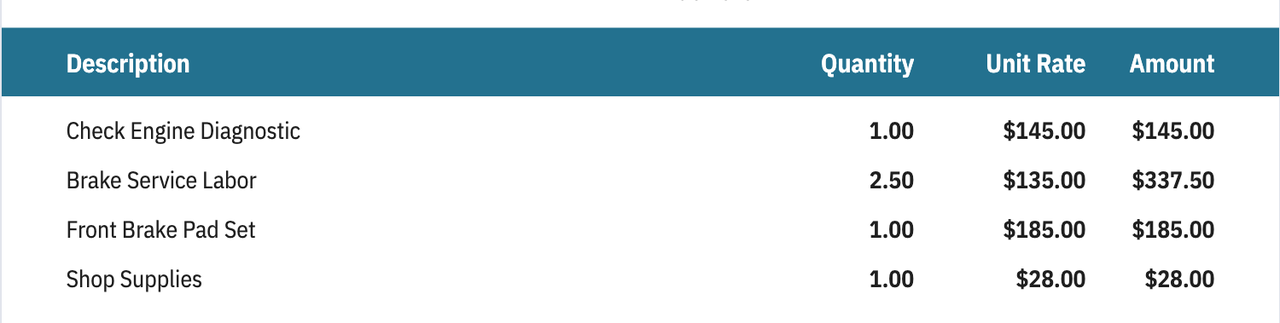
An invoice item description is the text that explains each product or service listed on an invoice.
It usually appears next to information such as:
- Quantity
- Unit price
- Tax
- Discount
- Total amount
For example, instead of writing “Design work,” a clearer description would be:
“Three-page responsive website design, including desktop and mobile layouts.”
The second description gives the customer more information and makes the charge easier to understand.
Why Is the Item Description Important?
It Explains What the Customer Is Paying For
A customer should not have to guess what an invoice charge means.
A specific description explains:
- What product or service was provided
- What work was completed
- How much work was included
- Which project or time period the charge relates to
This is especially important when an invoice contains several items or when the customer works with multiple suppliers.
It Helps Prevent Payment Delays
Unclear invoices often lead to questions. A customer may delay payment while waiting for clarification or approval.
A clear item description can answer common questions before they are asked:
- What was delivered?
- When was the work completed?
- Which project does this charge belong to?
- Does the amount include materials or labor?
- Is this a one-time or recurring charge?
The easier an invoice is to review, the faster it can usually be approved and paid.
It Creates a Useful Business Record
An invoice may be used weeks or months after it was issued. A detailed description helps you and your customer understand the transaction later.
Clear descriptions are useful for:
- Accounting
- Budget tracking
- Tax records
- Project management
- Customer support
- Payment follow-ups
If a customer asks about an invoice several months later, a detailed description can help you answer quickly.
What Should an Invoice Item Description Include?
The right amount of detail depends on the product or service.
For a service, include:
- The type of service
- The project or task
- The service period
- The quantity of hours or units
- Important deliverables
For a product, include:
- Product name
- Model or reference number
- Quantity
- Size, color, or version if relevant
- Delivery details if necessary
For example:
- Monthly bookkeeping services for June 2026
- 10 hours of website maintenance
- Kitchen cabinet installation, including labor and standard hardware
- 25 branded business cards, full-color printing
- Annual software subscription, July 2026–June 2027
Weak vs. Strong Descriptions
A weak description is usually too short or too general.
Examples of weak descriptions:
- Services
- Labor
- Consulting
- Materials
- Project work
These descriptions may not provide enough information for the customer to approve the invoice.
- Stronger descriptions explain the work more clearly:
- “Two-hour business consultation on pricing and cash flow planning”
- “Repair and replacement of damaged kitchen cabinet hinges”
- “Monthly social media management for June, including 12 posts and performance reporting”
- “Delivery of 100 printed product brochures”
The goal is not to write a long paragraph. The goal is to provide enough detail to remove uncertainty.
How Detailed Should the Description Be?
An invoice description should be specific but easy to read.
Avoid:
- Extremely short descriptions with no context
- Long paragraphs that are difficult to scan
- Internal abbreviations the customer may not understand
- Technical terms without explanation
- Descriptions that do not match the original agreement
A useful description should answer three basic questions:
- What was provided?
- When or where was it provided?
- What does the price include?
For larger projects, you can divide the work into separate line items.
For example:
- Project planning and site measurement
- Material purchase and delivery
- Installation labor
- Final inspection and cleanup
This makes the total easier to understand than one line called “Renovation project.”
Common Invoice Description Mistakes
Avoid these common problems:
- Copying the same generic description onto every invoice
- Failing to include the service period
- Using abbreviations without explanation
- Combining unrelated services into one line
- Describing work differently from the signed agreement
- Omitting quantities or units
- Including information that is too vague to verify
A description should be accurate and consistent with the quote, contract, or purchase order.
How Invoice Software Can Help
Invoice software can help you create consistent item descriptions by allowing you to save frequently used products and services.
This can help you:
- Reuse common descriptions
- Reduce typing errors
- Keep invoice wording consistent
- Add quantities and prices quickly
- Create professional invoices
- Track products and services more easily
Invoice Zip helps small businesses create clear invoices, organize line items, and send professional payment requests.
Final Thoughts
The invoice item description is important because it explains what the customer is paying for. A clear description can reduce questions, speed up approvals, and create a better financial record.
Before sending an invoice, make sure every item description is:
- Specific
- Accurate
- Easy to understand
- Consistent with the agreement
- Detailed enough to support the amount charged
A clear invoice is easier for customers to trust and easier for businesses to manage.
Most Popular Pages


Try Invoice Zip Today
Start Sending Invoices, Building Reports, Saving Office
Time and Get Paid Faster.