

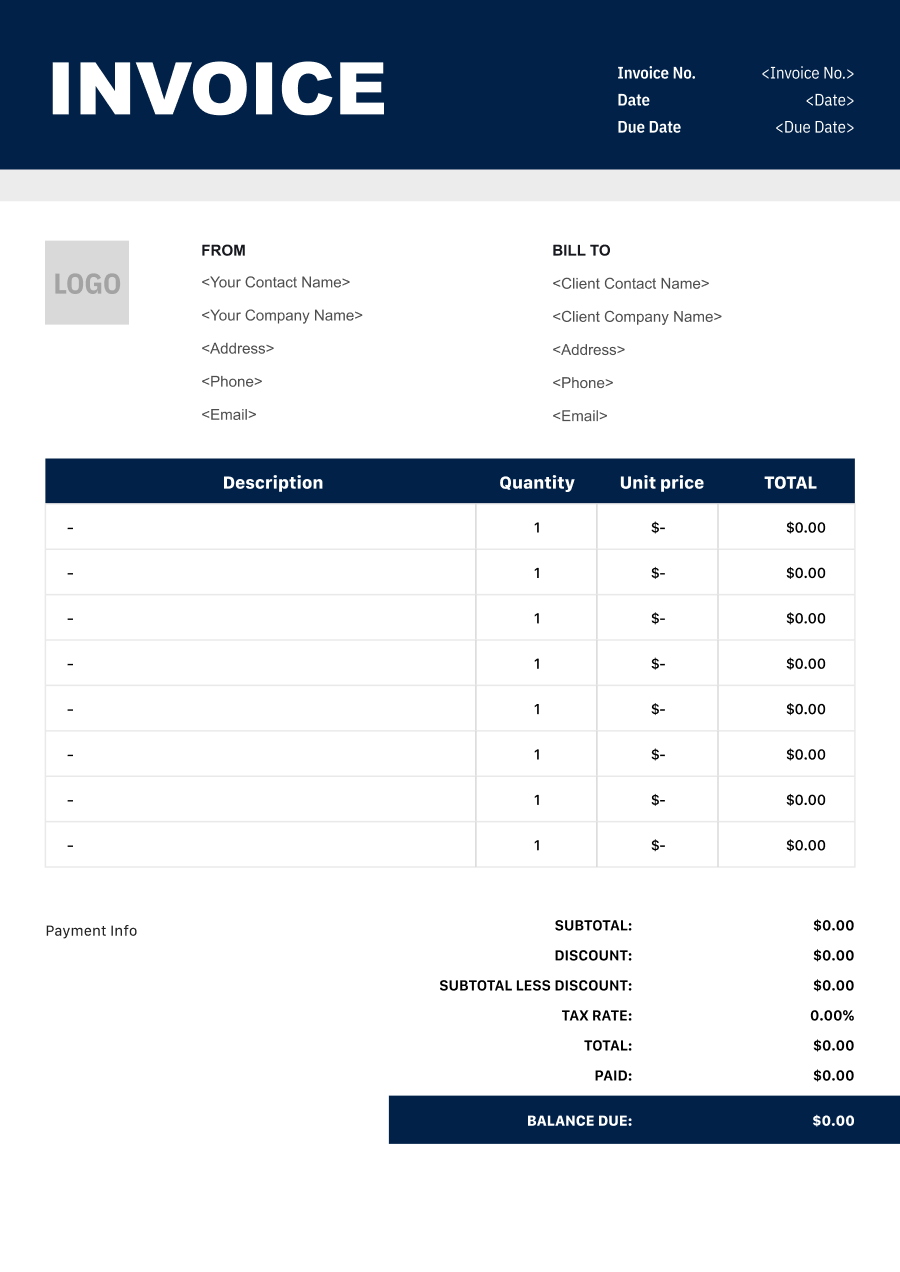
Nanny Invoice Template
Use a nanny invoice template to track childcare hours, overtime, transportation, and additional care services in a simple, professional format.
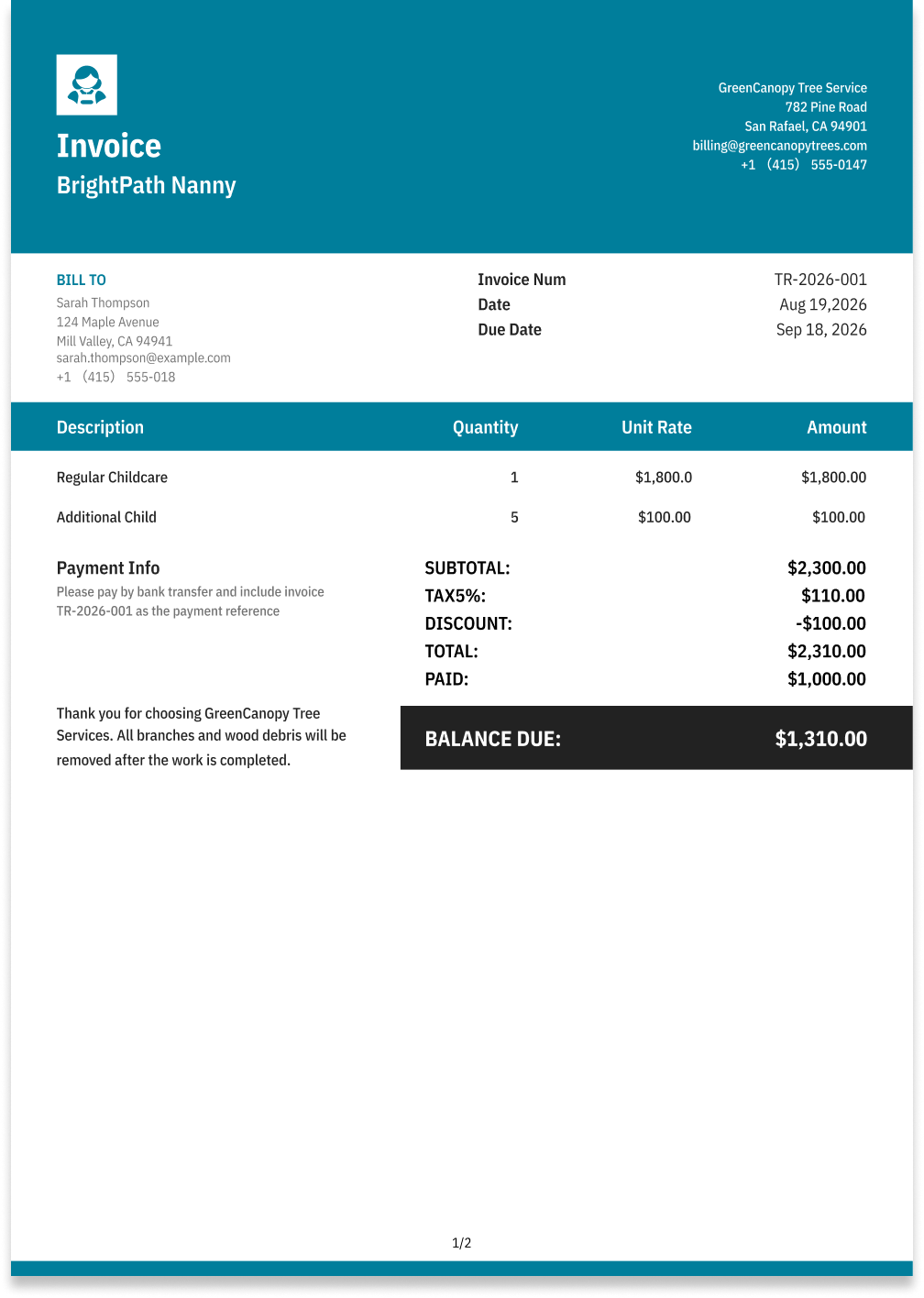
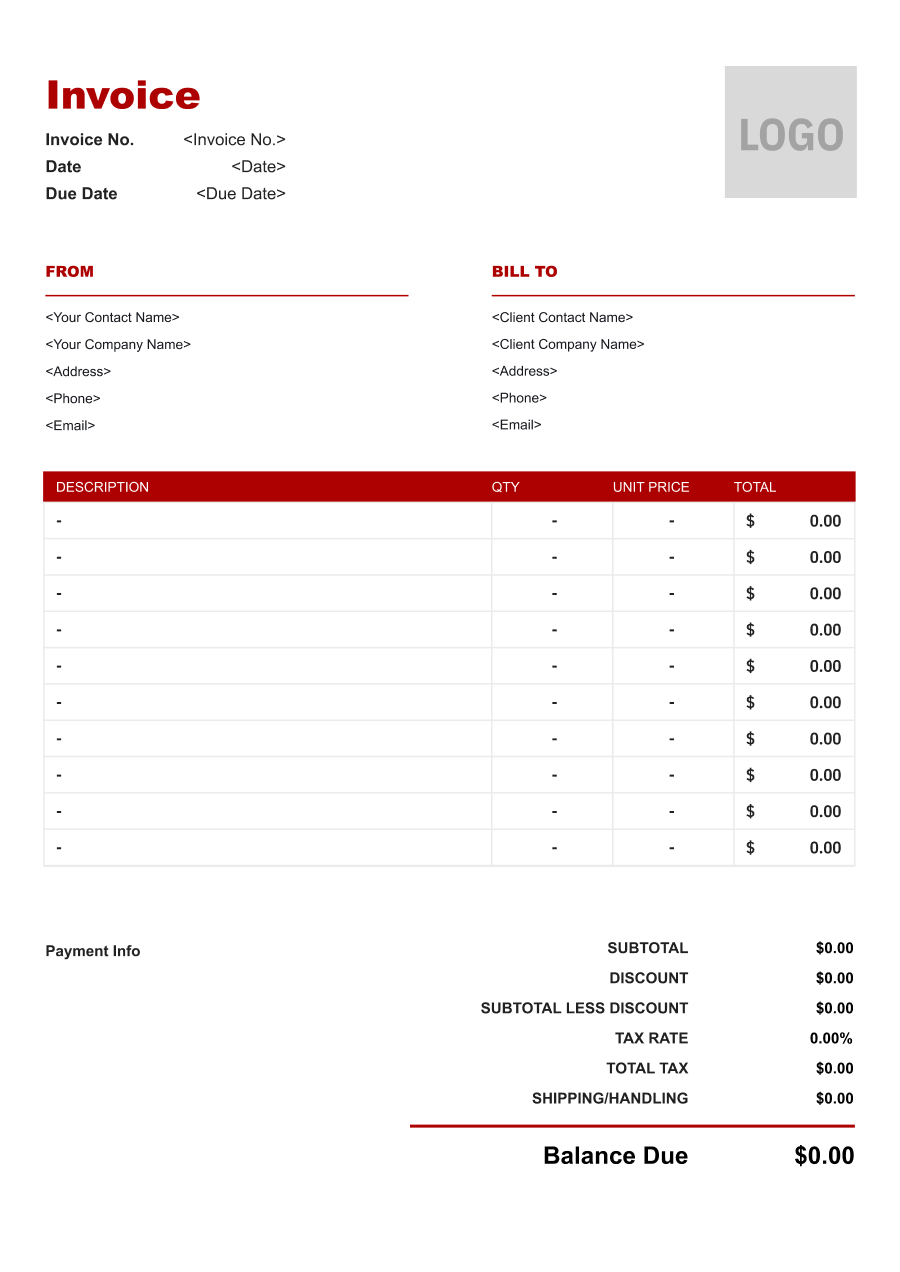
Choose the Best Invoice Template for Your Nanny Business


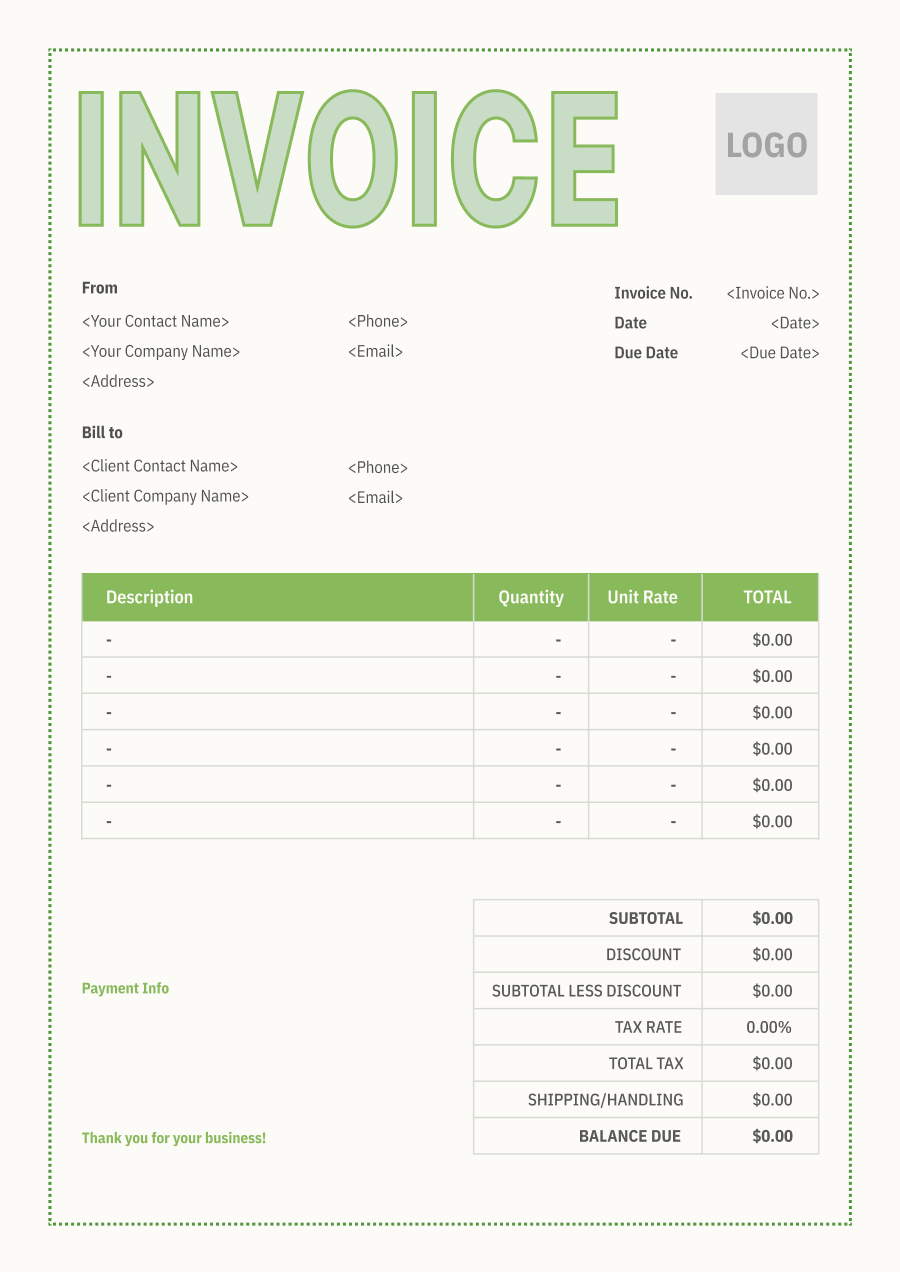
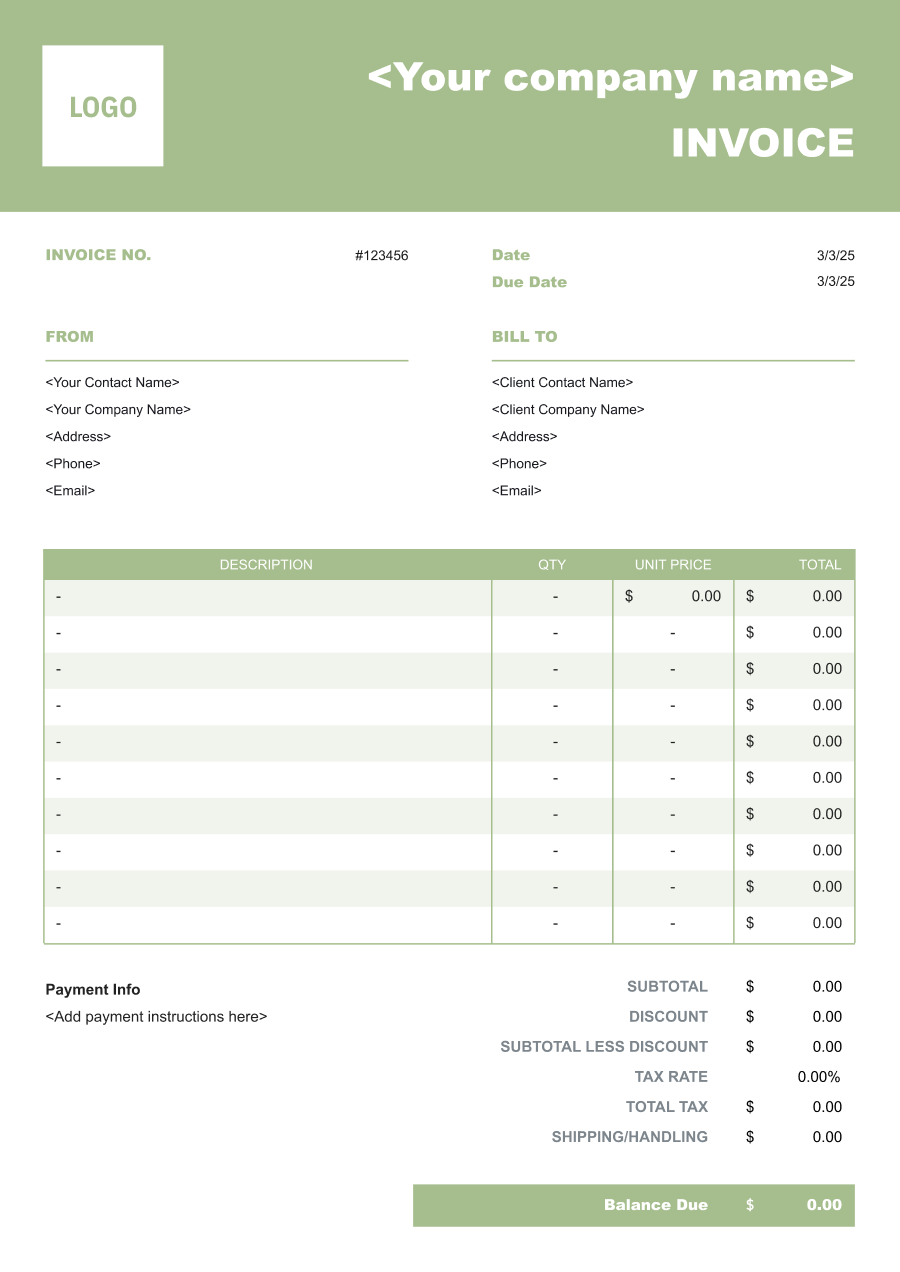
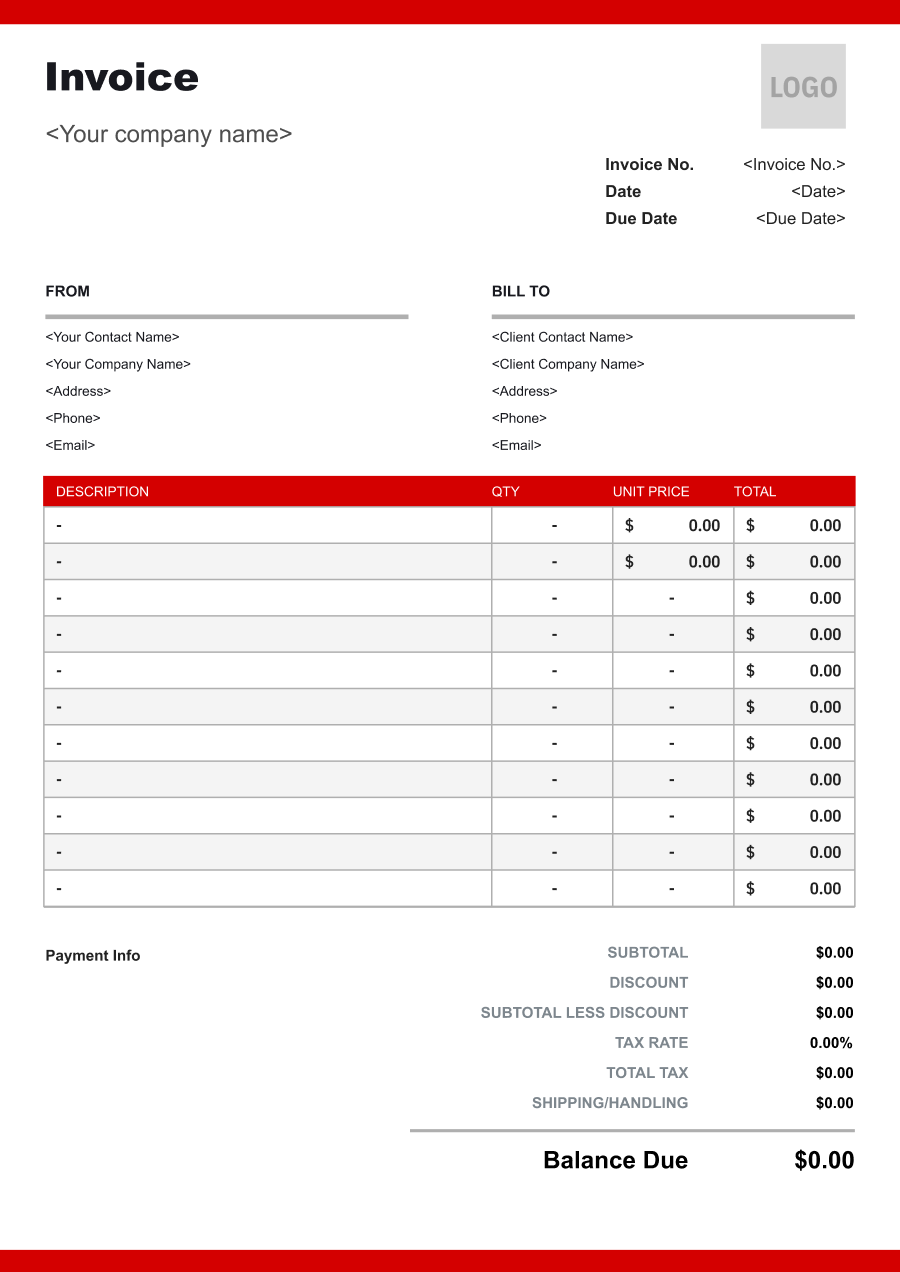
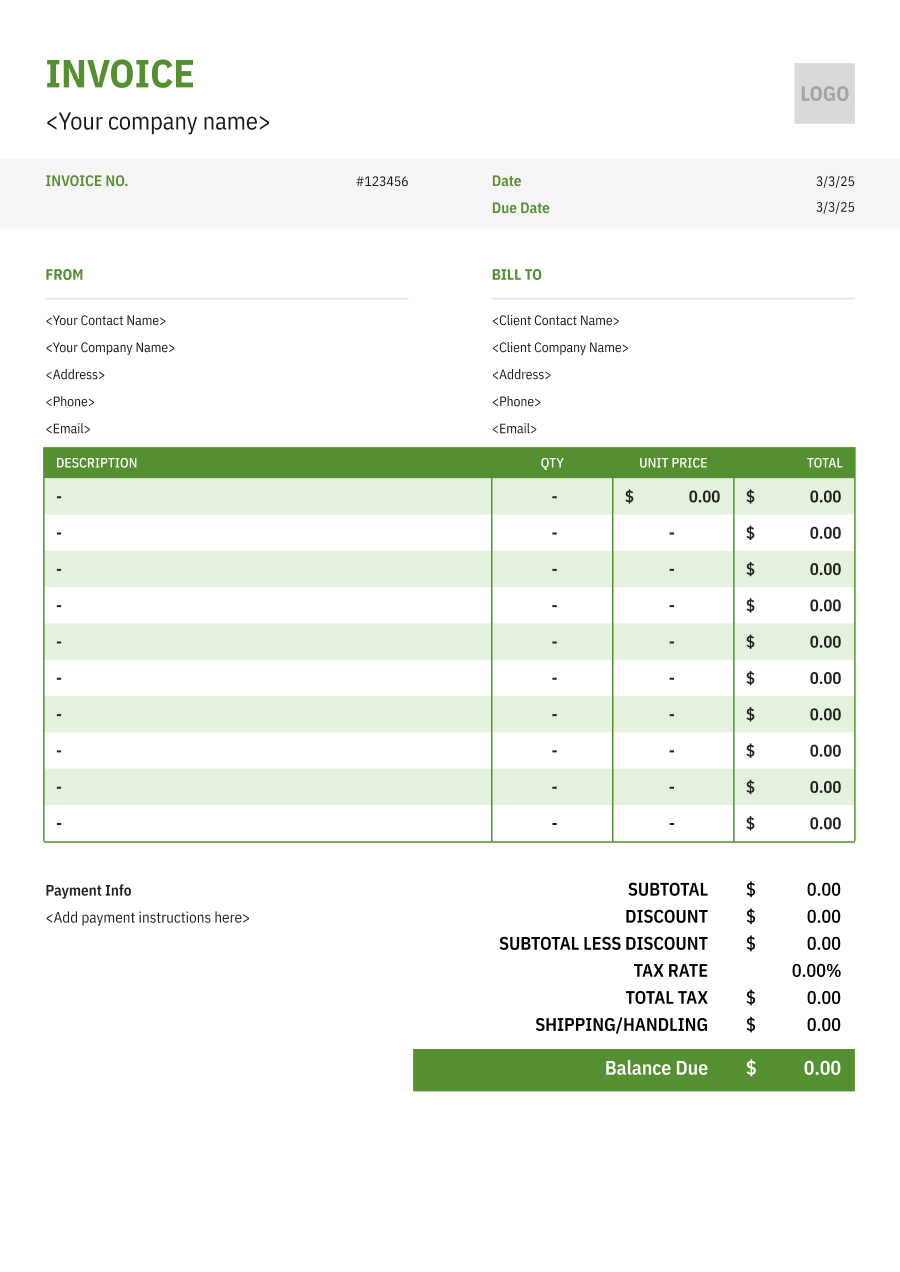
Create A Professional
Nanny Invoice in Minutes
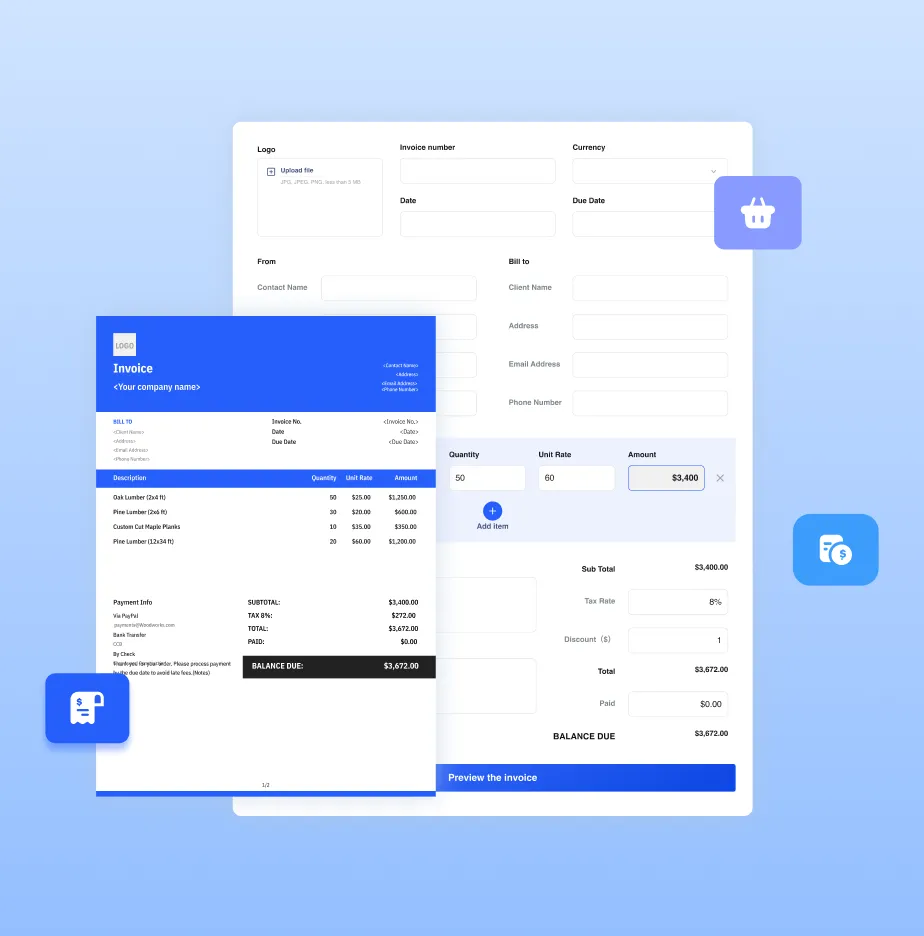
Add your nanny business and client details, itemize the products or services provided, and generate a professional invoice when you are ready.
1
Invoice details
Set the document identity, dates and currency.
Logo

Upload file
JPG, JPEG, PNG, less than 5 MB
Invoice number
Currency
USD
Issue date
Due date
2
Business & client
Add the details your client needs to identify both parties
From
Company Name
Contact name
Address
Email Address
Phone Number
Bill To
Client name
Address
Email Address
Phone Number
3
Products & services
Itemize what you’re charging for. Totals update automatically.
4
Totals & payment
Apply adjustments and tell your client how to pay.
Payment instructions
Notes
Sub Total
$0.00
Tax Rate
%
Discount
$
Total
$0.00
Amount paid
$
Balance Due
$0.00
What to include in Nanny Invoice
A clear nanny invoice helps prevent disputes and ensures timely payment. Use this checklist to include the essential details.
- 1
Business Header & Contact
Company name, logo, phone number, email address, and physical business location.
- 2
Client Contact Information
Client's full name or business entity name, billing address, phone number, and email.
- 3
Invoice Metadata
Unique invoice number, invoice issue date, and payment due date (e.g., Net 15 / Due upon receipt).
- 4
Cost Summary & Taxes
Subtotal for services, local sales taxes (if applicable), applied discounts, and final bolded Total Due.
- 5
Deposit & Balance Tracking
Original estimate total, pre-paid deposit deductions (e.g., 'Less Deposit Received: -$500'), and remaining net balance due.
- 6
Payment Instructions
Accepted payment methods, including direct online payment links (Credit/ACH), check mailing address, or bank transfer details.
- 7
Childcare Hours & Dates
Record the dates and hours of childcare provided, including regular hours and additional hours that are billed differently. This gives the family a clear record of the time covered by the invoice.
- 8
Hourly Rate & Premium Rates
Clearly state the agreed hourly rate and, when applicable, separate rates for overtime, late-night care, weekends, holidays, or other premium periods.
- 9
Additional Childcare Services
Identify separately billed services such as school pickup, transportation, overnight care, travel with the family, extended shifts, or other duties outside the standard childcare arrangement.
- 10
Reimbursable Child-Related Expenses
Document approved expenses paid on behalf of the family, such as admission fees, activity costs, transportation expenses, meals, or other child-related purchases, separately from the nanny's service fee.
Common Nanny Services & Billing Items
How Nanny charges are typically structured and billed.
Common Services
What's Included
Billing Items
Hourly Childcare
Caregiver hours, Children cared for, Hours beyond standard schedule, Service date, and Service location or project
Childcare LaborOvertime/Extended Hours
Overnight Childcare
Caregiver hours, Children cared for, Vehicle or transport type, Route or locations, and Service date
Childcare LaborTransportation
Weekend Childcare
Hours beyond standard schedule, Service date, Vehicle or transport type, Route or locations, and Service location or project
Overtime/Extended HoursTransportation
Child Transportation
Caregiver hours, Children cared for, Hours beyond standard schedule, Service date, Additional service provided, and Date or duration
Childcare LaborOvertime/Extended HoursAdditional Services
Meal Preparation
Hours beyond standard schedule, Service date, Additional service provided, Date or duration, and Event or order date
Overtime/Extended HoursAdditional Services
Additional Childcare Services
Caregiver hours, Children cared for, Vehicle or transport type, Route or locations, Additional service provided, and Date or duration
Childcare LaborTransportationAdditional Services
Date-Night Childcare
Caregiver hours, Children cared for, Hours beyond standard schedule, Service date, Vehicle or transport type, and Route or locations
Childcare LaborOvertime/Extended HoursTransportation
Childcare Labor: Charges for scheduled childcare and supervision time.
Overtime/Extended Hours: Charges for care provided beyond the standard schedule or agreed hours.
Transportation: Charges for transporting children, people, goods, or equipment as part of the service.
Additional Services: Optional maintenance or inspection services performed with the primary service.
Nanny Invoicing Tips
Nanny costs vary by service scope, pricing method, and additional requirements. A detailed invoice helps customers understand every charge and reduces payment disputes.
1
Use a Time-Based Breakdown
Childcare invoices are generally based on actual hours worked. Best practice: show service dates, hours, applicable rates, and line totals so parents can compare the invoice with their calendar or time records.
2
Separate Regular and Premium Hours
Evening, weekend, holiday, or overnight care may have different rates. Best practice: separate regular hours from premium hours instead of applying one blended rate to the entire billing period.
3
Keep Reimbursements Separate
A nanny may purchase food, activity tickets, transportation, or other items while caring for children. Best practice: list reimbursable expenses separately from childcare labor so parents can distinguish service charges from expenses paid on their behalf.
4
Use Recurring Billing for Regular Schedules
Families with ongoing childcare arrangements may use weekly, biweekly, or monthly billing. Best practice: identify the service period on each invoice and maintain consistent billing dates so both parties can track payments and outstanding balances.


Reusable Billing Structure in Invoice Software
Use the items above to quickly create a Nanny Invoice Template in Invoice Zip.
FAQs about Nanny Invoicing
Q: How should a nanny invoice handle overnight childcare or extended shifts?
A: Describe the overnight or extended service separately from ordinary daytime hours if it uses a different rate. Include the service dates and hours or agreed overnight fee.
Q: How should additional children or extra childcare duties affect the amount billed?
A: If the nanny charges more for additional children or duties such as meal preparation and transportation, those charges can be listed separately. This makes it easier for the family to understand the total.
Q: How should a nanny list transportation, mileage, or child-related purchases on an invoice?
A: Reimbursable expenses should be separated from childcare service fees. Include a brief description and amount for items such as mileage, activity fees, or approved purchases made on behalf of the family.
Q: How should holiday, weekend, or last-minute childcare rates be documented?
A: Use a separate line for any premium rate or surcharge and identify the dates or type of service that triggered it. This provides a clear record when the rate differs from the nanny's normal schedule.
Q: How should a nanny invoice recurring weekly childcare when the actual hours change from week to week?
A: Record the actual hours worked during each billing period rather than using a fixed number of hours. The invoice can summarize regular hours, additional hours, and reimbursable expenses before calculating the total.
Other Free Resources

Try Invoice Zip Today
Start Sending Invoices, Building Reports, Saving Office
Time and Get Paid Faster.