


Invoice Due Date Calculator
Calculate an invoice due date based on the invoice date and payment terms. Enter the invoice date and the number of days allowed for payment to quickly find when an invoice is due.
An invoice due date tells your customer when payment is expected. Setting a clear due date can help businesses communicate payment expectations and keep track of outstanding invoices.
The due date is usually determined by the payment terms agreed between the business and its customer. Common terms include Net 7, Net 15, Net 30, and Net 60.
How to Calculate an Invoice Due Date
For many invoices, calculating the due date is as simple as adding the agreed payment period to the invoice date.
Invoice Due Date = Invoice Date + Payment Period
For example, if an invoice is issued on August 1 with Net 30 payment terms:
August 1 + 30 days = August 31
The invoice due date is August 31.
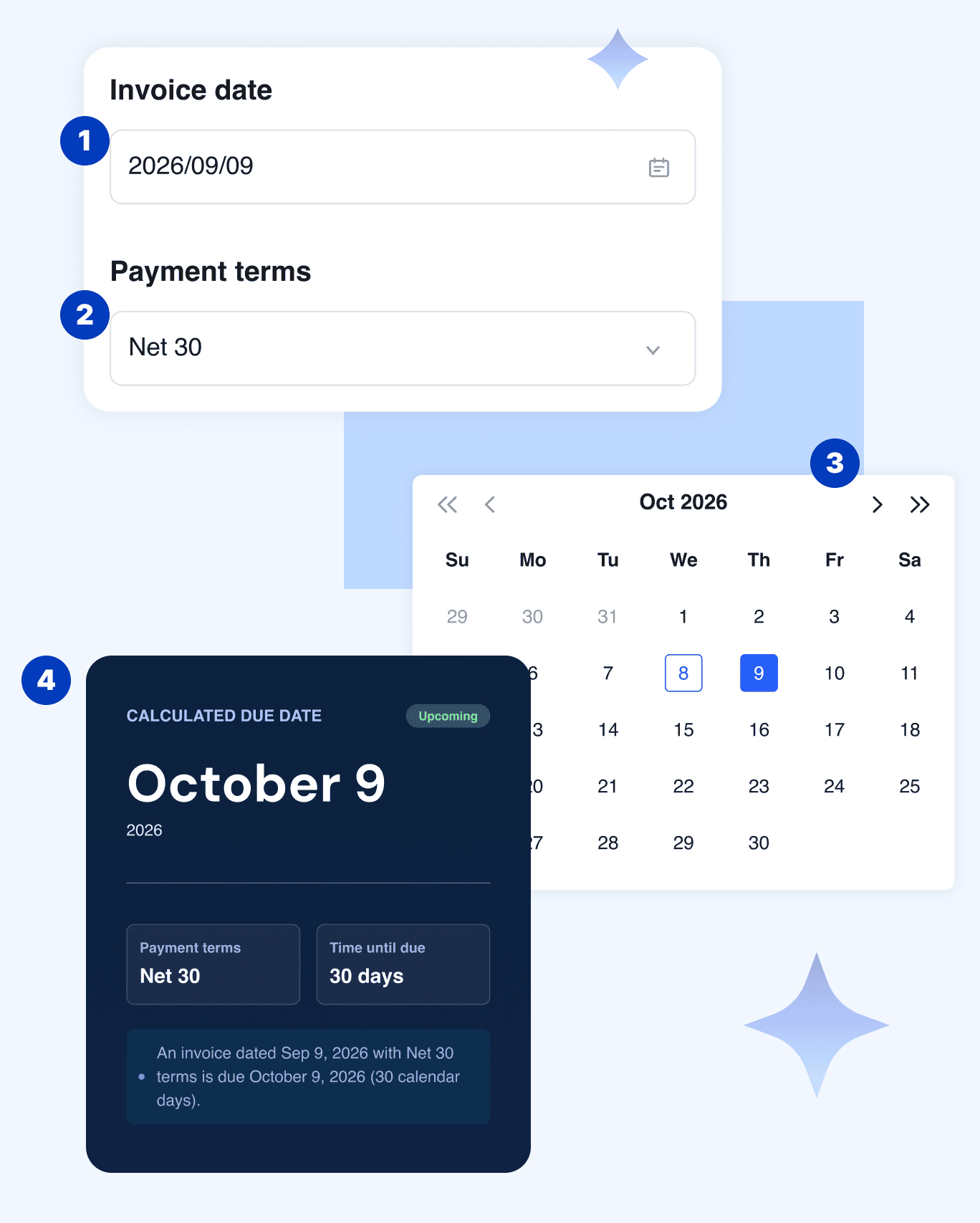
Step 1: Start With the Invoice Date
The invoice date is the starting point for calculating the payment deadline. It is the date shown on the invoice as the date it was issued.
Step 2: Identify the Payment Terms
Check the payment terms agreed with the customer. If the invoice uses Net 30, for example, payment is generally expected within 30 days according to the terms.
For example, assume:
- Overdue invoice: $1,000
- Daily rate: 0.1%
- Days overdue: 10
The calculation is:
$1,000 × 0.1% × 10 = $10
The calculated late fee would be $10.
Step 3: Add the Payment Period
Add the specified number of days to the invoice date.
For example, assume:
- Invoice Date: September 10
- Payment Terms: Net 15
- Due Date: September 25
Step 4: Check the Result
Review the calculated date and make sure it matches the payment terms you intend to use. Special arrangements, weekends, holidays, or contract-specific rules may affect how a payment deadline is determined.
How to Use the Invoice Due Date Calculator
To calculate a due date, enter the relevant information into the calculator such as:
- Invoice date
- Payment term or number of days
- Payment period
The calculator then determines the corresponding due date. For recurring invoicing, using a consistent calculation method can make it easier to establish and track payment deadlines.
Invoice Payment Terms
Payment terms explain when a customer is expected to pay an invoice. They are commonly expressed using a specific number of days or a particular payment date.
| Payment Term | Description |
|---|---|
| Net 7 | Net 7 generally means payment is due within 7 days of the invoice date or according to the specific terms stated on the invoice. |
| Net 15 | Net 15 generally means payment is due within 15 days. |
| Net 30 | Net 30 is one of the commonly used payment terms for business invoices. |
| Net 60 | Net 60 generally gives the customer 60 days to pay. |
| Due on Receipt | Due on receipt means payment is expected when the customer receives the invoice rather than after a specified number of days. The exact meaning and timing can depend on the agreement and how the invoice is delivered. |
| Specific Due Date | Instead of using a Net term, a business can specify an exact date. A specific date can remove uncertainty when both parties have agreed on a particular payment deadline. |
Invoice Due Date Examples
The due date changes depending on the invoice date and payment terms.
A freelancer sends an invoice on March 5 with Net 15 terms.
March 5 + 15 days = March 20
The payment is due on March 20.
A business issues an invoice on January 10 with Net 30 terms.
January 10 + 30 days = February 9
The invoice due date is February 9.
A supplier issues an invoice on June 15 with Net 60 terms.
June 15 + 60 days = August 14
The invoice due date is August 14.
A business issues an invoice on July 8 with payment terms of due on receipt.
The payment is generally expected when the customer receives the invoice, rather than after a 7-, 15-, or 30-day period.
Consider the same Net 30 payment term applied to different invoice dates:
| Invoice Date | Payment Terms | Due Date |
|---|---|---|
| January 5 | Net 30 | February 4 |
| February 10 | Net 30 | March 12 |
| March 20 | Net 30 | April 19 |
| April 25 | Net 30 | May 25 |
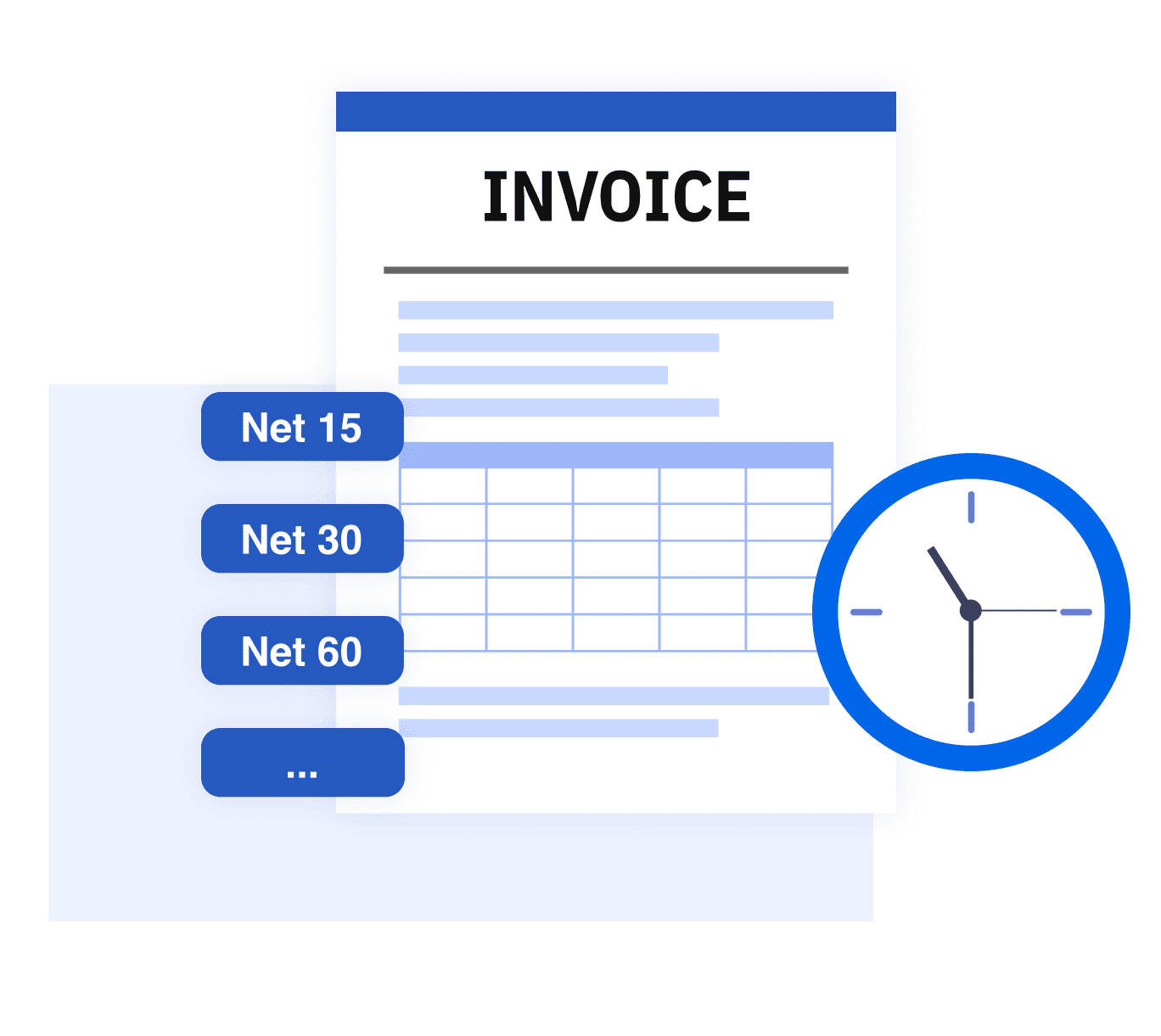
The payment period stays the same, but the actual due date changes with the invoice date.
When calculating dates around the end of a month, remember that calendar months have different numbers of days. A date-based calculator can help avoid manual counting errors.
Payment Terms vs. Due Date
Payment terms describe the conditions for when payment is expected, while the due date is the specific date by which payment should be made.
For example :
- Payment Terms: Net 30
- Invoice Date: August 1
- Due Date: August 31
The payment term provides the rule, while the due date gives the customer the actual deadline.
Frequently Asked Questions
Q: Does the invoice due date include the invoice date?
A: The exact counting method can depend on the payment terms and agreement. When using a Net term, businesses should clearly state the intended payment period rather than relying on assumptions.
Q: What happens if an invoice due date falls on a weekend?
A: The treatment of weekend or holiday due dates can depend on the contract, payment terms, and applicable rules. Some businesses specify that payment is due on the next business day, while others use the stated calendar date.
Does the invoice due date change if the customer receives the invoice late?
A: It can depend on how the payment terms are defined. If the agreement bases the deadline on receipt rather than the invoice date, the calculation may be different.
Q: Can I choose any invoice payment term?
A: Businesses can generally agree on payment terms with their customers, subject to applicable contracts, industry requirements, and laws.
Make sure the terms are communicated clearly before or when the transaction takes place.
Q: Can an invoice have a due date earlier than the invoice date?
A: An invoice can technically display different dates, but a due date earlier than the invoice date would generally be unusual and could create confusion. Make sure the dates and payment terms accurately reflect the agreement.
Q: Should the due date appear on every invoice?
A: Including a clear due date is useful because it tells the customer exactly when payment is expected. If you use payment terms such as Net 30, displaying the resulting due date can make the deadline easier to understand.
Q: Can I change the invoice due date?
A: A business may agree with a customer to change a payment deadline. If the terms change, keep the invoice and payment records consistent with the updated agreement.
Q: How do I calculate a due date for Net 30?
A: Add 30 calendar days to the date used as the starting point under your payment terms. For example, an invoice dated August 1 with Net 30 terms would have a calculated due date of August 31.
Q: Are Net 30 and 30 days the same?
A: They often describe a 30-day payment period, but the exact interpretation can depend on the agreement and how the payment period is defined. The invoice should clearly communicate the intended due date wherever possible.
Q: Can I calculate an invoice due date for past invoices?
A: Yes. If you know the relevant invoice date and payment terms, you can calculate the corresponding due date even after the invoice has already been issued.