


How Long Should You Keep Invoices and Business Records?
5min read
|
Sep 04, 2026
How long you should keep invoices and business records depends on the type of record and the rules that apply to your business. In the U.S., there isn't one single retention period for every business record.
For federal tax purposes, the IRS generally recommends keeping records for as long as they may be needed to prove income, deductions, or credits on a tax return. In many common situations, that means at least 3 years, while some records need to be kept longer. Employment records, property records, and records related to certain tax situations can have different retention periods.
For a small business, a practical approach is to keep invoices, receipts, bank records, and other supporting documents organized for several years rather than deleting them as soon as an invoice is paid.
Why Should You Keep Old Invoices?
An invoice doesn't stop being useful just because it has been paid.
Old invoices can help you:
- Support business income reported on a tax return
- Verify expenses and deductions
- Resolve customer disputes
- Check when and how a customer paid
- Reconcile bank and accounting records
- Review past pricing and sales
- Respond to an audit or tax question
For example, a customer may question a charge from two years ago. If you still have the original invoice, payment record, and related documents, you can quickly check what happened.
The same records can also help you understand how your business performed over time.
How Long Should You Keep Invoices?
For federal tax purposes, the IRS generally says you should keep records for as long as needed to support the items shown on your tax return.
A common rule is to keep tax-related records for 3 years after filing the return. However, that is not a universal rule.
Some situations require longer retention. For example, the IRS says records related to employment taxes should generally be kept for at least 4 years after the tax becomes due or is paid, whichever is later.
Property records can also need to be kept for longer. If you buy equipment or other business property, records related to the purchase may be needed to calculate depreciation or gain or loss when you eventually dispose of it.
So the right retention period depends on what the invoice or record is supporting.
A business shouldn't automatically delete an invoice just because three years have passed.
What Business Records Should You Keep?
Invoices are only one part of a business's financial records.
Depending on your business, you may also want to keep:
| Record | Examples |
|---|---|
| Sales records | Customer invoices, sales receipts, payment confirmations |
| Expense records | Vendor invoices, receipts, purchase records |
| Bank records | Bank statements, deposit records, canceled checks |
| Payment records | Credit card statements, ACH records, payment processor reports |
| Tax records | Tax returns, sales tax records, tax payment records |
| Payroll records | Pay records, payroll tax filings, employee payment records |
| Contracts | Customer agreements, vendor contracts, leases |
| Asset records | Equipment purchases, improvements, depreciation records |
Keeping these records together makes it easier to connect an invoice with the transaction behind it.
For example, a $5,000 invoice might be supported by a signed contract, a payment confirmation, and several receipts for project expenses. Keeping only the invoice may not give you the complete picture later.
Do You Need to Keep Paper Copies?
Not necessarily.
Many businesses now keep invoices and records digitally instead of maintaining filing cabinets full of paper.
A digital record can be much easier to search and organize, as long as it remains readable and can be produced when needed.
A simple folder structure can work well:
2026 → Sales Invoices → Paid
2026 → Sales Invoices → Unpaid
2026 → Expenses
2026 → Tax Records
You can also organize invoices by customer or invoice number if that fits your workflow better.
The important thing is consistency.
If you create invoices digitally, keep the original invoice along with important supporting records. Don't rely only on a screenshot or a bank transaction showing that money was received.
For particularly important documents, having a backup is also a good idea.
How Should Small Businesses Organize Old Invoices?
A good recordkeeping system should make an old invoice easy to find.
At a minimum, each invoice should have a clear invoice number and date. Your records should also show whether the invoice was paid, partially paid, or still outstanding.
It also helps to keep payment information with the invoice. For example:
Invoice #2026-0148
Customer: ABC Design
Invoice Date: March 10, 2026
Total: $2,400
Paid: March 18, 2026
Payment Method: ACH
This gives you a basic record of the transaction and makes it easier to check what happened later.
You should also avoid changing or deleting old invoices without keeping a record of what changed. If an invoice needs to be corrected, keep the original and document the adjustment. This creates a clearer record of the transaction.
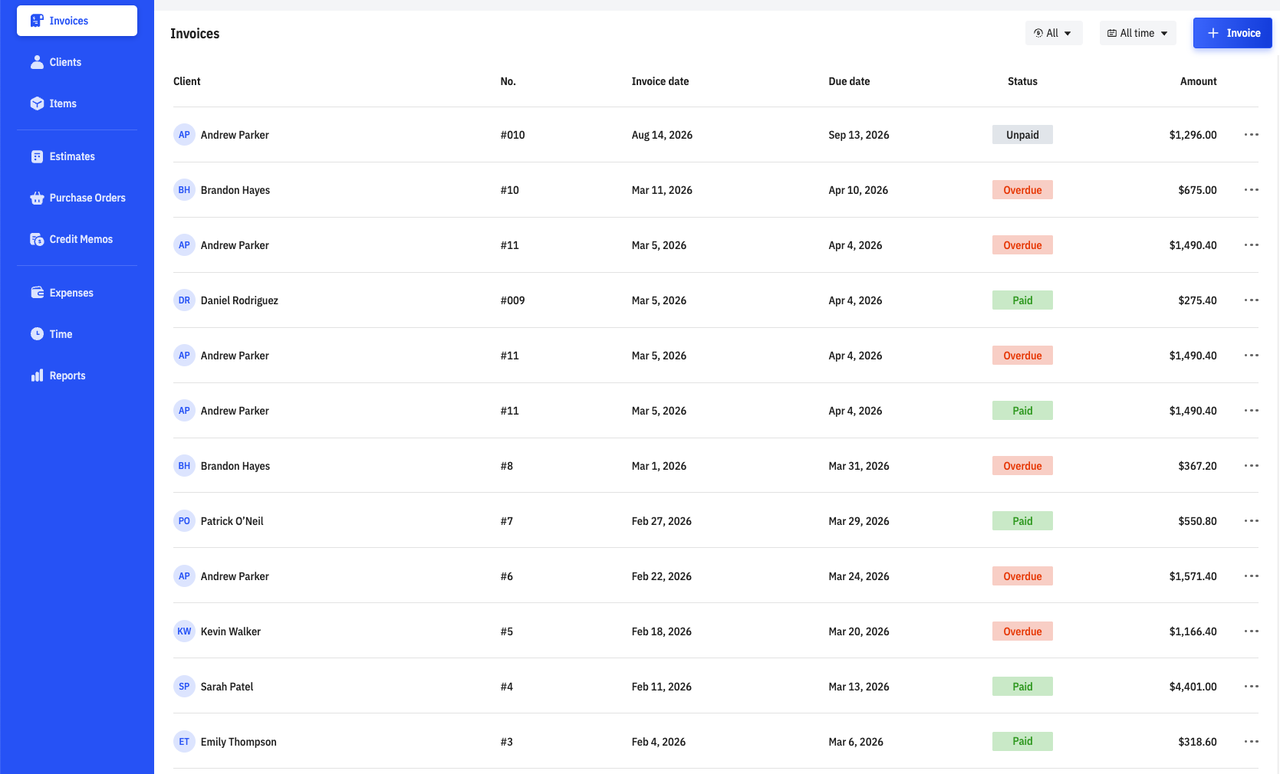
For businesses with a growing number of invoices, keeping everything organized can become harder to manage manually. For businesses with a growing number of invoices, keeping everything organized can become harder to manage manually. An invoice maker, such as Invoice Zip, lets small businesses create and manage invoices in one place, making it easier to keep track of invoice status and find older invoices when needed.
What Is the Best Retention Period for Your Business?
There is no single number that works for every invoice and every business.
For many small businesses, keeping financial and tax records for at least 3 years is a reasonable starting point, but you may need to keep certain records longer depending on the situation. State tax rules, employment requirements, industry regulations, contracts, and legal disputes can all affect the appropriate retention period.
If a record relates to property, employment taxes, or a tax return that has unusual circumstances, don't assume the standard three-year period applies.
It is also worth checking your state's requirements. State and federal retention rules are not always the same.
The simplest approach is to create a retention policy and follow it consistently. Keep invoices and supporting records organized by year, maintain backups of digital files, and avoid deleting records simply because they are old.
Good recordkeeping isn't just about taxes. When your invoices and business records are easy to find, it's much easier to answer customer questions, track payments, review past transactions, and understand where your business stands.
Most Popular Pages


Try Invoice Zip Today
Start Sending Invoices, Building Reports, Saving Office
Time and Get Paid Faster.