

Restaurant Invoice Template
Designed for restaurants, catering companies, and event dining service teams.
Choose the Right Restaurant Invoice Template
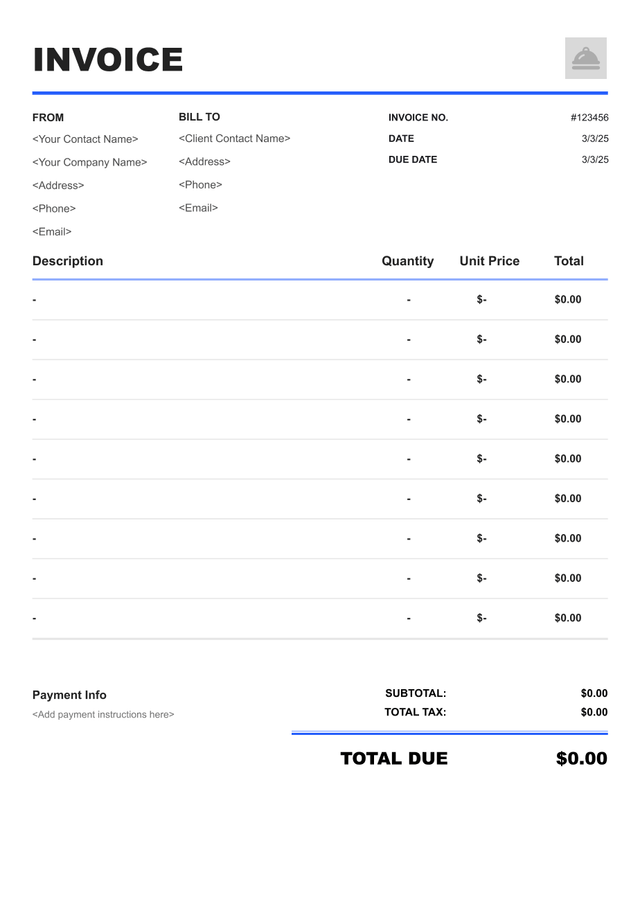


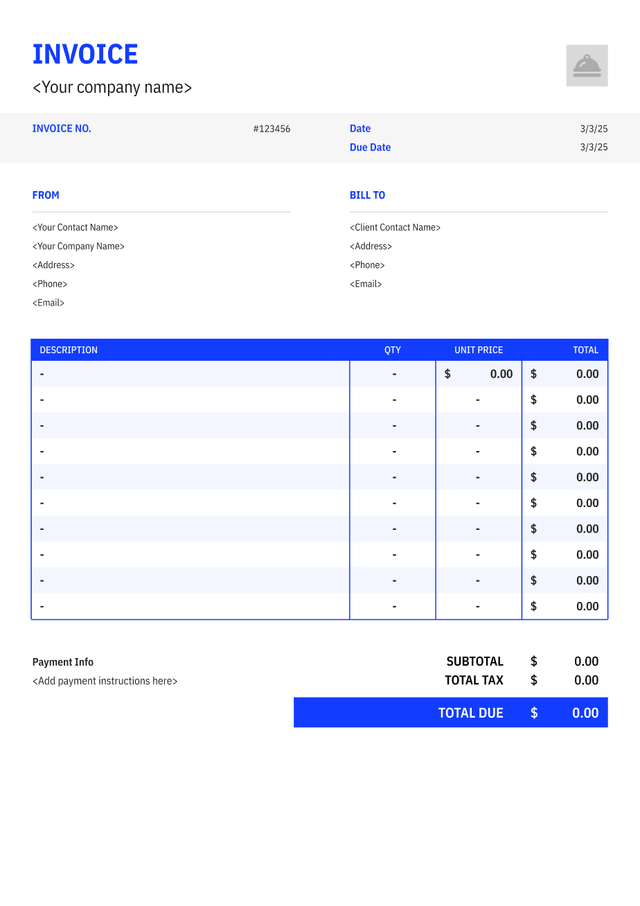
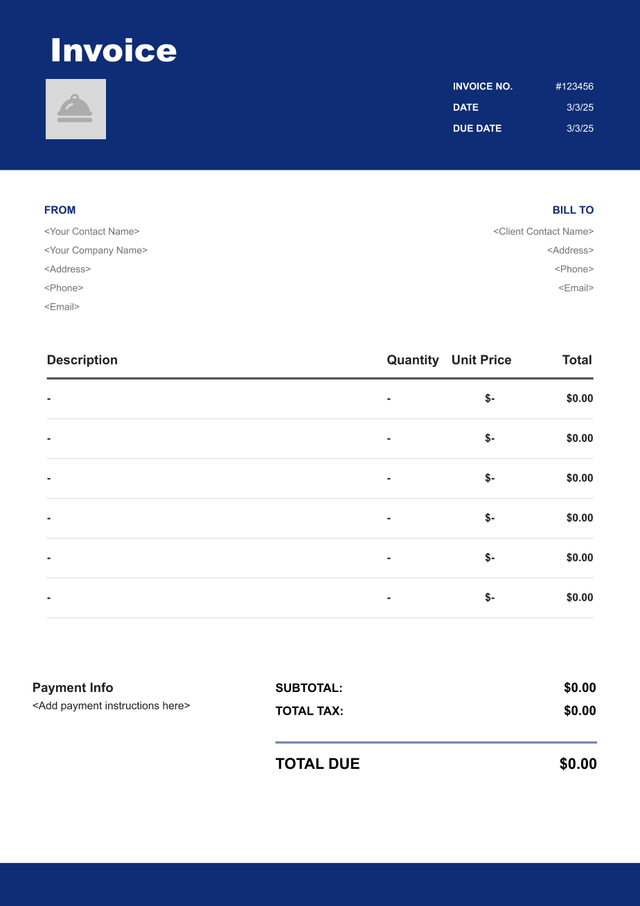
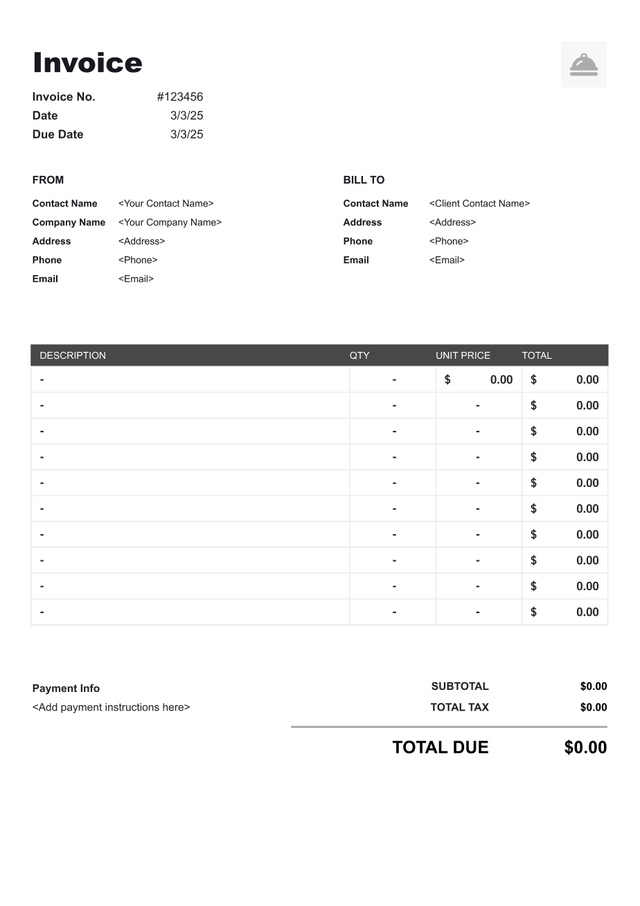
What to Include on a Restaurant Invoice
A restaurant invoice should clearly document menu items, guest count, event details, taxes, and payment information to help prevent billing disputes.
1.
Restaurant information: Includes the restaurant’s name, address, phone number, and email address.
2.
Client information: Includes the client’s name, address, phone number, and email address.
3.
Invoice and event details: Includes the invoice number and event date.
4.
Menu details: Lists the dishes, courses, or meal packages included in the order.
5.
Guest count: Shows the confirmed number of guests for the event or order.
6.
Payment method: Records whether the client paid by cash, credit card, or another payment method.
7.
Tax information: Shows the applicable sales tax rate and tax amount.
8.
Deposit record: Shows the amount collected from the client before the event, if applicable.
9.
Event order or booking number: Connects the invoice to the corresponding event order or reservation, if applicable.
10.
Billing items: Itemizes food, beverage, service charges, and other applicable restaurant charges.
Common Restaurant Services & Billing Items
How restaurant services are typically structured and billed.
Food Service
Dishes, courses, or menu packages prepared for the order or event
Catering Service
Food preparation and service for private or off-site events
Beverage Service
Alcoholic and non-alcoholic beverages served during the meal or event
Service & Staffing
Servers, bartenders, and other staff providing table or event service
Venue & Equipment Rental
Use of a private dining room or event space, including rented tables, chairs, or equipment
Delivery & Setup
Transportation, delivery, setup, and collection for an off-site order or event


Reusable Billing Structure in Invoice Software
Use the items above to quickly create restaurant invoices in Invoice Zip.
Common Restaurant Invoicing Mistakes
Common invoicing errors and how to avoid them in real-world restaurant and catering transactions.
| Mistake | What Goes Wrong | How to Fix |
|---|---|---|
Guest count is not recorded | Clients cannot verify individual costs and may question the total charge | List labor, materials, hardware, and additional fees as separate line items |
Service charges are not itemized separately | Missing or inaccurate hours can lead to underbilling and payment disputes | Record hours worked each day by carpenter, task, or project stage |
Gratuity and taxes are combined | Additional work increases the final invoice and makes payment difficult to collect | Use a signed change order before starting any work outside the original scope |
Dish quantities are incorrect | Clients cannot verify the type, grade, or quality of materials used | Include the exact material type, grade, quantity, or model number |
Deposit records are missing | Clients may think they were charged twice, and financial reconciliation becomes difficult | Show the deposit date and amount separately from the remaining balance |
Project and job site details are unclear | Clients cannot easily connect the invoice to the completed carpentry work | Include the project name, job site address, and service dates |
Additional fees are not itemized | Clients cannot understand how the final amount was calculated | List permit fee, delivery fee, or other charge separately |
Payment terms are unclear | Missing deadlines or payment instructions can delay payment | Clearly state the due date, payment schedule, and accepted payment methods |
Restaurant Invoice Challenges and Solutions
Discover common restaurant and catering invoicing challenges and practical ways to improve billing accuracy, protect cash flow, and reduce payment disputes.
| Challenge | Solution |
|---|---|
Clients may cancel informally or dispute a payment after food preparation has begun, leaving the restaurant with wasted ingredients and labor costs. | Collect a deposit in advance and establish a written cancellation policy that specifies notice deadlines and applicable cancellation fees. |
Last-minute changes to the guest count can disrupt ingredient purchasing, equipment preparation, and staffing plans, resulting in additional costs or shortages. | Set a final guest-count deadline and document any later adjustments, including the resulting food, equipment, and staffing charges. |
Unexpected event-day problems—such as delivery delays, equipment failures, staff shortages, or schedule changes—can interrupt service and create unplanned expenses. | Maintain a standardized contingency plan with backup equipment, staff, transportation, and a clear response process. |
Delayed or inconsistent invoicing can slow payment collection and negatively affect purchasing, payroll, and daily operations. | Issue invoices promptly, state clear payment terms and due dates, and follow up consistently on outstanding balances. |
Additional dishes, beverages, or services requested during an event may cause disputes if they are not properly recorded and approved. | Document and confirm all on-site additions in real time, then reconcile the final guest count, menu, and services before issuing the final invoice. |
FAQs About Restaurant Invoicing
Q: How is catering typically billed?
Catering is usually billed per guest or at a fixed package price, depending on the event and selected menu.
- Per-guest pricing → based on the confirmed guest count
- Package pricing → fixed price for an agreed menu and service scope
- Example → Wedding package: 80 guests × $65/guest = $5,200
Q: Should the service charge be listed separately?
Yes. Showing the service charge separately helps clients distinguish it from gratuity and taxes.
- State the service-charge rate
- Identify what the charge covers
- Example → Food and beverage subtotal: $3,000 + 20% service charge ($600) = $3,600
Q: Is gratuity included on the invoice?
This depends on the restaurant’s policy. Some restaurants apply automatic gratuity, while others leave it to the client’s discretion.
- Clearly label automatic gratuity
- State the applicable percentage
- Keep gratuity separate from services charges and taxes
- Example → Food subtotal: $1,000 × 18% automatic gratuity = $180
Q: How is the delivery fee calculated?
Delivery fees may be charged at a flat rate or calculated according to the distance to the event location.
- Flat fee → fixed charge within a specified delivery area
- Distance-based fee → calculated according to mileage
- Example → Delivery fee: 20 miles × $3/mile = $60
Q: What happens if the guest count changes?
Charges should be adjusted according to the guest-count terms stated in the catering contract.
- Record the original and revised guest counts
- Apply the agreed per-guest rate
- Confirm the adjustment with the client
- Example → Revised from 100 to 115 guests: 15 additional guests × $65/guest = $975
Q: Does tax need to be shown separately?
Yes. Sales tax should appear as a separate line item from food, beverages, service charges, and gratuity.
- Show the taxable subtotal
- State the applicable tax rate
- Display the calculated tax amount
- Example → Taxable subtotal: $4,200 + 8.5% sales tax ($357) = $4,557
Q: Is a detailed menu breakdown necessary?
Q: How can billing disputes be reduced?
Confirm the final guest count, menu, services, and additional charges with the client before the event.
- Set a final confirmation deadline
- Document approved changes in writing
- Reference the confirmed details on the invoice
- Example → Final confirmation: 100 guests; menu finalized three days before the event
Other Free Resources

Try Invoice Zip Today
Start Sending Invoices, Building Reports, Saving Office
Time and Get Paid Faster.