


View the break-even chart
The chart marks the exact mathematical intersection, before unit rounding.
Find out how much you need to sell to cover your business costs. Enter your fixed costs, selling price, and variable cost per unit to see your break-even sales volume, revenue, contribution margin, and sales needed for a target profit. Works for products, billable hours, and invoiced projects.
Each sale contributes its margin toward fixed costs. Once those costs are covered, additional contribution becomes profit before income tax within this model. A higher price can lower your break-even volume if variable cost per unit stays the same. Selling more helps you reach the threshold, but does not change the threshold itself.
Method comparison — same asset, different timing
The chart marks the exact mathematical intersection, before unit rounding.
The break-even point is the level of sales where total revenue equals total costs, so profit before income tax is zero. Below that threshold you make a loss; above it you make a profit, assuming a positive contribution margin. For whole products or projects, the first achievable sales volume may already produce a small profit.
Break-even analysis separates fixed costs, which stay constant within the period and capacity range,
from variable costs, which change with sales volume. The amount left after one sale covers its variable cost is
the contribution margin. It helps cover fixed costs and, after those are covered, contributes to profit before income tax.
Fixed Costs
Rent, fixed salaries, insurance, and subscriptions. These costs stay the same within the capacity range you are planning for.
Variable Costs
Materials, packaging, delivery, sales commissions, and transaction fees. These costs rise as you sell more.
Contribution Margin
What one sale contributes toward fixed costs. A positive margin is needed to recover positive fixed costs.
The formula is short; choosing consistent inputs matters. Follow these three steps:
List costs for the same accounting period. Separate fixed expenses from costs that change with each sale. Include payment processing and delivery fees in variable costs, and split mixed costs into fixed and variable portions.
Subtract variable cost per unit from selling price. If a project sells for $1,500 and costs $450 to deliver, its $1,050 contribution first covers fixed costs, then contributes to profit before income tax.
Divide fixed costs by contribution margin to find the theoretical sales volume. Multiply that unrounded volume by price for theoretical break-even revenue. Add a profit goal to fixed costs before dividing to find your target volume.
A design studio has $8,000 in monthly fixed costs. An average project sells for $1,500 and costs $450 in subcontractor work and processing fees.
Round indivisible units up. For billable hours, this calculator rounds up to 0.01 hour; adjust for your actual billing increment.
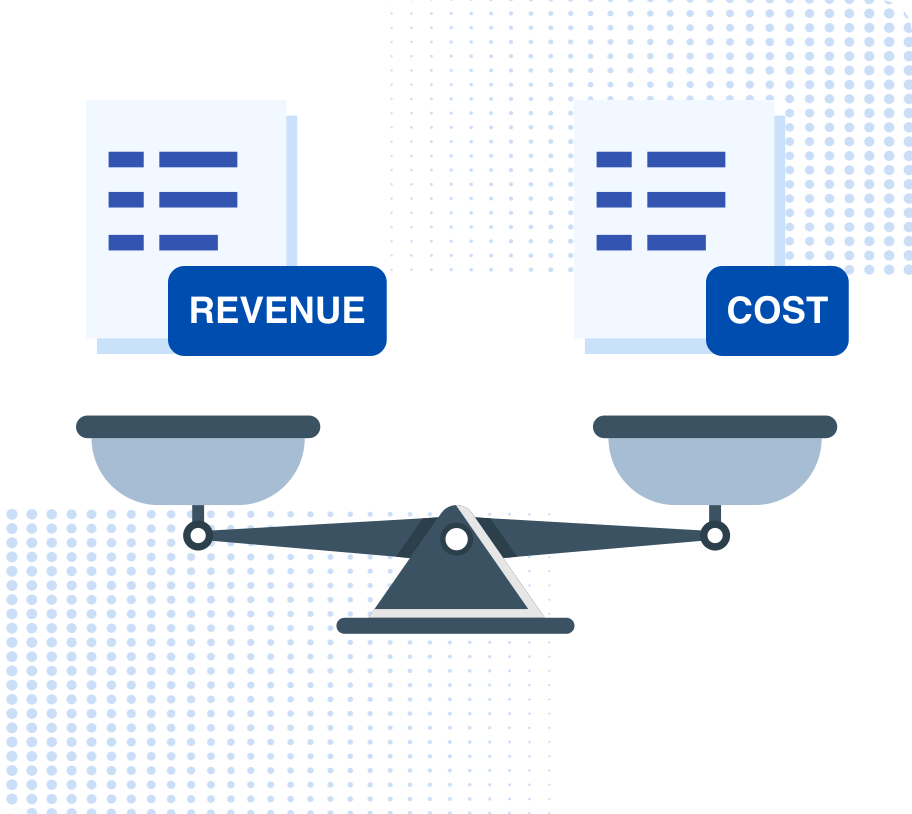
Useful break-even estimates start with a sensible cost split. Classification depends on how you pay for each expense and the capacity you are modeling.
| Cost | Classification | Why |
|---|---|---|
| Rent and insurance | Fixed | Usually constant for the period until you add capacity or change your contract. |
| Non-commission salaries | Fixed / stepped | Base pay is typically fixed; extra hires or overtime can change the cost structure. |
| Software subscriptions | Fixed / mixed | Flat plans are fixed. Usage charges and added seats can create variable or stepped costs. |
| Materials and packaging | Variable | Usually consumed per unit; volume discounts can change the cost per unit. |
| Shipping and sales commissions | Variable | Typically charged per shipment or as a percentage of sales. |
| Payment processing fees | Variable | Include both the percentage fee and any charge per transaction. Add fixed platform fees to fixed costs. |
| Subcontractor work | Variable / fixed | Per-project payments are variable; minimum commitments and retainers may be fixed. |
| Utilities | Mixed | A base charge can be fixed, while usage varies with activity. Estimate each portion separately. |
| Equipment purchases and loans | Separate cash flow | Do not expense the full capital purchase or loan principal here. Include relevant depreciation and fixed interest expense in fixed costs; model cash payments separately. |
Use costs that match the revenue and period you are analyzing. Avoid counting the same expense in both fixed costs and variable costs.
For service businesses, one unit can be an invoice, project, billable hour, or retainer client. Use the same definition for your selling price and delivery costs. If one project has several milestone invoices, count projects or use a consistent average per invoice throughout.
Divide recognized revenue by the matching invoice count for a representative period, excluding taxes collected for others and adjusting for credits and cancellations. Estimate variable costs over the same set of sales. If your mix of services changes, update both averages. Paid invoices alone can underrepresent slow-paying customers.
At an illustrative fee of 2.9% + $0.30, a $1,500 card payment costs $43.80. Include your actual rate and expected number of payments in variable costs. Bank transfers can have fees too; compare the costs that apply to your business.
This calculator estimates the sales needed to cover expenses. It does not forecast cash collection dates, bad debts, inventory payments, taxes, or loan principal. Delayed payments can create a cash shortfall even when reported sales cover costs. Use a separate cash flow forecast and monitor your Days Sales Outstanding.
| Average invoice value | Variable cost | Contribution margin | Whole invoices needed | Revenue at that volume |
|---|---|---|---|---|
| $600 | $250 | $350 | 23 | $13,800 |
| $1,000 | $350 | $650 | 13 | $13,000 |
| $1,500 | $450 | $1,050 | 8 | $12,000 |
| $2,500 | $700 | $1,800 | 5 | $12,500 |
| $5,000 | $1,600 | $3,400 | 3 | $15,000 |
These are separate illustrative scenarios, not a forecast of what happens when you raise prices. The final column uses rounded whole invoices. Larger invoices can reduce invoice count; revenue requirements also depend on variable costs and margin ratios. Less receivables exposure is not guaranteed.
For a single offering, three direct levers change the formula: raise price, lower variable cost, or lower fixed costs. Compare realistic scenarios and consider how each choice affects demand, delivery capacity, and quality.
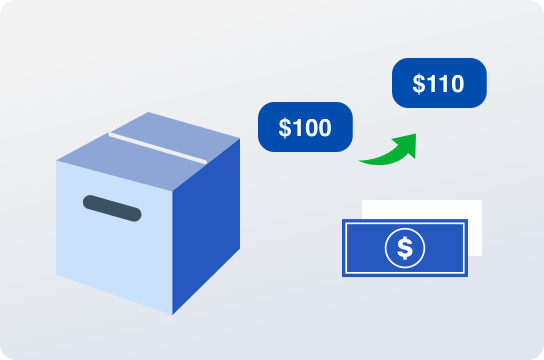
A 10% increase on a $1,500 project adds $150 to contribution if variable cost stays at $450. With $8,000 in fixed costs, the required whole-project volume falls from 8 to 7. Check whether customers will accept the change.
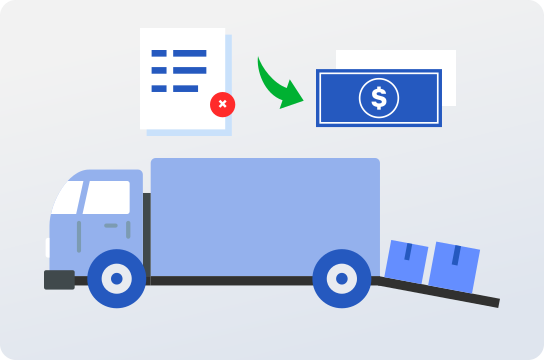
Compare supplier rates, payment methods, and delivery processes. Every dollar saved per unit adds a dollar to contribution when price stays the same. Avoid savings that increase rework or reduce quality.
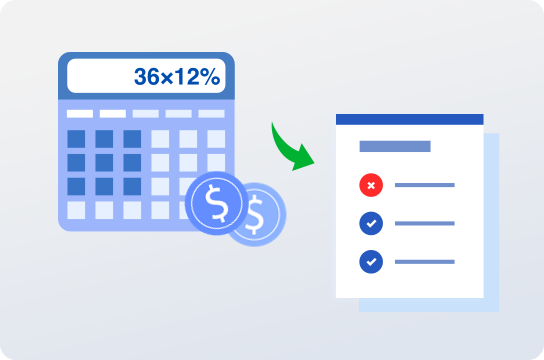
Review rent, unused subscriptions, and fixed commitments. Lower overhead reduces the contribution you need to cover each period. Check whether cuts limit the capacity you need to meet your sales target.
Divide fixed costs by contribution margin per unit: Fixed costs ÷ (Price − Variable cost). Theoretical break-even revenue equals the unrounded volume multiplied by price. For a profit goal, add target profit to fixed costs before dividing. Use the same accounting period for fixed costs and target profit.
Contribution margin is selling price minus variable cost per unit. It covers fixed costs first, then contributes to profit before income tax. The contribution margin ratio is that margin divided by selling price, expressed as a percentage.
There is no universal target. Compare your margin with your fixed costs, available capacity, expected sales, and businesses with similar cost structures. A higher ratio means less theoretical revenue is needed to cover the same fixed costs, but it does not guarantee healthy demand or cash flow.
Yes. Select invoices, clients, or billable hours. Match the price and variable costs to the same unit. Use a stable mix and weighted averages if services have different prices and delivery costs. If projects have multiple invoices, keep your unit definition consistent.
If price equals variable cost, each sale contributes zero toward fixed costs. If price is below variable cost, each sale increases the loss. Positive fixed costs cannot be recovered in either case. With zero fixed costs, zero sales gives zero profit; a positive profit target still cannot be reached with a non-positive margin.
Raise price, reduce variable cost per unit, or reduce fixed costs. In a business with multiple offerings, shifting toward higher-margin work may also help if the sales mix is sustainable. More sales help reach the threshold but do not lower it by themselves.
No. It estimates the sales needed to cover the costs included in the model. Use a cash flow forecast for payment delays, loan principal, capital purchases, and other cash movements. Faster collection can improve liquidity without changing the break-even calculation.
Round indivisible products, invoices, and clients up: 7.62 invoices means you need 8. This calculator rounds billable hours up to 0.01 hour. If you bill in 15-minute increments, round the result up to the next 0.25 hour. Theoretical revenue uses the exact unrounded threshold.

