


Interchange
Issuer's fee
Paid to the cardholder's bank. The amount varies by card, merchant category and transaction type, including whether the card is present.
See what it costs to get paid by card. Choose a processor and enter your invoice amount to estimate your processing fee, net payout and effective rate. Add your monthly volume to project costs, or work backward from the amount you want to receive.
Compare the full cost. The effective rate includes monthly account fees spread across your transactions. Monthly and annual estimates assume every payment is the invoice amount entered, with the same volume and rate throughout the year.
Transaction fees only. Monthly subscriptions and additional product fees are excluded.
| Processor & channel | Base rate | Fee | Net payout |
|---|---|---|---|
| Square Free — online / invoice | 3.3% + $0.30 | $49.80 | $1,450.20 |
| Square Free — in person | 2.6% + $0.15 | $39.15 | $1,460.85 |
| Square — manual / card on file | 3.5% + $0.15 | $52.65 | $1,447.35 |
| Stripe — online (Payments only) | 2.9% + $0.30 | $43.80 | $1,456.20 |
| Stripe — in person | 2.7% + $0.05 | $40.55 | $1,459.45 |
| Stripe — manually entered | 3.4% + $0.30 | $51.30 | $1,448.70 |
| PayPal — standard card payment | 2.99% + $0.49 | $45.34 | $1,454.66 |
| PayPal Checkout / Venmo | 3.49% + $0.49 | $52.84 | $1,447.16 |
| Shopify Basic — standard online card | 2.9% + $0.30 | $43.80 | $1,456.20 |
| Stripe — ACH Direct Debit | 0.8% (cap $5) | $5.00 | $1,495.00 |
A highlighted row matches the selected preset. Custom rates are not included in this comparison.
Card acceptance involves three main cost layers. A flat-rate processor bundles them into the rate you see; interchange-plus pricing separates pass-through costs from the processor's markup.
Interchange
Paid to the cardholder's bank. The amount varies by card, merchant category and transaction type, including whether the card is present.
Network fees
Fees for the payment network, such as Visa or Mastercard. These can include percentage charges and other transaction-related fees.
Processor Markup
The processor's charge for accepting payments. It may be a percentage, a fixed transaction fee, a subscription or a combination.
The transaction fee on a single payment has two parts: a percentage of the amount and a fixed per-transaction charge. Follow these three steps to estimate the full cost of a payment.
Multiply the payment amount by your rate. On a $1,500 invoice at 2.9%, the percentage fee is $43.50.
Add the per-transaction charge. With a $0.30 fixed fee, the total is $43.80. If your contract has a cap, apply it to the transaction fee.
Divide account and gateway costs by the monthly payment count. Add that allocation to the transaction fee, then divide by the invoice amount for the effective rate.
Fee = (amount × rate ÷ 100) + fixed fee
Capped fee = min(fee, transaction cap)
Monthly cost = (fee × transactions) + monthly fees
Effective rate = monthly cost ÷ monthly sales × 100
If your processor quotes a flat rate, do not add interchange again. A bundled rate such as 2.9% + $0.30 already includes the underlying card costs. This calculator models your combined rate; it does not predict card-by-card interchange charges.
A $1,500 invoice at 2.9% + $0.30, with 40 identical payments a month and no monthly fees:
Run the same $1,500 at 3.3% + $0.30 (Square's online/invoice rate) and the fee becomes $49.80 — a $6 difference per invoice, or $2,880 a year at 40 invoices a month.
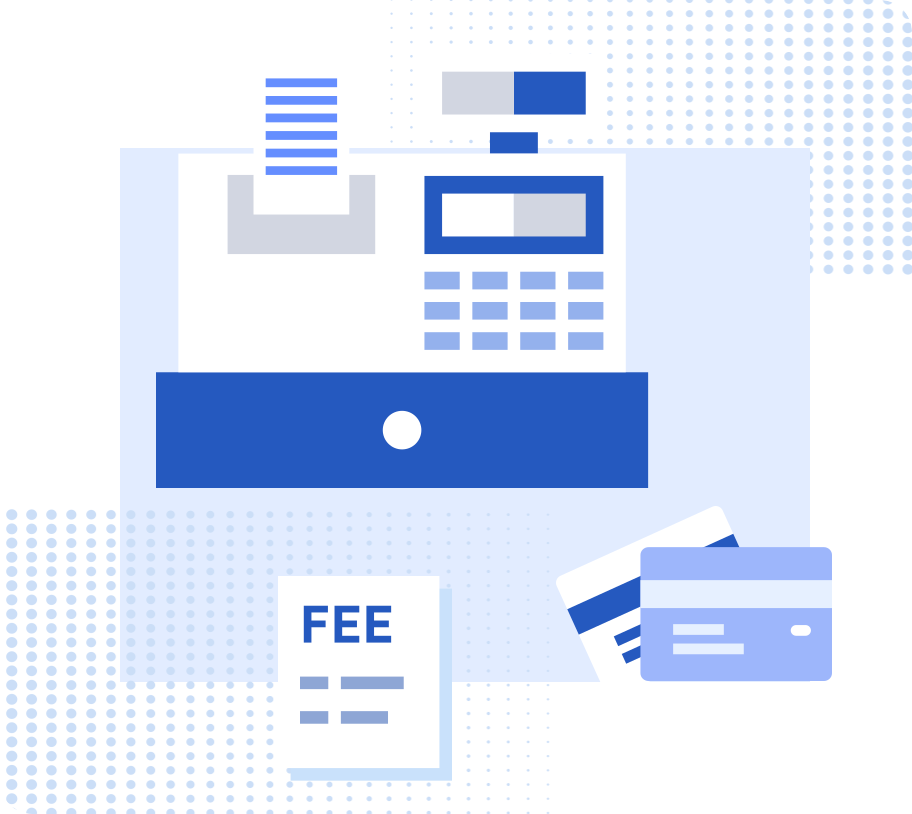
Selected U.S. domestic rates, checked September 30, 2026. Choose the exact plan and payment channel that applies to your business.
| Processor | In person | Online / invoice | Monthly base cost |
|---|---|---|---|
| Square Free plan | 2.6% + $0.15 | 3.3% + $0.30 | $0 |
| Stripe Standard Payments | 2.7% + $0.05 | 2.9% + $0.30 Invoicing software is extra | $0 for Payments |
| PayPal | 2.29% + $0.09 PayPal POS | 2.99% + $0.49 standard cards 3.49% + $0.49 Checkout / Venmo | $0 for these base options |
| Shopify Payments Basic | 2.6% + $0.10 | 2.9% + $0.30 standard cards Premium cards: 3.5% + $0.30 | $39 monthly $29/mo billed yearly |
| Helcim $0–$50K monthly card volume | IC + 0.40% + $0.08 | IC + 0.50% + $0.25 | $0 base monthly fee |
| Stax Subscription | IC + $0.08 | IC + $0.15 | $99–$199+ Based on annual volume |
| Stripe ACH Direct Debit | — | 0.8%, capped at $5.00 No fixed base fee | $0 for base processing |
IC = interchange. Interchange-plus and subscription rates shown above are not all-in rates. Underlying card costs still apply. Stripe Invoicing Starter lists an additional 0.4% per paid invoice; its Payments preset here excludes that product fee. Source links are in the processor names.
In-person payments often have lower base rates than online payments. A subscription may save money at sufficient volume, but compare its monthly cost, transaction charges and underlying card costs using your actual payment mix.
A credit card surcharge is a fee added to a card payment to offset what you pay to accept it. It is charged to the customer at the point of payment, and it must be disclosed before the transaction is completed.
A surcharge is not the same as a convenience fee. A surcharge applies to paying by credit card; a convenience fee applies to using a payment channel that is not standard for your business, such as paying an online store by phone. Card network rules and state law treat the two differently.
Under the card network rules, a surcharge cannot exceed what you actually pay to accept the card, and it is capped at 3% for Visa and 4% for Mastercard, whichever is lower. Debit and prepaid cards cannot be surcharged in any state. You must give your acquirer at least 30 days' written notice before you begin, and disclose the surcharge at the point of entry, at checkout, and as a separate line on the receipt.
| State | Status | What it means |
|---|---|---|
| Connecticut, Maine, Massachusetts | Prohibited | Do not surcharge credit cards. A cash discount is generally still allowed. |
| Colorado, Oklahoma | Capped at 2% | The surcharge may not exceed the lesser of 2% or your actual cost of acceptance. Colorado also requires posted signage. |
| New York | Disclosure required | The full card price, including the surcharge, must be posted. The surcharge cannot exceed your cost of acceptance; penalties up to $500 per violation. |
| Minnesota, New Jersey, Nevada, South Dakota | Additional requirements | Surcharging is allowed, but state disclosure, signage or cost limits go beyond the network rules. Confirm the current requirements before you start. |
| Louisiana | Debit surcharges banned | State law bans surcharging debit card transactions from August 1, 2026. Credit card surcharging follows the network rules. |
| California, Texas | Statute unenforced | The no-surcharge statutes remain on the books but have been held unconstitutional as applied, and are not enforced. Dual pricing is the safer route. |
| All other states | Network rules apply | Visa 3% / Mastercard 4% cap, no debit or prepaid surcharges, 30-day notice, disclosure at entry, checkout and receipt. |
Sources: Visa and Mastercard published merchant surcharge rules; state statutes and regulators. State surcharge law changes and is frequently litigated — verify the current rule for your state with your processor or an attorney before surcharging.
On an invoice, a surcharge should appear as its own line item so the customer can see the base amount, the fee and the new total separately. If you charge one, disclose it in your payment terms before the invoice is issued rather than adding it after the due date.
This content is for general information only and is not legal advice. Whether and how you can surcharge depends on your state, your card network agreements, and your processor contract.
Large project invoices and small recurring bills feel processing fees differently. Look at the dollars you lose on each payment, as well as the percentage of revenue it represents.
A $5,000 invoice at 2.9% + $0.30 costs $145.30. At this size, the percentage drives most of the cost. Reducing the rate from 3.3% to 2.9%, with the same fixed fee, saves $20.00 on one payment.
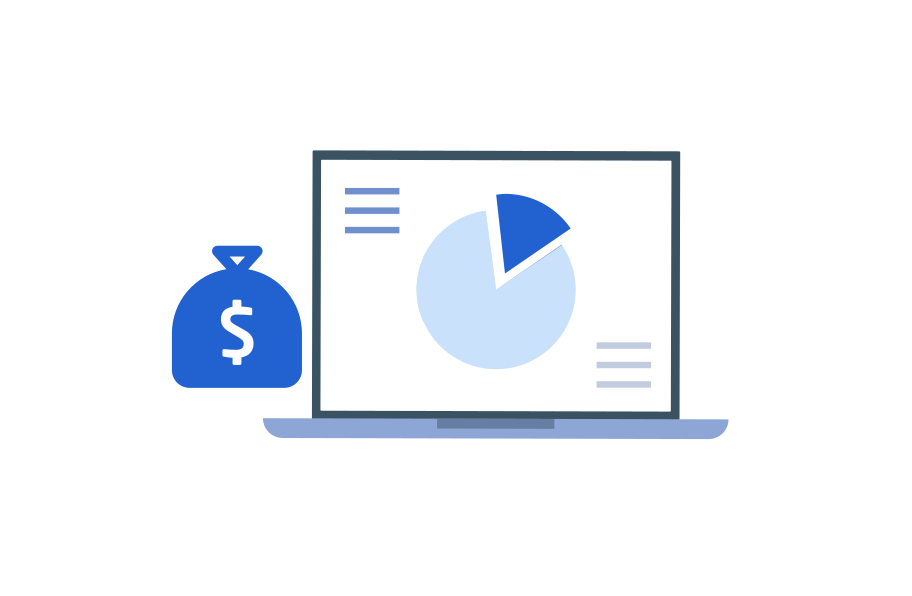
At 2.9% + $0.30, a $60 invoice costs $2.04, or 3.40%. A $20 invoice costs $0.88, or 4.40%. One $300 payment costs $9.00; three $100 payments cost $9.60. Consolidating payments saves fixed fees when the percentage rate stays the same.
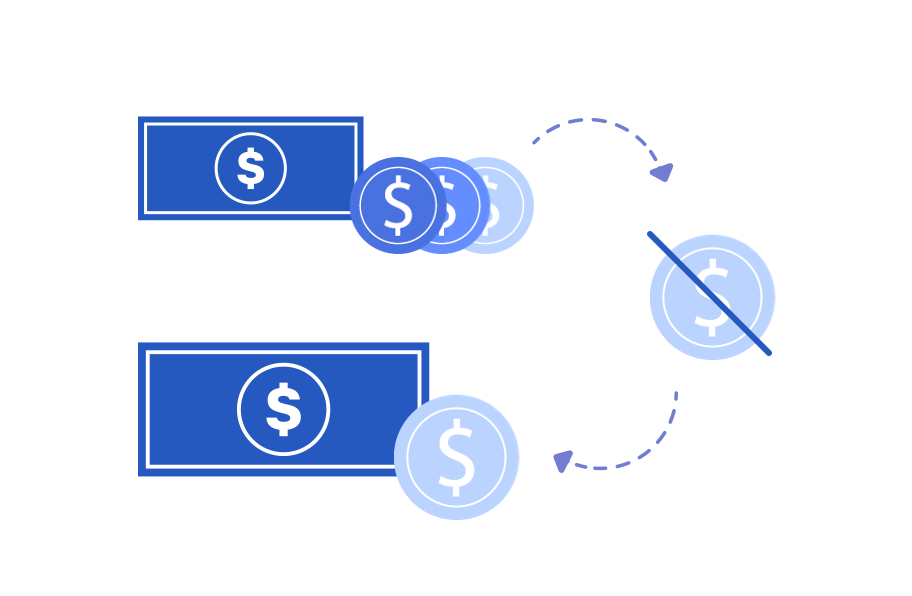
Under Stripe's base ACH Direct Debit pricing, a $5,000 payment costs $5.00 instead of the $145.30 base card fee — a $140.30 difference. Other ACH providers have different caps and minimums. Compare settlement timing, verification, return fees and customer preference before choosing a method.
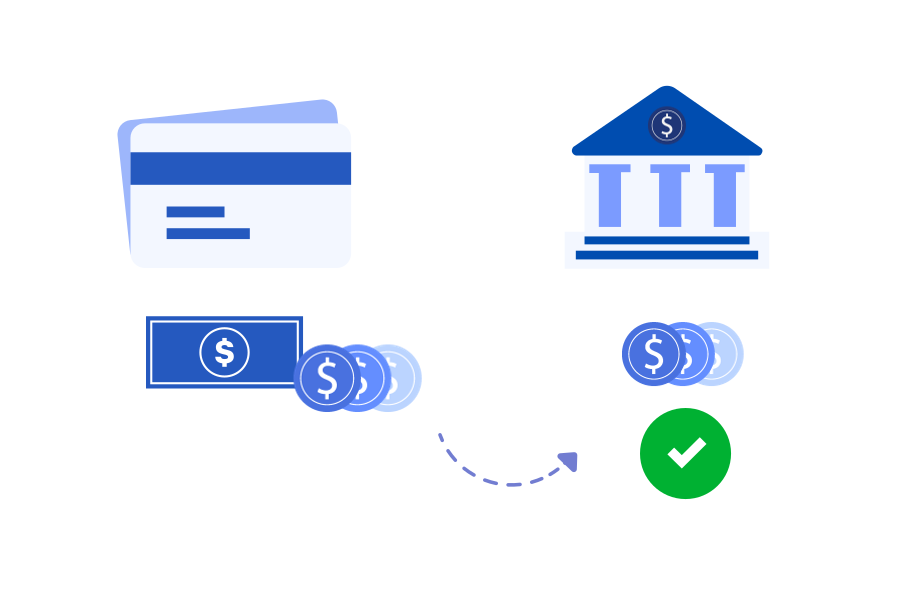
Practical ways to compare, reduce, and plan for what you pay.
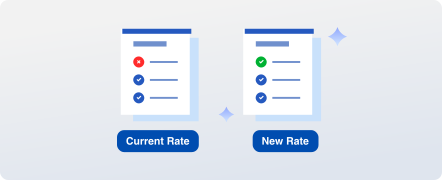
Request a custom or interchange-plus quote and compare the full monthly bill. Savings depend on card mix, volume and all account fees; no single volume threshold guarantees a better deal.
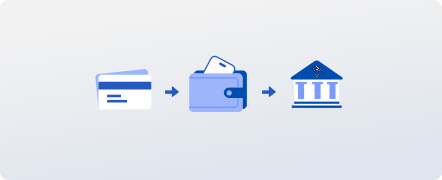
Offer bank transfer where it suits your customers. Use a card-present method for in-person sales when available. Compare the fee with settlement time, convenience and payment reliability.
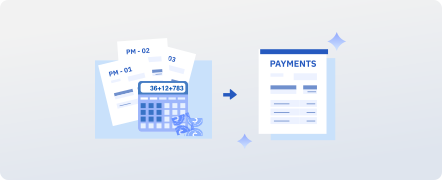
Combine related charges or agree on a billing schedule that reduces transaction count. Fewer payments can reduce fixed fees. Keep payment terms workable for both your business and your customers.

Show payment options clearly. Explain the available methods and any permitted price differences before payment. Include fees in your margin calculation. Monthly software costs and processing fees both affect profitability. Match payments to invoices. Record the gross invoice, fees and net payout separately for reconciliation. Keep approval and delivery records. They can support dispute responses; they do not guarantee that a chargeback will be reversed.
There is no single rate for every business. The selected U.S. base card presets here range from 2.6% + $0.15 to 3.5% + $0.15. Your effective rate also depends on payment size, monthly account costs and any additional charges.
Multiply the payment amount by the percentage rate, then add the fixed transaction fee. Apply any contractual cap. For the effective rate including monthly costs, divide total monthly costs by total monthly payment volume and multiply by 100.
Flat-rate pricing bundles card costs into one rate. Interchange-plus pricing passes through underlying card costs and adds a processor markup. Enter the combined rate in Custom for a simplified estimate; the calculator does not determine interchange for individual cards.
Fixed transaction fees and monthly account costs raise the effective percentage. A $50 payment at 2.9% + $0.30 costs $1.75, or 3.50%, even before allocating any monthly fees.
Without a cap, the starting formula is (target payout + fixed fee) ÷ (1 − rate ÷ 100). To receive $1,000.00 at 2.9% +
$0.30, the calculator gives $1,030.17. It finds the smallest cent-denominated amount that meets your target under its
fee-rounding model. Monthly account costs are excluded.
It can be, particularly for larger payments with a fee cap. Under Stripe's base ACH Direct Debit rate, a $5,000 payment costs $5.00 compared with $145.30 for its base online card rate. Check the exact provider, settlement times, verification costs and return fees.
This calculator does not authorize a surcharge. Applicable law, card-network rules, disclosure requirements and your processor contract determine whether and how one can be charged. See What Is a Credit Card Surcharge?. U.S. Visa debit and prepaid cards cannot be surcharged, and Visa credit surcharges are limited by cost of acceptance and a 3% maximum.
Business payment-processing fees are generally treated as business expenses in the U.S. Deductibility depends on the ordinary-and-necessary expense rules and your circumstances. Keep processor statements and confirm treatment with your tax adviser. IRS business expense guidance explains the general rules.
