


Depreciation Calculator
Build a year-by-year depreciation schedule for your business assets. Compare straight-line, declining balance, double declining balance, sum-of-the-years’ digits and U.S. MACRS. See annual depreciation, accumulated depreciation, remaining value and an estimated tax shield as you type.

Depreciation allocates an asset’s cost without another cash payment. Estimated tax shields assume deductions are available at your entered rate; book depreciation is not automatically a tax deduction.
Good to know — what this model does: Book methods allocate cost minus salvage over the useful life you enter. MACRS uses IRS GDS half-year table rates for 3-, 5-, 7-, 10-, 15- and 20-year property, ignoring salvage. Section 179, bonus depreciation, business-use allocation, vehicle limits, disposals, ADS, mid-quarter and mid-month conventions are excluded. Use this for planning; confirm tax treatment before filing.
Depreciation Schedule & Method Comparison
Method comparison — same asset, different timing
- Straight-line
- Double declining (200%)
- Declining balance (150%)
- Sum-of-years' digits
- MACRS 5-year
Showing the first 6 of 6 reporting years. The selected method is highlighted. MACRS uses the class you selected; it is not inferred from useful life.
| Year | Depreciation | Tax savings | Accumulated | Ending book value |
|---|---|---|---|---|
| 1 | $2,250.00 | $540.00 | $2,250.00 | $22,750.00 |
| 2 | $4,500.00 | $1,080.00 | $6,750.00 | $18,250.00 |
| 3 | $4,500.00 | $1,080.00 | $11,250.00 | $13,750.00 |
| 4 | $4,500.00 | $1,080.00 | $15,750.00 | $9,250.00 |
| 5 | $4,500.00 | $1,080.00 | $20,250.00 | $4,750.00 |
| 6 | $2,250.00 | $540.00 | $22,500.00 | $2,500.00 |
Straight-line · 5-year useful life · half-year start. Estimated tax shields use a constant 24% rate and assume deductions are available. Amounts are rounded to cents; the final year recovers the exact depreciable base.
| Method | Year 1 | Year 3 | % by year 3 | Total tax shield |
|---|---|---|---|---|
| Straight-line | $2,250.00 | $4,500.00 | 50.0% | $5,400.00 |
| Double declining (200%) | $5,000.00 | $4,800.00 | 79.1% | $5,400.00 |
| Declining balance (150%) | $3,750.00 | $4,462.50 | 64.8% | $5,400.00 |
| Sum-of-years' digits | $3,750.00 | $5,250.00 | 70.0% | $5,400.00 |
| MACRS 5-year | $5,000.00 | $4,800.00 | 71.2% | $6,000.00 |
Book methods use your 5-year life, $2,500.00 salvage and half-year start. MACRS uses the explicitly selected 5-year class and ignores salvage; its total base can therefore differ. Total shields sum the annual rounded estimates; they do not measure present value.
What Is Depreciation?
Depreciation spreads the depreciable cost of a tangible asset — machinery, vehicles, equipment or furniture — across the periods in which you use it. It accounts for consumption, wear and obsolescence without trying to predict the asset’s exact market price.
Allocating the cost helps match the expense to the revenue the asset supports, rather than charging an entire capital purchase to one period.
- It is a non-cash expense: recording depreciation does not make another payment.
- Book depreciation follows your accounting policy. Tax deductions follow separate rules.
- For book methods here, the depreciable base is cost minus estimated salvage.
- Land and cash are not depreciated. Many finite-life intangible assets are amortized instead.
Depreciation Methods
For book methods using the same cost and salvage, total depreciation is the same; the timing changes. MACRS ignores salvage, so its total depreciation may differ from the book schedule.
| Method | Pattern | Best for |
|---|---|---|
| Straight-line (SL) | Equal full-year expense | Steady use of buildings, furniture and equipment |
| Declining balance (DB) | Accelerated expense; final adjustment | Assets with more benefit in early years |
| Double declining (DDB) | 200% declining balance | A more accelerated book expense pattern |
| Sum-of-the-years’ digits (SYD) | Declining service-year weights | Assets more productive when new |
| Units of production | Based on usage or output | Machinery tied to production volume |
| MACRS | Prescribed tax recovery rules | Eligible U.S. depreciable property |
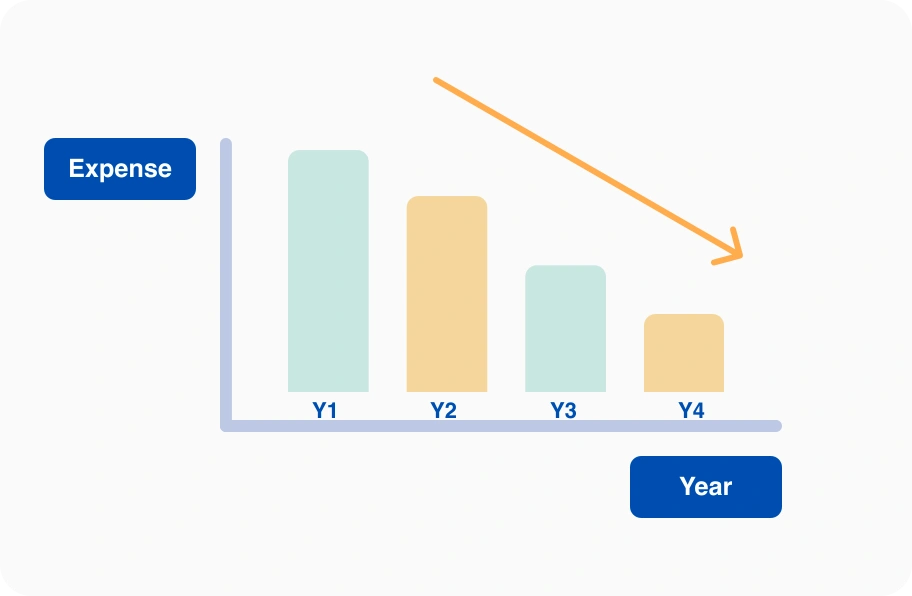
1Straight-Line (SL) Depreciation
Spreads the depreciable base evenly across the useful life. Each full service year carries the same expense.
Annual depreciation=(asset cost – salvage value)÷useful life
Useful for assets whose economic benefits are consumed steadily. A common book method, rather than a requirement for every asset.
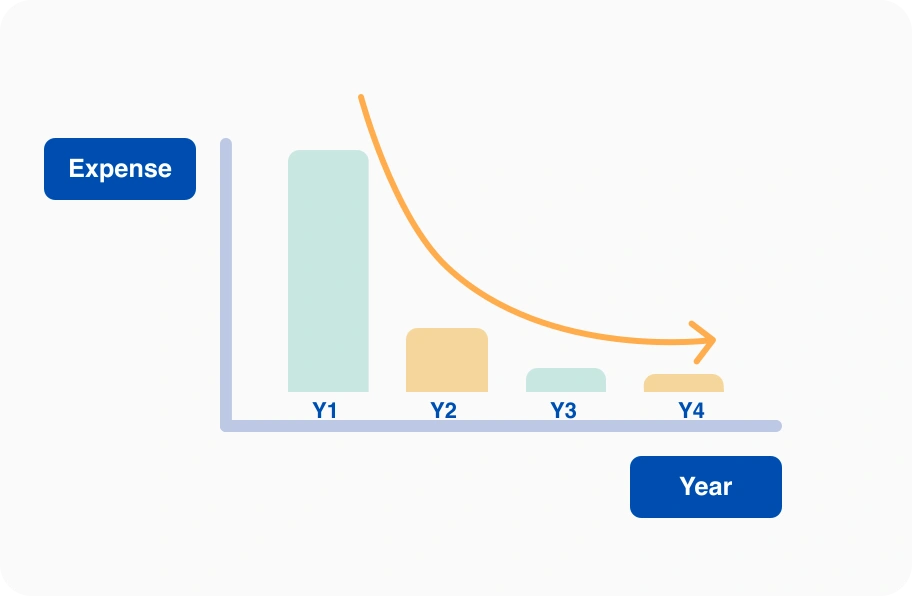
2Declining Balance (DB) Depreciation
Applies a fixed percentage to beginning book value. Double declining balance uses a factor of 2, or 200% of the straight-line rate.
Annual depreciation=beginning book value×factor÷useful life
This calculator caps expense at salvage and posts any remaining balance in the final year. It does not automatically switch book DB to straight-line; the final adjustment may exceed the prior year.
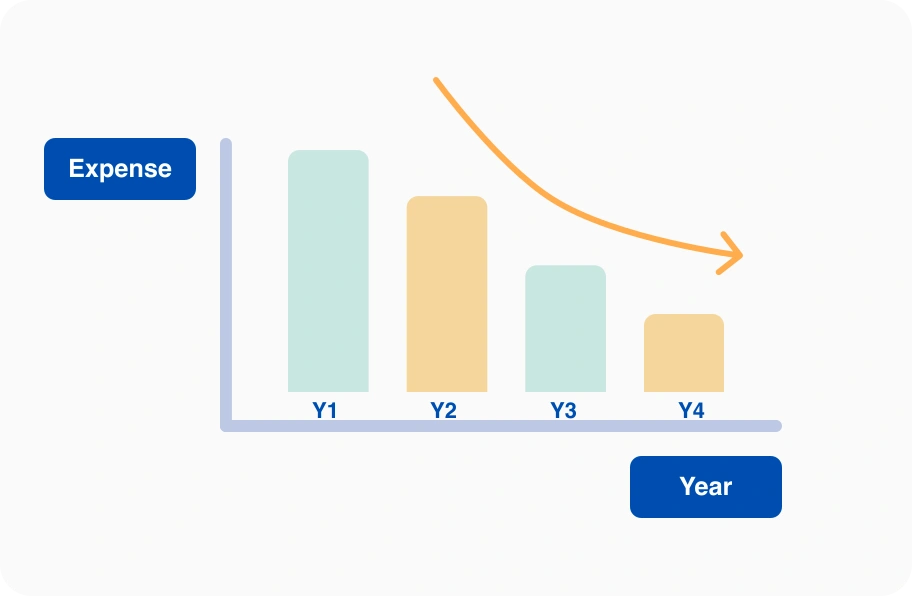
3Sum-of-the-Years’ Digits (SYD) Depreciation
Weights full service-year expense by remaining life divided by the sum of the years’ digits.
Depreciation=(cost – salvage)×remaining life÷sum of digits
Sum of digits=n(n + 1)÷2
For a 5-year life, the weights are 5/15, 4/15, 3/15, 2/15 and 1/15. With a half-year start, calendar years combine adjacent half service-years; the last year receives half of the last weight.
4Units of Production Depreciation
Allocates cost by actual usage rather than elapsed time. It can suit machinery whose wear tracks output, hours or cycles.
Depreciation=(cost – salvage)×(Actual output ÷ Estimated lifetime output)
A press rated for 500,000 cycles is one example. This method is explained for context but is not implemented in the calculator; it requires usage data.
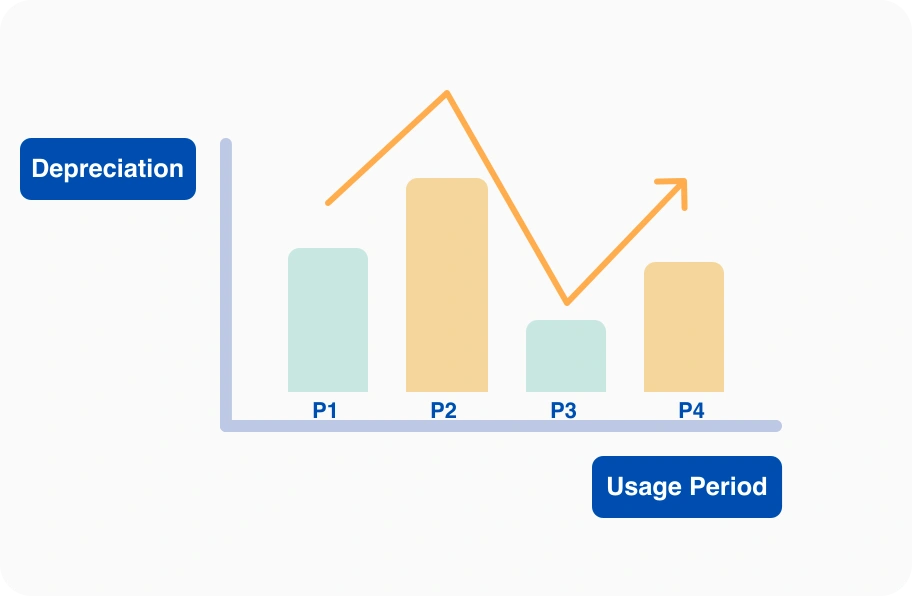
When to Use Each Method
- 01Predictable, even consumption?Straight-line.
- 02More economic benefit early on?DB or DDB.
- 03A fixed accelerated service-life schedule?SYD.
- 04Wear tracks actual output?Units of production.
- 05Calculating U.S. tax depreciation?MACRS, subject to eligibility.
How to Use This Depreciation Calculator
- 01
Pick a method
Choose straight-line, DB, DDB, SYD or MACRS. Select a factor if you choose custom DB.
- 02
Enter the asset cost
Use the full cost to acquire and ready the asset. All amounts in this calculator are USD.
- 03
Enter the salvage value
Use a supported estimate of end-of-life value. MACRS ignores it, but book comparisons use it.
- 04
Set the life and MACRS class
Enter a whole-year book life. Choose the tax recovery class explicitly for MACRS and comparisons.
- 05
Choose a first-year assumption
Use full year or simplified half year for book planning. MACRS always uses the half-year table here. Actual month-based book proration is not supported.
- 06
Add a marginal tax rate
The estimated shield is depreciation times the entered rate. It assumes the expense qualifies as a tax deduction and can be used.
- 07
Read, copy or download the schedule
Inputs update results immediately. Review annual depreciation and ending value, then copy the schedule or download it as CSV.
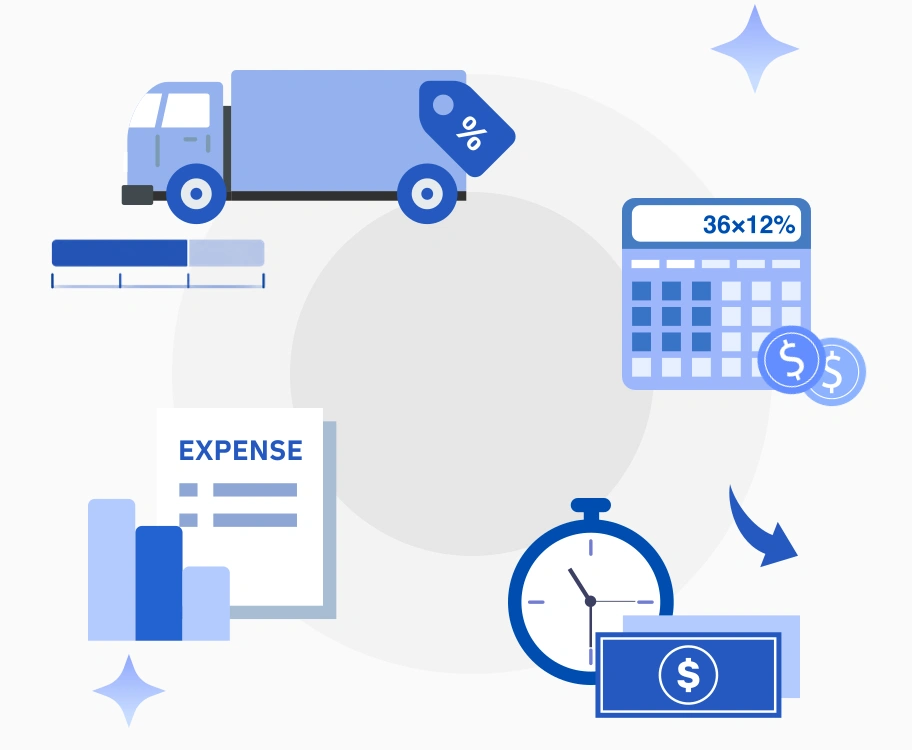
Key Depreciation Terms You Should Know
Hover, focus or tap a term to expand it. Press Escape to close.
Book vs. Tax Depreciation (MACRS)
Businesses often maintain a book schedule for financial reporting and a separate tax schedule. Different lives, methods and deductions can produce different annual expenses.
Book depreciation reflects the expected consumption of an asset’s economic benefits. MACRS applies prescribed U.S. recovery rules; the value remaining in its schedule is tax basis, not financial-statement book value.
Common MACRS Recovery Periods
| MACRS class | Common examples | Year 1 rate* |
|---|---|---|
| 3-year | Over-the-road tractor units | 33.33% |
| 5-year | Vehicles and computers | 20.00% |
| 7-year | Office furniture and fixtures | 14.29% |
| 10-year | Vessels; single-purpose agricultural structures | 10.00% |
| 15-year | Qualifying land improvements | 5.00% |
| 20-year | Farm buildings; certain municipal sewers | 3.75% |
| 27.5-year | Residential rental property | SL / mid-month; not supported |
| 39-year | Nonresidential real property | SL / mid-month; not supported |
*Selected GDS half-year rates from IRS Table A-1. Eligibility and asset classification must be checked separately. This widget does not calculate residential or commercial real-property tax schedules.
The supported 3-, 5-, 7- and 10-year table schedules use 200% declining balance; 15- and 20-year schedules use 150%. Both switch to straight-line within the IRS tables. A mid-quarter convention may be required under the last-quarter basis test, and real property generally uses mid-month. Those conventions are outside this calculator.
Section 179 & Bonus Depreciation 2026
These provisions may accelerate eligible tax deductions beyond the regular MACRS estimate shown above. They are not included in the calculation.
Section 179
$2,560,000
2026 expense limit. The limit begins to reduce above $4,090,000 of qualifying property, reaching zero at $6,650,000. A business-income limit also applies.
Bonus Depreciation
100%
Available for eligible property acquired and placed in service after January 19, 2025, subject to the applicable rules and elections. The widget does not apply this allowance.
Heavy SUV §179 Cap
$32,000
2026 Section 179 limit for qualifying SUVs. Separate passenger-auto limits and vehicle eligibility rules may also apply; the widget does not calculate them.
Where applicable, Section 179 is considered before bonus depreciation and regular MACRS. A larger first-year deduction is not always the preferred election; eligibility, income, other tax rules and state treatment affect the outcome.
Sources: IRS Publication 946, Revenue Procedure 2025-32, §3.24, and IRS bonus depreciation guidance. Tax figures reviewed September 30, 2026.
How Depreciation Affects Your Financial Statements & Invoicing
Depreciation links your fixed-asset register to your financial statements. It can also help you understand the equipment cost behind the work you invoice.
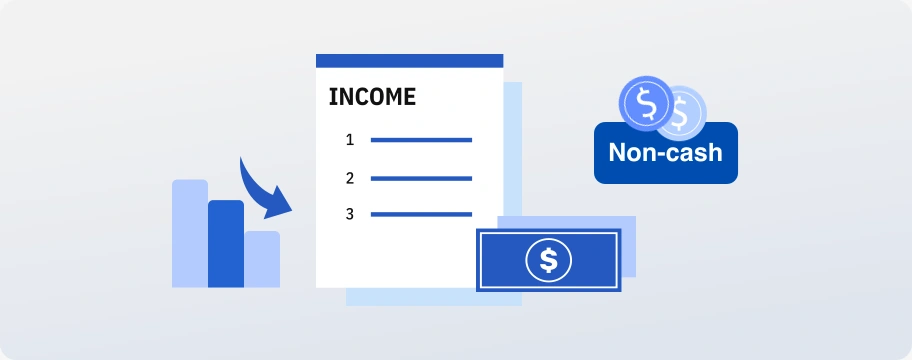
Income statement
Depreciation reduces accounting profit. Depending on the asset’s use, it can be an operating expense or part of production costs. Recording it does not create another cash outflow.
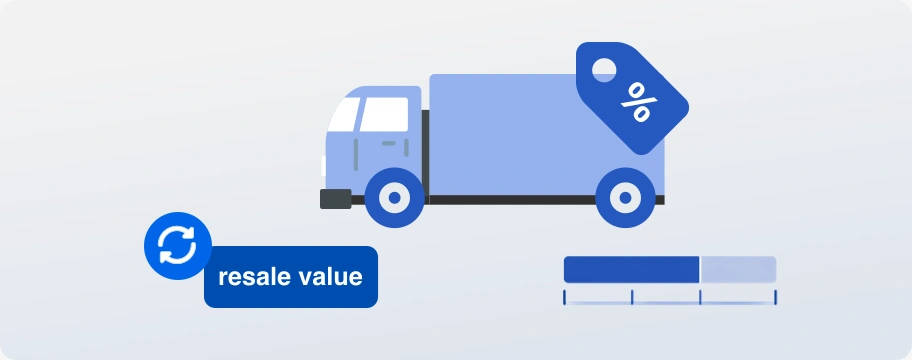
Balance sheet
Cost less accumulated depreciation gives net book value before other adjustments. Carrying value is an accounting measure, not necessarily the asset’s resale value.
Cash flow statement
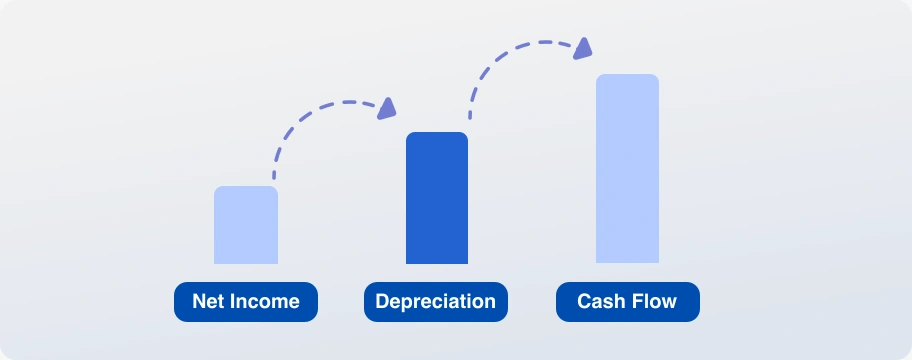
Under the indirect method, depreciation included in net income is added back in operating cash flow. Asset purchases generally appear in investing activities. EBITDA is not the same as cash flow.

Connecting it to invoicing
Equipment use is part of the cost of delivering a service. Allocating a machine’s cost over its useful life can improve costing and pricing; invoice payment does not determine when depreciation is recorded.
| What you bought | Possible treatment | Effect on expense |
|---|---|---|
| $300 routine printer repair | Usually expense | Current-period repair expense |
| $1,800 laptop | Depends on capitalization policy and tax rules | Book expense or depreciation; tax treatment can differ |
| $46,000 van | Book capitalization; tax rules vary | Book depreciation plus any eligible tax elections and limits |
| $49/month software subscription | Usually expense as service is received | Periodic service expense; prepayments can differ |
| $20,000 custom software project | Assess applicable accounting and tax rules | Capitalization, amortization or deductions depend on the project |
Invoice & Asset Tracking Checklist
- Classify vendor invoices consistently. Distinguish capital purchases from ordinary operating costs.
- Attach evidence to each asset record. Keep the purchase invoice and separate evidence of readiness for use.
- Split mixed invoices. Allocate amounts covering both repairs and new equipment.
- Apply a documented capitalization policy. A book threshold is a policy choice; it is not automatically a tax safe-harbor election.
- Reconcile monthly. Tie the fixed-asset register to cost and accumulated depreciation on the balance sheet.
- Include equipment costs in pricing. Annual depreciation divided by expected billable hours can inform costing alongside maintenance and other expenses.

Keep purchase invoices and asset records organized as your business grows.
Explore Invoice ZipRelated: DSO Calculator · All Financial Calculators
Common Depreciation Mistakes to Avoid
Depreciating land
Allocate cost appropriately between land and depreciable buildings or improvements.
Mixing book and tax schedules
Do not treat a MACRS tax-basis schedule as your financial-reporting carrying-value schedule.
Using an unsupported salvage estimate
Use asset-specific evidence. A blanket 10–20% or zero assumption may overstate or understate book expense.
Ignoring the declining-balance floor
Cap expense at salvage and document the final adjustment or any different accounting policy.
Capitalizing every repair
Routine maintenance is generally an expense. Betterments, restorations and adaptations need separate review.
Starting on the purchase date
Use the date the asset is ready and available for its intended use.
Assuming the half-year convention always applies
Check the relevant tax convention, including the last-quarter basis test. A book half-year assumption is not monthly proration.
Assuming every asset gets bonus depreciation
Eligibility and elections matter. Eligible bonus depreciation generally applies unless you elect out; it is not simply an optional election in every case.
Ignoring Section 179 limits
The dollar, purchase-volume and business-income limits can restrict the deduction.

Frequently Asked Questions
Depreciation allocates the depreciable cost of a tangible asset over the periods in which it is used. It is an accounting expense rather than a fresh cash payment.
Annual expense = (cost – salvage value) ÷ useful life. Full service years have equal expense. A half-year start splits the first and last service years across reporting periods.
DDB applies twice the straight-line rate to beginning book value, capped at salvage. This calculator includes a final-year catch-up adjustment and does not automatically switch book DDB to straight-line.
Estimate the expected end-of-life proceeds using the asset’s condition, intended holding period and market evidence. Percentages are planning examples, not universal rules. MACRS ignores salvage.
Land itself is not depreciated. Qualifying buildings and land improvements can have separate depreciation treatment.
Depreciation generally concerns tangible assets; amortization generally concerns finite-life intangible assets. Accounting and tax treatment depend on the asset and applicable rules.
Book depreciation follows the expected economic consumption of the asset under your accounting policy. Tax depreciation follows the applicable tax rules. The ending value in the MACRS schedule is tax basis, not book value.
Choose a book method that reflects the expected consumption of benefits. For tax, determine the required system, classification, convention and any elections. The comparison chart does not establish eligibility.
A half-year start spans six reporting years: one half year, four full years and a final half year. The same idea applies to supported half-year MACRS recovery classes.
It allocates half of the first service-year weight to reporting year one, averages adjacent service-year amounts in the middle years, and allocates half of the final weight to the last reporting year. This avoids shifting the first-year remainder entirely into the final year.
A fixed DB rate may leave an undepreciated balance above salvage at the end of useful life. This calculator posts that balance in the final year. Your accounting policy may instead require a different method or an earlier switch.
They are illustrations calculated at a constant entered rate, assuming the deduction qualifies and can be used. Actual timing, taxable income, elections, state rules and deduction limits can change the result.
No. It shows regular MACRS half-year tables only. Section 179, bonus depreciation, vehicle limits, ADS, business-use allocation, disposals and other tax conventions require separate calculation.
The widget does not calculate 27.5- or 39-year real-property tax schedules or mid-month proration. Do not substitute a rounded whole-year book life for a rental-property tax schedule.
Yes. Copy schedule produces tab-separated text. Download CSV includes the method, input basis, tax rate, convention, scope and every annual row. Values are USD and rounded to cents.
The book depreciable base is zero, so the calculator shows a valid zero-expense schedule. It reports 0.0% depreciated rather than dividing by zero.
Invalid inputs clear the current schedule and disable exports. Cost must be positive, book life must be an integer from 1 to 100, salvage must be between zero and cost, and the tax rate must be from 0% to 100%.
The maximum is $2,560,000, reducing above $4,090,000 of qualifying property. The separate Section 179 SUV limit is $32,000. Other eligibility and business-income rules apply. See the linked IRS sources in the tax section.