


Self-Employment Tax Calculator
Estimate the tax on your self-employment income as a freelancer, contractor, or sole proprietor. Enter your annual net profit and W-2 wages to see Social Security, Medicare, any Additional Medicare Tax on your SE income, and the deductible portion.

The total includes regular SE tax plus any Additional Medicare Tax attributable to your SE income. Only half of regular SE tax is deductible for income tax. This is a planning estimate, before any payments or withholding; use Schedule SE and, when applicable, Form 8959 to file.
What Is Self-Employment Tax?
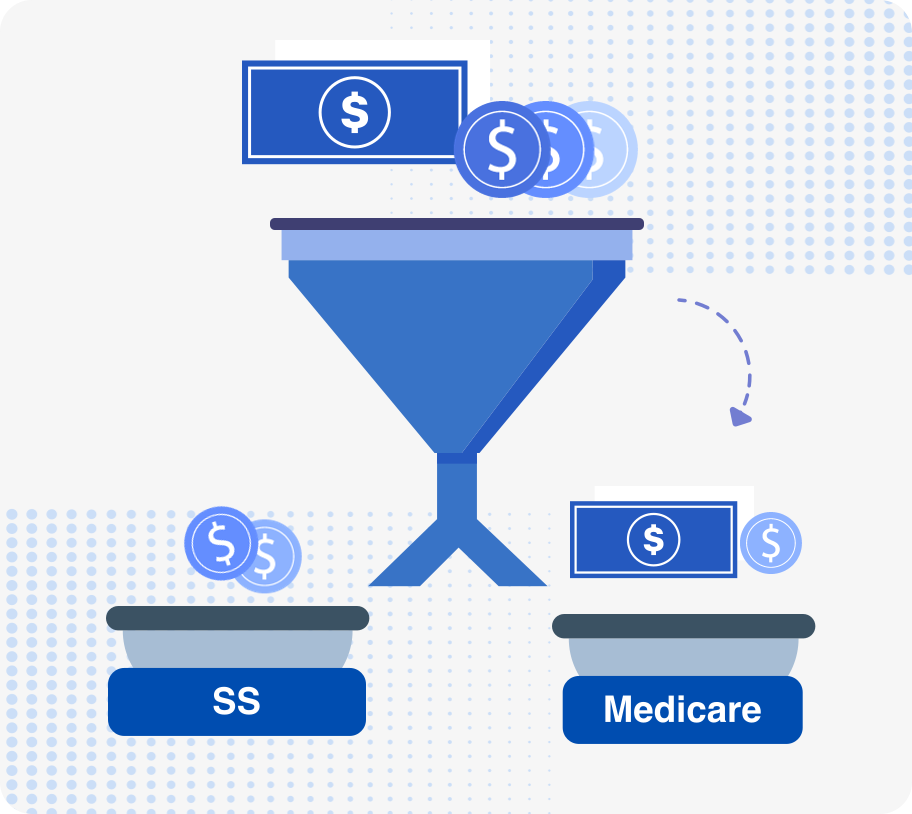
Self-employment tax helps fund Social Security and Medicare. People who work for themselves generally pay both the employee and employer portions, instead of having these taxes withheld through payroll.
The regular combined rate is 15.3% on taxable net earnings, subject to the Social Security limit. Under the regular method, the taxable amount is usually 92.35% of net business profit.
Social Security
12.4%
Applies up to the 2026 limit of $184,500, reduced by your own Social Security wages and tips.
Medicare
2.9%
Applies to all taxable SE earnings. An additional 0.9% may apply above your filing-status threshold.
Regular combined rate
15.3%
Below the limits, this is about 14.13% of net profit after the 92.35% adjustment.
Who Has to Pay Self-Employment Tax?
You generally owe regular SE tax when your taxable net earnings reach $400 for the year. That threshold applies after the 92.35% adjustment — roughly $433.14 in net profit using this tool’s unrounded method.
- Sole proprietors and owners of single-member LLCs taxed as sole proprietorships.
- Freelancers, independent contractors, and gig workers with business income subject to SE tax.
- Some partners and LLC members. Partnership tax treatment varies; use the SE amount determined under your K-1 instructions.

Being paid in cash or receiving no Form 1099 does not remove the tax obligation. A separate rule applies to certain church employee income of $108.28 or more; this calculator does not cover that rule. You may still need to file an income tax return when no SE tax is due.
How to Calculate Self-Employment Tax
- 1
Find your net profit
Subtract allowable business costs from revenue. Combine profits and losses from your businesses before entering the total.
- 2
Apply the 92.35% adjustment
Multiply positive net profit by 0.9235. If that result is below $400, this regular-method estimate produces no SE tax.
- 3
Calculate each tax component
Apply 12.4% up to your remaining Social Security limit and 2.9% to all taxable net earnings. Calculate Additional Medicare Tax separately when the threshold is exceeded.
E = positive net profit × 0.9235
SS = min(E, max(0, $184,500 − your SS wages)) × 12.4%
Medicare = E × 2.9%
Regular SE tax = SS + Medicare
(Regular tax is $0 when E < $400.)
Quick Example
A single freelance designer has $70,000 net profit and no W-2 wages:
- $70,000 × 92.35% = $64,645.00 net earnings
- Social Security: $8,015.98
- Medicare: $1,874.71
- Total estimated tax: $9,890.69
- Deductible portion: $4,945.34
How to Pay Self-Employment Tax
Federal tax is paid throughout the year through withholding, estimated payments, or both. Filing your return reconciles those payments with your final tax liability.
Report with Schedule SE
File Schedule SE with your individual income tax return to report regular SE tax. Use Form 8959 for any Additional Medicare Tax.
Make estimated payments
Use Form 1040-ES to plan payments for income tax and SE tax together. A quarter of this calculator’s total is not necessarily your required payment.
Standard estimated-payment dates for tax year 2026:
- Payment 1
- Payment 2
- Payment 3
- Payment 4
Plan for your full tax bill
- Estimated payments are generally needed if you expect to owe $1,000 or more after withholding and credits and those amounts do not meet the applicable IRS payment threshold.
- Common benchmarks are 90% of the current year’s tax or 100% of the prior year’s tax; some higher-income taxpayers use 110%. Timing and exceptions matter.
- Set a reserve based on your expected income tax, SE tax, state tax, and credits. 25–30% is not a guarantee that you have saved enough.
How to Manage Your Self-Employment Tax
Keep business expenses accurate and distinguish SE tax savings from income tax deductions. These three areas can help you plan.

Track
eligible expenses
Allowable business expenses reduce net profit and can reduce SE tax. Keep receipts and records for costs such as software, equipment, mileage, and qualifying home office use.

Review your business structure
An S corporation must pay reasonable compensation for services. Salary is subject to payroll taxes; distributions generally are not subject to SE tax. Discuss costs and eligibility with an adviser before electing.
Separate income tax deductions
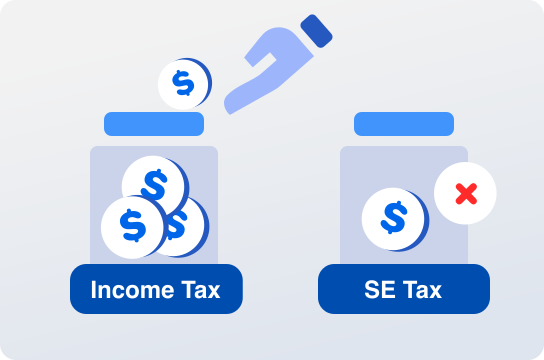
Eligible owner contributions to a SEP or solo 401(k) may reduce income tax. They generally do not reduce the SE tax calculated here. Contribution limits depend on your earnings and plan rules.
Keep your invoices and business records organized throughout the year so your tax estimate starts with accurate numbers.
Explore Invoice ZipFrequently Asked Questions
The regular rate is 15.3% of taxable SE earnings: 12.4% Social Security up to your remaining annual limit plus 2.9% Medicare. It is not a flat 15.3% of gross revenue. A separate 0.9% Additional Medicare Tax may apply.
Generally, people with at least $400 of taxable net earnings from self-employment. Sole proprietors and freelancers commonly qualify; partners and certain other workers have additional rules. This tool uses the regular method for one person.
SE tax pays into Social Security and Medicare. Federal and state income taxes are separate and depend on your broader tax return. This calculator estimates only tax on SE income and does not subtract withholding or estimated payments.
You can generally deduct half of regular SE tax as an adjustment to income on Schedule 1 (Form 1040). The Additional Medicare Tax is not included in that deduction. The deduction reduces income tax calculations, not SE tax itself.
The standard 2026 deadlines are April 15, June 15, September 15, and January 15, 2027. Whether you need to pay depends on expected tax after withholding and credits, payment thresholds, and any applicable exceptions.
It is the regular-method adjustment from business profit to taxable SE earnings. For example, $70,000 of net profit becomes $64,645 before applying the tax rates.
Your own Social Security wages reduce your $184,500 limit. Medicare wages reduce the threshold for Additional Medicare Tax: $250,000 for married filing jointly, $125,000 for married filing separately, and $200,000 for other statuses. For a joint return, include your spouse’s Medicare wages. If your spouse also has SE income, use a combined Form 8959 calculation.