


Deposit Invoice Template
Request an upfront payment with a clear record of what the customer is paying for and when the remaining balance will be due. Show the agreed project price, the deposit amount, and the payment instructions in one place.


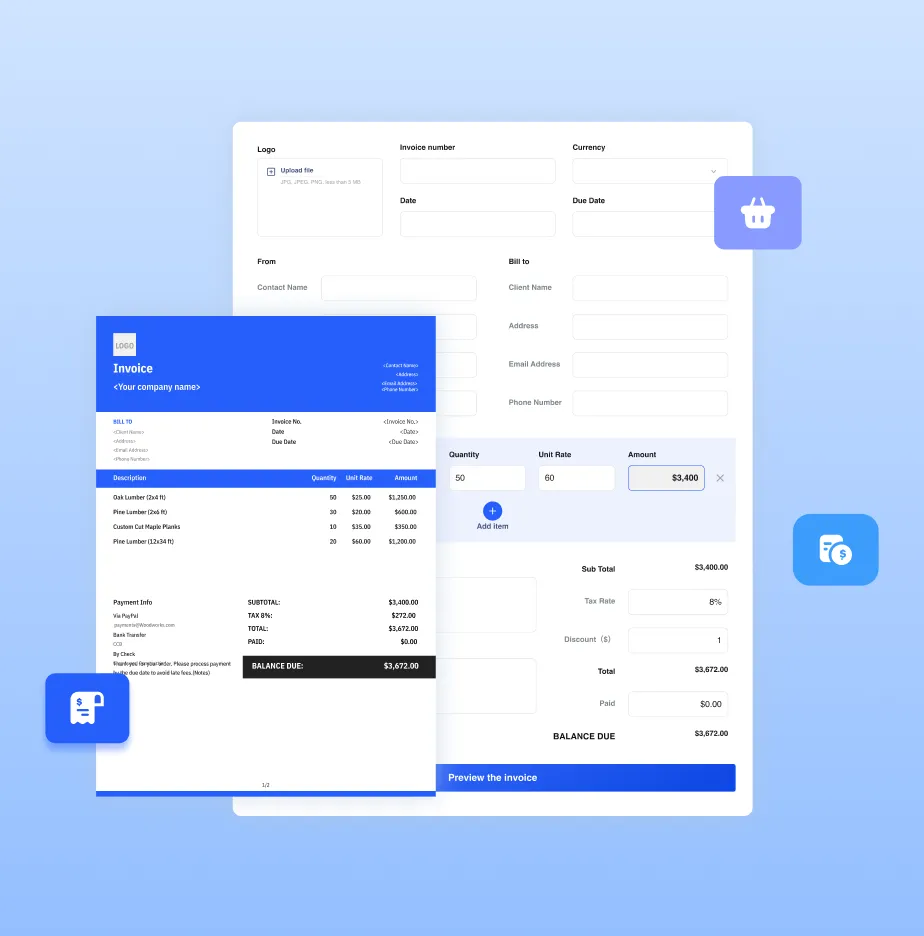
Create a Deposit Invoicewith a Live Preview
Enter the customer, project, and agreed upfront amount, then review how the deposit relates to the full price before sending the payment request.
Invoice Details
Add the reference and dates for this deposit request.

JPG, JPEG, PNG, less than 5 MB
Business & Customer
Identify the business requesting payment and the customer responsible for it.
From
Bill to
Deposit Details
Describe the project, booking, or order covered by the upfront payment.
Amount & Terms
Show the deposit due now and explain how it relates to the remaining balance.


Reuse Saved Information in Invoice Zip
Use saved items and client information to create an invoice in just a few taps.
What Is a Deposit Invoice?
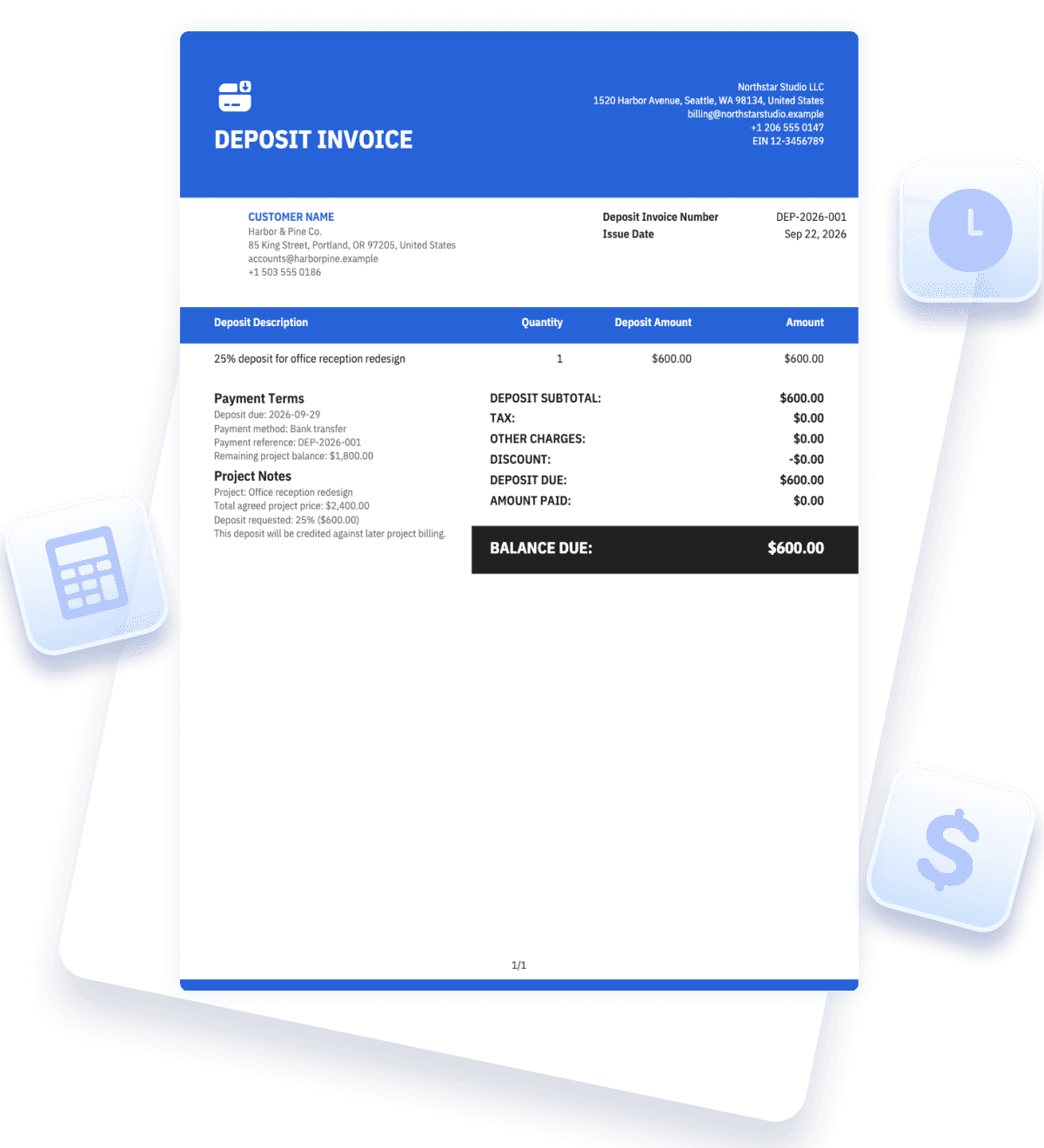
A deposit invoice requests an upfront portion of an agreed price before work begins, a booking is secured, or an order is fulfilled. If a project costs $2,400 and the agreed deposit is 25%, the invoice requests $600 and identifies the $1,800 that remains for later billing.
The document should make clear that the deposit is part of the agreed total rather than an additional charge. It is a payment request, not proof that money has already been received; record the payment separately after it arrives.
A clear deposit invoice links the customer, project, accepted proposal or order, and payment milestone. Reuse that reference on later invoices so the customer can see how the upfront amount is applied and your records do not charge it twice.
Cancellation, refund, and scheduling rules depend on the agreement and applicable requirements. State only the terms actually agreed for the transaction, and have any important policy reviewed through the business's normal legal and accounting process.
- 01
Agreed upfront payment
Show the fixed amount or percentage currently due.
- 02
Full-price context
Connect the deposit to the total agreed price and future balance.
- 03
Linked billing record
Carry the same project reference and deposit credit into later invoices.
What to Include on a Deposit Invoice
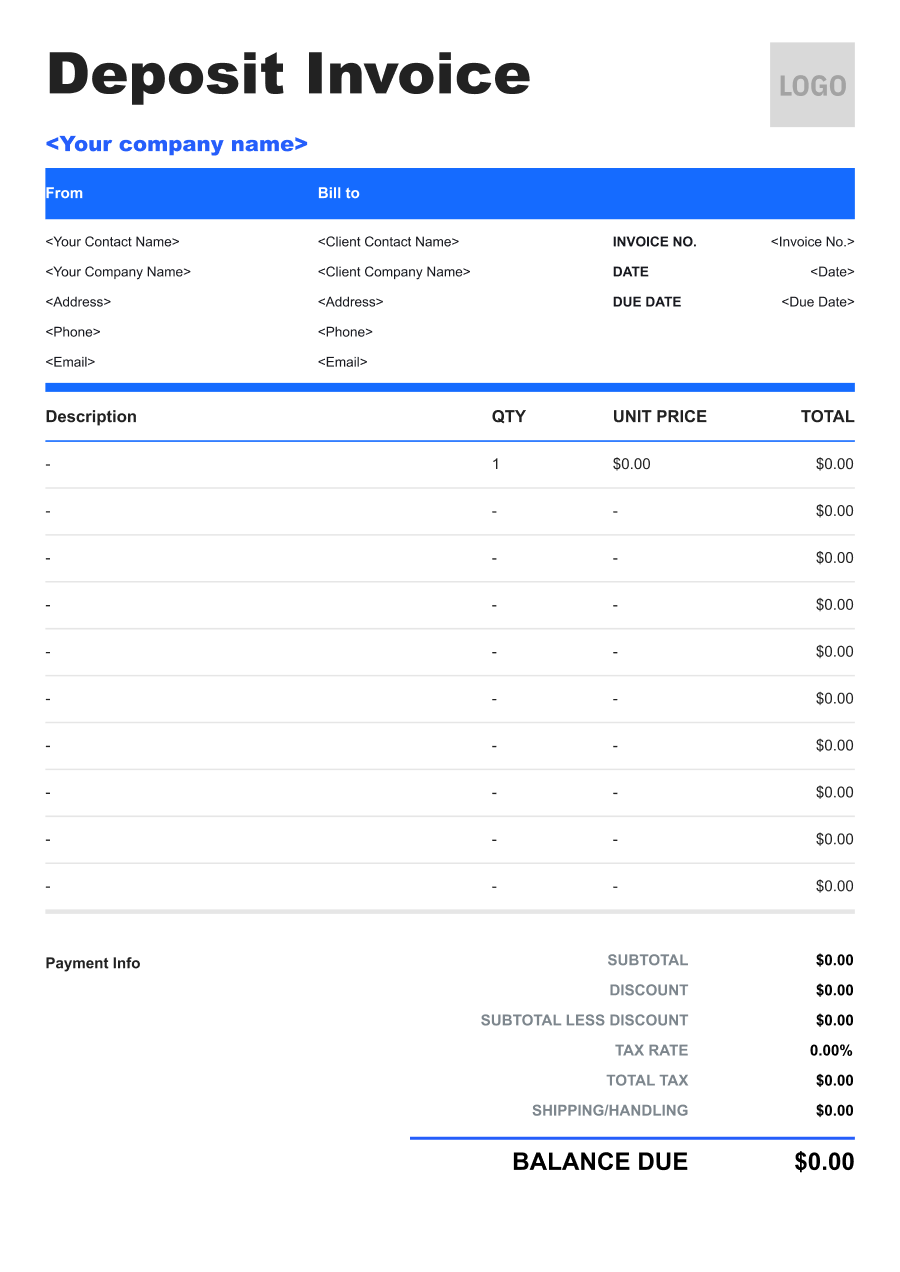
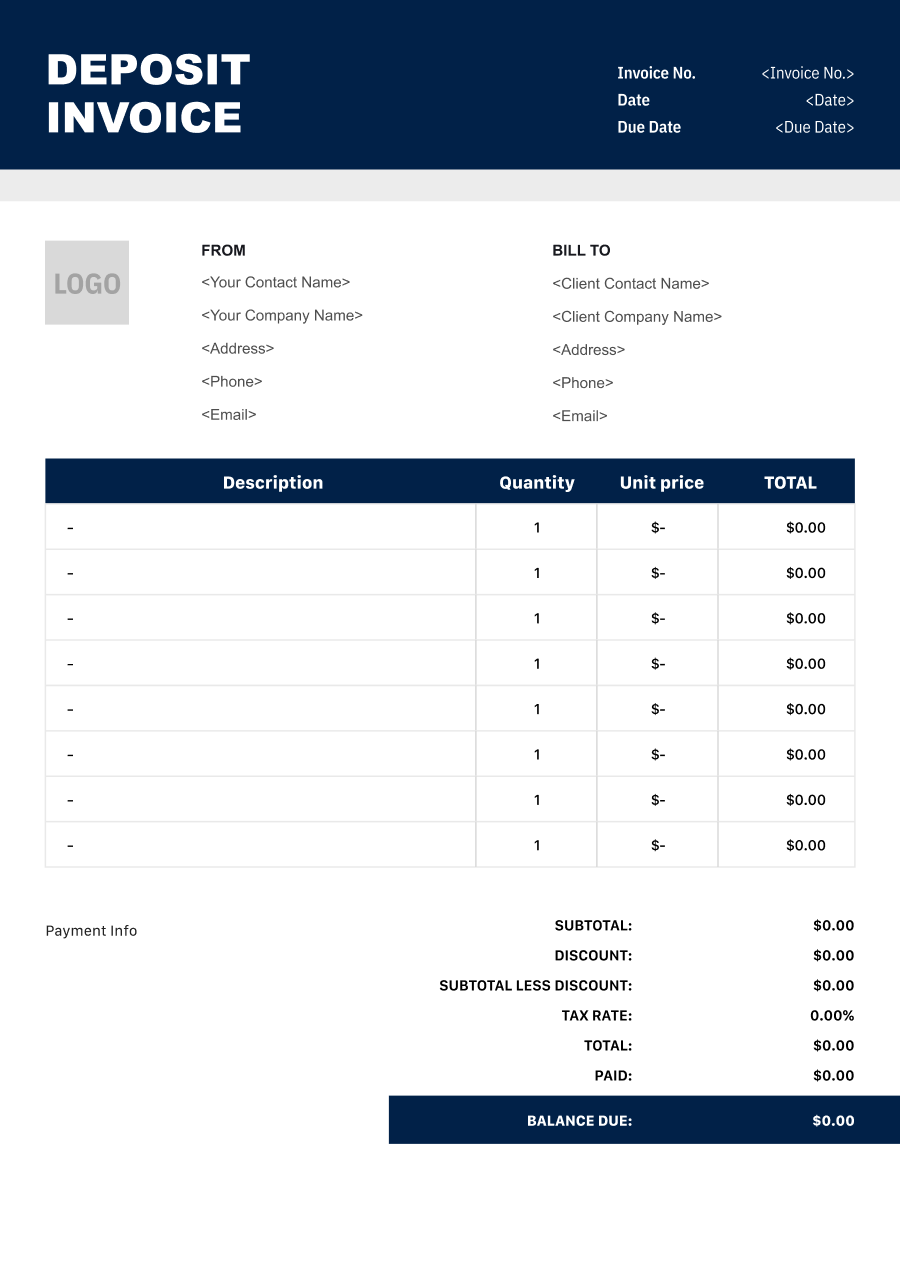
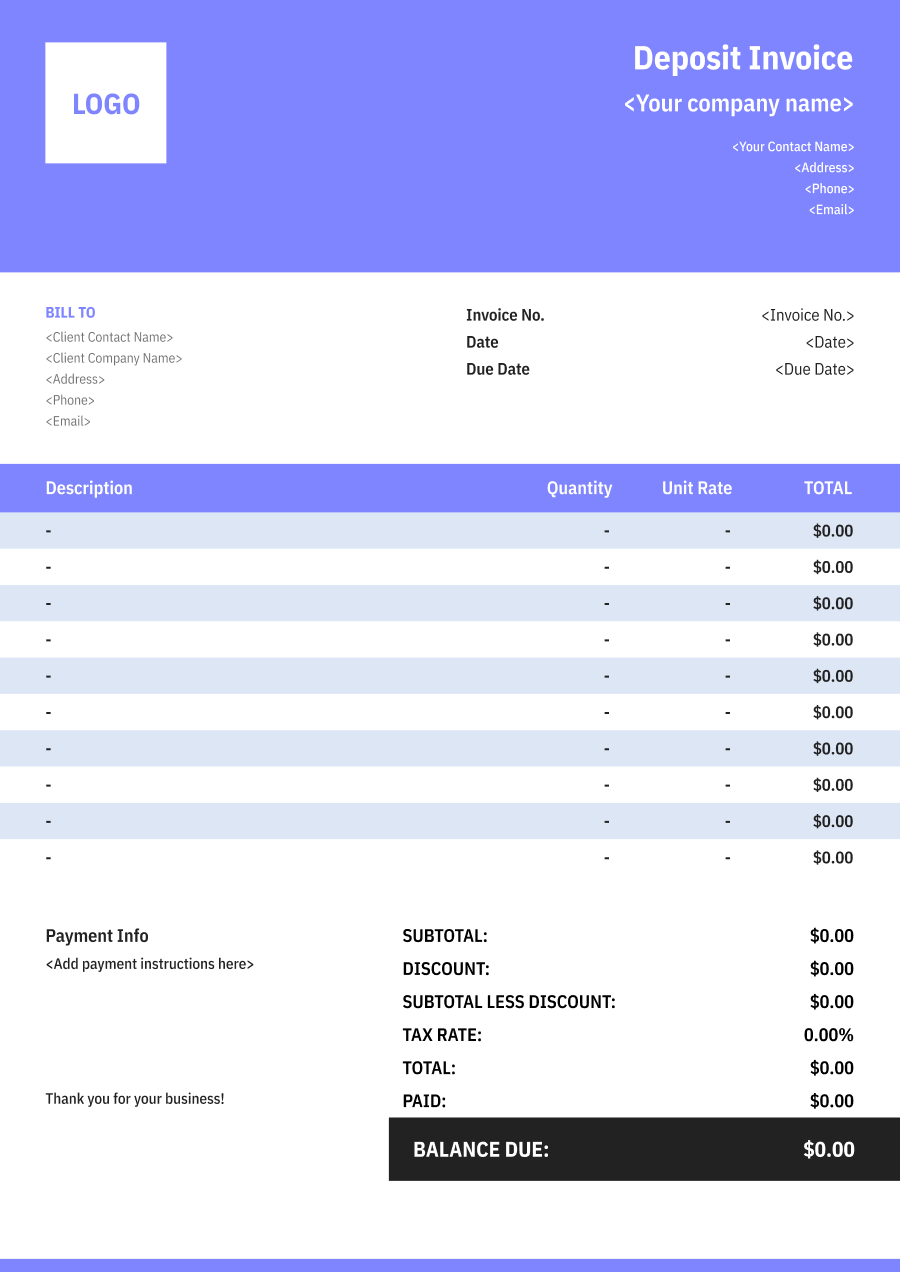
Give the customer enough context to verify the calculation and understand what the upfront payment reserves or starts. The amount due now should be visually separate from the full project price.
- 1
Business and Customer Details
List both parties' names, addresses, and useful contact details so the request can be matched to the correct customer account.
- 2
Invoice Number and Dates
Use a unique deposit invoice number, issue date, and due date. Keep the same project or order reference on every later billing document.
- 3
Project or Order Description
Name the service, booking, or custom order precisely. A description such as “Deposit for office redesign under proposal OR-104” is clearer than “advance payment.”
- 4
Total Agreed Price
Show the price used as the basis for the deposit when it has been agreed. If the scope is provisional, describe that status accurately instead of presenting an uncertain total as final.
- 5
Deposit Amount or Percentage
State the exact currency amount due. For a percentage deposit, also show the percentage and the agreed price to which it applies.
- 6
Remaining Balance
Show the expected amount remaining after the deposit, while keeping it distinct from the amount payable on this invoice.
- 7
Due Date and Payment Method
Tell the customer when and how to pay, including the payment reference needed to match the transfer to this invoice.
- 8
Agreed Terms and Notes
Include the relevant milestone and a concise reference to the accepted agreement. Do not introduce new refund or cancellation terms at the invoice stage.
Common Uses of a Deposit Invoice
Deposit invoices are useful when an upfront payment is part of the actual customer agreement and needs its own traceable billing record.
- 01
Contractor project start
A contractor requests the agreed amount needed to reserve labor or purchase project-specific materials.
- 02
Event booking
A venue, photographer, or vendor bills the upfront amount that secures a limited date.
- 03
Custom order
A maker requests a deposit before purchasing materials or beginning work on an item made for one customer.
- 04
Professional service engagement
A consultant or designer bills the first agreed portion before beginning a multi-stage assignment.
- 05
Milestone payment plan
A larger engagement separates the initial deposit from later progress and final invoices.
The reason for an upfront payment differs by business, but the invoice should always match the terms the customer accepted. Give each job its own reference and revise the request if the scope changes before payment. After the deposit is received, preserve the payment record and apply the amount once—as a credit—when later billing is prepared.
Deposit Invoice vs. Final Invoice
Both documents can describe the same project, but they request payment at different stages. Keeping the references and credits connected prevents duplicate billing.
| Question | Deposit invoice | Final invoice |
|---|---|---|
| When is it sent? | When the agreed upfront payment becomes due. | When the final balance becomes due under the agreement. |
| What amount is due? | The stated deposit amount or calculated percentage. | The remaining billable amount after applicable credits. |
| How does it show the project price? | Provides context for how the deposit was calculated. | Reconciles the agreed or approved final price with prior payments. |
| How are earlier payments handled? | Usually begins the payment history. | Shows the paid deposit and other earlier payments as credits. |
A paid deposit invoice is still not the same as a final invoice. One documents the upfront request; the other closes or advances the billing sequence. Before issuing the final invoice, confirm the amount actually received, approved scope changes, taxes or charges, and the balance that remains. If the customer paid only part of the deposit, credit only the amount received.
Deposit Invoice Tips for Clear Upfront Billing
A deposit request works best when the customer can verify the amount due now without confusing it with the project's full price.
- 01
Show the calculation
For a percentage deposit, display the base price, percentage, and resulting amount instead of asking the customer to calculate it.
- 02
Separate due now from due later
Make the deposit the current balance due and label the remaining project balance as future billing, not an overdue amount.
- 03
Use one project reference
Carry the proposal, booking, or job number into later invoices and payment records so every document can be reconciled.
- 04
Apply the credit once
After payment, record the amount received and deduct it from later billing only once. Review partial payments before marking the deposit paid.
Deposit Invoice FAQs
Is a deposit invoice the same as a receipt?
No. The invoice requests the deposit; a receipt or payment record confirms that money was received. Keep both connected by invoice number or project reference.
Should a deposit be a percentage or a fixed amount?
Either can work when it matches the agreement. If it is a percentage, show the exact currency amount and the price used for the calculation.
Do I need to show the full project price?
Showing it usually gives useful context and makes the remaining balance easier to understand. Keep that total separate from the amount currently due.
What happens to the deposit on a later invoice?
Show the amount actually received as a credit against the relevant project total. If there are several deposits or milestone payments, list them clearly enough to trace.
Can I use this template for milestone payments?
Yes. Name the milestone, show the amount due at that stage, and reference earlier payments. A later milestone request should not simply repeat the original deposit line.
Other Free Resources

Try Invoice Zip Today
Start Sending Invoices, Building Reports, Saving Office
Time and Get Paid Faster.