


Progress Invoice Template
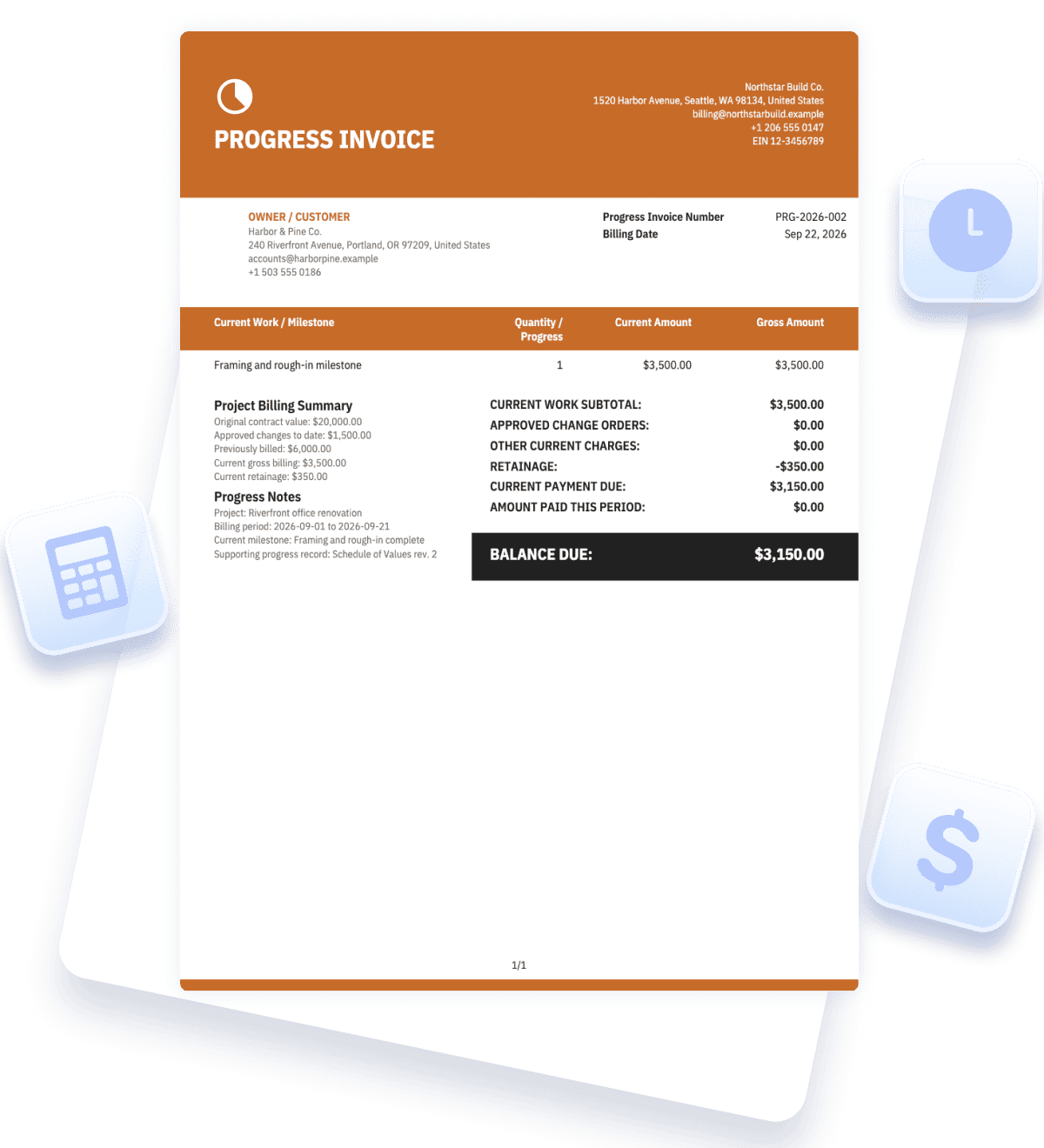
Bill an approved portion of a longer project while showing the contract value, work completed, earlier billings, retainage, and amount due for the current period. Keep every stage connected to one project record.
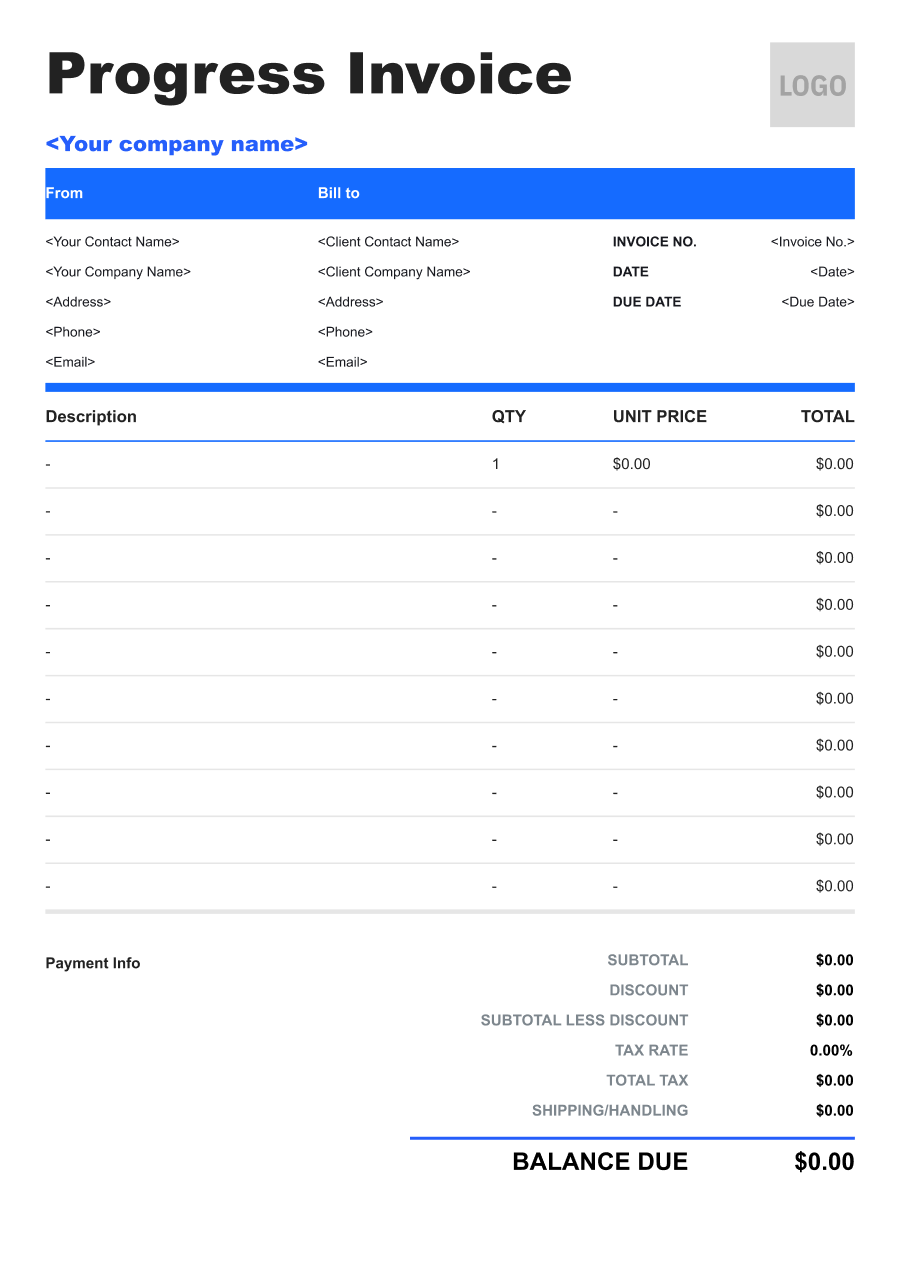


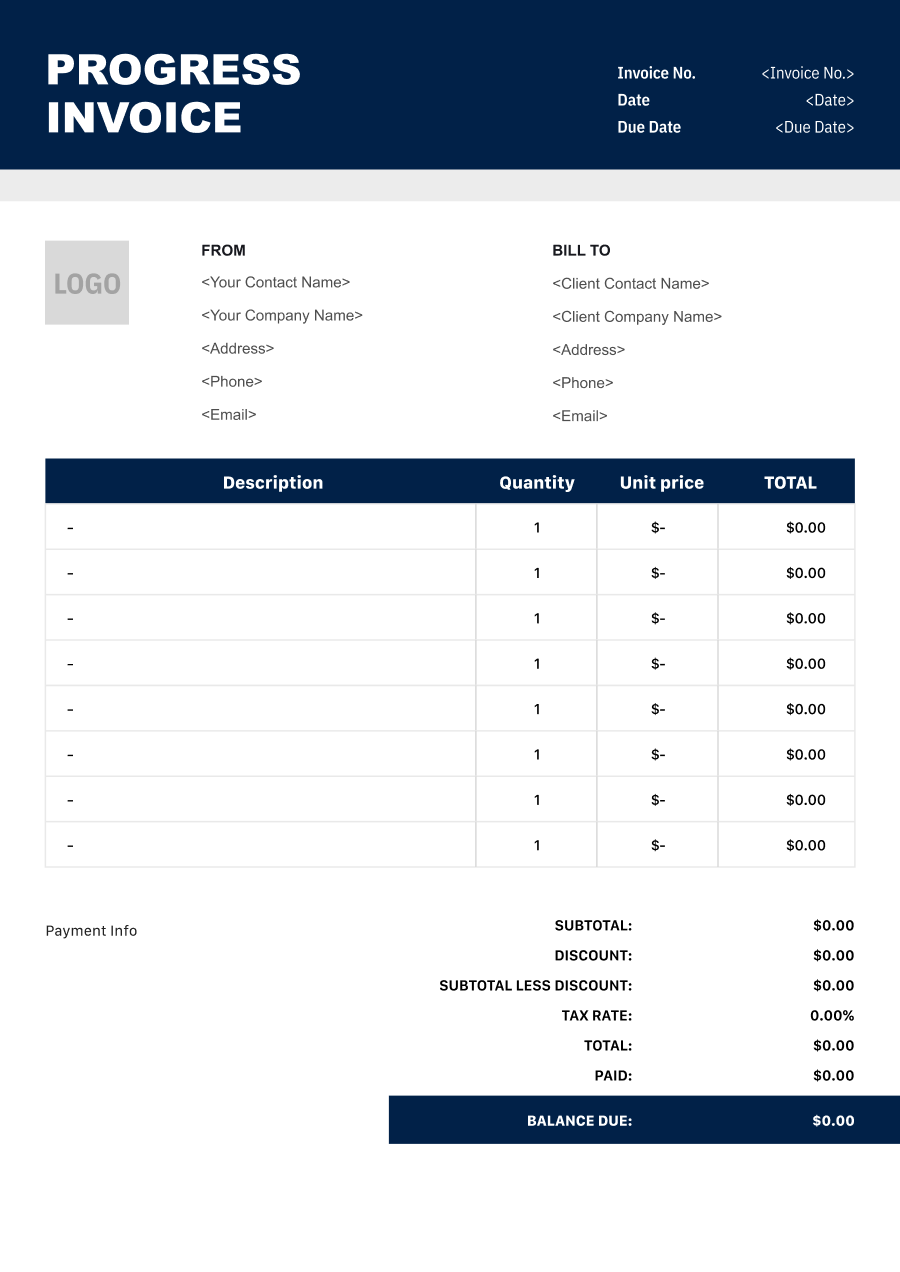
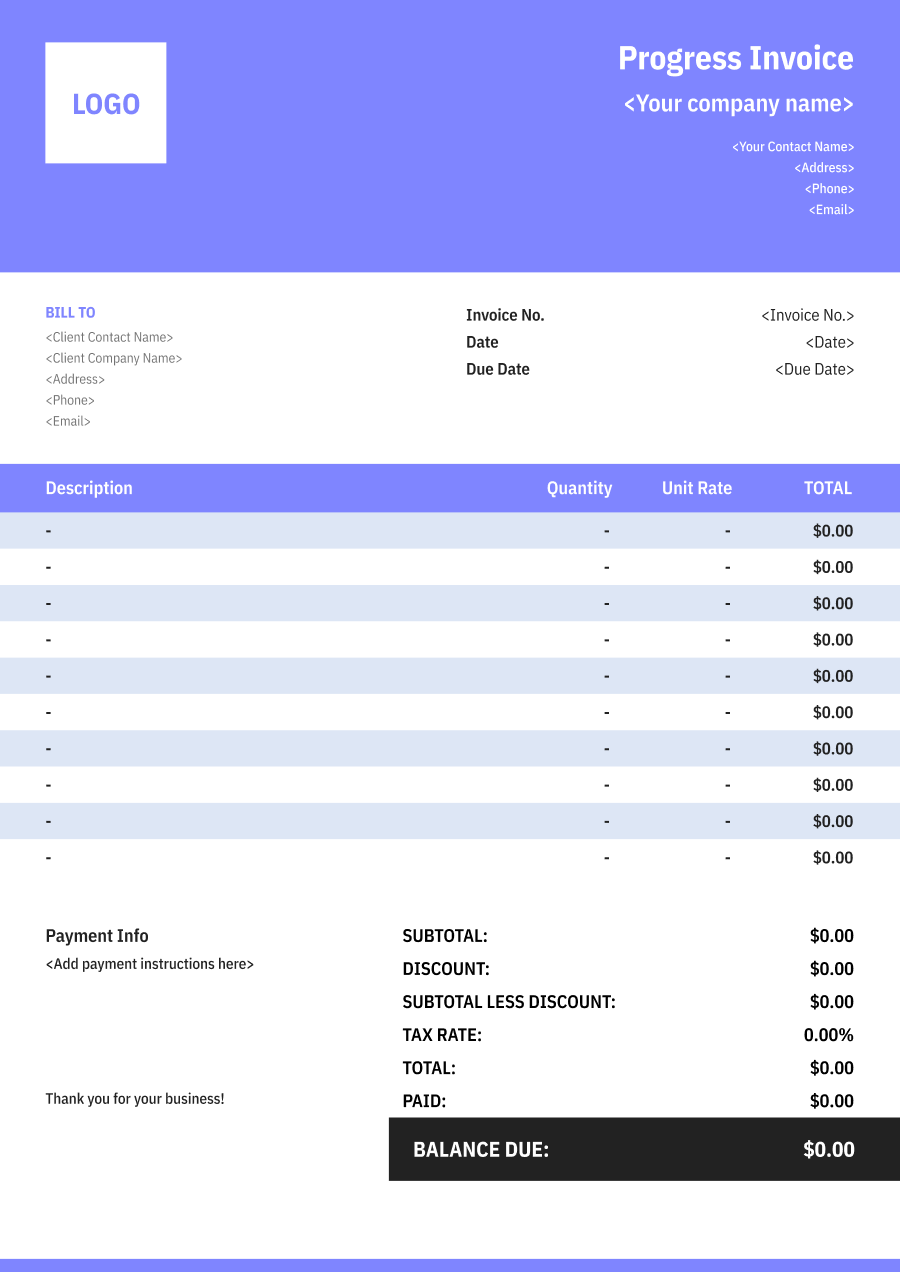
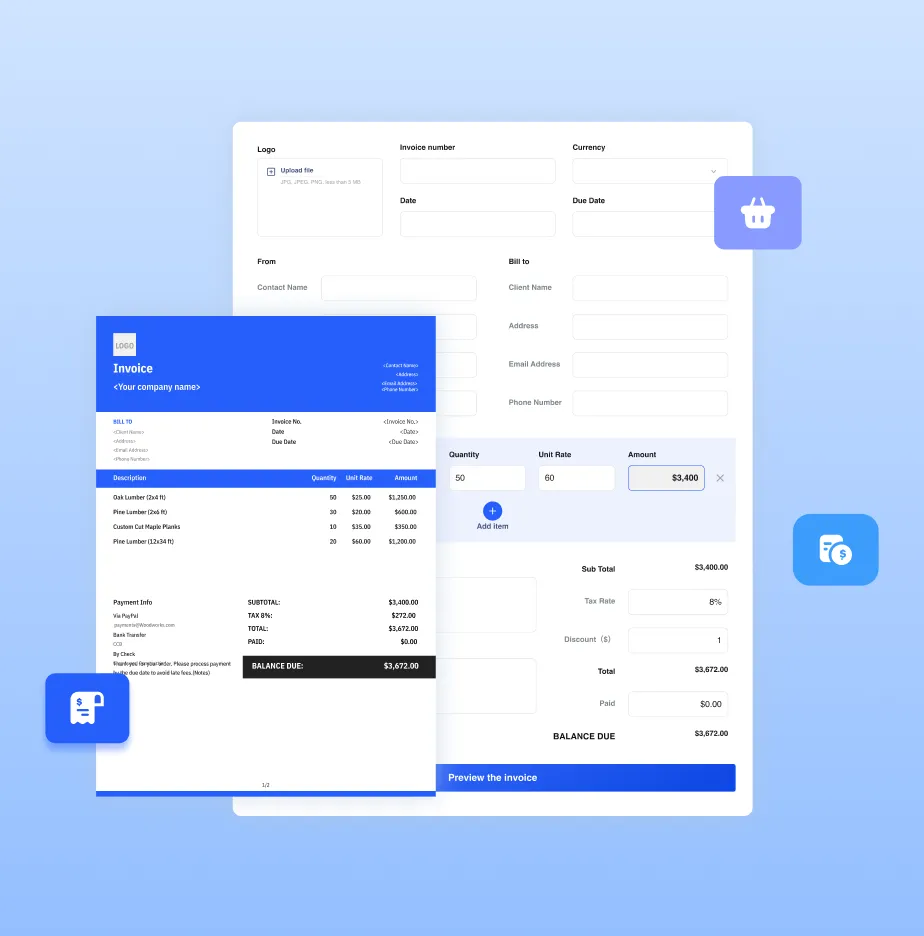
Create a Progress Invoicewith a Live Preview
Enter the project, current work or milestone, prior payments, and retainage, then verify the cumulative billing and amount due for this period.
Invoice Details
Identify the project, billing period, and progress invoice sequence.

JPG, JPEG, PNG, less than 5 MB
Contractor & Customer
Add the billing parties and project location or reference.
From
Bill to
Current Progress
Describe the approved work or milestone billed in this period.
Cumulative Billing
Reconcile contract value, prior billing, retainage, payments, and the current balance.


Reuse Saved Information in Invoice Zip
Use saved items and client information to create an invoice in just a few taps.
What Is a Progress Invoice?
A progress invoice requests payment for an approved portion of a project before the entire job is complete. It identifies the current work, milestone, or measured percentage and places that amount within the project's cumulative contract and billing history.
Unlike a simple installment invoice, a progress invoice often reconciles the original contract value, approved change orders, prior applications or invoices, retainage, current work, and payments received. The customer should be able to see both this period and the project-to-date position.
The invoice should follow the pricing structure used in the agreement, such as a schedule of values, project phases, measured quantities, or defined milestones. Do not bill a percentage that cannot be connected to documented progress.
Approval procedures, retainage, lien releases, tax, and project documentation vary by contract and location. Use the actual agreement and obtain the required review before treating a progress amount as approved or payable.
- 01
Current progress
Identify the work, milestone, quantity, or percentage billed now.
- 02
Project-to-date record
Connect current billing with prior invoices, payments, and changes.
- 03
Retainage and balance
Show withheld amounts and what remains in the contract clearly.
What to Include on a Progress Invoice
A complete progress invoice explains the current request and preserves the cumulative project arithmetic from contract value to remaining balance.
- 1
Project and Parties
Identify the contractor or provider, customer or owner, project name, site, and contract or purchase-order reference.
- 2
Invoice Sequence and Period
Use a unique number, application or invoice sequence, billing date, and period covered by the current request.
- 3
Contract Value
Show the original agreement value and keep approved changes distinct so the current adjusted value can be traced.
- 4
Current Work or Milestone
Describe the completed or approved work and use the measurement method required by the agreement.
- 5
Previously Billed Amount
Carry forward prior approved invoices or applications without billing the same work again.
- 6
Retainage
Show the contractual amount withheld from current or cumulative work and distinguish it from discounts or disputed charges.
- 7
Payments Received
Reconcile payments actually received against earlier billing rather than assuming every approved invoice has been paid.
- 8
Current Due and Remaining Contract
State the payment due for this period and show the unbilled or remaining contract amount separately.
Common Uses of a Progress Invoice
Progress invoices are suited to longer work where payment follows measurable completion, accepted phases, or recurring billing periods.
- 01
Construction project
A contractor bills completed work from the schedule of values and applies the agreed retainage.
- 02
Renovation phases
A remodeler invoices demolition, rough-in, finishes, and closeout as separately approved stages.
- 03
Long consulting engagement
A consultant bills monthly work against an agreed project budget and prior billing history.
- 04
Software implementation
A delivery team invoices defined discovery, build, testing, and launch milestones.
- 05
Manufacturing project
A supplier bills design, tooling, production, and delivery stages under the purchase agreement.
The billing basis must match the agreement. Milestones, measured quantities, percentage complete, and monthly time-and-materials work are not interchangeable. If the scope changes, include only approved change orders in the adjusted contract value. Keep disputed or unapproved work out of the certified amount until the applicable process resolves it.
Progress Invoice vs. Final Invoice
A progress invoice advances the project billing history; a final invoice reconciles and closes the remaining billable amount.
| Question | Progress invoice | Final invoice |
|---|---|---|
| When is it issued? | During the project at an agreed period or milestone. | When final billing becomes due under the agreement. |
| What does it bill? | Approved current work, measured progress, or a milestone. | The remaining billable work and final approved adjustments. |
| What history does it show? | Prior billing, current billing, retainage, and project-to-date totals. | The complete billing, credit, and payment reconciliation. |
| What remains afterward? | Unbilled work, retainage, future milestones, or balance may remain. | Normally only stated closeout items or no project balance remain. |
The final invoice should use the same project structure as the progress invoices. Reconcile the adjusted contract value, every prior billing, payments received, credits, approved changes, and retainage release. A final label does not cure missing or duplicate amounts, so review the cumulative arithmetic before sending it.
Progress Invoice Tips for Cumulative Project Billing
Every current request should be understandable on its own and consistent with the entire project history.
- 01
Use one schedule
Keep line items aligned with the contract or schedule of values so progress can be compared period to period.
- 02
Separate current and cumulative amounts
Show what is billed now alongside prior and project-to-date figures without adding the same work twice.
- 03
Track changes and retainage
Include only approved changes and display retainage as its own calculation, not as an unexplained discount.
- 04
Reconcile actual payments
Distinguish amounts previously billed from amounts actually received when calculating the outstanding balance.
Progress Invoice FAQs
What is a progress invoice?
It is a payment request for an approved portion of a project, tied to a billing period, measured work, or defined milestone before the whole project is complete.
How do I calculate the current amount due?
Start from the approved current work, add applicable approved changes or charges, subtract current retainage and credits, and then apply verified payments for that invoice.
Should prior invoices appear on a progress invoice?
Yes, at least as a clear prior-billing or cumulative summary. This prevents the customer from mistaking project-to-date value for the amount due now.
How should retainage be shown?
Show the contractual rate or amount separately and explain whether it applies to current work, stored materials, or the cumulative project, according to the agreement.
What belongs on the final invoice?
Reconcile all approved work, changes, prior billing, payments, credits, and any retainage release. Verify that the final amount does not duplicate an earlier progress request.
Other Free Resources

Try Invoice Zip Today
Start Sending Invoices, Building Reports, Saving Office
Time and Get Paid Faster.