


1099 vs W-2 for Contractors: What You Need to Know
You just landed your first 1099 contract. Or tax season just punched you in the gut.
Either way, the "1099 vs W-2" question stops being academic the moment money hits your account. The blunt version: the difference is who pays your taxes and who carries your benefits.
A W-2 employee has a boss withhold taxes and kick in half of Social Security and Medicare. A 1099 contractor is self-employed. No withholding. No benefits. And you pay the full 15.3% self-employment tax yourself.
That's the headline. But the part that actually decides whether you come out ahead? Everything that happens after you get paid. Let's get into it.
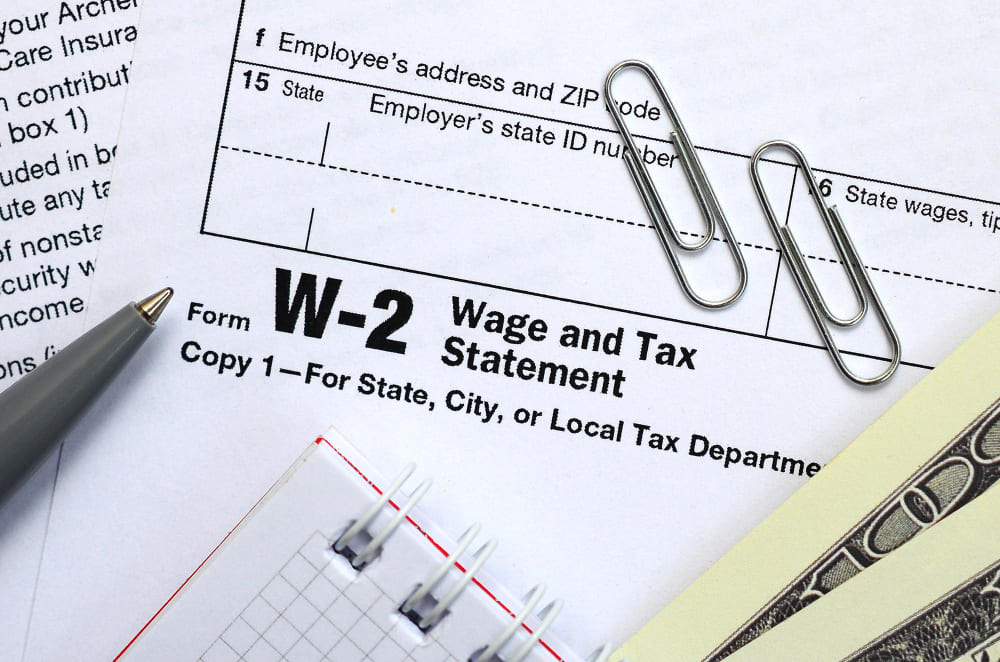
The 15.3% Tax Nobody Warns You About
The biggest shock for new contractors — and most never see it coming.
- W-2 employee: You pay 7.65%. Your employer pays the other 7.65%.
- 1099 contractor: You pay both halves — 15.3% — on 92.35% of your net self-employment income (the IRS lets you deduct the "employer half" before calculating, which softens the blow a bit).
On $100,000 of net income, that's roughly $14,130 in self-employment tax (per IRS Schedule SE rates). The good news: you can deduct half of it, lowering your adjusted gross income. The 15.3% figure is set by the IRS — 12.4% for Social Security (up to the annual wage base) plus 2.9% for Medicare, with no income cap on the Medicare portion.
W-2 vs 1099: The 60-Second Breakdown
The tax split is only the start. Here's the full contrast across your week:
| Factor | W-2 Employee | 1099 Contractor |
|---|---|---|
| Taxes withheld | Yes | No — you pay quarterly |
| Social Security + Medicare | 7.65% (you) + 7.65% (boss) | Full 15.3% |
| Benefits | Often included | You pay out of pocket |
| Tax form you receive | W-2 | 1099-NEC (if paid $600+) |
| Who sets your schedule | The employer | You do |
| Equipment & tools | Usually provided | You supply them |
| Expense reimbursement | Common | Rare — you deduct instead |
| Legal protections | Unemployment, workers' comp, anti-discrimination | Limited — generally none of these |
| Can be fired mid-job | Yes, at will | Only per contract terms |
Who Actually Decides? The IRS Common-Law Control Test
A myth worth killing: you and the client don't pick your status by agreement. The IRS uses its common-law control test, built on three prongs:
- Behavioral control: Does the client direct how, when, and where you work?
- Financial control: Do you invest in your own tools, incur unreimbursed expenses, and offer your services to the open market?
- Relationship: Is there a written contract, benefits, and an open-ended engagement?
If the client controls the work like an employee but hands you a 1099, that's misclassification. The IRS can review it via Form SS-8, and states are tightening the same rules.
Net-Take-Home: A Worked Example
Numbers make it concrete. SE tax hits 92.35% of net earnings at 15.3%, and you deduct half. Two income levels:
| Line item | At $60,000 net | At $100,000 net |
|---|---|---|
| Net self-employment earnings | $60,000 | $100,000 |
| Taxable base (92.35%) | $55,410 | $92,350 |
| SE tax @ 15.3% | $8,478 | $14,130 |
| Deductible half (lowers AGI) | $4,239 | $7,065 |
| Income tax (rough, single, std deduct) | ~$4,800 | ~$11,400 |
| Approx. total federal bite | ~$13,300 | ~$25,500 |
| Take-home | ~$46,700 | ~$74,500 |
Approximations using IRS SE rates and 2026 brackets — not a substitute for a CPA. A W-2 at the same gross often nets more, because you're not writing the employer's payroll-tax check.
Quarterly Estimated Taxes: The System That Catches Contractors Off Guard
As a 1099 contractor, no one withholds for you. The IRS expects you to pay as you go through Form 1040-ES, in four installments:
- April 15 — for income earned Jan 1 to Mar 31
- June 15 — for Apr 1 to May 31
- September 15 — for Jun 1 to Aug 31
- January 15 — for Sep 1 to Dec 31
Miss them and the IRS can charge an underpayment penalty. Set aside roughly 25–30% of every payment the day it lands, before you spend a dime.
Operate Like a Business: The Contractor Operations Playbook
Going 1099 means you run accounts receivable, not just a drill. Contractors who thrive treat it like a business from day one:
- Open a separate business bank account. Never mix client money with personal spending.
- Invoice on a schedule. Send bills the day work is done. Our invoice generator makes a clean PDF in two minutes.
- Use a consistent format. Our contractor invoice templates give you preset fields and placeholders for every job.
- Chase late payers fast. A reminder at day 3 past due, firmer at day 10, final at day 30.
- Log expenses weekly. Fuel, materials, software — capture the receipt now.
- Run a tax calendar. Block the four 1040-ES dates and a quarterly review.
The step contractors skip most is the one that decides whether you end the year in the black or just busy: before you send a quote, run the job through our profit margin calculator so you can see the margin left after materials, fuel, and the tax you are setting aside.
Benefits You Now Pay For Yourself
A W-2 hands you a benefits package. A 1099 hands you a bill. Budget for:
- Health insurance — marketplace or a spouse's plan.
- Retirement — a SEP IRA or Solo 401(k) shelters far more than a W-2's 401(k) cap.
- No unemployment or workers' comp — if injured or between gigs, the net is yours to build.
- No paid leave — every sick day is unpaid.
Run the numbers first. A higher 1099 rate only wins if it covers these gaps. A useful rule of thumb: price in the value of the benefits you'd otherwise receive — health premiums, the employer's retirement match, and a buffer for unpaid time off — so your quoted rate reflects your true replacement cost, not just your take-home wish.
Deductions That Shrink Your Tax Bill
The upside of 1099: almost everything business-related is deductible. Common ones:
- Half your self-employment tax (above).
- Home office — the exclusive, regular workspace in your home.
- Vehicle and mileage — the IRS standard rate for business miles.
- Tools, materials, and software — including your invoicing app.
- Retirement contributions — SEP or Solo 401(k) deposits.
- Continuing education and licenses.
Should You Be 1099 or Push for W-2?
No universal answer. Lean 1099 if you want autonomy, can fill a client pipeline, and have the discipline to run the playbook. Lean W-2 if you value steady benefits, withheld taxes, and no collections calls. Many tradespeople do both — a W-2 day job plus 1099 side work — legal when each passes the control test. The self-employed ranks are growing: BLS data shows about 9.92 million unincorporated self-employed U.S. workers in 2024, up 2.0% from 2023.
However you classify, the back office matters as much as the badge. That is where Invoice Zip earns its keep: one dashboard for every open invoice, so you can see at a glance what's been paid, what's due, and what's running late. Keep that side of going 1099 organized, and the paperwork stops eating your evenings.
When an S-Corp Election Starts to Make Sense
Once net self-employment income climbs past roughly $80,000–$100,000, many contractors ask whether to fold the work into an S-Corporation. The mechanics: the S-corp pays you a reasonable W-2 salary (subject to normal payroll taxes), and any profit above that salary is distributed as a dividend-like distribution that isn't hit with the 15.3% self-employment tax. The savings can be real, but so are the costs — payroll service, separate filings, and the IRS expectation that your salary be genuinely "reasonable" for the role. It's a milestone decision, not a default, and it only pays off once the payroll-tax savings clear the administrative overhead. Talk to a CPA before you flip the switch; done wrong, it draws audits rather than dodging them.
Worked example: a solo electrician netting $120,000. As a sole proprietor, SE tax runs about $16,900 on the 92.35% base. Elect S-corp, pay yourself a $70,000 reasonable salary (about $9,870 in payroll tax on both halves), and take the remaining ~$50,000 as a distribution exempt from SE tax. That can save several thousand dollars a year — but budget $1,500–$3,000 for payroll and bookkeeping, so the net win only appears once income is high enough. The election also requires filing Form 2553 on time and running real payroll, not just moving numbers on paper.
State rules vary: some states don't recognize the S-corp election and still tax all income as personal, eroding the benefit, while others require a separate state filing. Before committing, model the full federal and state picture with your CPA rather than relying on a generic calculator alone.
This article provides general information and is not legal or tax advice. For choices that affect your filing status or deductions, confirm the details with a CPA or the IRS directly.
Frequently Asked Questions
Can I be both W-2 and 1099 in the same year?
Yes. Many contractors hold a W-2 job and take 1099 side work. Each engagement is judged separately under the IRS control test.
Do I owe self-employment tax on all my 1099 income?
You owe it on net earnings of $400 or more (IRS threshold), on profit after legitimate business expenses — not gross.
What tax form do I get as a 1099 contractor?
Clients paying you $600+ in a year file 1099-NEC with the IRS and send you a copy. You report it on Schedule C; SE tax flows from Schedule SE.
How do quarterly estimated payments work?
Via Form 1040-ES, in four installments (Apr 15, Jun 15, Sep 15, Jan 15). Near-even quarters avoid the underpayment penalty.
Can a client control my work and still call me 1099?
If they control how, when, and where you work like an employee, the IRS may deem them a misclassified employer. The check's label doesn't override the facts.
Do I need to charge sales tax on my invoices?
It depends on your state and trade — many services are exempt, many materials taxable. Check your state's rules; don't guess.
What happens if I'm misclassified?
You may owe the employer's share of payroll tax, and the client can face penalties. File Form SS-8 with the IRS for a formal determination.
How do I prove I'm a real business to the IRS?
Separate bank account, consistent invoicing, a web presence, real expenses, and multiple clients. The more business-like your ops, the safer your status.
Most Popular Pages

Try Invoice Zip Today
Start Sending Invoices, Building Reports, Saving Office
Time and Get Paid Faster.