


Essential Tools for HVAC Contractors
10min read
|
Sep 24, 2026
HVAC contractors rely on a combination of hand tools, power tools, electrical testing equipment, and specialized instruments to install, maintain, and repair heating, ventilation, and air conditioning systems.
The tools an HVAC contractor needs depend on the type of work they perform. A technician handling routine maintenance may need a different set of equipment from a contractor installing a new air conditioning system, troubleshooting electrical problems, or servicing refrigeration equipment.
For most HVAC businesses, it makes sense to start with a core set of tools used on everyday service calls and add specialized equipment as the business takes on more complex work.
What Tools Do HVAC Contractors Need?
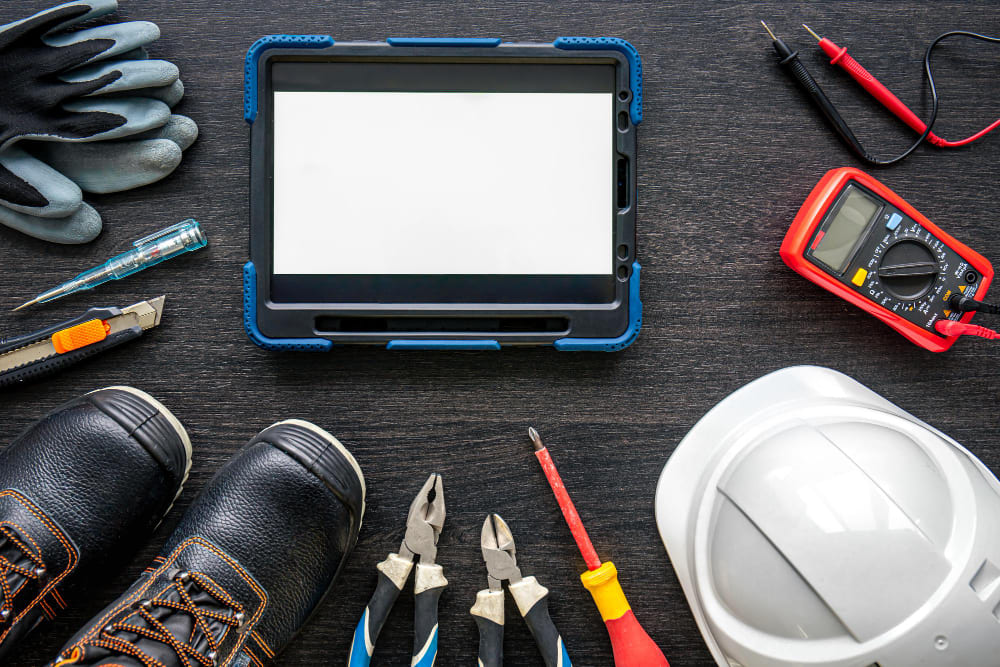
A typical HVAC tool kit includes basic hand tools, measuring equipment, electrical testing tools, and equipment for working with HVAC components. Some tools are useful on almost every service call, while others are only necessary for specific types of installation, repair, or diagnostic work.
Essential HVAC Tools
These are some of the tools most HVAC contractors and technicians can expect to use regularly:
| Tool | Common Use |
|---|---|
| Digital Multimeter | Measuring voltage, resistance, and electrical continuity |
| Clamp Meter | Measuring electrical current without disconnecting conductors |
| Screwdriver Set | Installing and removing screws |
| Nut Driver Set | Installing and removing hex-head fasteners |
| Adjustable Wrench | Tightening and loosening fittings and fasteners |
| Pliers | Gripping, bending, and cutting materials |
| Wire Stripper | Removing insulation from electrical wires |
| Cordless Drill | Drilling holes and fastening components |
| Impact Driver | Driving screws and other fasteners |
| Tubing Cutter | Cutting copper and other tubing |
| Utility Knife | Cutting insulation, duct materials, packaging, and other materials |
| Tape Measure | Measuring equipment, ductwork, and installation areas |
| Level | Checking equipment and components for proper alignment |
| Thermometer | Measuring air and equipment temperatures |
| Voltage Tester | Checking whether electrical circuits are energized |
| Flashlight or Headlamp | Illuminating equipment and confined work areas |
| Ladder | Accessing elevated HVAC equipment |
These basic tools cover many routine installation, maintenance, and repair tasks. A technician can use the same core set of hand tools and testing equipment across a wide range of service calls.
Optional and Specialized HVAC Tools
More specialized tools become useful as an HVAC business takes on refrigeration work, advanced diagnostics, ductwork, or larger installations.
| Tool | Common Use |
|---|---|
| Manifold Gauge Set | Checking refrigerant pressure |
| Digital Micron Gauge | Measuring vacuum levels during system evacuation |
| Vacuum Pump | Removing air and moisture from refrigeration systems |
| Refrigerant Scale | Measuring refrigerant during charging and recovery |
| Refrigerant Recovery Machine | Recovering refrigerant from HVAC systems |
| Refrigerant Leak Detector | Finding refrigerant leaks |
| Psychrometer | Measuring temperature and humidity |
| Manometer | Measuring air or gas pressure |
| Anemometer | Measuring air velocity and airflow |
| Thermal Imaging Camera | Identifying temperature differences and potential problems |
| Inspection Camera | Inspecting difficult-to-reach areas |
| Brazing Torch | Joining copper tubing and HVAC components |
| Flaring Tool | Creating flared tubing connections |
| Swaging Tool | Expanding tubing for certain tubing connections |
| Sheet Metal Snips | Cutting sheet metal and ductwork |
| Duct Knife | Cutting flexible ductwork and insulation |
| Crimpers and Seamers | Shaping and joining sheet metal ductwork |
| Fin Comb | Straightening damaged condenser or evaporator coil fins |
| Coil Cleaning Tools | Cleaning HVAC coils |
Not every HVAC contractor needs all of these tools. A company focused primarily on residential maintenance may rarely need some of the equipment used by refrigeration specialists or commercial HVAC installers. Contractors who frequently install or modify ductwork may instead invest more heavily in sheet metal tools.
The best tool setup depends on the services a business offers, the systems its technicians work on, and the types of jobs it takes on.
Hand Tools for HVAC Contractors
Basic hand tools are used on almost every HVAC job. They allow technicians to remove panels, tighten connections, adjust components, prepare materials, and complete routine repairs without relying on larger equipment.
A basic HVAC tool kit commonly includes screwdrivers, nut drivers, adjustable wrenches, pliers, hex keys, utility knives, and tubing cutters. Wire strippers and crimping tools are particularly useful when working with electrical connections.
Sheet metal tools are also important for technicians who install or modify ductwork. Aviation snips, crimpers, seamers, and duct knives allow contractors to cut, shape, and connect sheet metal and flexible duct materials.
Because these tools are used frequently, durability and portability matter. Many HVAC technicians carry their most commonly used hand tools in a dedicated service bag or rolling tool case so they can quickly access them during service calls.
Electrical Testing Tools
Modern HVAC systems contain numerous electrical components, including motors, capacitors, contactors, relays, control boards, thermostats, and sensors. Electrical testing tools are therefore an essential part of HVAC troubleshooting.
A digital multimeter is one of the most commonly used diagnostic tools. Depending on the model, it can measure voltage, resistance, continuity, and other electrical characteristics. Technicians can use these measurements to identify electrical faults and determine whether components are operating as expected.
A clamp meter provides another way to measure electrical current. Instead of requiring a conductor to be disconnected, the meter clamps around it to take a reading. This can be useful when checking motors and other electrical components.
HVAC technicians may also use voltage testers, capacitor testers, phase testers, and other specialized electrical instruments. The exact equipment depends on the types of systems being serviced.
Electrical testing should always be performed with equipment rated for the application and in accordance with applicable safety procedures. HVAC technicians may encounter dangerous voltages even during routine service calls.
Refrigeration and Refrigerant Tools
HVAC contractors who install or service air conditioning and refrigeration systems often need specialized equipment for measuring, recovering, evacuating, and charging refrigerant.
A manifold gauge set is traditionally used to measure refrigerant pressure during service. Digital manifold systems can provide additional measurements and calculations, depending on the model.
A refrigerant scale allows technicians to measure how much refrigerant is added to or removed from a system. Accurate measurement is important because incorrect refrigerant charge can affect system performance.
A vacuum pump is used to evacuate air and moisture from a refrigeration system before charging. Technicians may use a micron gauge alongside the vacuum pump to measure the vacuum level and determine whether the system has reached the required level.
Refrigerant recovery equipment is used to recover refrigerant from a system rather than releasing it into the atmosphere. Leak detection equipment can then help technicians identify the source of refrigerant loss.
In the United States, technicians who perform work involving regulated refrigerants may also need the appropriate EPA Section 608 certification. Refrigerant handling requirements should therefore be considered alongside the tools and equipment needed for this type of work.
Tools for Ductwork and Airflow
HVAC contractors who install or service duct systems need tools for cutting, shaping, connecting, and measuring ductwork.
Sheet metal snips are commonly used to cut sheet metal, while duct knives can be used for flexible duct and insulation. Crimpers and seamers help technicians shape and connect sheet metal components.
Airflow measurement requires a different set of instruments. Anemometers can measure air velocity, while manometers can measure pressure differences. Depending on the job, technicians may use additional instruments to evaluate airflow and system performance.
Accurate airflow measurements can help identify problems such as restricted ducts, inadequate ventilation, or incorrect system balancing. These measurements can be especially important during installation and commissioning, when the contractor needs to verify that the system is operating as intended.
HVAC Diagnostic Tools
Some HVAC problems cannot be identified through a visual inspection alone. Diagnostic equipment allows technicians to collect measurements and identify issues with electrical components, temperature, airflow, refrigerant systems, and other parts of the equipment.
Thermal imaging cameras can help technicians identify unusual temperature patterns in electrical components, ductwork, insulation, and HVAC equipment. Inspection cameras can provide visibility inside tight spaces that are difficult to access directly.
Digital thermometers can be used to compare temperatures at different points in a system, while psychrometers can provide temperature and humidity readings. These measurements can help technicians evaluate system performance and investigate customer complaints such as poor cooling, inconsistent temperatures, or inadequate airflow.
Advanced diagnostic equipment can be expensive, so it may not make sense for every new HVAC business to purchase every available instrument. Contractors can prioritize the tools that match the systems they service and add more specialized equipment as their business grows.
Tools for HVAC Installation
HVAC installation jobs often require many of the same tools used for repair and maintenance, along with equipment for mounting, connecting, and commissioning new systems.
Cordless drills and impact drivers are commonly used to secure equipment, brackets, ductwork, and other components. Tubing cutters, flaring tools, swaging tools, and brazing equipment are used when installing refrigerant lines.
Installation work can also involve heavy equipment. Depending on the system and job site, contractors may need lifting equipment or additional workers to safely move outdoor condensers, air handlers, furnaces, or other large components.
Accurate measurement and testing are equally important during installation. Technicians may need to verify electrical connections, refrigerant pressures, temperatures, airflow, and other operating conditions before completing the job.
The tools required can therefore vary considerably between a small residential replacement and a large commercial HVAC installation.
HVAC Safety Equipment
Safety equipment is not technically a tool, but it is an essential part of an HVAC contractor's equipment.
Common safety items include:
- Safety glasses
- Work or cut-resistant gloves
- Hearing protection
- Protective footwear
- Hard hats when required
- Appropriate respiratory protection
- Fall protection equipment
- Appropriate electrical protective equipment
- Protective clothing for brazing and other high-temperature work
HVAC technicians may work around electricity, refrigerants, hot surfaces, rotating equipment, sharp sheet metal, elevated equipment, and confined spaces. The appropriate protective equipment depends on the specific hazards present on the job.
Protective equipment should be used as part of a broader safety program that includes appropriate training, work procedures, and hazard controls. Contractors should also follow applicable workplace safety requirements for the work being performed.
How Much Do HVAC Tools Cost?
HVAC tool costs vary considerably depending on the type of tool, quality, brand, and intended use.
Basic hand tools such as screwdrivers, pliers, and wrenches are relatively inexpensive compared with specialized equipment such as refrigerant recovery machines, thermal imaging cameras, digital manifold systems, and advanced diagnostic instruments.
For a new HVAC contractor, it may make sense to build a tool collection gradually. Everyday hand tools and basic testing equipment can form the initial toolkit, while specialized equipment can be added when the business begins taking on jobs that require it.
Renting can also be an option for expensive equipment that is only needed occasionally. For example, a contractor may choose to rent specialized lifting equipment for a particular installation rather than purchasing equipment that will spend most of the year unused.
The purchase price is not the only cost to consider. HVAC businesses may also spend money on tool maintenance, calibration, batteries, replacement parts, storage, transportation, and eventual replacement. Keeping records of these expenses can help contractors understand the actual cost of operating their business.
How HVAC Tools Affect Job Estimates and Invoices
HVAC tools are generally part of the contractor's operating costs rather than separate charges on every customer invoice. A technician would not normally list a drill, multimeter, or set of wrenches as an individual billable item simply because those tools were used during a repair.
Specialized equipment can be different. If an HVAC project requires a lift, specialized rental equipment, or another project-specific resource, the related cost may be considered when preparing the estimate. Whether that cost appears as a separate charge depends on the agreement with the customer and how the project is priced.
Labor, replacement parts, refrigerant, equipment rental, travel, disposal, and other project costs can all contribute to the final price of an HVAC job. Keeping accurate records of these costs helps contractors compare the original estimate with the actual cost of completing the work.
Once the job is finished, those records can also make invoicing easier. An HVAC invoice might include labor, replacement parts, refrigerant, diagnostic services, equipment rental, or other agreed-upon charges.
For example, a service call might involve two hours of technician labor, a replacement capacitor, and a diagnostic charge. Recording those details during the job gives the contractor the information needed to prepare a clear invoice rather than reconstructing the work later.
For HVAC businesses that handle recurring maintenance contracts or multiple service calls, organized estimates, work records, and invoices become increasingly important. They connect the work performed in the field with the amount ultimately charged to the customer and make it easier to track which invoices have been paid and which payments are still outstanding.
Most Popular Pages



Try Invoice Zip Today
Start Sending Invoices, Building Reports, Saving Office
Time and Get Paid Faster.