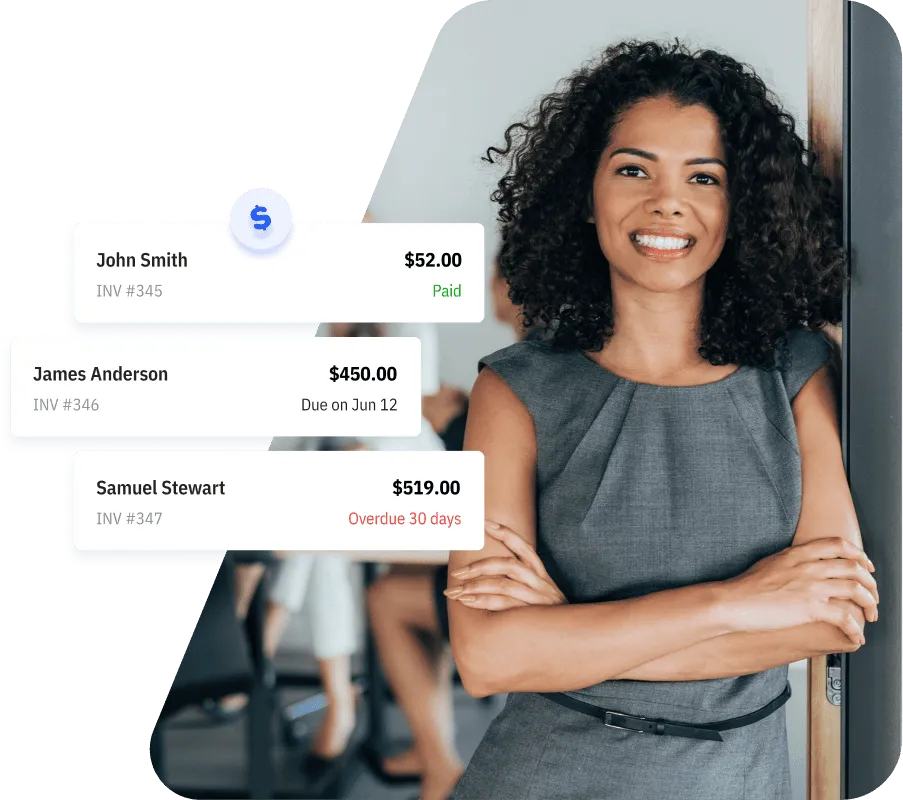


What Is Invoice Payment Processing
6min read
|
Sep 24, 2026
Invoice payment processing is the process of handling a customer's payment after they receive an invoice. It connects the invoice with a payment method, processes the transaction, and records the payment so the business can track what has been paid and what remains outstanding.
For small businesses and contractors, invoice payment processing can make it easier for customers to pay online and for businesses to keep payment records organized.
How Does Invoice Payment Processing Work?
Invoice payment processing typically involves several steps:
- Create an invoice
The business creates an invoice with the products or services provided, the amount due, payment terms, and due date. - Send the invoice
The invoice is sent to the customer, often by email or through an online invoicing platform. - Customer chooses a payment method
Depending on the business's setup, the customer may be able to pay by credit card, debit card, ACH bank transfer, or another supported payment method. - Payment is processed
A payment processor handles the transaction and communicates with the relevant financial institutions to authorize the payment. - Payment is confirmed
Once the transaction is successfully processed, the payment information is returned to the invoicing or accounting system. - Invoice is marked as paid
The business can record the payment against the invoice and update its outstanding balance.
For example, a contractor sends a $1,500 invoice to a customer. The customer clicks the payment option on the invoice and pays by card. The payment processor handles the card transaction, and the business receives confirmation that the $1,500 invoice has been paid.
What Payment Methods Can Be Used to Pay an Invoice?
The payment methods available depend on the invoicing platform, payment processor, business location, and account configuration.
Common options include:
Credit and Debit Cards
Card payments allow customers to pay an invoice online without sending a check or making a bank transfer manually. They are commonly used for service businesses and other companies that send invoices electronically.
ACH Bank Transfers
ACH payments allow customers in the U.S. to pay directly from a bank account. They can be useful for larger invoices or recurring business payments where customers prefer bank transfers over cards.
Digital Wallets
Some payment setups support digital wallets such as Apple Pay or Google Pay. These can allow customers to complete a payment using payment information already stored on their device.
Bank Transfers and Other Methods
Depending on the invoicing and payment setup, businesses may also accept other types of bank transfers or local payment methods.
Offering multiple payment options can make it easier for customers to pay an invoice using their preferred method.
What Is a Payment Processor?
A payment processor is a service that helps handle electronic payment transactions between a customer, business, financial institution, and payment network.
Companies such as Stripe and PayPal provide payment processing services that businesses can connect to their invoicing or accounting systems.
The payment processor is responsible for handling the payment transaction. The invoicing system, meanwhile, provides the billing document that tells the customer what they owe.
This distinction is important:
- Invoice = what the customer owes
- Payment processor = how the payment is processed
- Payment record = what the business received
For example, a contractor might create a $2,000 invoice in an invoicing platform and allow the customer to pay by card through Stripe. The invoice explains the $2,000 charge, while Stripe processes the card payment.
Invoice Payment Processing vs. Invoicing
Invoicing and payment processing are closely connected, but they are not the same thing.
Invoicing is the process of creating and sending a bill to a customer. An invoice normally includes the services or products provided, prices, taxes, payment terms, due date, and amount due.
Payment processing begins when the customer decides to pay. It handles the transaction through the selected payment method and helps confirm whether the payment was successful.
Consider a $750 plumbing invoice:
- Labor: $500
- Materials: $250
- Total Due: $750
The invoice tells the customer why they owe $750.
If the customer pays the $750 by credit card, the payment processor handles the card transaction.
Once payment is confirmed, the business can update the invoice to show that the $750 balance has been paid.
In other words, creating an invoice and collecting the payment are two connected parts of the same billing workflow.
Why Does Invoice Payment Processing Matter for Small Businesses?
Online invoice payment processing can simplify several parts of getting paid.
Faster Payments
When customers can pay directly from an online invoice, they do not have to arrange a separate payment method or manually provide payment details to the business.
A convenient payment option can reduce the steps between receiving an invoice and making the payment.
Easier Payment Tracking
When payments are connected to invoices, businesses can more easily see which invoices are paid, partially paid, or still outstanding.
This is particularly useful for businesses managing multiple customers and invoices at the same time.
Better Customer Experience
Customers can review the invoice and pay from the same place instead of receiving an invoice and then contacting the business to ask how to pay.
For contractors and service businesses, this can make the payment process more straightforward.
More Organized Cash Flow Management
Knowing which invoices have been paid and which remain outstanding gives a business a clearer picture of expected and received cash.
Payment processing does not guarantee that customers will pay on time, but reducing unnecessary friction in the payment process can make it easier for customers to complete a payment.
How to Accept Payments Through an Invoice
To accept online payments through an invoice, a business generally needs an invoicing system and a connected payment processing service.
A typical setup looks like this:
- Create an invoice
Add the customer, services or products, prices, taxes, payment terms, and due date. - Connect a payment processor
Depending on the invoicing platform, you may be able to connect services such as Stripe or PayPal. - Enable online payment
Choose which payment methods customers can use, such as cards or ACH. - Send the invoice
The customer receives the invoice with an option to pay online. - Customer completes the payment
The payment processor handles the transaction. - Record the payment
The payment is associated with the invoice, allowing the business to track the updated balance and payment status.
For example, InvoiceZip can help businesses create and send invoices while supporting online payment workflows. This allows the invoice to remain the central record of what the customer owes while the payment processor handles the transaction.
What Happens After an Invoice Is Paid?
After a successful payment, several records may need to be updated. The payment processor records the transaction, while the invoicing system can update the invoice's payment status.
For a fully paid invoice, the record may show:
- Invoice Total: $1,200
- Payment Received: $1,200
- Balance Due: $0
- Status: Paid
For a partially paid invoice, the remaining balance can continue to be tracked.
Keeping the payment connected to the original invoice is useful for bookkeeping because it helps the business understand not only how much money was received, but also which customer and invoice the payment relates to.
Businesses should also account for any payment processing fees when reconciling their deposits and financial records.
Most Popular Pages
Try Invoice Zip Today
Start Sending Invoices, Building Reports, Saving Office
Time and Get Paid Faster.