

What Does Invoice Date Mean
4min read
|
Aug 28, 2026
The invoice date may look like a small detail, but it affects your payment schedule, accounting records, and communication with clients. If the date is missing or unclear, your client may not know when payment is expected.
So, what does invoice date mean, and why does it matter?
What Is an Invoice Date?
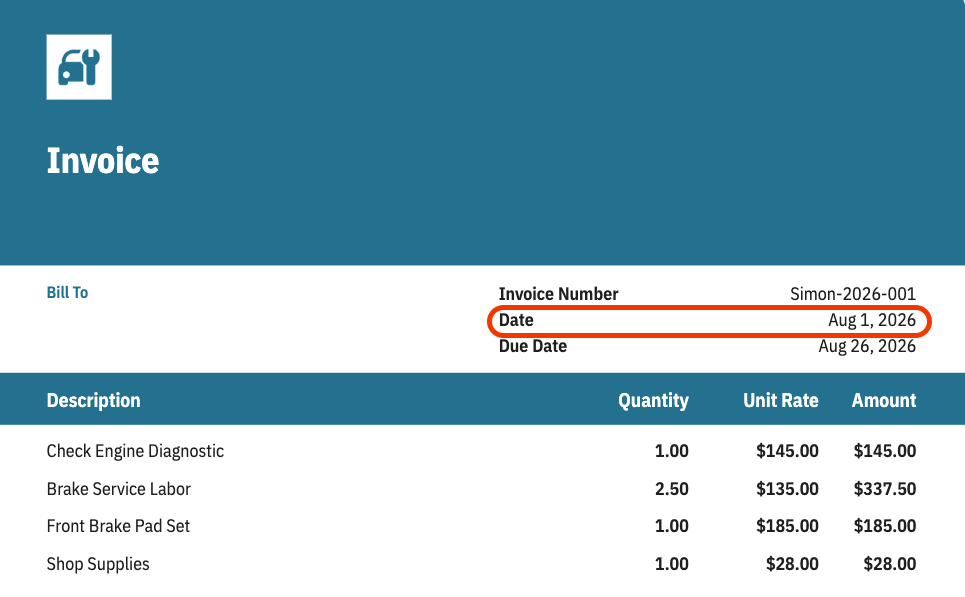
The invoice date is the date when an invoice is officially issued or sent to a customer. It shows when you requested payment for the products or services listed on the invoice.
For example, if you complete a website design project and send the invoice on May 10, the invoice date is May 10.
The invoice date is usually shown near the top of the invoice, alongside details such as:
- Invoice number
- Business name and contact information
- Customer information
- Payment terms
- Due date
The invoice date is not always the same as the date when you completed the work. It is the date the invoice is created and issued.
Why Is the Invoice Date Important?
The invoice date helps both you and your customer understand when the payment process begins.
It is used to:
- Track when an invoice was sent
- Calculate the payment due date
- Organize income and accounting records
- Follow up on unpaid invoices
- Match payments to the correct invoice
- Create a clear record of a business transaction
For small businesses and freelancers, consistent invoice dates make it easier to track outstanding payments and maintain organized financial records.
Invoice Date vs. Service Date
The invoice date and service date are two different things.
The service date shows when the product was delivered or when the work was completed. The invoice date shows when you issued the request for payment.
For example:
- Service date: May 1–May 7
- Invoice date: May 8
- Payment terms: Net 30
- Due date: June 7
In this example, the work was completed during the first week of May, but the invoice was issued on May 8. The payment period begins from the invoice date if the payment terms are based on the date of issue.
Some invoices may include both the service date and invoice date. This is especially useful for contractors, consultants, and businesses that bill for work completed over a specific period.
Invoice Date vs. Due Date
The invoice date tells the customer when the invoice was issued. The due date tells the customer when payment must be completed.
These dates are connected, but they are not interchangeable.
For example, if an invoice is issued on June 1 with Net 30 payment terms:
- Invoice date: June 1
- Payment term: Net 30
- Due date: July 1
If you offer payment due upon receipt, the due date may be the same as the invoice date. If you offer Net 15 or Net 30 terms, the due date will be later.
Always make sure the due date matches the payment terms shown on the invoice.
How to Choose the Correct Invoice Date
In most cases, use the date when you create and send the invoice.
However, the best date may depend on your agreement with the customer. Some businesses send invoices:
- When a project is completed
- At the beginning of each month
- At the end of a billing period
- After reaching a project milestone
- Before starting work when a deposit is required
The important thing is to follow the payment schedule agreed upon with your customer.
If you send an invoice several days after completing the work, use the actual date when the invoice is issued. You can include the service period separately if the customer needs more detail.
Common Invoice Date Mistakes
Using the Wrong Date
Entering the wrong date can make the due date confusing and may affect your accounting records. Check the invoice date before sending the invoice.
Changing the Invoice Date Later
Changing an invoice date after sending it can create confusion, especially if the customer has already recorded the original invoice.
If you need to correct an invoice, issue a new invoice or a clearly marked replacement invoice according to your normal business process.
Forgetting the Service Period
The invoice date alone may not explain when the work took place. If you bill for ongoing services, include a service period such as “May 1–May 31.”
Using Different Date Formats
Avoid switching between formats such as 05/06/2026 and 06/05/2026. These dates can be interpreted differently depending on the country.
A clear format such as May 6, 2026 or 2026-05-06 helps avoid misunderstandings.
Example of an Invoice Date
Imagine that you provide monthly bookkeeping services for a small business.
- Service period: June 1–June 30
- Invoice date: July 1
- Payment terms: Net 15
- Due date: July 16
- The service period tells the customer what the invoice covers. The invoice date shows when payment was requested. The due date shows when the payment is expected.
- Each piece of information has a different purpose.
Most Popular Pages


Try Invoice Zip Today
Start Sending Invoices, Building Reports, Saving Office
Time and Get Paid Faster.