


Free Auto Body Repair Estimate Template
Prepare a collision repair estimate that prices the damage visible at inspection, ties each line to an OEM repair procedure or labor-time guide entry, and shows where teardown may reveal more. Give the vehicle owner and the insurer a reviewable basis before a deductible, an authorization to repair, or a supplement is requested.
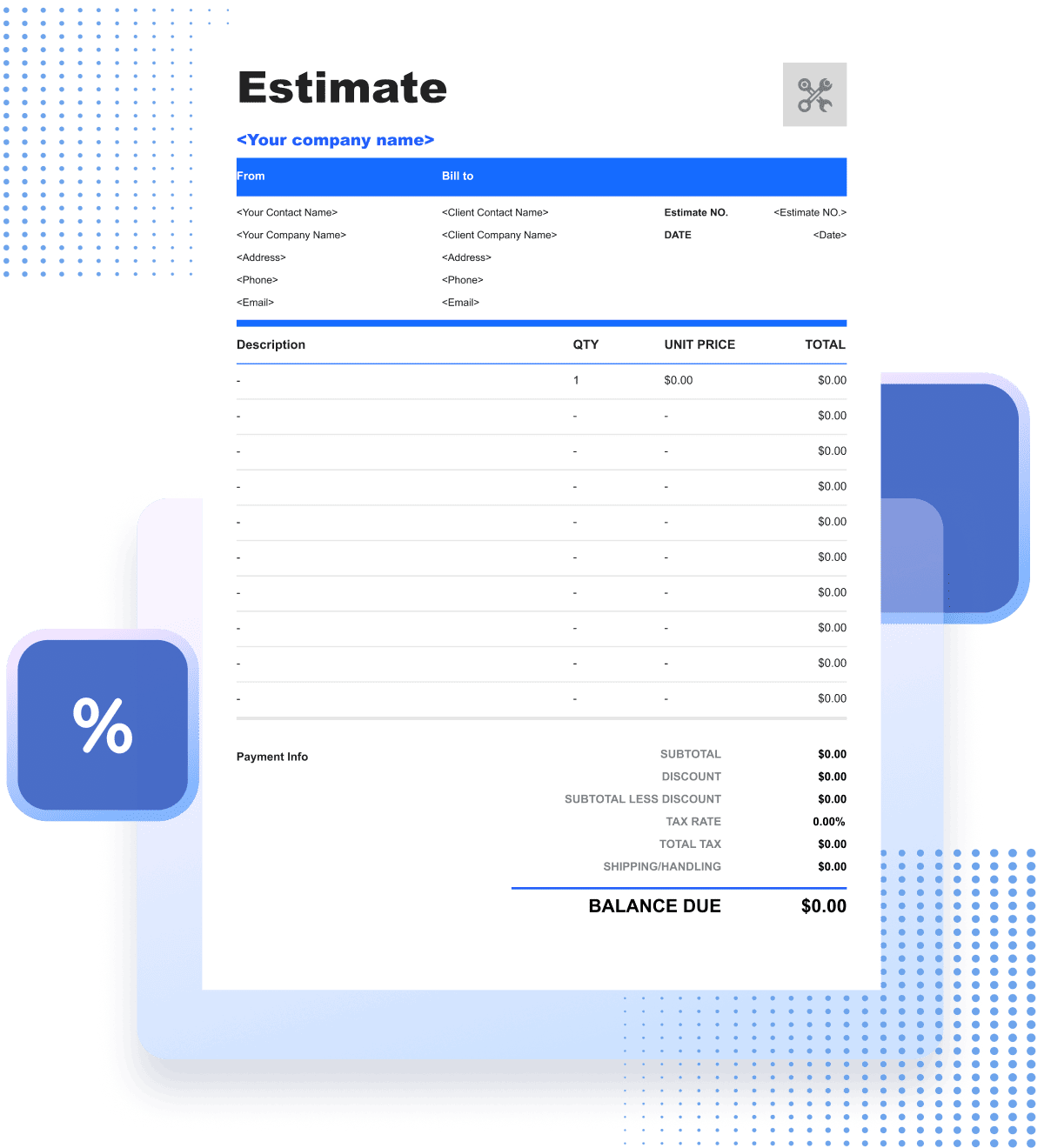
Auto Body Repair Estimate Template
An estimate number should carry the vehicle from the drive-in inspection to the final invoice without anyone retyping the damage. Put the VIN, the inspection findings and photographs, the repair procedures consulted, the parts sourcing decision, and the insurer and claim details under that one number.
Supplements are part of the process rather than a failure of the first write-up. Keeping every operation on its own line, with its hours and rate, lets the insurer see what was priced before teardown and what changed after it, and gives the shop the same basis for the supplement, the authorization, and the final bill.
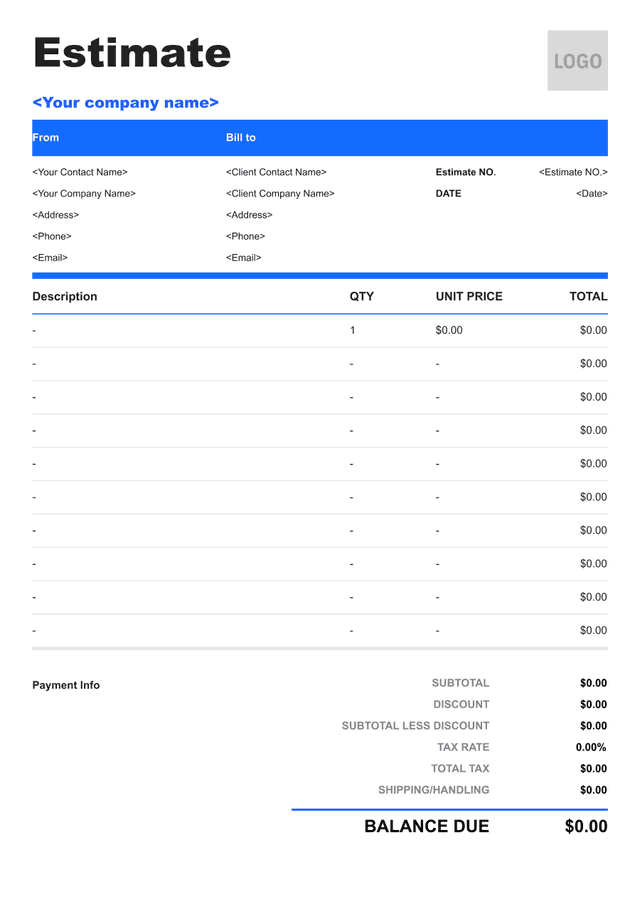


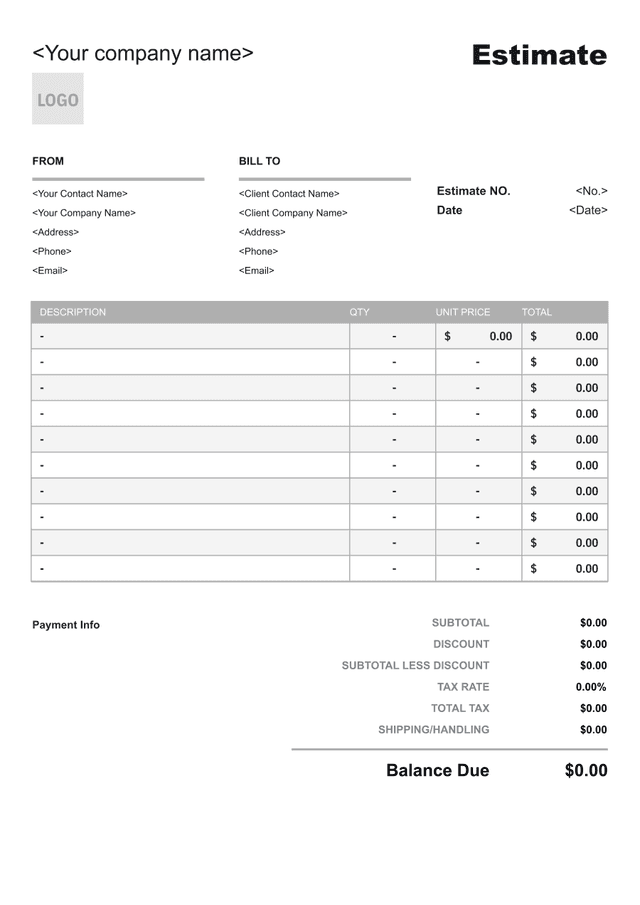
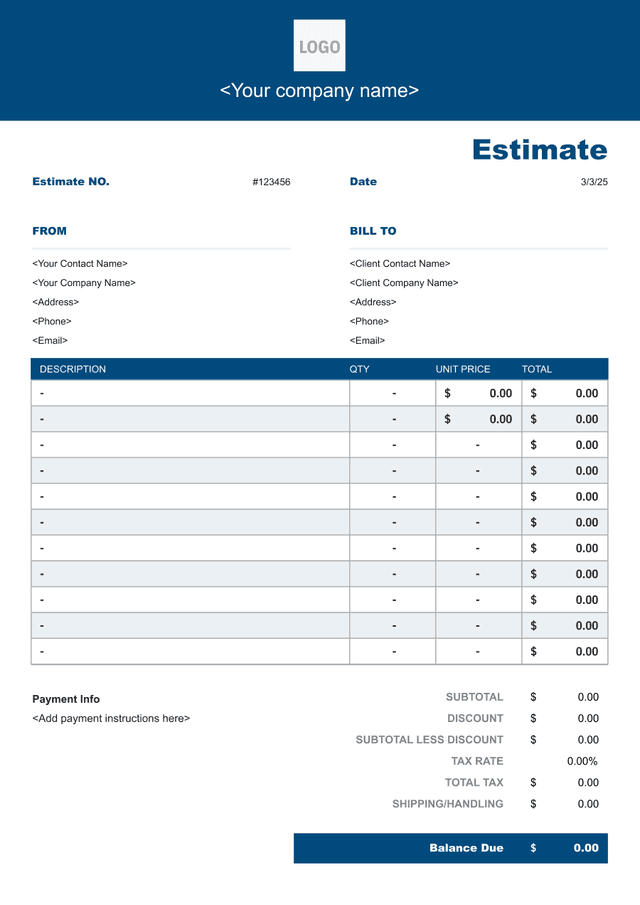
What Is an Auto Body Repair Estimate?
An auto body repair estimate is the shop's priced answer to one specific damage event: what the repair will probably cost, which operations it takes, and where the number may still move. The figure comes out of body, frame, and refinish hours, the parts and paint materials the repair consumes, and sublet work such as a diagnostic scan, an alignment, or a sensor calibration.
Most of the uncertainty sits behind whatever took the hit. A bumper cover, a wheel liner, or a headlamp can conceal a bent reinforcement, a cracked bracket, or a sensor that needs recalibrating, so a first number reflects only what was visible and measurable when it was written.
That makes it a decision document rather than a bill: the owner and the insurer use it to decide whether to repair, how to settle the claim, and what to budget. It is read next to the claim file and the repair order, and its value comes from separating findings that are confirmed from those that still depend on disassembly.
- 01
What the number represents
It is the cost of a repair path, not a commitment to repair for that amount. The figure reflects the damage documented, the parts sourcing choice between new OEM, aftermarket, and recycled, the labor and refinish rates in force, and the repair procedures consulted when it was written. Call it an estimate and price it as one, because a document that reads like a fixed bid is the one that gets argued over later.
- 02
How much detail it carries
A drive-in write-up and a post-teardown estimate are not the same kind of document. The first can carry broader operations and allowances for what is probably behind a panel; the second should name each panel, part, and refinish operation with its hours and rate. Matching the level of detail to how far the vehicle has been taken apart is what keeps the number reviewable.
- 03
Why the total moves
Supplements are normal rather than a failure of the first write-up. Hidden damage, a parts delay or substitution, corrosion found under a panel, and sublet calibration work all move the number after it is issued. Keep each provisional item on its own line with the reason it cannot be finalized yet, so the insurer and the owner can approve it on its own instead of reopening the whole total.
What to Include in an Auto Body Repair Estimate
Every line on a repair estimate should be traceable: to a photographed finding, a measured dimension, an OEM procedure, a parts sourcing decision, or a stated allowance. Before those lines, the document has to carry the identifiers that let the insurer, the shop, and the owner agree they are discussing the same vehicle and the same claim.
- 01
Business and client details
Name the shop with its licence or registration, address, phone, and email, and the owner with a contact number and the address where the vehicle is stored. Then the claim side: insurer, claim and policy number, adjuster and their contact, the deductible the policy applies, and the repair-order number this estimate becomes once it is authorized.
- 02
Estimate number, dates, and validity
Number it in its own sequence, separate from invoices, and put three dates on it: the date issued, the date the vehicle was inspected, and the date the damage was photographed. Then say how long the pricing stands, because parts availability and paint material costs do not hold still, and what has to happen once the validity period runs out.
- 03
Scope of work with inclusions and exclusions
Write the repair one operation at a time and say what each operation includes, then write down what it does not: pre-existing damage, unrelated wear, and mechanical complaints that cannot be traced to the collision. List the evidence behind the scope — photographs, measurements, diagnostic scans, the OEM procedures consulted — and the limits of that evidence, such as a bumper cover not removed or a wheelhouse liner left in place. Silence reads as inclusion.
- 04
Inspection, disassembly, and body or structural labor
Price the write-up itself first: damage mapping, the pre-repair diagnostic scan, photo documentation, teardown or partial disassembly, and estimate administration, on whatever basis the shop uses, such as inspection hours, a scan count, tear-down hours, or a flat fee credited against the repair. Then the repair labor: panel repair versus replacement, sectioning, dent pulling, bench measuring and straightening, welding, corrosion protection, and seam sealing.
- 05
Paint, parts, mechanical, and safety systems
Refinish is priced by operation rather than by panel color: preparation, primer, basecoat and clearcoat, blend panels, color matching and tinting, masking, booth time, and any three-stage or special finish. Then the parts list — panels, brackets, lamps, glass, moldings, clips, and one-time fasteners — with the part type, freight, and expected availability, followed by the cooling, suspension, electrical, restraint, and sensor work the repair disturbs or requires.
- 06
Totals, payment terms, warranty, and acceptance
Bring the numbers together in the order an adjuster reads them: subtotals by operation type, the paint and materials calculation, tax, the deductible and any betterment the policy applies, then the total. Under it, state how the deductible and insurer payments are handled, how supplements raised after teardown get authorized, what the workmanship warranty covers and for how long, how the parts warranty differs, storage terms if the vehicle stays on site, and a signature block with the printed name, the date, and the version accepted.
Reuse Saved Information in Invoice Zip
Use saved items and client information to create an auto body repair estimate in just a few taps.
How to Break Down an Auto Body Repair Estimate
Whether the job is a bumper cover or a quarter panel, the number is built the same way: confirm what is damaged, measure the operations it takes, price them at your rates, and check the result before it goes out.
Confirm the scope
Start from damage that can be documented, not from what was described over the phone. Walk the vehicle, photograph each area, and record what the inspection can and cannot see. Separate what is confirmed from what a teardown may still expose, and note the OEM repair procedure consulted for each operation, since that procedure decides whether a panel is repaired or replaced.
Measure the work
Turn each confirmed finding into operations with hours: body hours for panel repair, replacement, or sectioning, frame or structural hours for bench measuring and straightening, and refinish hours for preparation, basecoat, clearcoat, and blend panels. Add the measurable items, such as dimensions taken, dent counts, and sectioning points, and carry anything still hidden as an allowance with the reason it cannot be measured yet.
Apply resources and rates
Price the hours at the rate each operation earns, then add parts by sourcing decision, new OEM, aftermarket, or recycled, with freight and expected availability. Add paint and materials using the calculation the shop applies, sublet work such as scans, alignment, or calibration at the sublet price, and any storage or disposal charges. Keep each on its own line so a later supplement does not reopen the whole estimate.
Review and issue
Check the write-up against the photographs and the vehicle before it leaves your hands: operations with no finding behind them, hours with no operation, parts with no sourcing decision. Issue it under its own number with a validity period, then state what follows: a supplement when teardown exposes more damage, an authorization to repair once the owner or insurer agrees, and the work order after that.
Common Auto Body Repair Estimate Line Items
- 01
Inspection and disassembly
Write-up, damage mapping, pre-repair diagnostic scan, photo documentation, teardown, measuring, and estimate administration.
Typical units: inspection hours, scans, tear-down hours
- 02
Body and structural labor
Panel repair or replacement, sectioning, pulling, bench measuring, spot or MIG welding, corrosion protection, seam sealing, and structural procedures.
Typical units: body hours, frame hours, panels
- 03
Parts and hardware
Panels, brackets, lamps, glass, moldings, clips, one-time fasteners, part type, freight, and expected availability.
Typical units: each, kits, allowances
- 04
Paint and refinishing
Preparation, primer, basecoat and clearcoat, blend panels, color tinting, masking, and booth operations.
Typical units: refinish hours, paint units, panels
- 05
Mechanical and safety systems
Suspension, cooling, electrical, restraint, airbag and seat belt components, sensor, calibration, and diagnostic scan work tied to the repair.
Typical units: mechanical hours, scans, calibrations
- 06
Reassembly and quality control
Reassembly, wheel alignment, ADAS recalibration, post-repair scan, water leak testing, road test, detailing, and final inspection.
Typical units: hours, sublet fees, flat fees
Key Considerations for Auto Body Repair Estimates
- 01
Validate inspection and disassembly
Check the VIN and option codes against the parts catalog, confirm the scan report, and photograph every damaged area before teardown. State whether hours come from a labor-time guide or from observed work, and keep anything found only after disassembly, such as hidden structural or mechanical damage, outside the confirmed scope until it has been inspected and measured, with the supplement documented, submitted to the adjuster, and authorized before work continues.
- 02
Measure body and structural labor
Separate body, frame or structural, mechanical, and refinish rates, since shops and insurers usually rate them differently. Support panel replacement with the OEM sectioning procedure, and state whether measurements were taken on a bench system or by tram gauge. Price reassembly on its own line, including the correct clips and one-time fasteners, alignment, water leak testing, road test, final inspection against a written checklist, and the scan reports and calibration certificates the insurer expects.
- 03
Confirm parts and hardware
Confirm part numbers against the VIN, then record type as OEM, aftermarket, recycled, or reconditioned with the certification standard where one applies, and note backorders, obsolete parts, freight, and restocking, because parts availability usually drives the completion date more than labor does. Cover airbag and seat belt components, ADAS camera or radar calibration, and pre-repair and post-repair diagnostic scans, stating whether the work is done in-house or sublet, and price calibration as a defined operation because it needs a level floor, correct ride height, and specific targets.
- 04
Plan paint and refinishing
Price refinish operations per panel, including blending into adjacent panels, tinting for color variance, and any three-stage or matte finish, and show paint materials either as a rate per refinish hour or as measured product, stating which method the shop uses before the estimate is issued. Identify parts and refinishing options by name and status, note where the insurer or policy limits the choice, and record who approved each change, its cost, and its effect on the completion date.
Auto Body Repair Estimate, Quote, or Invoice?
Estimate
Projected cost
- Purpose
- Put a defensible number on the damage that has been seen and documented, using labor-time data, parts pricing, and the inspection or teardown findings in hand.
- When used
- After an inspection or a teardown, while parts sourcing and claim terms are still being agreed.
- Next document
- Issue a numbered supplement as teardown exposes more damage, or convert it into an authorization to repair and a work order once scope is settled.
Quote
Defined offer
- Purpose
- Offer one price for one defined repair path, naming the parts type and the refinish operations the owner or insurer has agreed to.
- When used
- Once the vehicle is torn down, the parts are confirmed, and the operations, rates, and completion date are known.
- Next document
- Keep the signed authorization with the file, and record any later parts substitution, supplement, or scheduling delay against it.
Invoice
Payment request
- Purpose
- Ask for money that is actually due: a deductible, a progress payment, the balance at pickup, or an approved supplement.
- When used
- At a payment event — the vehicle is collected, the insurer pays its share, or a supplement is approved.
- Next document
- Record what was paid, credit the deposit and the insurer payment, and show the balance the owner still owes.
Auto Body Repair Estimate FAQs
Is an auto body repair estimate final before the vehicle is disassembled?
No. An estimate from a visual inspection prices visible damage only — reinforcements, brackets, and inner panels behind the outer skin cannot be assessed until teardown. Treat the first total as provisional, and when hidden damage appears, issue a numbered supplement tied to the original estimate rather than quietly changing the total.
How should body labor, parts, paint, scans, and calibrations be priced?
Use the unit each operation is rated in: body hours, frame hours, refinish hours, part counts, and flat sublet fees, with rates kept separate by operation type. Price parts by type and quantity including clips and fasteners, and confirm whether paint materials are rated per refinish hour or from measured product before issue.
What happens when hidden collision damage is found during teardown?
Stop, document, and re-estimate. Photograph the added damage, list the new operations as a separate supplement, and send it to the adjuster for approval before the work proceeds. Explain to the owner what was found and what portion may fall to the deductible, then continue only after authorization.
How should part type and refinishing choices appear in the estimate?
List each part as OEM, aftermarket, recycled, or reconditioned with the certification standard where one applies, and note whether the insurer limits the choice. Show the part price, freight, and related labor separately, and document any schedule difference when the owner or insurer selects a different option.
Other Free Resources

Try Invoice Zip Today
Start Sending Invoices, Building Reports, Saving Office
Time and Get Paid Faster.