


Pro Forma Invoice Template
Share a clear preliminary invoice before a sale is finalized or for an eligible no-sale shipment. Describe the proposed goods, values, terms, and expected charges without presenting the document as a final bill.
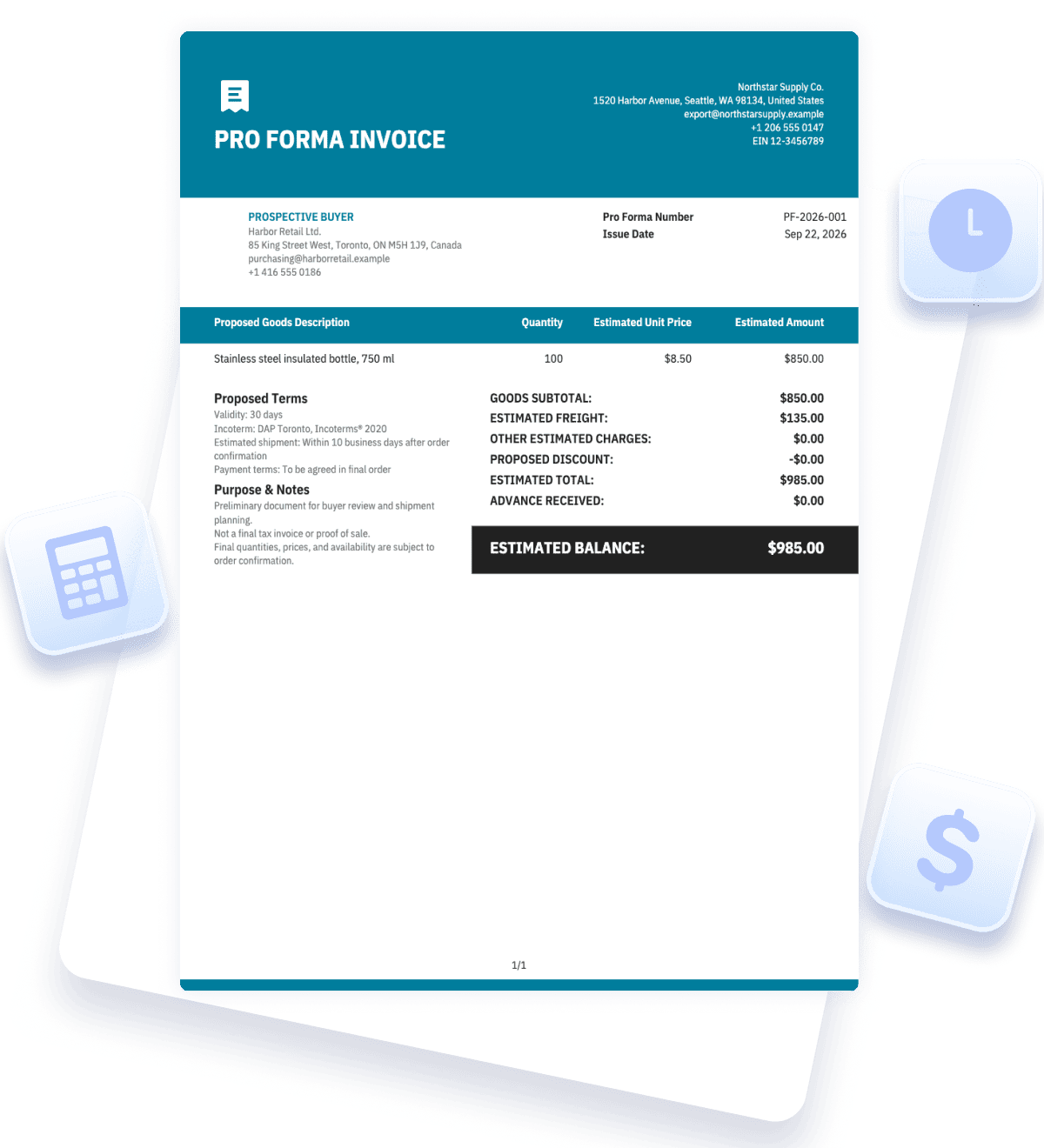
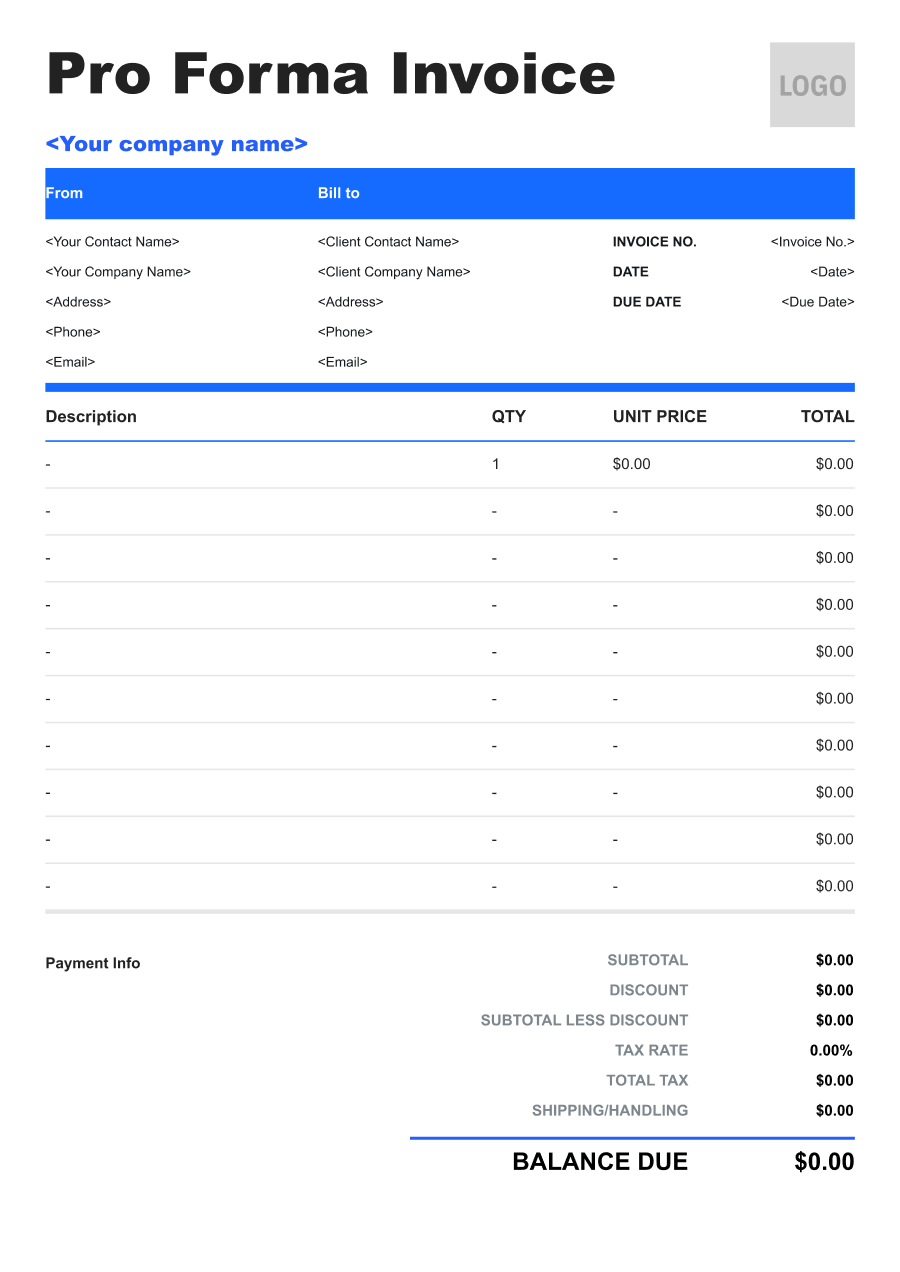


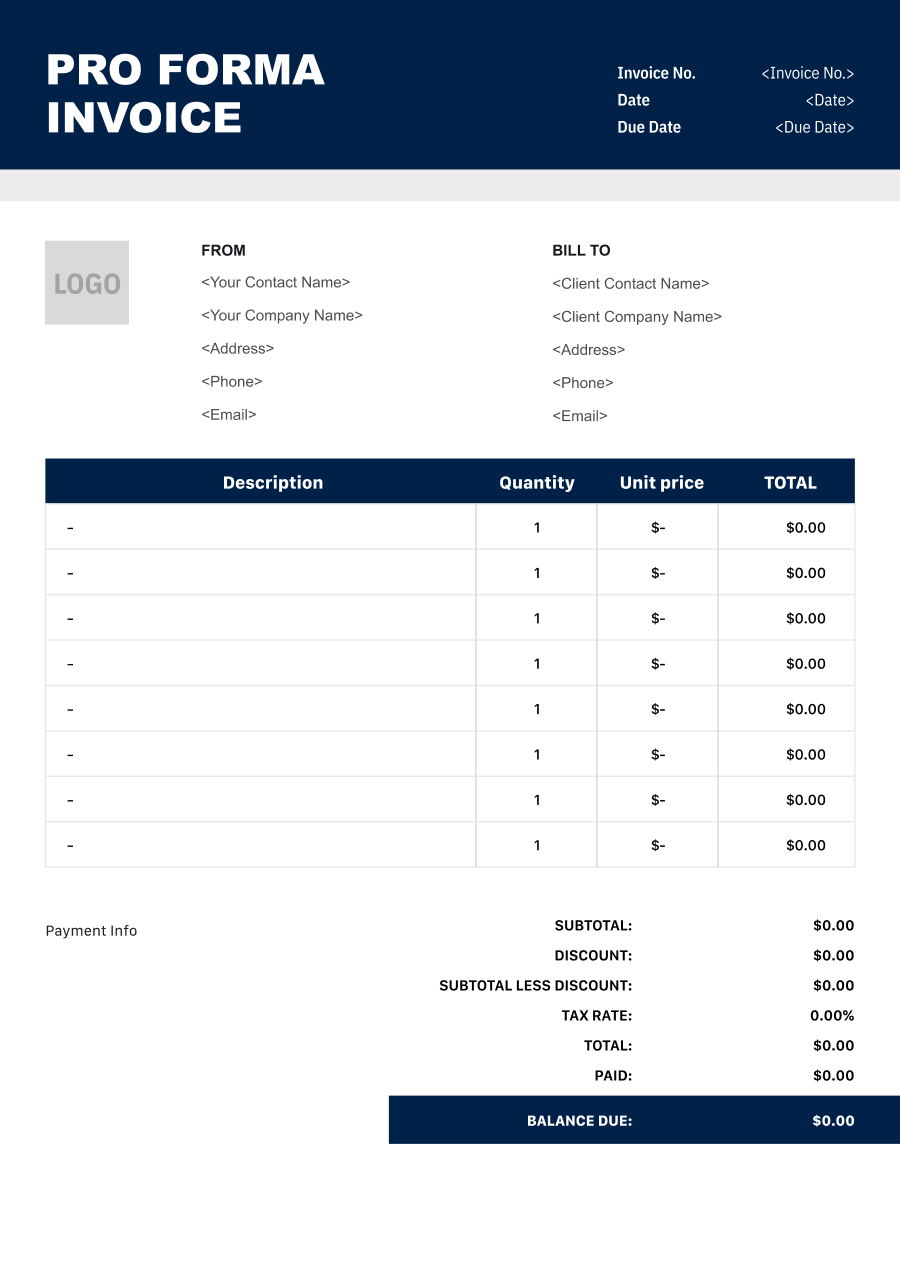
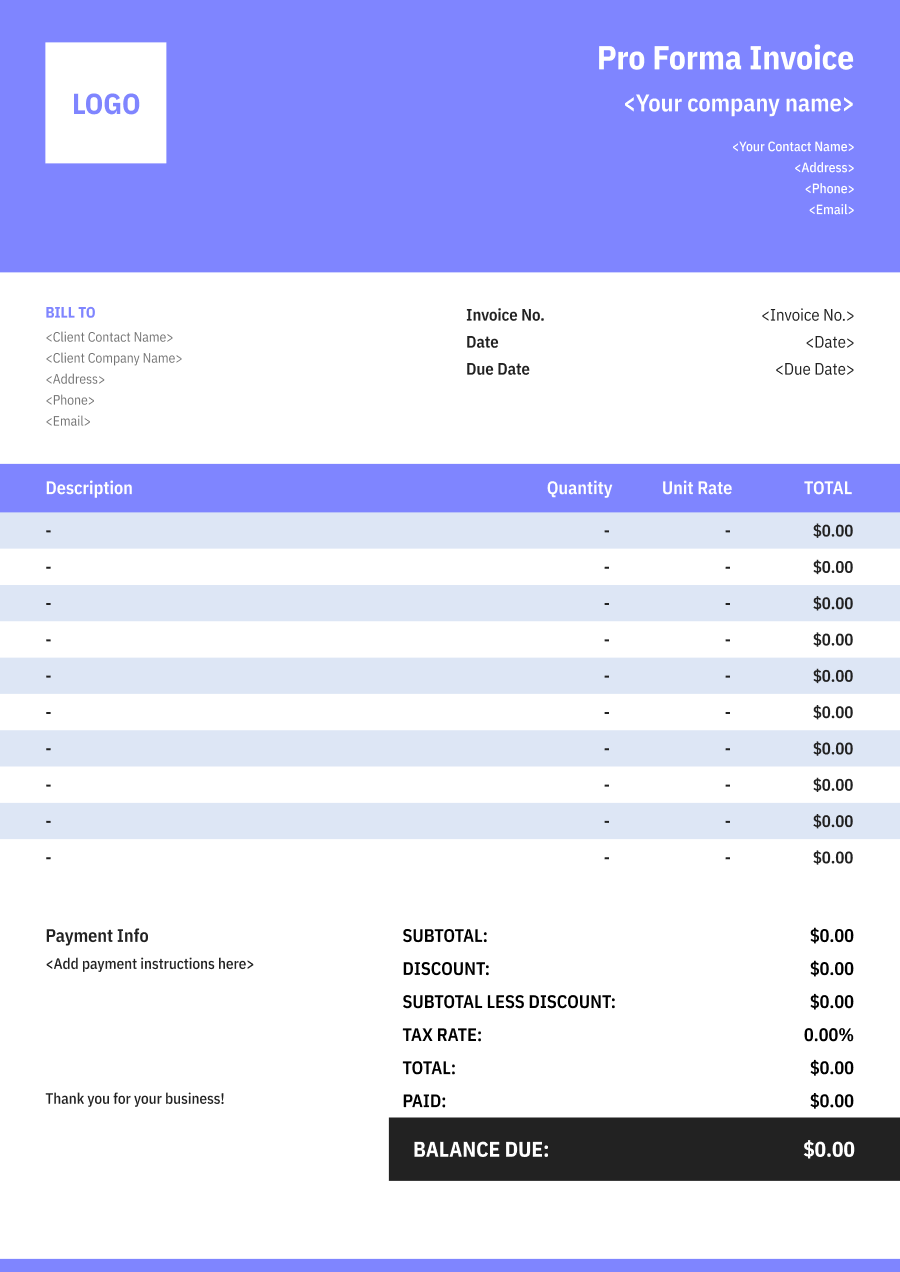
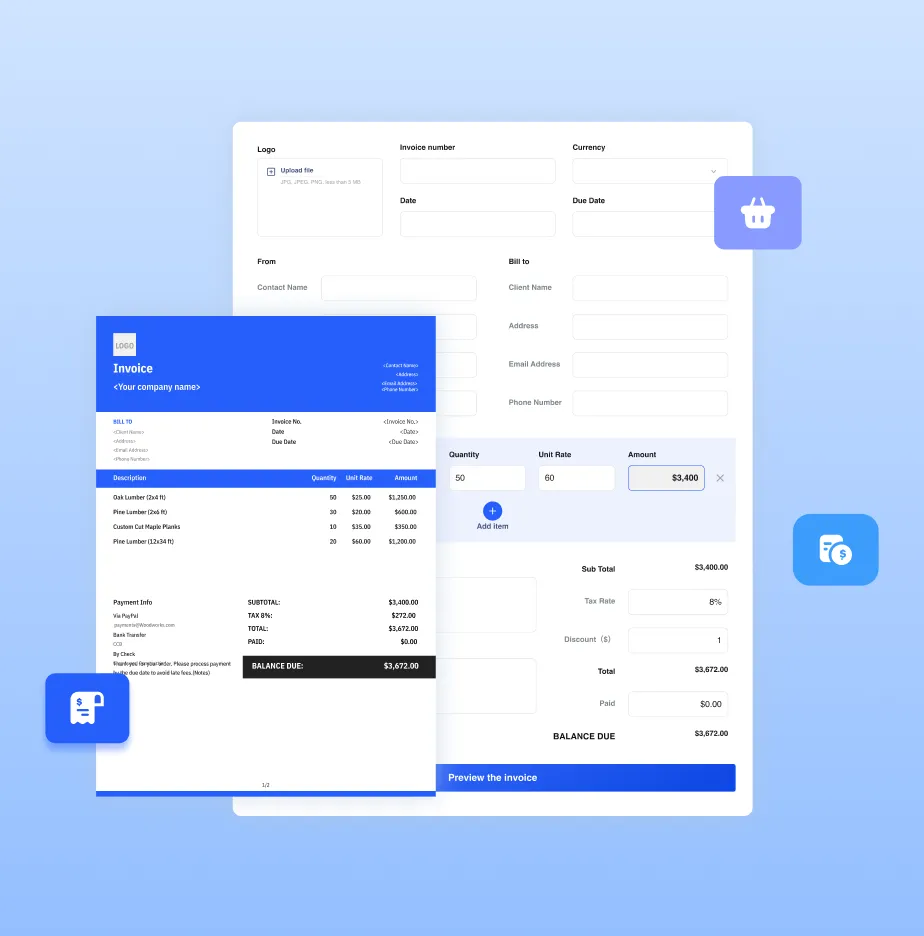
Create a Pro Forma Invoicewith a Live Preview
Enter the proposed buyer, goods, prices, and shipping terms, then review the document before sharing it for approval or shipment planning.
Document Details
Identify this preliminary document and its validity period.

JPG, JPEG, PNG, less than 5 MB
Seller & Buyer
Add the parties considering or arranging the transaction.
From
Bill to
Proposed Goods
Describe the expected products, quantities, and values.
Estimated Value & Terms
Summarize expected charges and the conditions behind them.


Reuse Saved Information in Invoice Zip
Use saved items and client information to create an invoice in just a few taps.
What Is a Pro Forma Invoice?
A pro forma invoice is a preliminary document that describes a proposed transaction before the final sale invoice is issued. It can show the seller and buyer, expected goods, estimated prices, shipping terms, and a validity period so the recipient can review the planned transaction.
It resembles an invoice but should be labeled clearly because it is not the final billing record. The figures may support approval, purchasing, financing, or certain shipment preparations, but they should not be treated as final revenue or proof that payment is due unless the parties' separate terms say otherwise.
Once the buyer confirms the order, compare the pro forma details with the final quantities, prices, availability, and delivery terms. Issue the appropriate final sales or commercial invoice from the confirmed facts rather than simply removing the words “pro forma.”
For cross-border or no-sale shipments, acceptance and required fields can vary by carrier, destination, and purpose. Confirm the applicable documentation and declared-value rules before dispatch.
- 01
Preliminary transaction
Present proposed goods, prices, and terms for review.
- 02
Clear document status
Label it pro forma so it is not mistaken for final billing.
- 03
Path to final invoice
Reconcile the proposal with the confirmed order before invoicing.
What to Include on a Pro Forma Invoice
A useful pro forma invoice is specific enough to evaluate while clearly identifying every figure or date that remains provisional.
- 1
Seller and Prospective Buyer
Identify the parties and their contact details. For a shipment, distinguish buyer, consignee, and importer when they are not the same entity.
- 2
Pro Forma Number and Date
Assign a traceable reference and issue date, and state how long the offer or preliminary terms remain valid.
- 3
Detailed Goods or Services
Describe each proposed item in plain language with model, material, or scope details that affect price or shipment.
- 4
Expected Quantities and Prices
Show quantity, unit, proposed unit price, line amount, currency, and estimated total so the recipient can check the calculation.
- 5
Estimated Charges
List expected freight, insurance, tax, packaging, or other charges separately and label estimates where the final amount is not known.
- 6
Proposed Delivery Terms
State anticipated delivery timing, shipping method, and trade term or named place when relevant to the transaction.
- 7
Validity and Conditions
Explain the validity period and material conditions such as availability, buyer approval, or final measurement.
- 8
Status Statement
State that the document is pro forma and not the final invoice. Avoid numbering or wording that makes it indistinguishable from posted invoices.
Common Uses of a Pro Forma Invoice
A pro forma invoice can organize proposed transaction details before the final billing event or support certain non-final shipment workflows.
- 01
Buyer approval
A buyer reviews expected products, prices, currency, and delivery terms before confirming an order.
- 02
Purchase authorization
A customer uses the preliminary total to obtain internal approval or create a purchase order.
- 03
International shipment planning
The parties or carrier review expected goods and values before the final shipping documents are prepared.
- 04
Advance-payment arrangement
A seller communicates the planned order and payment terms before a final invoice is issued, where appropriate.
- 05
Samples or no-sale goods
A shipper provides a stated value and purpose when a pro forma document is accepted for that route and shipment.
The document should reflect its real purpose. A sample shipment, a proposed sale, and an approved order are different situations even if their item tables look similar. Do not use a pro forma invoice to conceal a completed sale or avoid required final documentation. Preserve revisions so the final transaction can be reconciled with what the buyer reviewed.
Pro Forma Invoice vs. Commercial Invoice
Both may describe parties and goods, but they represent different transaction stages and should not be used interchangeably without checking the shipment facts.
| Question | Pro forma invoice | Commercial invoice |
|---|---|---|
| When is it prepared? | Before a sale is finalized or for an accepted no-sale purpose. | For the actual sale and goods being shipped. |
| What values appear? | Proposed, anticipated, or purpose-specific values. | The actual transaction and item values for the shipment. |
| Does it finalize billing? | Usually no; it communicates preliminary terms or value. | It records the final sale details and may state the amount due. |
| How is it used for customs? | May be accepted for certain samples or no-sale shipments. | Commonly supports clearance for goods sold across borders. |
A pro forma invoice is not merely a commercial invoice with a temporary title. Before selecting either document, determine whether a sale has occurred, what value must be shown, and what the destination and carrier require. If an earlier pro forma becomes an order, review every line before issuing the final document because quantity, price, origin, or shipping terms may have changed.
Pro Forma Invoice Tips for Preliminary Transactions
Clear status labels and explicit assumptions keep a preliminary document useful without letting it masquerade as final billing.
- 01
Label it prominently
Use “Pro Forma Invoice” in the document title and include a note that it is not the final invoice.
- 02
State a validity period
Tell the recipient how long prices, availability, or terms can be relied upon before the document must be updated.
- 03
Separate estimates from known facts
Mark freight, taxes, delivery dates, or quantities as estimated when they have not been confirmed.
- 04
Reconcile before finalizing
Compare the accepted order and actual shipment with the pro forma version before creating the final invoice.
Pro Forma Invoice FAQs
Is a pro forma invoice a request for payment?
It usually communicates proposed transaction details rather than final billing. If an advance payment is separately agreed, make the payment terms and document status clear and follow the business's accounting process.
Can a pro forma invoice be used for customs?
It may be accepted for certain no-sale or preliminary shipment purposes, depending on the goods, carrier, and destination. Confirm the route-specific requirements before shipping.
Should I assign a number to a pro forma invoice?
Yes. A distinct reference helps track revisions and connect the document to a later order, while a separate numbering convention can prevent confusion with final invoices.
Can prices change after a pro forma invoice is sent?
They can when the stated terms allow it or the underlying facts change. Record the revision and obtain any needed buyer approval before issuing the final invoice.
When should I replace it with a final invoice?
Issue the appropriate final invoice when the sale or billing event is confirmed. Use the accepted quantities, prices, charges, and terms rather than copying provisional figures without review.
Other Free Resources

Try Invoice Zip Today
Start Sending Invoices, Building Reports, Saving Office
Time and Get Paid Faster.