


Common Construction Tools
9min read
|
Sep 24, 2026
Construction work requires a wide range of tools, from basic hand tools used on almost every job to specialized equipment designed for specific trades. The right tools help contractors measure accurately, complete work efficiently, and maintain consistent quality on the job site.
The tools a contractor needs depend on the type of construction work they perform. A general contractor may use measuring, cutting, fastening, and layout tools every day, while electricians, plumbers, HVAC technicians, carpenters, and concrete contractors often rely on specialized equipment.
For contractors and small construction businesses, tools are also part of the cost of doing business. Keeping track of equipment, materials, labor hours, and other job costs can make it easier to prepare accurate estimates and understand the actual cost of completing a project.
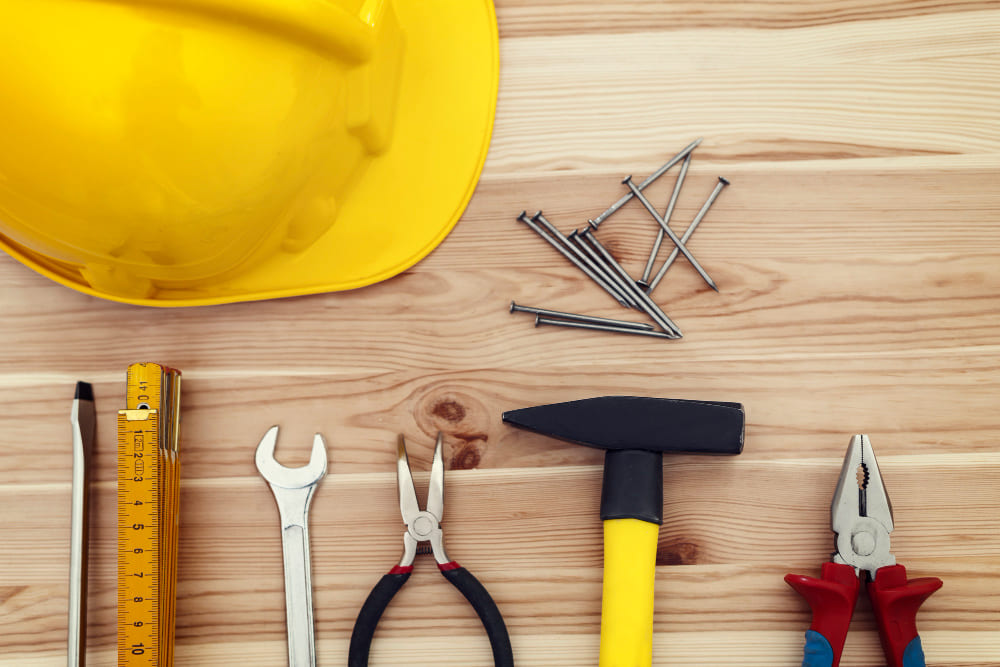
What Are the Most Common Construction Tools?
Construction tools can generally be divided into several categories, including measuring tools, hand tools, power tools, safety equipment, and specialized trade tools.
Some of the most commonly used construction tools include:
| Tool | Common Use |
|---|---|
| Tape Measure | Measuring distances and dimensions |
| Level | Checking whether surfaces are horizontal or vertical |
| Laser Level | Projecting accurate horizontal or vertical reference line |
| Framing Square | Measuring and marking angles and layouts |
| Chalk Line | Marking long, straight reference lines |
| Hammer | Driving nails and general demolition work |
| Screwdriver | Installing and removing screws |
| Pliers | Gripping, bending, and cutting materials |
| Adjustable Wrench | Tightening and loosening nuts and bolts |
| Utility Knife | Cutting drywall, insulation, packaging, and other materials |
| Pry Bar | Removing nails, boards, trim, and other materials |
| Chisel | Cutting, shaping, and removing material |
| Cordless Drill | Drilling holes and driving screws |
| Impact Driver | Driving screws, bolts, and other fasteners |
| Hammer Drill | Drilling into masonry, concrete, and other hard materials |
| Circular Saw | Making straight cuts in wood and other materials |
| Reciprocating Saw | Cutting wood, metal, pipes, and materials during demolition |
| Miter Saw | Making precise crosscuts and angled cuts |
| Angle Grinder | Cutting, grinding, and finishing metal or masonry |
| Nail Gun | Fastening wood and other materials with nails |
| Rotary Hammer | Drilling and chiseling concrete, brick, and masonry |
| Handsaw | Cutting wood and other materials manually |
| Bolt Cutters | Cutting bolts, chains, wire, and other metal materials |
| Concrete Mixer | Mixing concrete, mortar, and other construction materials |
| Trowel | Spreading and finishing concrete, mortar, and other materials |
| Screed | Leveling and smoothing freshly placed concrete |
| Wheelbarrow | Moving materials, debris, concrete, and soil |
| Hand Truck | Moving heavy boxes, tools, and materials |
| Ladder | Reaching elevated work areas |
| Scaffolding | Providing a stable elevated work platform |
The tools required for a particular project depend on the materials, job scope, and trade involved. A small repair job may require only basic hand tools, while a larger construction project can involve power tools, specialty equipment, and machinery.
Hand Tools
Hand tools are some of the most frequently used items on a construction site. They generally do not require electricity or batteries and are commonly used for measuring, fastening, cutting, positioning, and finishing work.
A tape measure is essential for determining dimensions before materials are cut or installed. Levels help contractors check walls, cabinets, frames, pipes, and other components for proper alignment. Hammers, screwdrivers, wrenches, pliers, and utility knives are also common across many construction trades.
Because hand tools are relatively portable, contractors often keep their most frequently used tools in a tool bag or toolbox that can move from one job to another. A contractor may use the same basic set of hand tools across dozens of projects, even when the type of work changes.
Although individual hand tools may not be particularly expensive, replacing lost or damaged tools can become a meaningful business expense over time. Keeping receipts and purchase records can help contractors maintain better records of these costs and understand how much they are spending to operate the business.
Power Tools
Power tools allow contractors to complete many tasks faster than traditional hand tools. Corded and cordless models are commonly used for cutting, drilling, fastening, grinding, sanding, and demolition.
Some common construction power tools include:
- Cordless drills and impact drivers
- Circular saws
- Reciprocating saws
- Miter saws
- Table saws
- Rotary hammers
- Angle grinders
- Sanders
- Nail guns
- Demolition hammers
Different power tools are designed for different materials and applications. For example, a circular saw may be used for straight cuts in lumber, while a reciprocating saw is useful for demolition and cutting in areas where a larger saw is difficult to position.
Cordless tools can be particularly convenient for contractors working in locations where power is not readily available. However, batteries, chargers, blades, drill bits, and other accessories are also part of the cost of using these tools.
For contractors who use power tools frequently, maintenance and replacement should also be considered. A tool that breaks down in the middle of a project can cause delays, while worn blades or bits can affect the quality and efficiency of the work.
Measuring and Layout Tools
Accurate measurements are essential before materials are ordered, cut, or installed. Measuring and layout tools help contractors determine dimensions and keep construction work aligned with project specifications.
Common examples include tape measures, levels, framing squares, chalk lines, laser levels, and measuring wheels.
Laser levels can be particularly useful for larger projects because they provide a consistent reference line across a room or work area. A framing square can help with layout and marking, while a chalk line can create long, straight reference lines on construction surfaces.
Measurement tools may seem simple compared with heavy equipment, but mistakes at this stage can lead to wasted materials, additional labor, and rework. For contractors, accurate measurements can therefore affect both project costs and the final price charged to the customer.
Construction Safety Equipment
Safety equipment is different from tools used to perform the physical work, but it is an important part of construction operations.
Common personal protective equipment and safety items include:
- Hard hats
- Safety glasses
- Work gloves
- Hearing protection
- High-visibility clothing
- Respirators or other appropriate respiratory protection
- Protective footwear
- Fall protection equipment
The specific safety equipment required depends on the work being performed and the conditions on the job site. Contractors should follow applicable workplace safety requirements and use equipment appropriate for the hazards involved.
Safety equipment can also become an ongoing operating expense, particularly for businesses with employees. Protective equipment may need to be replaced because of wear, damage, contamination, or changes in job requirements.
For a small contractor, these costs may be relatively easy to overlook because individual purchases can be inexpensive. Over time, however, regularly replacing gloves, protective eyewear, respirators, or other equipment can add to the cost of running a construction business.
Tools for Different Construction Trades
Not every contractor needs the same set of tools. Specialized trades often require equipment designed around the materials and tasks they handle.
Plumbing Tools
Plumbers commonly use pipe wrenches, tubing cutters, pipe cutters, drain augers, basin wrenches, pipe inspection equipment, and other specialized tools.
The exact tools depend on whether the work involves installing new plumbing, repairing existing systems, clearing drains, or working with specific types of pipe. A plumber handling a simple fixture replacement may need only a small selection of tools, while a larger installation or repair job can require specialized cutting, inspection, and testing equipment.
Electrical Tools
Electricians typically use tools such as wire strippers, cable cutters, fish tapes, multimeters, voltage testers, conduit tools, and insulated hand tools.
Electrical work also requires appropriate safety practices and equipment because the tools and work environment can involve electrical hazards. Many electricians carry a dedicated set of hand tools and testing equipment that they use across different jobs.
HVAC Tools
HVAC contractors may use refrigerant gauges, vacuum pumps, leak detectors, thermometers, electrical testing equipment, tubing tools, and other specialized equipment.
Because HVAC systems combine mechanical, electrical, and refrigeration components, technicians often need a broad range of diagnostic and installation tools. The equipment required can vary considerably between routine maintenance, repairs, and new system installations.
Carpentry Tools
Carpenters commonly work with tape measures, levels, squares, saws, drills, nail guns, chisels, clamps, and other woodworking tools.
For finish carpentry, contractors may also use specialized saws, sanders, routers, and precision measuring equipment where accurate cuts and finishing are particularly important. A framing contractor and a finish carpenter may therefore have very different tool collections even though both work primarily with wood.
Concrete Tools
Concrete contractors use tools such as concrete mixers, screeds, bull floats, trowels, concrete vibrators, edgers, and finishing tools.
Large concrete projects may also require equipment such as pumps or other machinery, depending on the scale and site conditions. Some contractors own this equipment, while others rent it for individual projects when purchasing and maintaining the equipment would not make financial sense.
How Much Do Construction Tools Cost?
Construction tool costs vary significantly depending on the type of tool, brand, quality, power source, and intended use.
A basic hand tool may cost relatively little, while professional power tools and specialized equipment can cost hundreds or thousands of dollars. Contractors should consider both the purchase price and the expected useful life of a tool when deciding what equipment to buy.
For a small construction business, tool expenses can take several forms. A contractor may purchase everyday hand tools, replace power-tool batteries and accessories, maintain existing equipment, or rent specialized machinery for a particular project. These costs can have different accounting and tax treatments depending on the business and the type of purchase.
Tool costs can also affect job pricing. If a contractor regularly uses specialized equipment for a particular type of project, the cost of owning, maintaining, transporting, or renting that equipment may need to be considered when calculating the overall project price.
This is particularly important for equipment that is expensive but only used occasionally. Renting a concrete saw, lift, excavator, or other specialized machine for one project may be more practical than purchasing it, but the rental cost still needs to be accounted for when estimating the job.
How Construction Tools Affect Project Costs
Construction tools are only one part of the cost of completing a project. Contractors also have to account for labor, materials, equipment, transportation, disposal, subcontractors, overhead, and other expenses when determining what to charge.
For example, a contractor preparing an estimate for a renovation project may calculate the expected labor hours and material costs first. If the project also requires equipment that the contractor needs to rent, that rental cost can be added to the project estimate. The contractor can then use the total expected costs, along with the desired markup or profit margin, to determine the proposed price.
Not every tool used on a job should automatically become a separate customer charge. Everyday tools such as hammers, drills, tape measures, and screwdrivers are generally part of the contractor's normal operating costs. A specialized equipment rental, on the other hand, may be treated as a project-specific cost when it is necessary for the job and included in the agreed pricing.
Keeping track of these costs can also make it easier to compare the original estimate with the actual cost of completing the work. If a project consistently takes more labor hours or equipment expenses than expected, the contractor can use that information when pricing similar jobs in the future.
Once the work is completed, accurate records of labor, materials, equipment, and other billable items also make invoicing easier. Instead of reconstructing the project from memory, the contractor can use the job records to prepare an invoice that reflects the work actually performed and the charges agreed upon with the customer.
For construction businesses, good tool and cost management therefore supports more than productivity on the job site. It can also contribute to more accurate estimating, clearer project records, and more consistent billing.
Most Popular Pages



Try Invoice Zip Today
Start Sending Invoices, Building Reports, Saving Office
Time and Get Paid Faster.