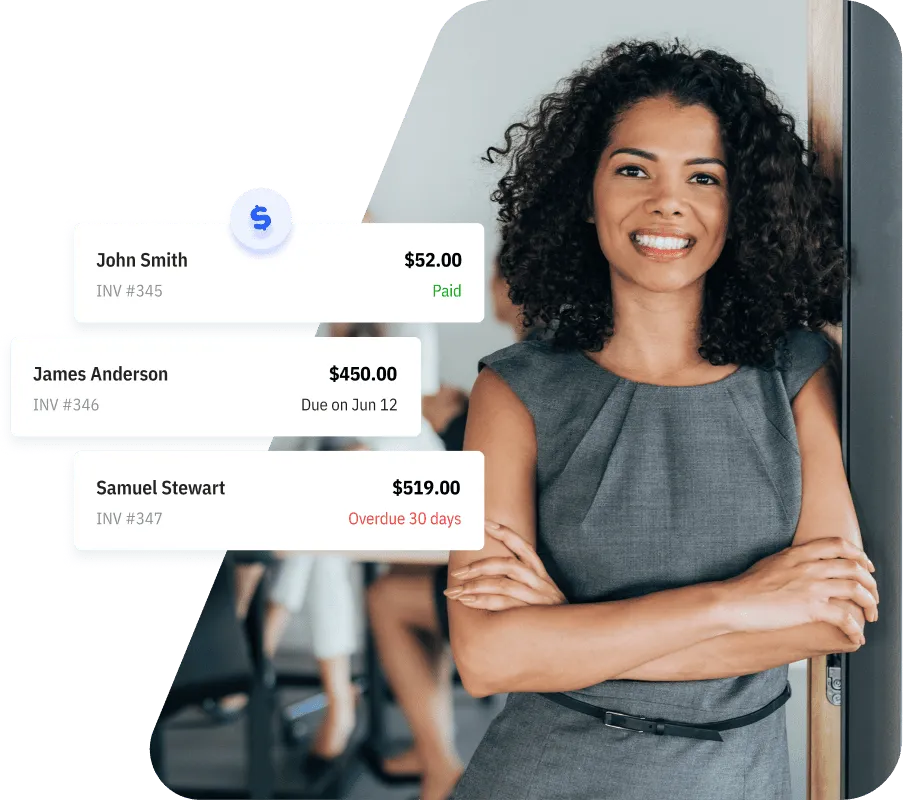


What Is an Open Invoice
Your accounting software shows 47 open invoices. Some are a week old. Some are pushing 90 days. You know the big ones by heart — but that $800 invoice from January? You forgot about it until just now. An open invoice is simply one you've sent but haven't been paid for yet. The difference between a one-week-old open invoice and a 90-day one is enormous, and most small businesses have no system to tell them apart.

What an Open Invoice Is
An open invoice is any invoice you've issued to a customer but haven't been paid in full. It sits on your books as accounts receivable (A/R) — money owed to you that hasn't arrived yet. The category includes invoices still within their payment terms and ones that are already past due. An invoice stays open until it's paid completely; a partially paid invoice remains open for its remaining balance — a $6,000 invoice with $3,000 received is still open for $3,000. The sum of every open invoice is your accounts receivable — the live picture of money you've earned and billed but not yet banked.
Think of it this way: a closed invoice is cash. An open invoice is a promise. Until that promise is kept, the money is not yours to spend. That single distinction drives almost every cash-flow problem a contractor faces.
Open vs Outstanding vs Overdue
- Open: the broadest term — any unpaid invoice, whether it's still inside its terms or already past due.
- Outstanding: in many systems this carries a more urgent tone, implying the payment deadline has passed.
- Overdue: the narrowest category — past the payment deadline, and the one that demands action.
Usage varies: some teams reserve "open" for invoices still within terms and "outstanding" for overdue ones. Either way, overdue is the status that needs a response. A five-day-old open invoice needs no follow-up; a 28-day outstanding one needs monitoring; a 45-day overdue one needs a phone call. The label matters less than the age of the invoice, which is why aging buckets (below) beat vocabulary debates.
Why Open Invoices Are Your Biggest Hidden Risk
Open invoices feel like assets — and on paper they are. But until they're collected, they're unfunded promises that can quietly sink a business. The scale of the problem is staggering. In the U.S. alone, more than $825 billion sits tied up in unpaid B2B invoices at any given time. In the UK, the figure is roughly £112 billion, per analysis by the Centre for Economics and Business Research (CEBR). Smaller businesses carry the heaviest load: a 2025 study of UK small firms found 62% of small businesses were waiting on unpaid invoices, averaging £21,400 each in overdue money.
That's not a rounding error. For a one-person electrical or plumbing shop, £21,400 — or the U.S. equivalent — is often several months of operating runway. The risk isn't that open invoices exist; it's that they age past the point of easy collection while you assume they're fine.
How Aging Buckets Work (30 / 60 / 90)
Aging is the practice of sorting every open invoice by how long it's been unpaid. The standard brackets are 0–30 days, 31–60 days, 61–90 days, and 90+ days. The older the bucket, the lower the odds of collection. Industry payment data from Atradius and the EU Payment Observatory consistently show that beyond 90 days, recovery rates fall sharply — many debts are never collected at all.
Aging turns a vague "I'm owed money" feeling into an actionable list. You stop treating all 47 open invoices the same and start treating the 90-day ones like emergencies.
Aging Buckets & the Action You Should Take
Use this table as a weekly triage rule. The share of A/R column is an illustrative example from a sample contractor ledger — your real ratios will differ, but the actions should not.
| Aging bucket | Typical share of A/R* | Recommended action |
|---|---|---|
| 0–30 days | ~55% | On track. Confirm receipt, no nudge yet. |
| 31–60 days | ~25% | Send a friendly reminder; confirm PO and scope. |
| 61–90 days | ~13% | Firm dunning email + phone call; pause new work. |
| 90+ days | ~7% | Collections, lien, or write-off path (see below). |
The takeaway: a small slice of your invoices (the 90+ bucket) usually holds a dangerous share of your risk. Watch it closest.
The $25K vs $8K Runway Example
Here's why aging kills businesses. Two contractors each have $40,000 in open invoices. Contractor A's book is fresh — most invoices are under 30 days, so collections are predictable and A keeps $25,000 of usable cash runway after normal costs. Contractor B's book is stale — half the $40,000 is over 90 days and unlikely to arrive. B's real, bankable runway is closer to $8,000.
Same headline number. Wildly different survival odds. Aging tells you which number is real. That's the entire point of tracking open invoices seriously instead of glancing at a total.
How to Track Open Invoices (Without Buying a Fleet You Don't Need)
You need a live list of every open invoice, its age, and its status — updated automatically. The market splits two ways. Heavy field-service management (FSM) suites bundle scheduling, dispatch, inventory, and A/R dashboards into one platform. They're powerful, but a solo electrician or plumber pays for modules they'll never open. Broader accounting platforms are strong on bookkeeping but weaker on fast, mobile, on-site invoicing. What you want is a focused system that keeps a live list of open invoices and flags what's overdue, without charging you for fleet modules you'll never use.
How to Get Paid Faster
Speed comes from three levers. First, shorten your terms — net-30 instead of net-60 removes a whole aging bucket. Second, offer a 2% early-pay discount for payment within 10 days. On a $700,000 annual book, pulling receivables in just two weeks can unlock roughly $14,000 of working capital that would otherwise sit idle. Third, automate reminders so nothing slips past 30 days unnoticed.
Pair these with clear, professional documents. Ready-made contractor invoice templates help every job go out looking legit and payment-ready. New to invoicing? Start with our What Is an Invoice guide.
What to Do at 90+ Days
Once an invoice crosses 90 days, gentle nudges stop working. You move to structured escalation:
- Final demand letter — state the amount, the original due date, and a firm new deadline (7–10 days).
- Collections agency — they take a percentage (often 20–50%) but pursue the debt so you don't have to. Good for invoices you've given up chasing yourself.
- Mechanic's lien — for qualifying construction work, filing a lien against the property can force payment. Rules vary by state; this is where a CPA or attorney earns their fee.
- Write-off — if the debt is truly uncollectible, close it out (and capture the tax benefit — see next section).
Dead debt isn't just a loss; handled right, it's a documented deduction. Acting at 90+ days protects both your cash and your tax position.
Open Invoices and Your Taxes
An open invoice is not the same as taxable income the moment you send it — under accrual accounting you record it as revenue when earned, but under cash-basis accounting (common for small contractors) you don't recognize it until the cash lands. Either way, the IRS lets you deduct a genuine bad debt when an open invoice becomes uncollectible. That turns a painful write-off into a smaller tax bill.
Need the full list of what you can offset at write-off time? A CPA can map every allowable deduction for your trade.
Take Control of Your Open Invoices
Open invoices aren't the enemy — unmonitored open invoices are. Sort them into 30/60/90 buckets this week, act on the old ones, and set up automated reminders so next month's book stays fresh. When you're ready to bill, the free invoice generator helps you build a clean, professional invoice in minutes. Once those invoices are out, Invoice Zip keeps them all on one list with their status, so you can see what's still open, how old it is, and which one to chase next.
This article explains open invoices and collections for general information only, not financial or tax advice. For anything that touches your filings or remittance rules, confirm with a CPA or the IRS directly.
Frequently Asked Questions
Does an open invoice count as income?
It depends on your accounting method. Under accrual accounting, you count it as income when you earn it, even if unpaid. Under cash-basis accounting — used by many small contractors — you record income only when payment arrives. Confirm your method with a CPA; the IRS treats them differently.
How do write-offs of bad debt affect my taxes?
A legitimate bad-debt write-off is a deductible business expense, lowering your taxable income. You must document that you tried to collect and that the debt is genuinely worthless. Keep the invoice, reminders, and any demand letters as proof.
What's the difference between an open and a paid invoice?
A paid invoice is closed — cash received, job done. An open invoice is unpaid (in full or part) and still sitting in your accounts receivable. The moment it's paid completely, it leaves the open bucket.
How old is too old to collect an open invoice?
Statutes of limitation vary by state (often 3–6 years for written contracts), but practically, collection odds fall fast after 90 days. Don't wait for the legal deadline — act at 90+.
Can I charge late fees on open invoices?
Yes, if your contract and the customer's state law allow it. State the late-fee or interest rate clearly on the invoice upfront. Late fees both recover cost and motivate faster payment.
Should I stop work on a job with an open invoice?
If a repeat or ongoing client is 60+ days overdue, pausing new billable work until they clear the balance is a common, reasonable lever — provided your contract allows it. For one-off jobs, focus on collections instead.
What's the best way to prevent open invoices from aging?
Short terms, automated reminders, clear scope on every invoice, and a 2% early-pay discount. A dedicated invoicing tool that handles reminders automatically helps ensure nothing slips past 30 days unnoticed.
Most Popular Pages
Try Invoice Zip Today
Start Sending Invoices, Building Reports, Saving Office
Time and Get Paid Faster.