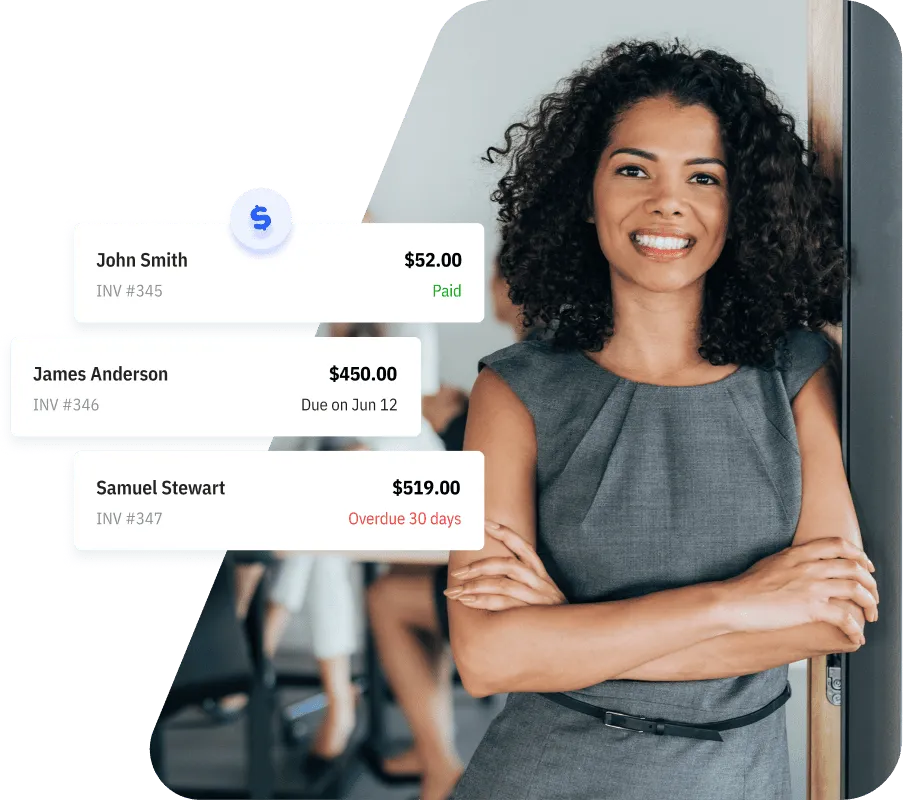


Recurring Invoices and Monthly Retainers: How to Bill Ongoing Clients
By Invoice Zip Editorial Team
10min read
Published:
The first of the month arrives and you are rebuilding the same invoice from scratch: same client, same amount, same line items, same awkward pause while you hunt for last month's file. You have been billing this client for a year, and it still takes twenty minutes every month. The good news is that ongoing work is the easiest billing you will ever do once you set up a repeating structure — the amount is agreed, the schedule is predictable, and the relationship is already established. Below, we break down how recurring invoices and monthly retainers differ, what belongs on each one, and exactly how to set up the rhythm so billing becomes a two-minute routine.

Why Repeat Clients Need a Different Billing Setup
A one-off project invoice has a natural beginning and end: you quote, you deliver, you bill, you close the file. Ongoing work has no such edge. The scope drifts, the invoice does not always reflect what actually happened in the month, and a client who signed on at one rate quietly expects that rate to hold forever even as the workload grows. Those are the three sources of nearly every recurring billing dispute.
What a Recurring Invoice Is
A recurring invoice is any invoice that repeats on a fixed schedule — usually monthly — for ongoing work, where the amount and terms stay the same and only the date, the billing period, and the invoice number change each cycle. It is a billing mechanism, not a pricing model. Think of it as a saved template with a calendar attached.
Recurring Invoice vs Monthly Retainer
The two terms get used interchangeably, but they describe different things, and the difference changes how you bill. A recurring invoice is the mechanism — "this invoice repeats." A retainer is the arrangement — the client pays an agreed amount to reserve your time, your availability, or a defined scope of work for a period. In day-to-day practice most retainers are delivered as recurring invoices: the retainer is the deal, and the recurring invoice is how you collect on it.
| Aspect | Recurring invoice | Monthly retainer |
|---|---|---|
| What it is | A billing mechanism that repeats on a schedule | A commercial arrangement reserving capacity or a defined scope |
| When it is billed | In advance or in arrears, depending on the agreement | Usually in advance, at the start of the service period |
| What the client buys | A repeated flat deliverable or subscription | Access, priority availability, or a set block of hours |
| How leftovers are handled | Rarely addressed | The agreement states whether unused hours roll over or expire |
| Common extra charges | None, or a variable usage line | Overage hours billed above the included block |
| Typical examples | Hosting, maintenance plans, memberships | Consulting, bookkeeping, legal or marketing support |
One distinction worth keeping straight: a retainer is not a deposit. A deposit is a one-off advance against a specific project that gets reconciled against the final invoice when the work completes. A retainer recurs and reserves ongoing capacity. If what you really need is a single up-front payment on a fixed job, our guide to whether contractors should charge a deposit covers that instead.
When Recurring Billing Works — and When It Doesn't
Recurring billing fits when the work itself is continuous and the scope is stable. Reach for it when you deliver the same service every period at a predictable price, the relationship is ongoing rather than one-and-done, you want steady income instead of lumpy project payments, and you are tired of re-approving identical work each month.
It is the wrong tool in a few clear cases. A fixed-scope, one-time project should be billed as a normal invoice, possibly with a deposit up front. If the amount changes substantially every period because it is driven by hours or usage, you can still reuse the template, but you will be editing totals each cycle, which weakens the "set it and forget it" benefit. And if the client has not actually committed to an ongoing arrangement in writing, do not start auto-billing — agree the retainer or subscription first, then schedule the invoices. Billing on a rhythm the client never agreed to is the fastest way to create a dispute.
What to Put on Every Recurring Invoice
Recurring invoices should be cleaner and faster to send than project invoices, because most of the information stays the same month to month. Build the template once and update only what changes. Every cycle needs:
- Invoice number: A unique, sequential number, never reused. Some businesses reset each year (2026-001, 2026-002) and others increment forever; either works as long as numbers never repeat.
- Billing period: State exactly what the invoice covers, such as "June 1 – June 30, 2026." Without it, nobody can tell whether you are billing for work done or work coming up.
- Base line item: Name the service and the period in one dated line — "Monthly retainer, content strategy (June 2026), $3,500.00."
- Overage lines, if any: Put extra work below the base fee as separate lines, for example "Additional hours: 3 hrs × $175/hr = $525.00," so the client can see the breakdown.
- Payment terms and due date: State both the term and the actual calendar date. If you charge late fees, include the policy consistently on every invoice, not just on reminders.
- Client and your details: Legal names, addresses, and any tax registration numbers that would appear on a standard invoice.
How to Set Up Recurring Billing, Step by Step
You do not need an elaborate system to bill repeat clients well. You need a clean template, a fixed schedule, and discipline about numbering. To skip the formatting work, start from a reusable invoice template and set the repeating fields once.
- Put the arrangement in writing: Define the scope, the included hours or deliverables, the monthly fee, what counts as overage, and whether unused hours roll over.
- Choose the billing model: Flat recurring fee, retainer with overages, or base plus variable usage. The model decides how the invoice looks.
- Pick a cycle and an invoice day: Monthly is the most common; quarterly suits larger fees. Hold the same day each cycle, such as the 1st, and match the client's accounts payable calendar if they have one.
- Decide advance or arrears: Billing in advance, at the start of the service period, is generally the better structure for service retainers — more on that below.
- Build the template: Save the client details, base line item, tax handling, payment terms, and your standard notes. Only the period, date, number, and any overages should change.
- Set the payment terms: Net 7 or Net 15 is common for ongoing clients, since the relationship is established. You can check the exact due date with an invoice due date calculator before you commit to a term.
- Automate collection where possible: A saved card or standing instruction turns recurring revenue from "predictable but still chased" into genuinely hands-off. Send the invoice as a record even when payment collects automatically.
- Send on schedule without fail: A recurring invoice that slips a week trains the client to pay a week late. Consistency is the entire product.
Bill in Advance or in Arrears?
This is the single decision with the biggest cash flow effect, and it is worth doing the arithmetic rather than guessing. Say you start work on June 1. With billing in arrears, you invoice on June 30 for June's work. On Net 15 terms, payment arrives around July 15 — a 45-day gap between starting the work and getting paid, and it stretches toward 60 days on Net 30. You are effectively financing a month and a half of labor every single cycle.
With billing in advance, you invoice at the start of the month and begin work once payment clears. You are never doing work you have not been paid for. Some clients push back on paying before delivery, but most accept it once the relationship is established, especially if you frame it as the normal structure at setup: "I invoice on the first of each month and start the month's work once payment clears." For most independent contractors and small agencies, advance billing is the safer default.
Whichever you choose, keep your terms consistent with the rest of your invoicing. If you use Net 30 everywhere else, understand what it does here: on a monthly retainer billed in arrears, you are regularly waiting a full month to be paid for work done at the start of that same month. Our guide to Net 30 payment terms explains how the clock starts and where the delays come from.
How to Handle Overages, Price Changes, and Pauses
Once the cycle is running, three changes will come up sooner or later. Handle each one in writing, before it reaches the invoice.
- Overages: Show extra hours or usage as a separate line on top of the base fee, with the rate and quantity spelled out. "$3,500.00 retainer + 3 hrs × $175/hr = $525.00 overage = $4,025.00 total" is harder to dispute than a single unexplained $4,025.00 figure.
- Price changes: Give written notice well before the cycle where the new amount takes effect, then update the recurring amount from that date. Never let a higher amount appear for the first time on the invoice itself.
- Pauses and cancellations: Document them so billing stops cleanly and you are not invoicing for a service that ended. Note the last billing period on the final invoice.
Common Mistakes With Ongoing Billing
Most recurring billing problems are process problems, not pricing problems. Use this as a self-check list before you put the cycle on autopilot:
- No billing period on the invoice, so the client cannot tell which month it covers.
- Reusing or skipping invoice numbers, which breaks your records and looks careless at tax time.
- A drifting invoice day, which quietly trains clients to pay late.
- Billing in arrears on Net 30 without noticing the 45-to-60-day cash gap.
- Folding overages into one lump sum instead of showing the breakdown.
- Adding a late fee for the first time on an overdue invoice rather than stating the policy up front on every invoice.
- Raising the price with no written notice before the cycle it takes effect.
- Treating a retainer as a deposit and trying to reconcile it against a final project invoice.
- Auto-billing a client who never agreed to an ongoing arrangement in writing.
This article provides general information and is not legal, tax, or financial advice. Billing and tax treatment vary by jurisdiction and contract; confirm requirements with your accountant and your written agreement.
Frequently Asked Questions
Is a Retainer the Same as a Recurring Invoice?
No. A retainer is the arrangement — the client reserves your time or a defined scope for a fee. A recurring invoice is the mechanism that collects it. Most retainers are delivered as recurring invoices, but you can have a recurring invoice with no retainer at all, such as a flat hosting subscription.
Should I Bill Ongoing Clients in Advance or in Arrears?
In advance, in most cases. You invoice at the start of the service period and begin work once payment clears, so you are never financing unpaid labor. Billing in arrears on Net 15 can leave a 45-day gap between starting work and receiving payment.
What Payment Terms Work Best for a Monthly Retainer?
Net 7 or Net 15 is common for established clients, because the relationship and the amount are already agreed. Short terms keep the cycle tight; a Net 30 retainer billed in arrears means waiting roughly a month and a half to be paid for work done at the start of that month.
Do Recurring Invoices Need Sequential Invoice Numbers?
Yes. Each cycle needs its own unique number, never reused. You can reset the series each year or keep incrementing, as long as no number appears twice and the sequence is unbroken.
What Should I Do When a Client's Work Exceeds the Retainer?
Add the extra hours or usage as a separate line below the base fee, with the rate and quantity shown, so the client sees exactly what the additional charge covers. If overages become routine, it is time to reprice the retainer at the next review.
Most Popular Pages


Try Invoice Zip Today
Start Sending Invoices, Building Reports, Saving Office
Time and Get Paid Faster.