


Free Auto Repair Estimate Template
Prepare a mechanical repair estimate that ties each line to a diagnostic finding or a maintenance interval, prices labor by the guide or the actual flag time, and shows where additional diagnosis may shift the total. Give the vehicle owner a reviewable basis before any repair is authorized, a part is ordered, or a labor ticket is opened.
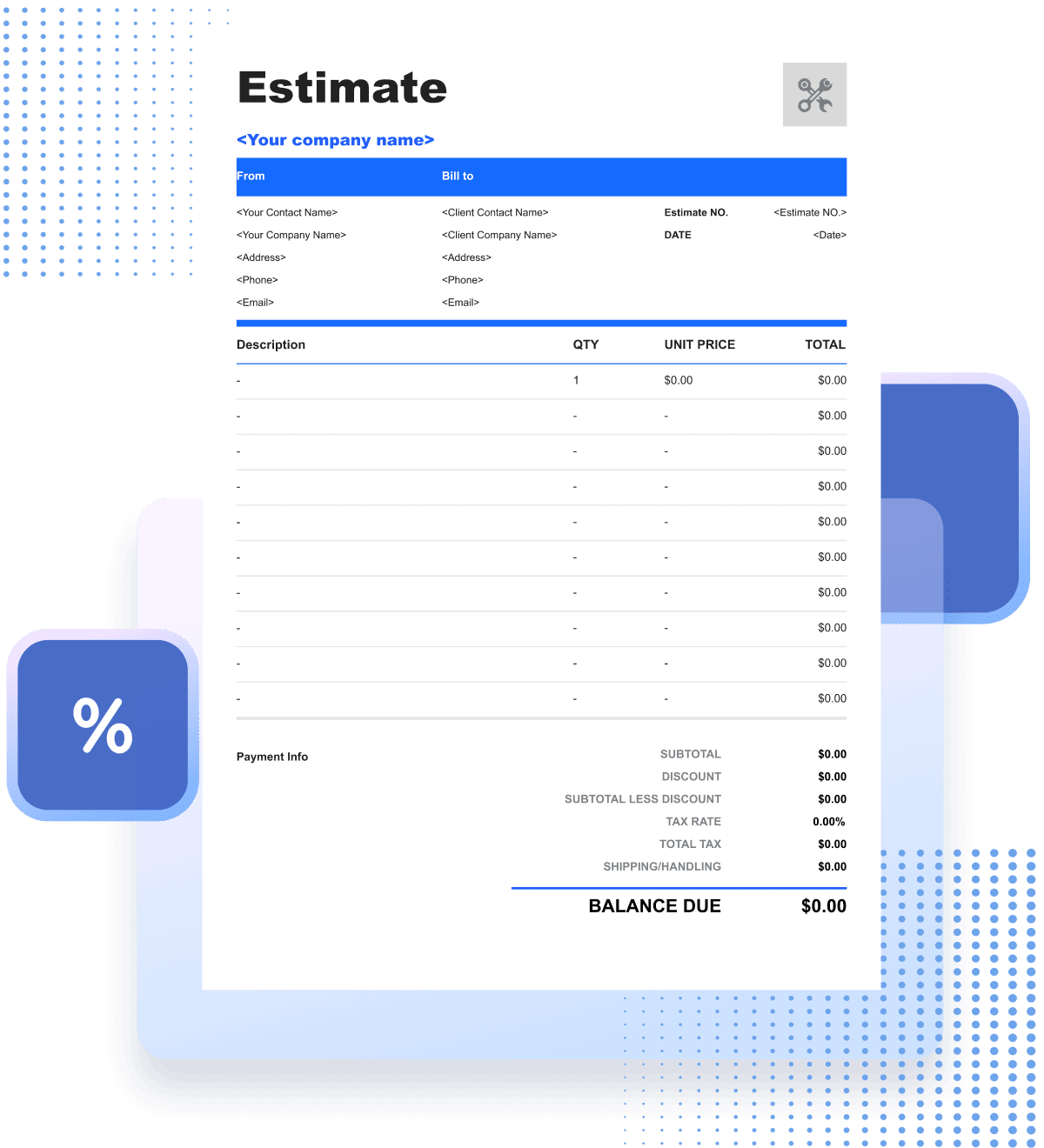
Auto Repair Estimate Template
A repair estimate starts where the diagnosis ends. Tie the customer's complaint, the codes and test results, the parts grade chosen, and the labor operations quoted to one estimate number and one repair order.
Mechanical work rarely ends where it was expected to. Itemizing the labor operations and the parts separately means a second finding can be priced and approved on its own, instead of reopening a single lump figure the customer has already agreed to.
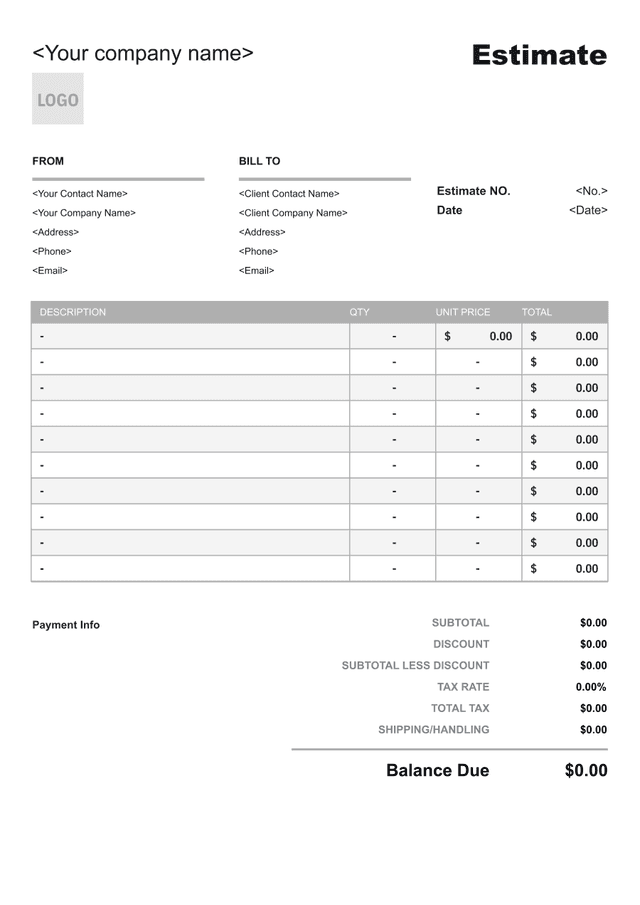


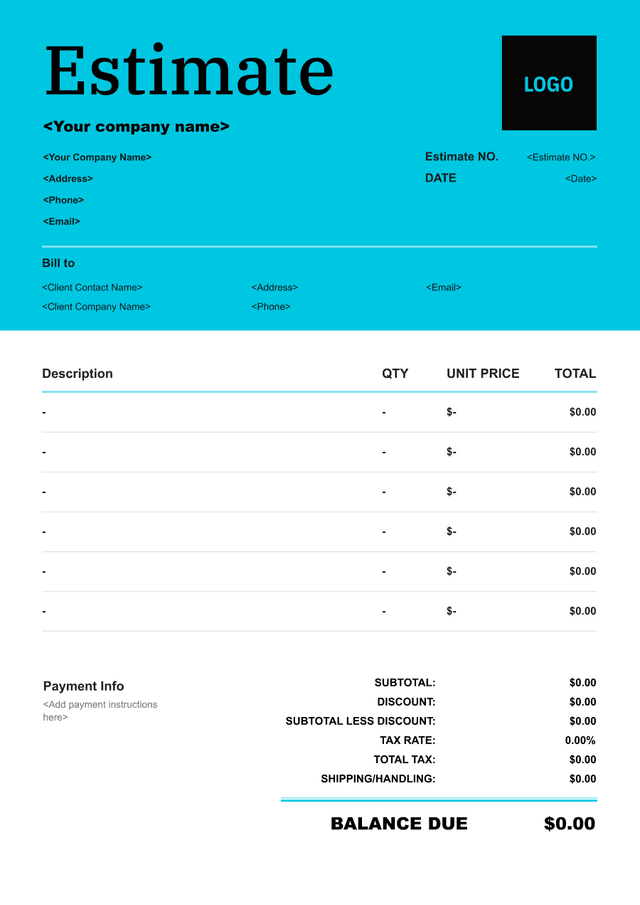
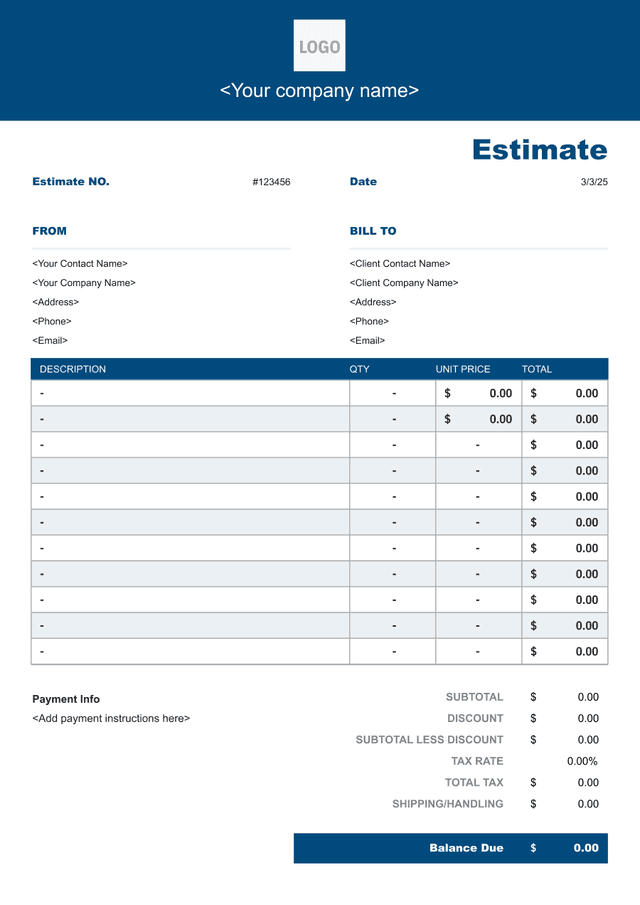
What Is an Auto Repair Estimate?
An auto repair estimate is the shop's priced response to a reported symptom or a maintenance request: what the repair will probably cost, which operations it takes, and where the number may still move. The figure comes out of diagnostic time, labor hours priced by a flat-rate guide or the actual flag time, the parts grade chosen, shop supplies, and any sublet work such as machining or programming.
A symptom and its cause are not the same thing. A check-engine light, a pull to one side, or a no-start can trace to several different failed components, so a first number reflects the findings confirmed at the time it was written, not a guarantee that the list is closed.
Read it as a decision document rather than a bill. The owner uses it to decide whether to repair, which parts grade to accept, and how much to set aside, so it belongs next to the repair order and the authorization record. Its value comes from separating confirmed failures from items still pending further testing.
- 01
What the number represents
It prices the repair path described by the diagnostic findings, not a commitment to fix the vehicle for that exact amount. The figure reflects the labor-time source, the parts grade selected, the shop supplies, and the sublet operations carried when it was written. Label it an estimate and price it as one, because a document that reads like a fixed quote is the one that gets disputed at invoice time.
- 02
How much detail it carries
A quick-check write-up and a confirmed-diagnosis estimate carry different levels of detail. The first can list a suspected component with a diagnostic allowance; the second should name the failed part, the labor operation, the parts grade, and the calibration or programming it requires. Matching the detail to how far the testing has gone is what keeps the number defensible.
- 03
Why the total moves
Additional labor time is normal when a confirmed failure turns out to have a related cause. A frozen caliper may have warped the rotor, a misfire may trace to a coil that took the catalytic converter with it, and a parts substitution can change the labor operation. Keep each pending item on its own line with the reason it cannot be finalized, so the owner can approve it individually instead of reopening the whole ticket.
What to Include in an Auto Repair Estimate
Every line on a repair estimate should trace to a diagnostic finding, a maintenance interval, a labor-time entry, or a parts grade decision. Before those lines, the document has to carry the identifiers that let the shop, the advisor, and the owner agree they are discussing the same vehicle and the same complaint.
- 01
Business and client details
Name the shop with its license or registration, address, phone, and email, then the owner with a contact number and the address where the vehicle is kept. Add the VIN, the year, make, model, trim, and mileage, and the repair-order number this estimate becomes once it is authorized, so no one confuses it with another vehicle of the same nameplate.
- 02
Estimate number, dates, and validity
Number it in its own sequence, separate from invoices, and put three dates on it: the date issued, the date the vehicle was inspected, and the date the diagnostic findings were recorded. State how long the pricing stands, because parts costs and supplier availability do not hold still, and what has to happen once the validity period runs out.
- 03
Scope of work with inclusions and exclusions
Write the repair one operation at a time and say what each operation includes, then write down what it does not: pre-existing conditions, unrelated wear on adjacent components, and symptoms not yet traced to a confirmed cause. List the evidence behind the scope — DTCs retrieved, test-drive results, pressure tests, voltage drops, the labor-time source consulted — and the limits of that evidence, such as a component not yet removed for bench testing. Silence reads as inclusion.
- 04
Diagnostics, scanning, and road testing
Price the testing itself first: the initial scan and code pull, the targeted diagnostic time for isolating the failure, the test-drive for drivability or brake concerns, and any sublet programming or calibration the vehicle requires after the repair. State whether the diagnostic fee is flat or hourly, and whether it credits against the repair if the owner proceeds, because that credit is one of the first things an owner asks about.
- 05
Labor operations, parts grade, and fluids
Price each labor operation against the source the shop uses — a flat-rate labor guide, published book time, or the actual flag time a technician logs — and name the source so the owner can tell what the hours rest on. List parts by grade: OEM, aftermarket, remanufactured, or used, with the warranty each carries and the expected availability. Add the fluids, filters, gaskets, seals, and shop supplies the job consumes, since a brake job or a timing belt service is incomplete without them.
- 06
Totals, payment terms, warranty, and acceptance
Bring the numbers together in the order an owner reads them: subtotals by labor, parts, and sublet, shop supplies, tax where it applies, then the total. Under it, state how the diagnostic fee credits if the repair proceeds, whether a deposit is needed to order special-order parts, what the workmanship warranty covers and for how long, how the parts warranty differs by grade, whether old or failed parts are returned to the owner, and a signature block with the printed name, the date, and the version accepted.
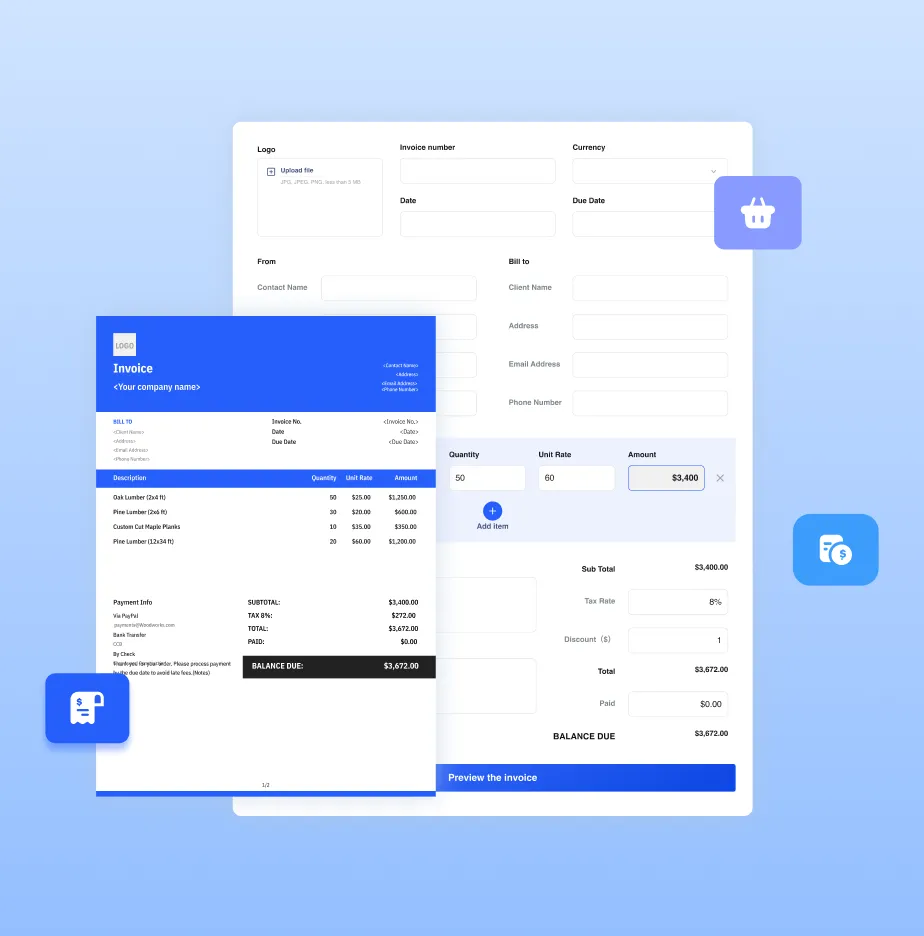
Reuse Saved Information in Invoice Zip
Use saved items and client information to create an auto repair estimate in just a few taps.
How to Break Down an Auto Repair Estimate
Four passes turn a reported symptom into a defensible price: confirm what the vehicle needs, size the labor and parts, price them at your rates, and check the result before it goes out.
Confirm the scope
Start from a symptom the owner can describe and a finding the shop can verify. Pull codes, road-test for the reported condition, perform the targeted tests that isolate the failed component, and separate what is confirmed from what a further bench test or a deeper disassembly may still reveal. Note the maintenance intervals the vehicle is due for, since a repair visit is often the right time to address them.
Measure the work
Turn each confirmed finding into a labor operation with hours: look up the flat-rate guide entry or estimate the actual flag time, and add the operations the repair disturbs, such as bleeding brakes after a caliper replacement or relearning an idle after a throttle body service. Quantify the parts by part number and grade, the fluids by type and volume, and carry anything still pending further testing as an allowance with the reason it cannot be finalized.
Apply resources and rates
Price the labor hours at the shop's labor rate, and name the time source — guide, book, or actual flag — so the owner can see what the hours rest on. Add parts by grade, quantity, and availability, fluids and shop supplies, and sublet work such as machining, programming, or alignment at the sublet price. Keep each on its own line so an additional authorization does not reopen the whole estimate.
Review and issue
Read the write-up back against the scan data and the test results before it goes out: an operation with no finding behind it, hours with no operation, a part with no grade. Release it under its own number with an expiry, then say what happens next: another authorization if further testing confirms more work, a repair order once the owner approves the scope, and the parts order and labor ticket after that.
Common Auto Repair Estimate Line Items
- 01
Diagnostics and scanning
Code pull, DTC analysis, targeted diagnostic time, test-drive, voltage drop and pressure tests, battery and charging system test, and programming or relearn setup.
Typical units: diagnostic hours, flat fees, scan counts
- 02
Brakes, suspension, and steering
Pads, rotors, calipers, hoses, struts, shocks, tie rods, ball joints, bushings, alignment, and brake fluid flush.
Typical units: labor hours, each, axles
- 03
Engine and drivetrain
Tune-up, timing belt or chain, water pump, thermostat, gaskets, mounts, clutch, and transmission service or replacement.
Typical units: labor hours, each, flat rates
- 04
Electrical, charging, and HVAC
Alternator, starter, battery, wiring repair, blower motor, compressor, condenser, evaporator, refrigerant recharge, and climate control diagnosis.
Typical units: labor hours, each, refrigerant weight
- 05
Parts, fluids, and shop supplies
OEM, aftermarket, remanufactured, and used parts by grade, oil and coolant by type and volume, filters, gaskets, shop supplies, and hazardous waste disposal.
Typical units: each, quarts, gallons, allowances
- 06
Tires, alignment, and road test
Tire mounting and balancing, four-wheel alignment, road test before and after repair, state or emissions inspection, and final quality check.
Typical units: each, labor hours, flat fees
Key Considerations for Auto Repair Estimates
- 01
Distinguish diagnostic findings from suspected causes
Pull codes and confirm the complaint with a road-test or a targeted test before pricing a repair. A DTC points to a circuit or a system, not always to a single failed part, so state which tests isolated the component and which are still pending. Price the diagnostic time on its own line, and say whether it credits against the repair if the owner proceeds, because folding it into the labor rate is what makes owners question the total.
- 02
Match labor time to the right source
State whether hours come from a flat-rate labor guide, published book time, or the actual flag time a technician logged. Guide hours assume clean, accessible work on a known failure; rust, seized fasteners, and broken hardware add time that the guide does not carry. Flag the conditions that put the job outside the guide and price the additional time on its own line with the reason, so the owner sees why the hours differ from a number they looked up online.
- 03
Specify parts grade and availability
List each part as OEM, aftermarket, remanufactured, or used, with the warranty and expected availability each grade carries. A reman alternator may carry a shorter warranty than a new OEM unit, and a used part may have no warranty at all; the owner should see that before choosing. Note backorders, special-order lead times, and freight, because parts availability usually drives the completion date more than the labor does, and a backordered part can idle a vehicle for days.
- 04
Document post-repair verification and warranty scope
State how the shop verifies the fix: a road-test for drivability and brake concerns, a post-repair scan to confirm the DTC is cleared, a recheck for leaks after a fluid service, and a test-drive under the same conditions the owner reported. Define the warranty by length, start date, and what it covers, and separate workmanship from the parts warranty, since a reman or aftermarket part may carry a different term. Say whether the warranty covers a recurring symptom or only the specific component replaced, because that distinction is where most post-repair disputes begin.
Auto Repair Estimate, Quote, or Invoice?
Estimate
Projected cost
- Purpose
- Put a defensible number on the failures confirmed by testing, using the labor-time source, the parts grade selected, and the diagnostic and sublet operations in hand.
- When used
- After diagnostics and before parts are ordered or labor is authorized, while some findings may still depend on further testing.
- Next document
- Issue an additional authorization if further testing confirms more work, or convert it into a repair order and labor ticket once the owner approves the scope.
Quote
Defined offer
- Purpose
- Offer one price for one defined repair path, naming the parts grade, the labor operations, and the post-repair verification the owner has agreed to.
- When used
- Once the failure is confirmed, the parts are sourced, and the operations, rates, and completion date are understood on both sides.
- Next document
- Keep the signed authorization with the job file, and record any later parts substitution, additional labor, or recheck against it.
Invoice
Payment request
- Purpose
- Ask for money that is actually due: a deposit for special-order parts, a progress payment, the balance at pickup, or an approved additional authorization.
- When used
- At a payment event — the repair is completed and road-tested, the vehicle is collected, or an additional authorization is approved.
- Next document
- Record what was paid, credit the diagnostic fee if that was the agreement, and show the balance the owner still owes.
Auto Repair Estimate FAQs
Does the diagnostic fee come off the repair if I go ahead?
It depends on what the shop wrote. Some credit the diagnostic time against the labor if the owner authorizes the repair within a set period; others bill it separately. The estimate should show the diagnostic fee on its own line and state whether it credits, so the owner sees the answer before testing starts, not after the invoice arrives.
Why does the estimate differ so much from another shop?
Usually because the scope, the labor-time source, or the parts grade differs. One shop may use a flat-rate guide, another actual flag time, and a cheaper estimate may have excluded fluids, filters, or the post-repair scan. Match the operations, parts grade, and inclusions line by line before comparing the bottom line.
Can I bring my own parts for the shop to install?
Many shops decline, and the reason is warranty and liability — the shop cannot warranty a part it did not source. Shops that accept owner-supplied parts install them at the normal labor rate but mark the warranty as installation-only, with the parts warranty belonging to the owner. Get it in writing on the estimate.
What happens if the repair does not fix the problem?
The warranty should answer that before work starts. A workmanship warranty covers the installation and typically runs 12 to 24 months; a parts warranty covers the component on the supplier's terms. The estimate should name the length, what each covers, and whether a recurring symptom or only the replaced part is included.
Other Free Resources

Try Invoice Zip Today
Start Sending Invoices, Building Reports, Saving Office
Time and Get Paid Faster.