


Free Lawn Care Estimate Template
Prepare a lawn care estimate that prices the services the property needs across a season, ties each line to a measured lot size and a visit frequency, and shows where conditions such as weeds, thin turf, or soil chemistry may move the total. Give the property owner a reviewable basis before a seasonal contract, a first service visit, or a prepay is requested.
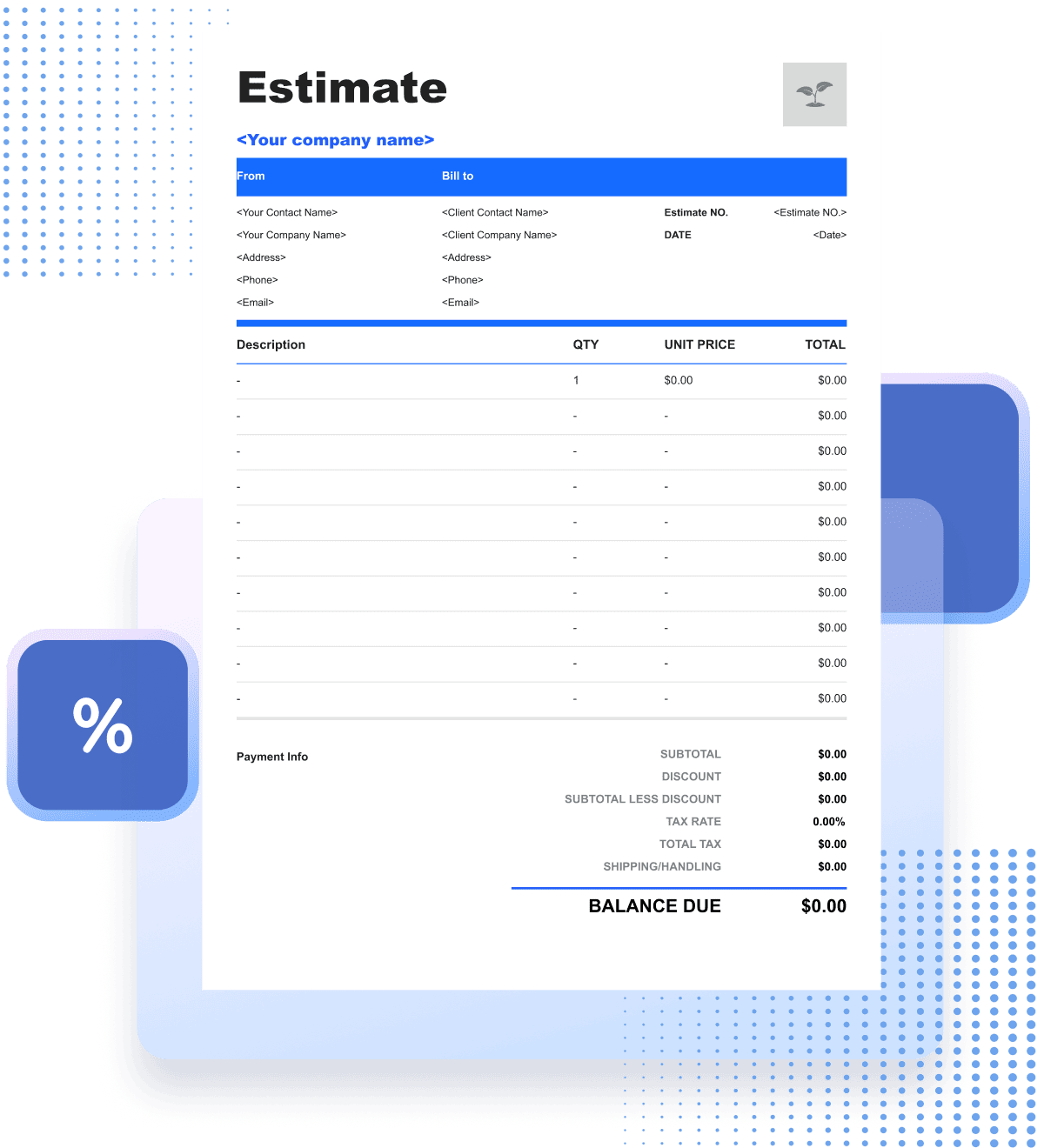
Lawn Care Estimate Template
Lawn care is sold as a season rather than as a single visit. Put the measured turf area, the visit frequency, the treatments and application rates, the season dates, and the cancellation terms under one agreement number.
Weather moves the schedule and the condition of the turf moves the treatment. A per-visit structure with the products and rates named lets the customer see what they are paying for on each visit, and gives your office a record to point to when a month gets skipped or an application gets swapped.
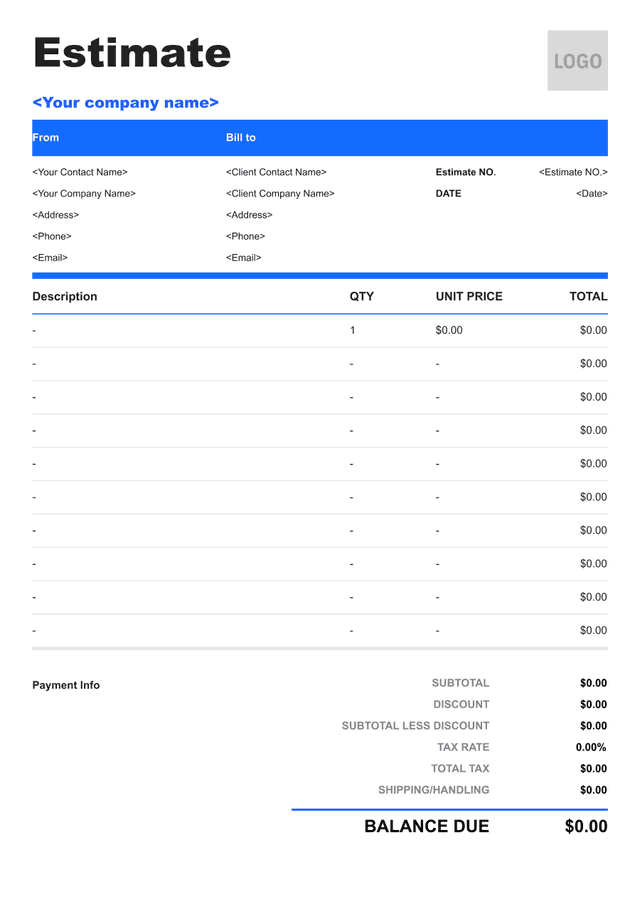


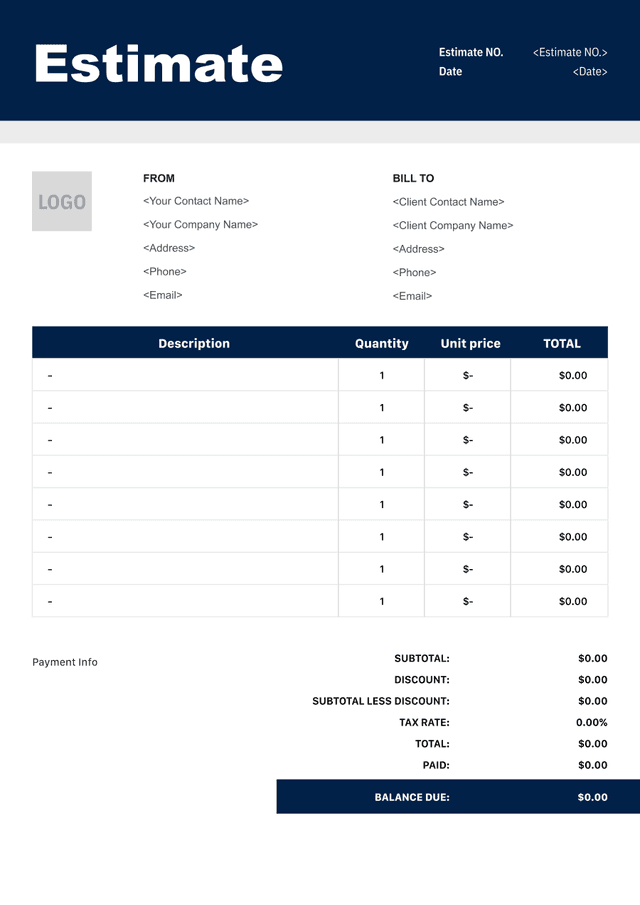
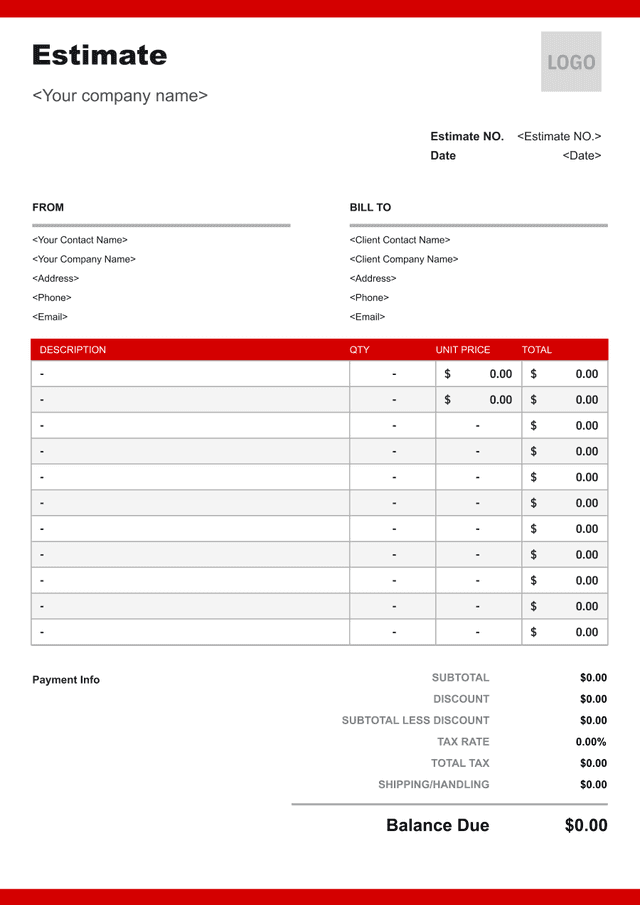
What Is a Lawn Care Estimate?
A lawn care estimate is the price a property owner receives after the lot is measured and the turf is walked: what the service visits will cost across the agreed period, which applications and treatments are included, and where the number may still move with weed pressure, weather, or soil conditions. The figure comes from the measured turf area, the visit frequency, the labor and equipment per visit, the fertilizer and chemical products applied, and the overhead and margin your company carries.
Most of the uncertainty sits in the turf itself and the weather that drives its growth. A lawn that looks manageable in spring can develop grub damage, fungal pressure, or bare patches by mid-summer, and a per-visit price based on today's conditions may not cover the extra treatments a stressed lawn requires.
Owners read it to decide whether to sign a seasonal contract, whether to prepay, and how much to budget for the full growing season. It belongs next to the service agreement rather than on its own, and its value comes from separating the fixed per-visit pricing from the conditional treatments that depend on what the turf actually does.
- 01
What the number represents
It prices the services as described at the walkthrough: the turf area measured, the conditions observed, the treatments included, and the visit frequency agreed. It is not a bill and not a locked annual total — calling it an estimate keeps the owner and the crew on the same page when weather or turf condition shifts what the season actually requires.
- 02
How much detail it carries
A first walkthrough and a soil-tested season plan are not the same document. The first can carry a per-visit rate and a basic program; the second should name each application by product, rate, and timing, with the turf area broken out by zone if the lot has shaded, sunny, or sloped sections that grow differently. Matching the detail to how much of the turf has actually been assessed keeps the number defensible.
- 03
Why the total moves
A grub infestation that requires a curative treatment, a fungal outbreak that needs a fungicide application, a drought that pauses mowing frequency, and a soil test result that changes the fertilizer blend all move the total after the estimate is issued. Carry each conditional treatment on its own line with the trigger that activates it, so the owner can approve it separately rather than meeting it inside a lump-sum invoice.
What to Include in a Landscaping Estimate
Every estimate has to identify the property and the service period well enough that the office, the crew, and the owner never confuse it with another route or another season. After that, each priced service should trace to a measured turf area, a visit frequency, a product label, or a stated conditional trigger.

- 01
Business and client details
Your company name, license number where the state requires one, address, phone, and email, then the owner's name, the service address, and the billing address if the two differ. Where the property is managed by an HOA or a property manager, add that contact and note who authorized the walkthrough.
- 02
Estimate number, dates, and validity
Keep estimate numbering in its own series, apart from invoices, and put three dates on it: the date issued, the date the lot was measured, and the service start date. Say how long the pricing stands, because fertilizer and chemical product costs move seasonally and the per-visit rate assumes the lot size measured on the day.
- 03
Scope of work with inclusions and exclusions
List the services included by name — mowing, edging, trimming, blowing, fertilization, pre-emergent, post-emergent weed control, aeration, overseeding, topdressing, and leaf removal — then list what is excluded: irrigation repair, tree and shrub work, grading, drainage, pest control beyond the lawn, and treatments that depend on a soil test not yet performed. Note what the scope rested on, such as the turf area measured and the walkthrough photographs, and where the assessment stopped, such as a soil sample not taken or an irrigation zone not tested. Silence reads as inclusion.
- 04
Turf area, lot complexity, and visit frequency
State the measured turf area in square feet, how it was measured — wheel, aerial, or property records — and whether the lot is treated as one zone or broken into shaded, sunny, sloped, or fenced sections that affect mowing time and product rates. Then state the visit frequency: weekly, bi-weekly, or monthly, and which services trigger on each visit versus which run on a separate seasonal schedule.
- 05
Treatments, products, and seasonal schedule
Price the seasonal program by application: pre-emergent and post-emergent timing, fertilizer rounds by N-P-K blend and application rate, grub control, fungicide, lime if a soil test calls for it, aeration and overseeding windows, and topdressing if offered. Name the product, the rate per thousand square feet, and the application window tied to soil temperature or calendar date, and mark which treatments are included in the base price and which are conditional on turf condition.
- 06
Totals, payment terms, warranty, and acceptance
Finish with the per-visit rate, the seasonal or annual total, any prepay discount, tax where it applies, and the grand total. Under that, the terms: how payment is collected per visit, monthly, or by prepay; how a service is rescheduled for weather and what counts as a weather day; how the contract is canceled mid-season and whether prepay is refunded on a pro-rated basis; what the satisfaction guarantee covers and for how long; and a signature block with printed name, date, and the version accepted.
Reuse Saved Information in Invoice Zip
Use saved items and client information to create a lawn care estimate in just a few taps.
How to Break Down a Landscaping Estimate
Four passes turn a lot walkthrough into a seasonal price: confirm what services the property needs, measure the turf, price it against your rates and product costs, and check it before the owner sees it.
Confirm the scope
Walk the lot and write down what you are actually pricing: which services the owner wants, how often, and what the turf currently looks like. Separate the services the owner asked for from the ones the turf condition suggests — grub damage, thinning, compaction, or broadleaf pressure — and note what a first visit cannot assess, such as soil pH or irrigation coverage, so none of it turns up later as an unpriced surprise.
Measure the work
Measure the turf area yourself rather than pricing from the owner's estimate or the tax records, and break out zones if the lot has sections that grow at different rates or require different products. Price mowing by the square foot or by the lot, fertilization by the thousand square feet, and aeration and overseeding by the square foot. Where a soil test has not been run, carry the amendment or lime application as a conditional line with an assumed rate.
Apply resources and rates
Put the per-visit labor and equipment rate on the mowing line separately from the product cost on the treatment lines, so a product change can be repriced without reopening the visit rate. Add fertilizer and chemical products by blend, rate, and price per bag, the equipment each service requires, and the overhead and margin your company carries, and mark each as fixed or conditional.
Review and issue
Read it back the way the owner will: every service named, every conditional treatment flagged, every exclusion written down. Confirm the turf area, the visit frequency, the seasonal total, and the validity period, then issue it and say what follows: a signed service agreement once the scope is agreed, with a numbered work order for any treatment added after the contract starts.
Common Landscaping Estimate Line Items
- 01
Mowing, edging, and cleanup
Mowing at the correct height for the season, edging along walks and beds, string trimming around obstacles, blowing of hard surfaces, and clippings handling.
Typical units: per visit, square feet, lot count
- 02
Fertilization and weed control
Pre-emergent, post-emergent broadleaf control, fertilizer rounds by N-P-K blend, grub control, fungicide, and lime by soil-test recommendation.
Typical units: per application, thousand square feet, per visit
- 03
Aeration and overseeding
Core aeration, overseeding with a compatible cultivar, starter fertilizer, and topdressing with compost or sand where the soil profile calls for it.
Typical units: square feet, per visit, cubic yards
- 04
Leaf removal and seasonal cleanup
Spring and fall cleanups, leaf removal and hauling, bed cleaning, stick and debris pickup, and final cut at season end.
Typical units: per visit, square feet, loads
- 05
Soil testing and amendments
Soil sample collection and lab analysis, pH adjustment with lime or sulfur, compost topdressing, and gypsum or biological amendment where indicated.
Typical units: each, thousand square feet, cubic yards
- 06
Equipment, fuel, and disposal
Mower, trimmer, blower, aerator, and spreader costs, fuel, blade sharpening, leaf and debris hauling, and disposal of yard waste.
Typical units: hours, loads, flat fees
Key Considerations for Landscaping Estimates
- 01
Measure turf area and zone complexity
Measure the turf yourself rather than relying on the owner's figure or the tax records, and break the lot into zones if sections have different sun exposure, slope, or fence gates that affect access and product rates. A lot that reads as one square footage on paper may take longer to service if it has narrow gates, steep grades, or obstacles that slow the mower, and the per-visit rate should reflect that complexity.
- 02
Set visit frequency and weather triggers
State the visit frequency and what drives it: weekly mowing assumes active growth during the primary season, and the estimate should say what happens when growth slows in heat or drought. Define what counts as a weather day — rain, saturated soil, or heat above a stated threshold — and whether the visit is skipped, pushed back, or made up, because unspoken assumptions about weather rescheduling are the most common source of per-visit disputes.
- 03
Confirm products, labels, and application rates
Name each product by brand or active ingredient, state the application rate per thousand square feet, and confirm it matches the label, because over-application violates the label and the label is the law. Mark which treatments are included in the base program and which are conditional, and note the soil temperature or calendar window each application depends on, since a pre-emergent applied too late is a wasted treatment the owner still pays for.
- 04
Manage cancellation, prepay, and mid-season changes
State how the contract is canceled mid-season, whether prepay is refunded on a pro-rated basis, and what happens to services already rendered at a discount when the owner cancels early. Record who approved each added treatment, its cost, and whether it changes the seasonal total, and note that a conditional treatment triggered by turf condition is an amendment to the scope, not an optional add-on the owner can refuse after the application has been made.
Landscaping Estimate, Quote, or Invoice?
Estimate
Projected cost
- Purpose
- Price the services as described at the walkthrough, using your own turf measurements, today's product pricing, and the visit frequency agreed.
- When used
- After a lot walkthrough, before the service agreement is signed, the soil test is in, or the season schedule is booked.
- Next document
- Become a signed service agreement once the scope and frequency are agreed, with a numbered work order for any treatment added after the contract starts.
Quote
Defined offer
- Purpose
- Commit to one price for one defined service program, naming the products, the application schedule, and the visit frequency the owner has agreed to.
- When used
- When the services are confirmed, the turf area is measured, and the program, pricing, and schedule are understood on both sides.
- Next document
- Hold the signed service agreement with the route file, and log later conditional treatments, weather reschedules, and added services against it.
Invoice
Payment request
- Purpose
- Ask for what is actually due: a per-visit charge, a monthly billing cycle, a seasonal prepay draw, or an approved conditional treatment.
- When used
- On the billing cycle or at a service event — a visit completed, a treatment applied, or the season-end summary issued.
- Next document
- Record the payment, credit the prepay draw against the remaining balance, and show the amount the owner still owes for the season.
Landscaping Estimate FAQs
How often will the crew visit, and what happens if it rains?
The estimate should state the visit frequency and tie it to the active growing season. Rain and saturated soil push visits back rather than cancel them. Define what counts as a weather day in the service agreement and say whether the visit is made up within the same week or pushed to the next cycle.
Can I cancel a seasonal or annual contract mid-season?
Yes, but the terms have to be written before signing. The estimate should state the notice required, whether prepay is refunded pro-rated, and whether services already delivered at a discounted seasonal rate are repriced at the single-visit rate. Conditional treatments already applied — grub control, fungicide — are billed at full rate regardless of cancellation.
Can you provide application records for fertilizer and weed control?
Yes, and the estimate should say so. Each application record should list the product name, application rate, date, technician, and weather conditions, because that record is what the owner needs if a neighbor, a pet, or a waterway is affected. In some states, licensed applicators are required to carry and provide them.
What if the lawn has grub damage, fungus, or bare patches after the estimate?
Those are conditional treatments, carried as separate lines with the trigger that activates them — confirmed grub presence, visible fungal lesions, or bare patches exceeding a stated area. The owner approves the treatment and its cost before it is applied, and it is billed as a work order against the contract.
Other Free Resources

Try Invoice Zip Today
Start Sending Invoices, Building Reports, Saving Office
Time and Get Paid Faster.