


Free Painting Estimate Template
Prepare a painting estimate that prices the surfaces measured at walkthrough, ties each line to a substrate, a prep step, a coating system, and a crew rate, and shows where opening up walls or testing for lead may move the total. Give the property owner and any property manager or HOA a reviewable basis before a deposit, a signed contract, or a change order is requested.
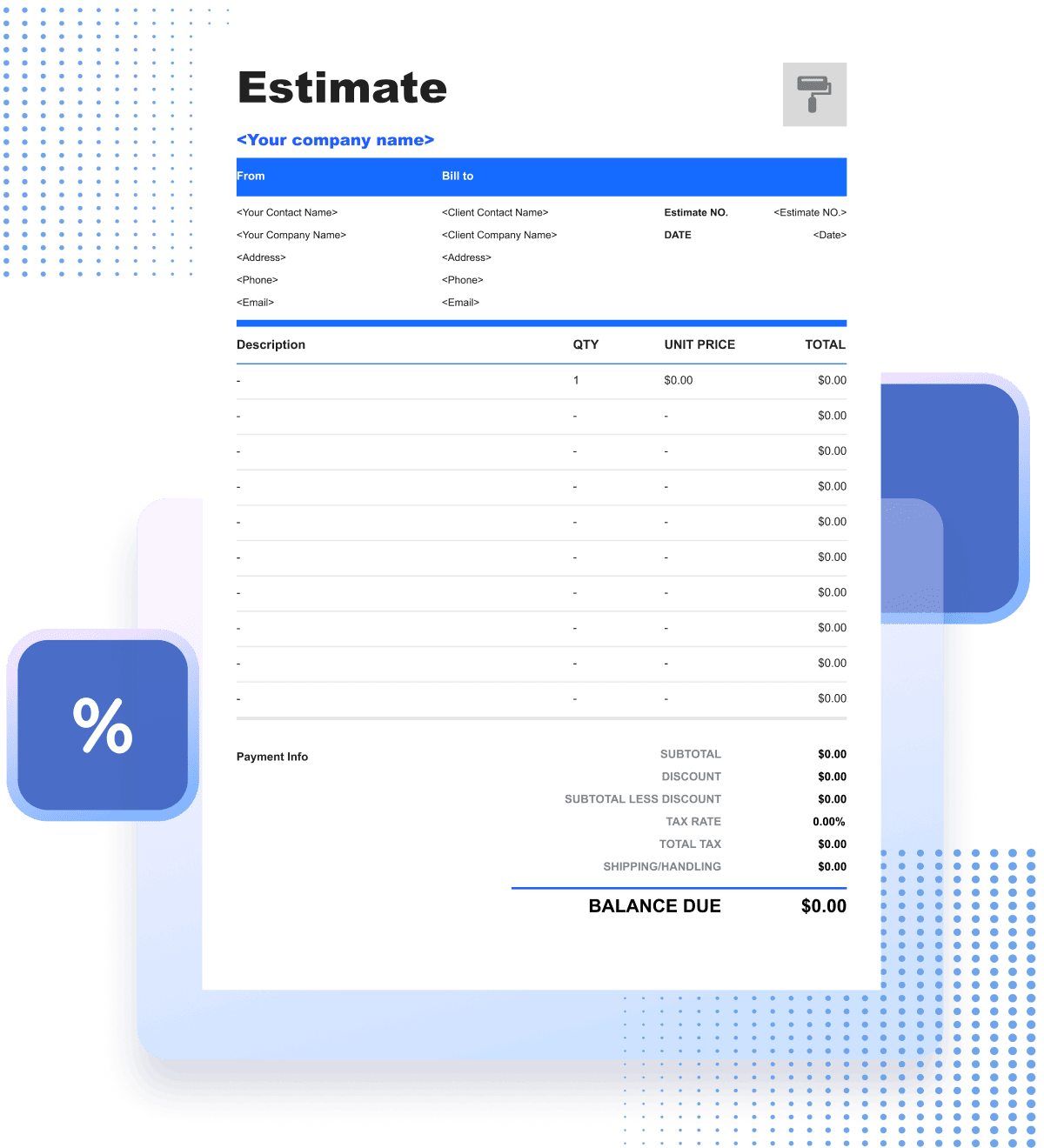
Painting Estimate Template
Paint is priced by surface condition and coating system, not by the size of the room alone. Put the substrate condition and prep, the primer and finish products with their grade and sheen, the number of coats, the application method, and the protection and cleanup under one estimate number.
What sits under the old paint decides most of the labor. Separating prep from coating, and listing each surface with its own coat count, lets the customer see why one room costs more than another and gives you a basis for pricing the rot or the lead-safe work that appears once the scraping starts.
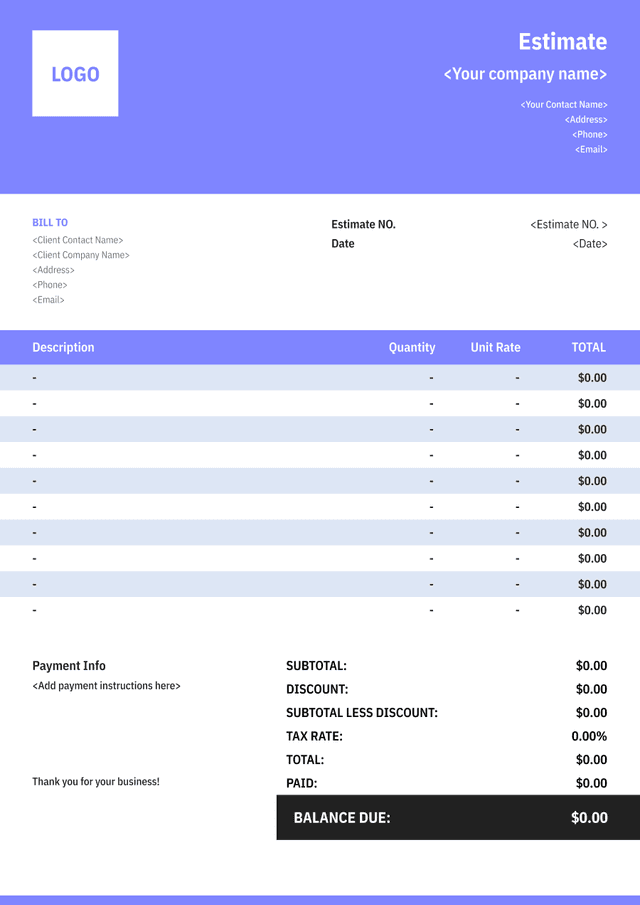


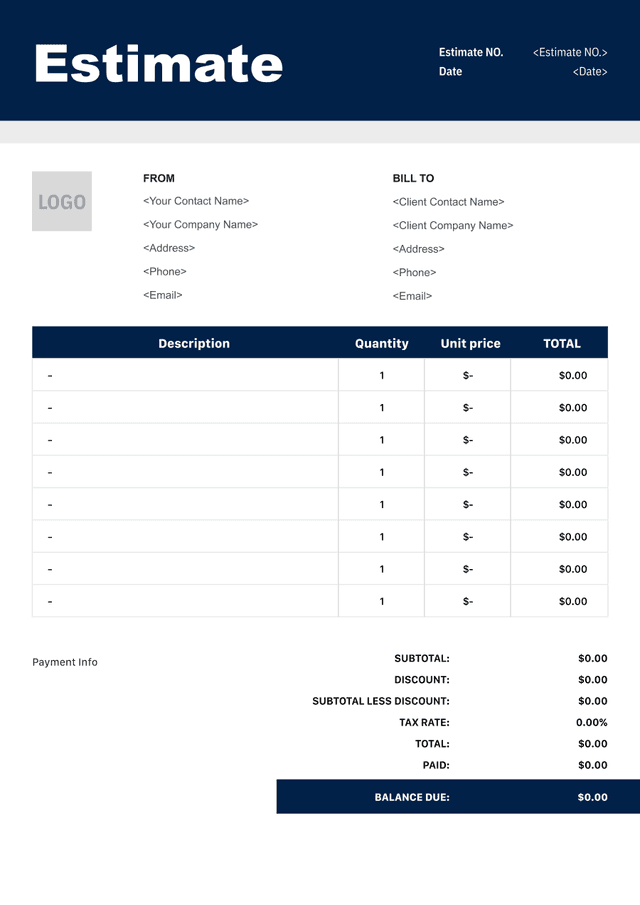
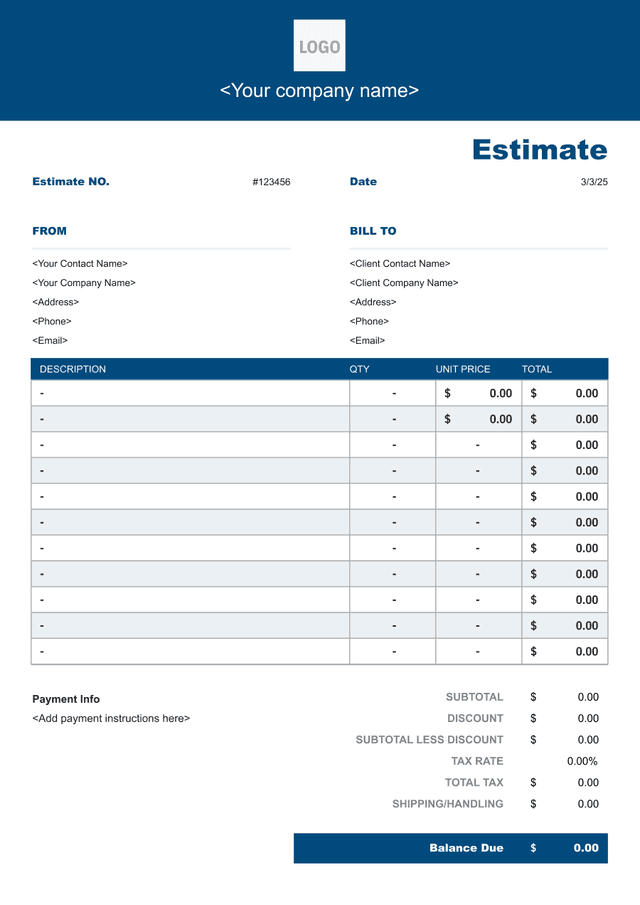
What Is a Painting Estimate?
A painting estimate is what a property owner receives after a walkthrough: a price for the job as the surfaces were understood on the day, before substrate damage is fully exposed and before sheen or color selections are locked. It starts from the square footage and linear feet measured on site and adds labor hours and crew rates, paint and primer by grade and coverage rate, surface prep, masking and protection, equipment, plus the overhead and margin your company carries.
What a walkthrough can confirm stops at the surface. Peeling, blistering, alligatoring, water staining, hairline cracks, and previous layers applied over gloss without scuff sanding are all visible, but what sits under them — damaged drywall, loose joint compound, hidden moisture, or lead-based paint under a 1978-era coating — is not. The first number reflects only what was measured and tested on site.
Owners read it to decide whether to proceed, which sheen and grade to select, and how much to set aside, so the estimate belongs next to the contract and the work order rather than floating on its own. Its value comes from separating the surfaces priced from measurement from the conditions that depend on prep, testing, or opening up.
- 01
What the number represents
It prices the surfaces measured and the coating system specified on the day of the visit: the walls, ceilings, trim, and doors walked, the prep observed, the paint grade and sheen chosen or still to be chosen. It is not the final figure if the substrate changes or the scope moves, and calling it a firm bid rather than an estimate is what triggers most of the disputes that surface at invoice time.
- 02
How much detail it carries
A quick walk-through and a measured takeoff produce two different documents. Off a first visit, square footage by surface and a coverage allowance for an unselected paint grade are appropriate; once prep is underway and the substrate is exposed, each wall and trim run should carry its own prep steps, primer, and coat count. The level of detail should match how much of the substrate has actually been seen.
- 03
Why the total moves
A substrate that needs more repair than the surface suggested, a lead-positive test on a pre-1978 home that triggers containment procedures, a sheen upgrade that adds a coat, and a color change that requires a tinted primer all move it. Break out each one by quantity and unit rate on its own line, so the owner signs off on the figure beforehand rather than discovering it as an unexpected line item.
What to Include in a Painting Estimate
The estimate has to identify the job well enough that your office and the owner never confuse it with another: the property, the rooms or elevations priced, and the date each was walked. Then each priced surface should trace to a measurement taken, a substrate condition noted, a coating system specified, or a test result carried.

- 01
Business and client details
Show the painting firm's name, licence number, address, phone, and email; beneath that, the owner's name, the site address, and a distinct billing address whenever it is not the same as the property. Where the job is insurance-funded or HOA-governed, add the claim or HOA reference number, and note who authorized the walkthrough.
- 02
Estimate number, dates, and validity
Number estimates on a track separate from your invoices, and print both the issue date and the date the property was walked. Set an expiry and say what happens after it, because paint pricing and primer costs do not stay open indefinitely and a selected color line can be discontinued mid-project.
- 03
Scope of work with inclusions and exclusions
Describe the job surface by surface — walls, ceilings, trim, doors, windows, stairs — and say what each part includes; then list what it leaves out: walls behind fixed cabinetry, floors, window treatments, work by other trades, owner-supplied paint, and the substrate damage that only prep will expose. Note what the scope rested on, such as the square footage measured and the lead swab tests taken, and where the inspection stopped, such as a crawlspace or behind a fixed mirror not accessed. Silence reads as inclusion.
- 04
Surface prep, patching, and priming
Price the prep that decides whether the coating holds: scraping loose paint, power washing exterior surfaces, spackling and sanding, skimming damaged drywall, re-caulking failed joints at trim and windows, spot-priming bare wood and repaired areas, and applying full primer where the substrate requires it. Each prep step should carry its own quantity — square feet patched, linear feet caulked, square feet primed — so a grade change does not reopen the labor.
- 05
Coating system, paint grade, and application method
Specify the coating system per surface: primer brand and product, paint grade from builder-grade through premium, sheen from flat through high-gloss, the number of coats, and the coverage rate in square feet per gallon. State whether application is by sprayer, roller, or brush, since spraying a ceiling is faster but masking a furnished room adds labor, and cutting in lines by brush is priced by the linear foot of edge.
- 06
Totals, payment terms, warranty, and acceptance
Finish with subtotals by surface or room, contingency on its own line rather than buried in the rates, tax where it applies, and the total. Under that, the terms: payments tied to completed and inspected stages — prep complete, primer coat accepted, finish coats applied — how a change order is raised and priced, who supplies the paint, how the workmanship warranty differs from the manufacturer warranty on the coating, and a signature block with printed name, date, and the version accepted.
Reuse Saved Information in Invoice Zip
Use saved items and client information to create a painting estimate in just a few taps.
How to Break Down a Painting Estimate
Four passes turn a walkthrough into a price: confirm which surfaces are in the job, measure them, price them against your rates and suppliers, and check the result before the owner sees it.
Confirm the scope
Walk the property and record what you are actually pricing: which rooms or elevations, which surfaces within them, what the owner expects to be included, and what you could not see. Note the substrate conditions, the sheen and grade selections still open, and the lead-test status on pre-1978 properties, so none of it turns up later as an unpriced surprise.
Measure the work
Measure every surface yourself rather than pricing from the owner's dimensions, and price each in the unit that fits it: square feet for walls and ceilings, linear feet for baseboard, casing, and crown, each for doors and window sashes. Where the repair quantity cannot be known until prep exposes the substrate, carry an allowance with the square footage and unit cost it covers.
Apply resources and rates
Put labor hours and crew rates on each surface separately from its coating system, so a sheen or grade change can be repriced without reopening the labor. Add paint and primer by grade, sheen, and coverage rate at current supplier pricing, masking and protection by the room or by the day, equipment such as sprayers and lifts, and the overhead and margin your company carries.
Review and issue
Read it back the way the owner will: every surface priced, every prep step named, every exclusion written down. Confirm the measurements, the coat count, the total, and the validity period, then issue it and say what follows: a signed contract and work order once the scope is agreed, with a numbered change order for anything that shifts after that.
Common Painting Estimate Line Items
- 01
Surface prep and repair
Scraping, power washing, spackling, skimming, sanding, re-caulking trim and windows, and spot-priming bare substrate.
Typical units: square feet, linear feet, hours, each
- 02
Primer and undercoats
Primer application by surface type, stain-blocking primer over water marks, bonding primer over gloss, and tinted primer for color changes.
Typical units: square feet, gallons, coats
- 03
Finish coats by surface
Walls, ceilings, baseboard, casing, crown, doors, window sashes, stair stringers, and railings, priced by the coat.
Typical units: square feet, linear feet, each, coats
- 04
Paint grade, sheen, and coverage
Builder, professional, and premium grades, flat through high-gloss sheens, coverage rate per gallon, and the tint cost per color change.
Typical units: gallons, square feet per gallon, each
- 05
Masking, protection, and equipment
Floor and furniture masking, containment for lead-positive work, sprayer setup and cleanup, lifts or scaffolding, and daily cleanup.
Typical units: rooms, days, hours, each
- 06
Punch list, touch-up, and warranty
Final walk, touch-up, touch-up material, cleanup, warranty registration, and closeout documents.
Typical units: hours, flat fees, each
Key Considerations for Painting Estimates
- 01
Verify substrate condition and prep scope
Inspect each surface for peeling, blistering, alligatoring, water staining, and hairline cracking, and press on trim and casing for soft spots that signal rot rather than paint failure. State whether prep quantities come from your measurements or from an assumed repair rate per square foot, and carry anything that depends on opening up a damaged area — rotted siding, loose joint compound, hidden moisture — as an allowance rather than a fixed number, with the change order documented and authorized before work continues.
- 02
Confirm lead-safe practices on pre-1978 properties
Any residence built before 1978 requires an EPA Renovation, Repair, and Painting (RRP) certification, and a positive lead swab test triggers containment, wet-scraping, HEPA vacuuming, and proper disposal. State on the estimate whether the property has been tested, who holds the RRP certification, and what the containment and disposal add in labor and material, because skipping it is a federal violation and a liability the owner inherits.
- 03
Lock coating system and application method
Specify the primer product, the paint grade, the sheen, the coat count, and the coverage rate per gallon, and state whether the application is spray, roller, or brush, since the method changes both the labor hours and the material consumed. Spraying a vaulted ceiling is faster but overspray in a furnished room adds masking labor, and cutting in a crisp line at crown or baseboard is priced by the linear foot of edge, not by the square foot of wall.
- 04
Control allowances, color changes, and touch-up
List each allowance by name — unselected paint grade, unconfirmed color, repair quantity behind damaged substrate — with the quantity and unit cost it covers, and state who carries the overrun when the actual selection costs more. Note that a color change after the first coat requires a tinted primer and a recoat, and carry a touch-up allowance by the room or by the hour, because the final walk nearly always finds nail pops, scuffs, and holidays that need a brush and a return visit.
Painting Estimate, Quote, or Invoice?
Estimate
Projected cost
- Purpose
- Price the surfaces measured at walkthrough, using your own square footage, today's paint and primer pricing, and the substrate conditions observed.
- When used
- After a site visit, before sheen and color are finalized, lead tests are returned, or the schedule is booked.
- Next document
- Once the scope is settled it turns into a signed contract and work order, and anything that changes from there carries a numbered change order.
Quote
Defined offer
- Purpose
- Offer one price for the scope as written, including the coating system, sheen, coat count, and completion date the owner has agreed to.
- When used
- When paint grade and color are selected, lead-test status is known, and scope, materials, and schedule are understood on both sides.
- Next document
- Keep the signed proposal with the job file, and record later color changes, change orders, and scheduling delays against it.
Invoice
Payment request
- Purpose
- Ask for what the contract allows at that point: a deposit for materials, a stage payment after prep, the balance on completion, or an approved change order.
- When used
- When a stage is finished and inspected — prep complete, primer accepted, finish coats applied, final walkthrough.
- Next document
- Note the payment received, subtract the deposit already collected, and display the outstanding balance the owner still owes.
Painting Estimate FAQs
How many coats does the estimate include, and who buys the paint?
The estimate should state the coat count per surface: typically one primer and two finish coats on new or repaired substrate, and one spot-primer plus two finish coats on sound previously painted surfaces. If the contractor buys the paint, the grade, sheen, brand, and coverage rate per gallon should be named; if the owner supplies it, show labor only.
How is lead-based paint on an older home handled in the estimate?
Any residence built before 1978 is assumed to have lead-based paint until a certified test proves otherwise, and any disturbance falls under the EPA RRP rule. The estimate should state whether testing is included, who holds the RRP certification, and what containment, HEPA vacuuming, and disposal add to the total. If it does not mention lead, ask before signing.
How long until the space is reoccupiable after interior painting?
Ventilation and product chemistry decide it, not a fixed hour count. Low- and zero-VOC paints allow re-entry within hours; conventional alkyd coatings can require a full day of off-gassing. The estimate should name the product line, note whether the space must be cleared during application, and state how long furniture should stay off freshly painted surfaces.
What happens if the substrate is worse than it looked at walkthrough?
Prep is where the total moves. Peeling paint can extend across a full elevation once scraping reveals adhesion failure underneath, and water-stained drywall can turn out to be soft. The estimate should carry an allowance for hidden substrate repair — a square-foot rate with an assumed quantity — and the contractor should photograph and issue a change order before continuing.
Other Free Resources

Try Invoice Zip Today
Start Sending Invoices, Building Reports, Saving Office
Time and Get Paid Faster.