


Free Pest Control Estimate Template
Prepare a pest control estimate that ties each line to an identified species and its treatment protocol, prices the initial service and any recurring contract separately, and shows where follow-up visits or retreatment may apply. Give the property owner a reviewable basis before any product is applied, a contract is signed, or a warranty period begins.
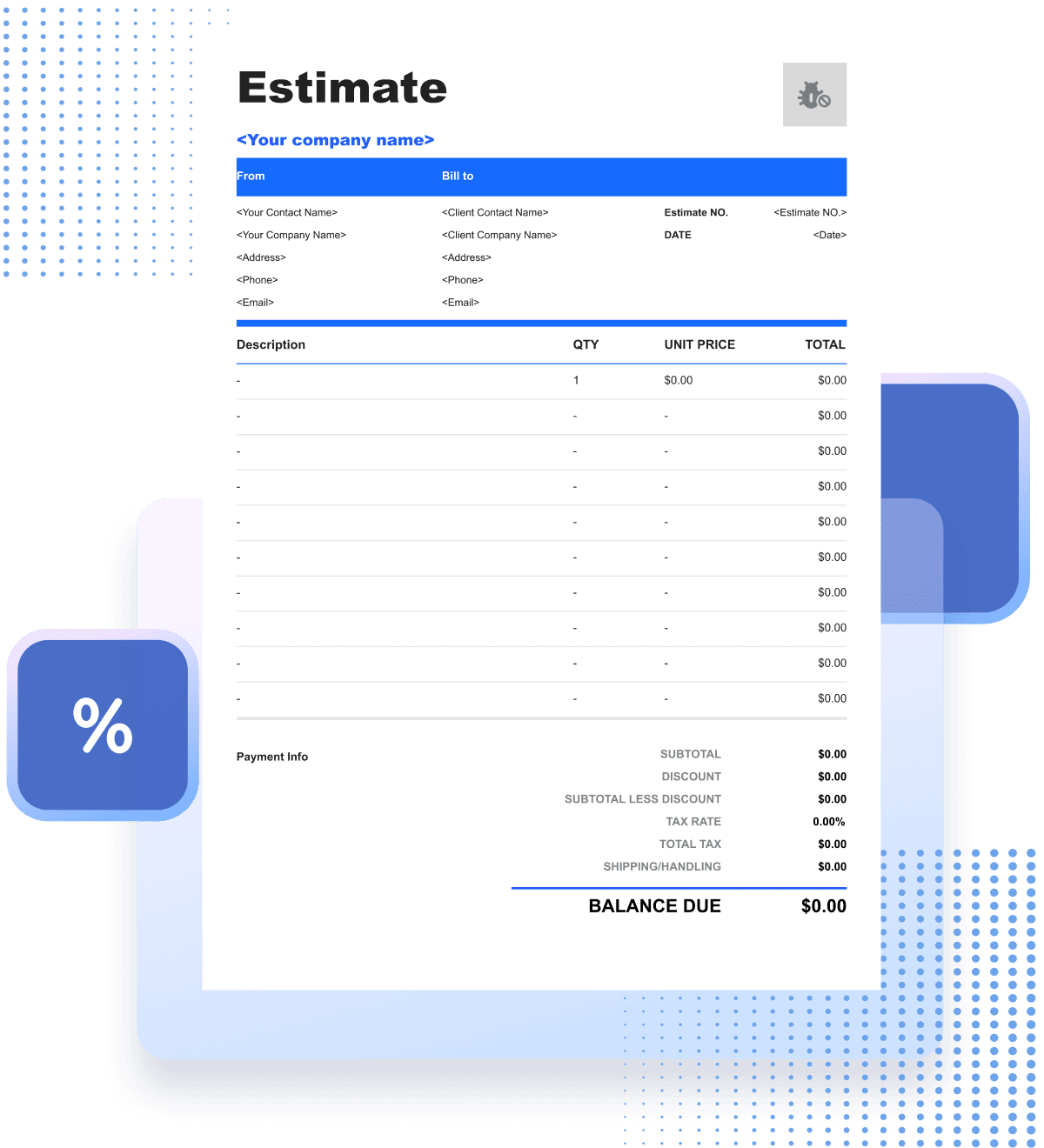
Pest Control Estimate Template
The pest identified decides the protocol, and the protocol decides the price. Put the species found, the treatment method and application points, the indoor and outdoor coverage, the number of visits, the re-entry interval, and the retreatment terms under one estimate number.
A pest job is judged by whether the problem comes back, not by how it looked on the day. Listing the initial service and the recurring visits separately, with what each one covers and what the guarantee includes, turns a complaint into a specific question about a specific visit.
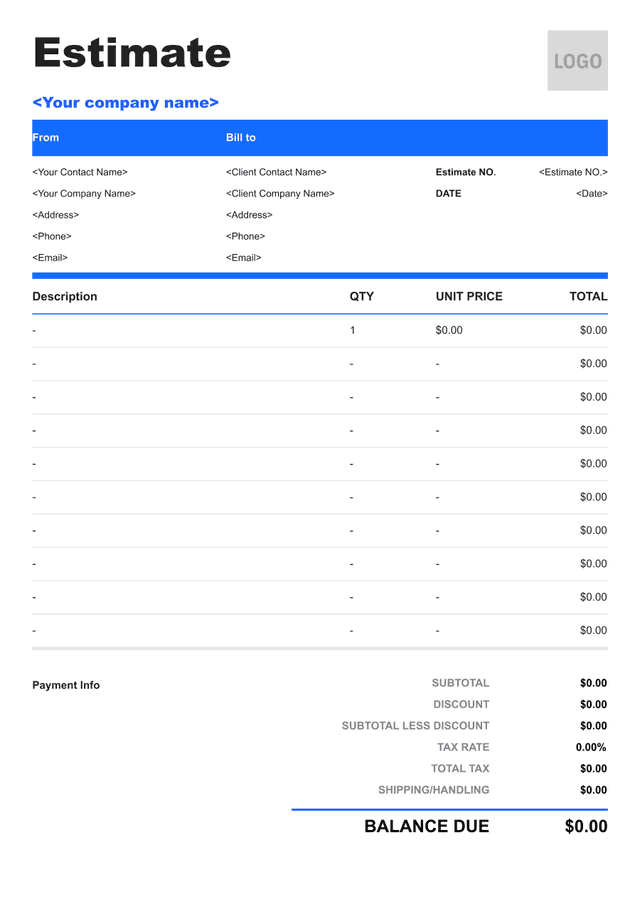


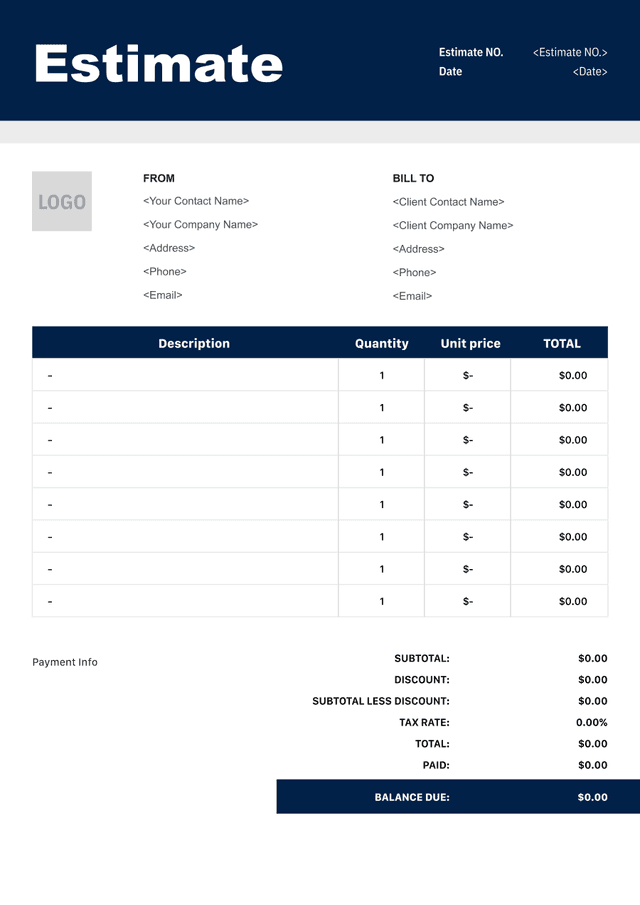
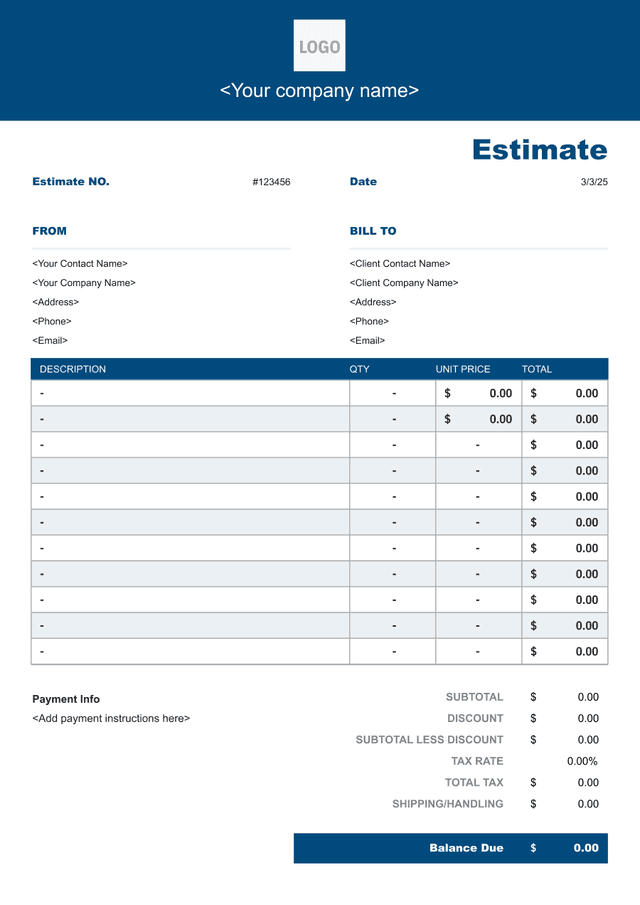
What Is a Pest Control Estimate?
A pest control estimate is what a property owner receives after an inspection or a species identification: a price for the treatment protocol the infestation calls for, before any product is applied and before a contract is signed. It starts from the pest identified, adds the treatment method and product category, the application points and coverage area, the indoor and outdoor range, and the contract or one-time structure the service carries.
Species and infestation level drive everything downstream. An ant trail along a foundation, a German cockroach population behind a kitchen, a rodent entry point in an attic, and a subterranean termite colony under a slab each call for a different treatment path, so a first number reflects what the inspection confirmed rather than a generic spray visit.
Owners read it to decide whether to treat, whether to sign a recurring contract, and how much to set aside, so it belongs next to the service ticket and the application record. Its value comes from separating what the initial treatment covers from what a follow-up or a retreatment may add, and from naming the warranty terms so both sides know what a recurrence means.
- 01
What the number represents
It prices the treatment protocol for the species identified at the inspection, not a guarantee that the pest is gone for that exact amount. The figure reflects the product category, the application points, the coverage area, the contract structure, and the warranty or retreatment terms in force. Call it an estimate and price it as one, because a document that reads like a fixed warranty is the one that gets argued over when a recurrence appears.
- 02
How much detail it carries
A phone-described sighting and a full property inspection produce different documents. The first can carry a flat initial treatment with a follow-up allowance; the second should name each pest, its signs, the product category, the application points, and the contract or warranty it carries. Matching the detail to how far the inspection has gone is what keeps the number defensible.
- 03
Why the total moves
A recurrence is normal for some species and not for others. A German cockroach treatment may need a second visit, a bed bug protocol may call for multiple applications, and a termite treatment may carry its own separate inspection and warranty. Keep each follow-up or retreatment on its own line with the reason it is needed, so the owner can approve it individually instead of reopening the whole contract.
What to Include in a Pest Control Estimate
Every line on a pest control estimate should trace to a species identified, a treatment protocol, a product category and application point, or a contract and warranty term. Before those lines, the document has to carry the identifiers that let the company, the technician, and the owner agree they are discussing the same property and the same infestation.

- 01
Business and client details
Your company name, state pest control license number, address, phone, and email, then the owner's name, the property where the treatment happens, and the billing address if the two differ. Note whether the property is residential or commercial, since the protocol and the contract terms differ, and whether pets or children are on site, because that changes the safety interval the treatment requires.
- 02
Estimate number, dates, and validity
Run estimates on their own number series rather than the invoice or contract series, and show the date issued alongside the date the property was inspected. Set an expiry and say what happens after it, because pest activity and seasonal pressure do not hold still, and a treatment plan priced in spring may not match the conditions in late summer.
- 03
Scope of work with inclusions and exclusions
Describe the treatment pest by pest and say what each protocol includes, then write down what it does not: pests not identified at the inspection, areas not treated such as an attic or crawlspace not accessed, and wildlife or termite work that requires a separate inspection and contract. List the evidence behind the scope — droppings, frass, live or dead specimens, entry points, and damage — and the limits of that evidence, such as a wall void not inspected. Silence reads as inclusion.
- 04
Species, protocol, and application points
Name each pest identified and the treatment protocol it calls for: a crack-and-crevice treatment for cockroaches, a bait station and exclusion program for rodents, a soil treatment and monitoring system for subterranean termites, or a heat or chemical protocol for bed bugs. List the product category — baits, residuals, insect growth regulators, dusts, or traps — and the application points: baseboards, voids, perimeter, attic, slab, or yard. Different species take different methods, and the owner should see which protocol applies to which pest.
- 05
Contract structure, coverage, and safety interval
State whether the price is a one-time initial treatment or a recurring contract — quarterly, bi-monthly, or annual — and what each visit covers. Distinguish the indoor from the outdoor treatment range, since a perimeter service and an interior service are priced and scheduled differently. Note the safety interval the owner and pets must observe after application, because re-entry timing is one of the first things an owner asks about, and it varies by product category.
- 06
Totals, payment terms, warranty, and acceptance
Finish with subtotals by treatment type, the initial service, any contract renewal or maintenance fee, trap and bait station placement, tax where it applies, and the total. Under that, the terms: whether the initial treatment is billed on completion or invoiced, how the contract renews and what cancellation requires, what the retreatment or guarantee covers and for how long, how it differs from a termite warranty which is a separate document, and a signature block with printed name, date, and the version accepted.
Reuse Saved Information in Invoice Zip
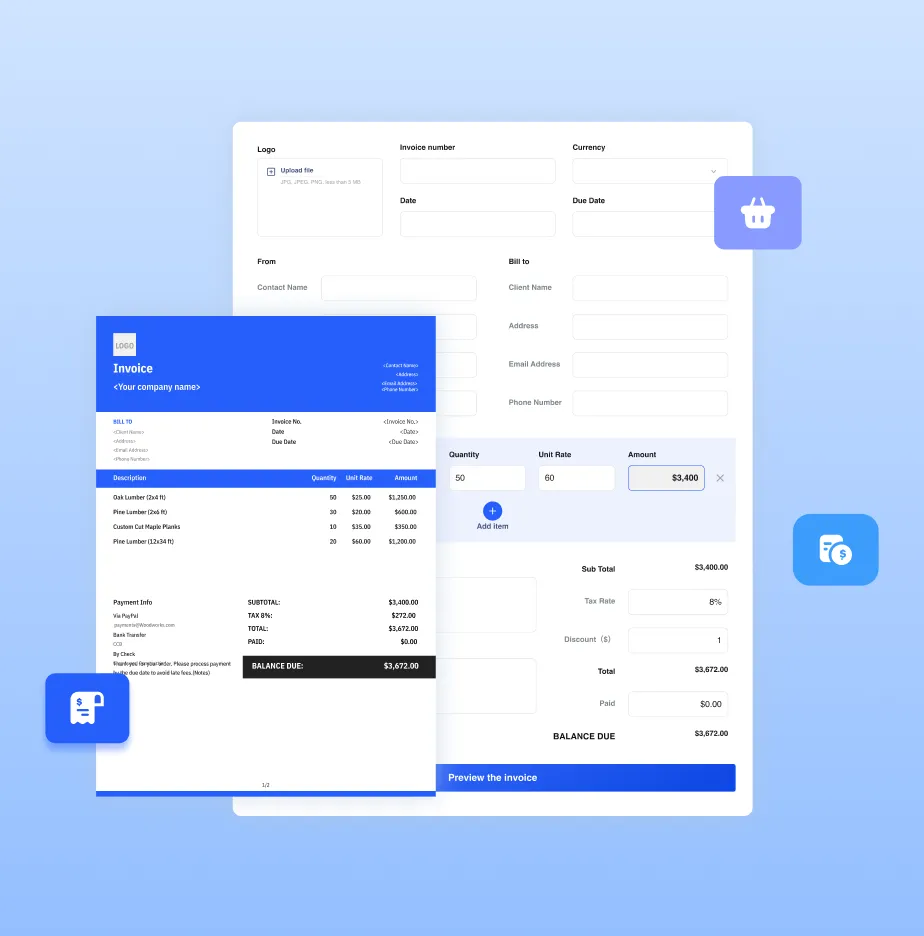
Use saved items and client information to create a pest control estimate in just a few taps.
How to Break Down a Pest Control Estimate
Four passes turn a reported sighting into a defensible price: confirm the pest and its extent, size the treatment, price it at your rates, and check the result before it goes out.
Confirm the scope
Start from a pest the owner can describe and a sign the technician can verify. Inspect the interior and exterior, identify the species from specimens, droppings, frass, or damage, and separate what is confirmed from what a follow-up inspection may still reveal, such as a wall void or an attic not accessed. Note the infestation level and the entry points, and whether the protocol calls for exclusion work or monitoring.
Measure the work
Turn each confirmed pest into a treatment protocol with its components: application points, product category, the square footage or perimeter treated, and the number of traps, bait stations, or monitors placed. Quantify the coverage area — interior square feet, exterior linear feet, or yard area — and carry anything still pending a follow-up as an allowance with the reason it cannot be finalized yet.
Apply resources and rates
Price the treatment at the rate each component earns: the initial service, the product and material used, the trap and bait station placement, and any exclusion or sealing work. Add the contract or maintenance fee if the owner is signing a recurring plan, the sublet work such as a termite soil treatment done by a specialist, and the travel and record-keeping time the application requires. Keep each on its own line so a follow-up does not reopen the whole estimate.
Review and issue
Read the write-up back against the inspection findings before it goes out: a protocol with no species named, an application point with no product category, a contract with no retreatment term. Release it under its own number with an expiry, then say what happens next: a service ticket once the owner approves, an application record left on site, and a follow-up visit booked if the protocol calls for one.
Common Pest Control Estimate Line Items
- 01
Initial inspection and species identification
Interior and exterior inspection, species identification from specimens or signs, infestation level assessment, entry point mapping, and treatment protocol selection.
Typical units: inspection hours, flat fees, each
- 02
General pest treatment — ants, roaches, and spiders
Crack-and-crevice treatment, perimeter residual, baits, insect growth regulators, web removal, and indoor and outdoor application.
Typical units: square feet, linear feet, flat fees
- 03
Rodent control and exclusion
Trap placement, bait stations, entry point sealing, attic and crawl space treatment, and monitoring.
Typical units: each, stations, labor hours
- 04
Termite treatment and monitoring
Soil treatment, trenching, slab drilling, bait system installation, and annual monitoring with a separate warranty document.
Typical units: linear feet, stations, flat fees
- 05
Bed bug and specialty treatment
Heat treatment, chemical protocol, mattress encasement, follow-up application, and room-by-room inspection.
Typical units: rooms, square feet, flat fees
- 06
Contract, retreatment, and records
Quarterly or bi-monthly maintenance visit, retreatment under warranty, application record, and state-required documentation.
Typical units: visits, flat fees, each
Key Considerations for Pest Control Estimates
- 01
Identify the species before pricing the protocol
A treatment priced without a confirmed species is a guess, and the guess usually shows up as the wrong product in the wrong place. Argentine ants and carpenter ants take different protocols, German and American cockroaches respond to different baits, and a subterranean termite and a drywood termite call for entirely different treatment paths. State which specimens or signs were used to identify each pest, and if the identification is probable rather than confirmed, label it as such and carry a follow-up inspection before the protocol is finalized.
- 02
Separate the initial treatment from the recurring contract
The initial service and the quarterly or annual maintenance are two different charges, and the estimate should show them on separate lines so the owner can choose one or both. The initial treatment addresses the infestation confirmed at inspection; the contract covers monitoring, preventive application, and retreatment if a recurrence appears within the term. State what the contract covers, how it renews, what cancellation requires, and whether the retreatment guarantee is unlimited or capped at a number of visits per year.
- 03
Distinguish indoor and outdoor coverage and re-entry timing
An exterior perimeter service and an interior crack-and-crevice treatment are priced, scheduled, and restricted differently. Show the coverage area for each, and note the safety interval the owner, children, and pets must observe after application, because re-entry timing varies by product category — a residual spray may require drying time, a dust in a void may require ventilation, and a bait station outdoors has a different exposure profile than a treatment inside a kitchen.
- 04
Keep termite work on its own estimate and warranty
Subterranean and drywood termite treatments are structured differently from general pest work: they call for soil treatment, trenching, slab drilling, or a bait system, and they carry a separate warranty or bond that is its own document. Do not fold termite treatment into a general pest estimate, because the contract terms, the retreatment triggers, and the state-required documentation are different, and an owner who sees termite work buried in a general pest line will not know what coverage they actually hold.
Pest Control Estimate, Quote, or Invoice?
Estimate
Projected cost
- Purpose
- Put a defensible number on the pests identified at inspection, using the treatment protocol, the product category, the coverage area, and the contract terms in hand.
- When used
- After an inspection or species identification, before a product is applied or a contract is signed.
- Next document
- Become a signed service ticket and application record once the protocol is agreed, with a follow-up scheduled if the species calls for one.
Quote
Defined offer
- Purpose
- Offer one price for the treatment protocol as written, naming the product category, the coverage area, and the contract or warranty terms the owner has agreed to.
- When used
- Once the species is confirmed, the protocol is selected, and the contract structure and warranty are understood on both sides.
- Next document
- Keep the signed service agreement with the file, and record any later retreatment, contract renewal, or protocol change against it.
Invoice
Payment request
- Purpose
- Ask for what is actually due: the initial treatment on completion, a contract renewal, a follow-up visit, or an approved retreatment.
- When used
- At a payment event — the initial treatment is applied, a maintenance visit is completed, or a contract term renews.
- Next document
- Record the payment, credit any deposit already held, and show the balance the owner still owes.
Pest Control Estimate FAQs
Do I need to leave the house during treatment?
It depends on the product and the application points. An exterior perimeter treatment typically does not require leaving; an interior crack-and-crevice treatment usually requires occupants and pets to leave until the product has dried — two to four hours. The estimate should state the safety interval for each treatment. If you have infants, birds, reptiles, or fish, tell the technician before the estimate is written.
How long before I see results, and what if the pests come back?
It varies by species. Ant and cockroach bait can take several days to two weeks as it moves through the colony; bed bug treatments often require a follow-up at two weeks since eggs survive the first application. The estimate should state the expected timeline for each pest and whether a follow-up is included. The warranty governs recurrence — state what it covers and whether retreatment is capped.
Are the products safe for my pets and children?
Applied correctly, the products a licensed technician uses are within the safety margins the label specifies. The estimate should name the product category — baits, residuals, growth regulators, dusts, or traps — and the safety interval each one requires. Birds, fish, and reptiles are more sensitive than mammals to certain products, and a mist application near a fish tank requires covering the tank and turning off the aerator.
Why is termite treatment priced separately from general pest control?
Because the protocol, the contract, and the warranty are different. A general pest contract covers ants, roaches, and spiders; a termite treatment calls for soil trenching, slab drilling, or a bait system, and carries a separate warranty or bond. If termites are identified, the estimate should name the species and state that the treatment is a separate line and agreement.
Other Free Resources

Try Invoice Zip Today
Start Sending Invoices, Building Reports, Saving Office
Time and Get Paid Faster.