


Free Pressure Washing Estimate Template
Prepare a pressure washing estimate that prices the surfaces you walked, ties each line to a material type, a pressure or soft-wash method, and a chemical, and shows where staining or oxidation the owner did not report may move the total. Give the homeowner or property manager a reviewable basis before a service date, a deposit, or a sealant application is set.
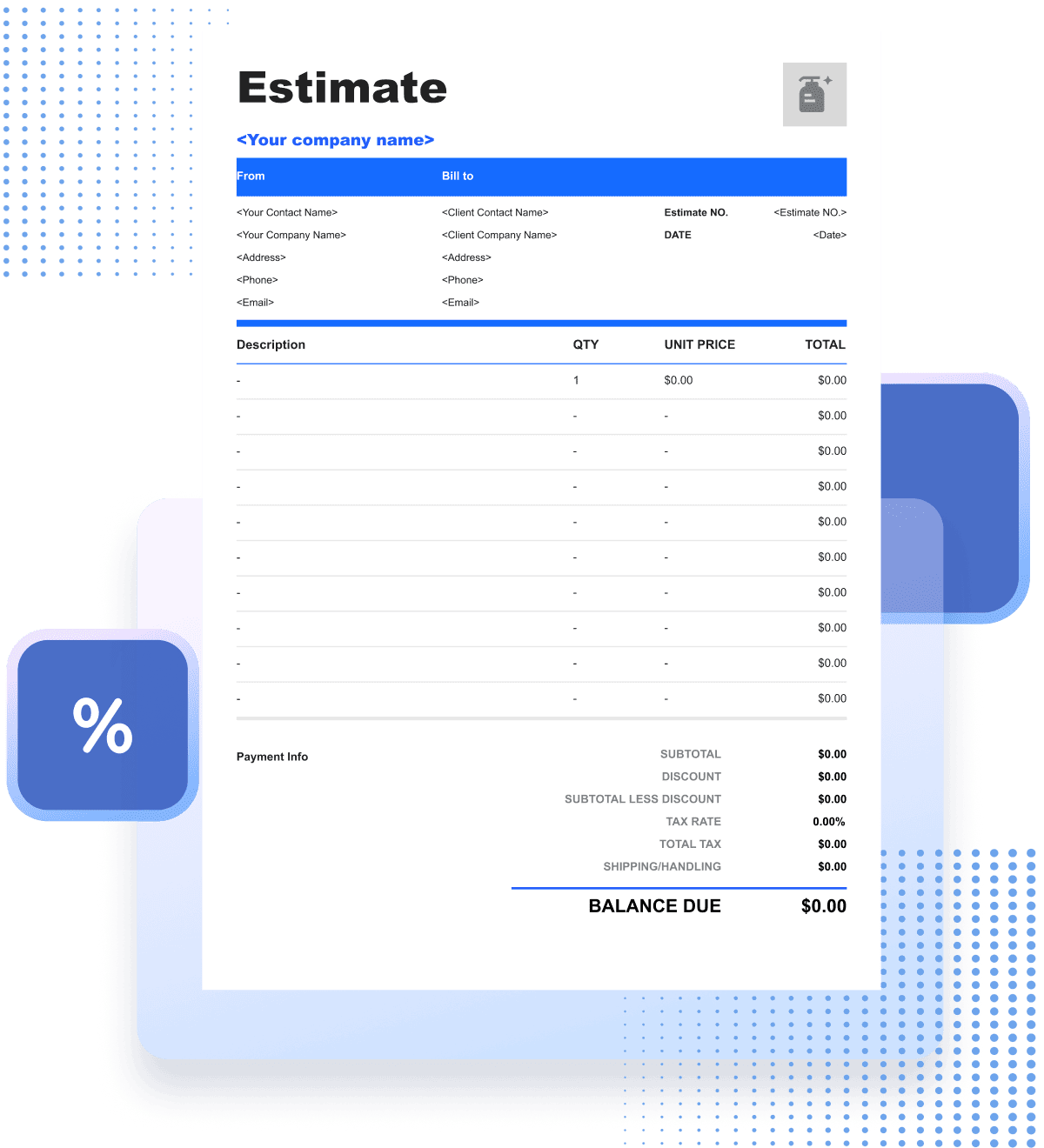
Pressure Washing Estimate Template
Surfaces, not square footage alone, set the method and the price. Put each material and its stain type, the wash method and pressure, the chemicals and neutralization, the water source and wastewater handling, and the sealant follow-up under one estimate number.
The wrong pressure on the wrong surface costs more than the job earns. Naming the method and the chemical for each surface lets the customer see that soft washing a roof and blasting a driveway are different operations, and gives you a record if a stain or a pre-existing defect resurfaces.
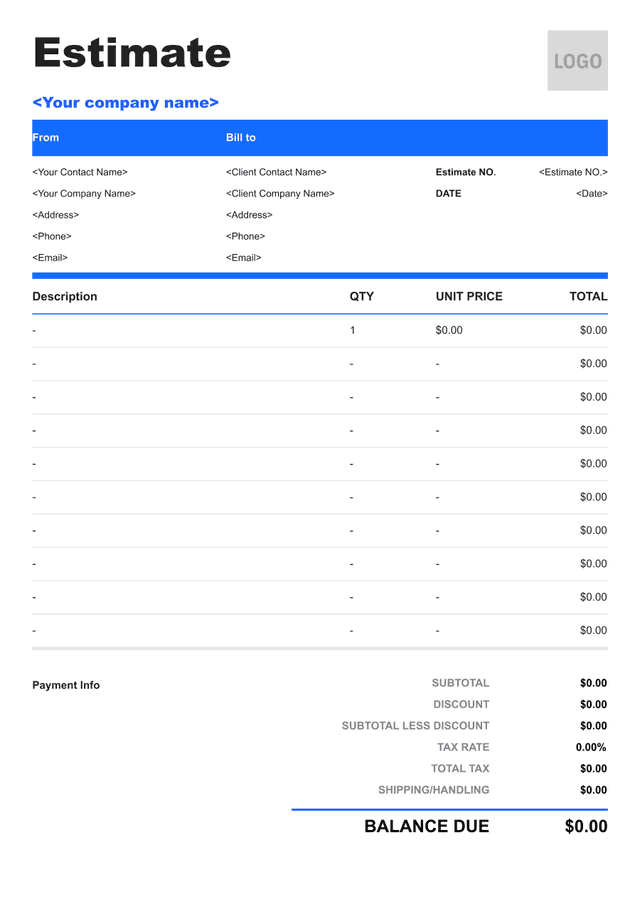


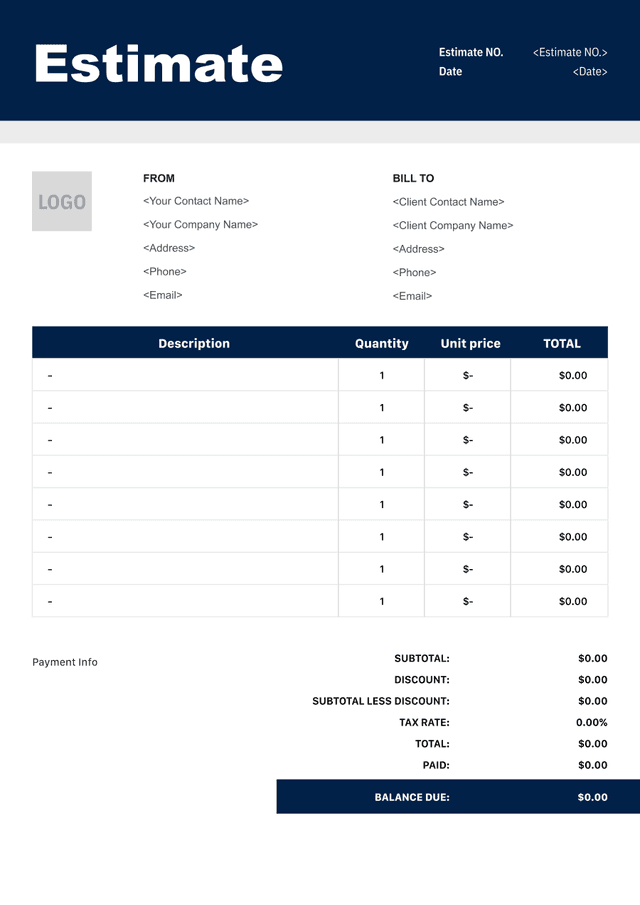
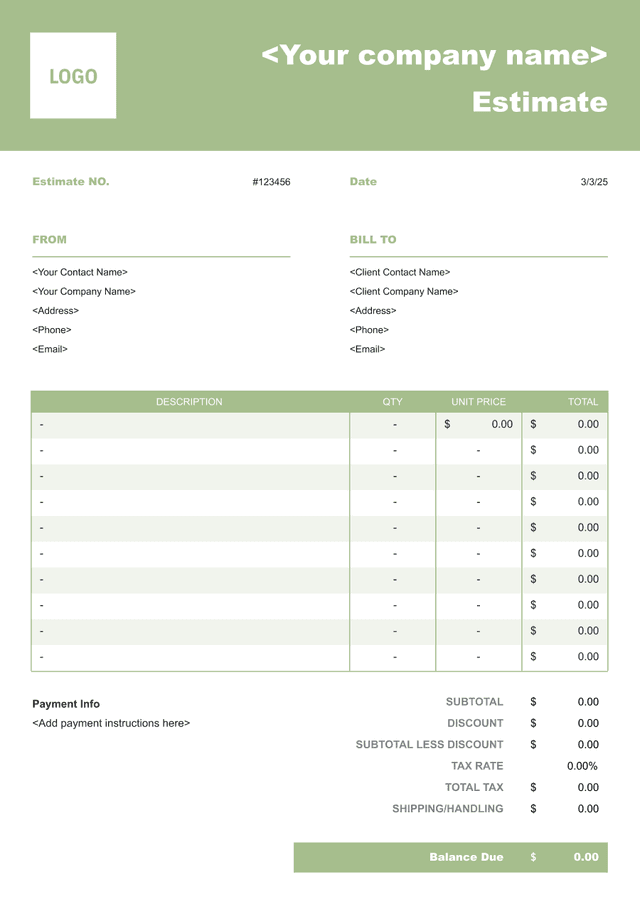
What Is a Pressure Washing Estimate?
A pressure washing estimate is what a property owner receives after a walkthrough: a price for the job as it was understood on the day, before water hits the surface and before the actual stain depth is tested. It starts from the square footage or linear footage measured and adds labor hours and equipment rates, chemicals and surface cleaners, water source and recovery, plus the overhead and margin your company carries.
What a dry walkthrough can see is limited to the surface layer. Algae and mold read differently wet, oxidation underneath a stain does not show until it is hit, and oil on a driveway soaks deeper than the surface suggests. None of it is fully assessed until the equipment is on site.
Owners read it to decide whether to book, which method to choose, and whether to add sealant, so it belongs next to the service agreement rather than floating on its own. Its job is to make the boundary between what is priced from visible conditions and what is still an assumption obvious while both sides are still friendly.
- 01
What the number represents
It prices the surfaces measured at the walkthrough, the pressure or soft-wash method assigned to each material, and the chemical and water plan stated. It is not the final figure if the staining or oxidation turns out heavier than reported, and it is not a bill — writing that plainly on the page prevents most of the arguments that surface at invoice time.
- 02
How much detail it carries
Each visit yields its own estimate. Off a dry walk, a per-square-foot rate with the method named is appropriate; once the crew has actually tested a section, each surface should carry its actual chemical consumption, dwell time, and pass count. The detail should match how much of the surface has actually been tested.
- 03
Why the total moves
A stain that requires more dwell time or a stronger chemical than the walk suggested, an oxidation layer that needs a separate step, a substrate that limits pressure and forces a soft-wash downgrade, and a sealant added after the wash all move it. List each variable as its own line with the unit and rate it applies to, so the owner knows exactly what they are agreeing to before it shows up as an added charge.
What to Include in a Pressure Washing Estimate
The estimate has to identify the property and each surface well enough that your office and the owner never confuse it with another job: the address, the surfaces and materials covered, the method assigned, and the date it was walked. Then each priced surface should trace to a measurement taken, a material identified, a stain type observed, or a chemical and method selected.
- 01
Business and client details
List your business name, license number, address, phone, and email at the top, followed by the owner's name, the service address, and a separate billing address if it differs from the site. Where the job is commercial or managed by an HOA, add the management contact and the surface location, and note who authorized the walkthrough and who controls the water source on site.
- 02
Estimate number, dates, and validity
Assign estimates a numbering sequence distinct from your invoices, and display both the date the document was issued and the date the property was walked. Set an expiry and say what happens after it, because chemical pricing and equipment availability do not stay open indefinitely.
- 03
Scope of work with inclusions and exclusions
Break the job down surface by surface and state what each one covers; then list what it leaves out — the roof, second-story siding without lift access, painted surfaces that will not hold under pressure, and areas behind obstacles the crew cannot move. Note what the scope rested on, such as the square footage measured and the stain type observed, and where the walkthrough stopped, such as a gated backyard or a roof not accessed. Silence reads as inclusion.
- 04
Material type, method, and chemical plan
Name the substrate on each surface — concrete, asphalt, brick, vinyl siding, stucco, wood, or roof shingle — because the material decides whether the line gets high pressure or soft wash, hot water or cold, and which chemical at what dilution. A single wrong assignment strips paint, etches a surface, or forces a surface cleaner replacement, so each surface carries its method and chemical in writing.
- 05
Water source, recovery, and sealant
State where the water comes from — an on-site spigot, a hydrant, or a tank truck — and how much the job needs, because a low-flow source changes the crew size and the time. Where the job is commercial or on a driveway with a storm drain, note wastewater recovery and neutralization as a separate line, and carry sealant application as a stated follow-up with its own unit and rate, not an automatic add-on.
- 06
Totals, payment terms, warranty, and acceptance
Finish with subtotals by surface or method, chemicals and water on their own lines rather than buried in the rates, disposal and recovery fees, tax where it applies, and the total. Under that, the terms: payments tied to completed surfaces rather than to calendar dates, how a re-wash or a stain that needs a second pass is raised and priced, who carries the cost of substrate damage, how the sealant warranty differs from the cleaning result, and a signature block with printed name, date, and the version accepted.
Reuse Saved Information in Invoice Zip
Use saved items and client information to create a pressure washing estimate in just a few taps.
How to Break Down a Pressure Washing Estimate
Four passes turn a walkthrough into a price: confirm what is in the job, measure it, price it against your rates and chemical costs, and check it before the owner sees it.
Confirm the scope
Walk the property and write down what you are actually pricing: which surfaces, what material each one is, and what you could not see. Note the stain type on each surface — algae, mold, oxidation, oil, rust, or gum — and whether access requires a lift, a ladder, or a surface cleaner, so none of it turns up later as an unpriced surprise.
Measure the work
Measure every surface yourself rather than pricing from the owner's lot size, and price each surface in the unit that fits it: square feet for driveways and siding, linear feet for fences and curbs, each for gutters and downspouts. Where the actual chemical consumption cannot be known until a section is tested, carry a stated range with the unit and rate it covers.
Apply resources and rates
Put labor hours and equipment rates on each surface separately from its chemicals and water, so a method change can be repriced without reopening the labor. Add chemicals by type and dilution at current supplier pricing, surface cleaner and nozzle consumables, water source and recovery, and the overhead and margin your company carries.
Review and issue
Read it back the way the owner will: every surface priced, every method named, every exclusion written down. Confirm the measurements, the total, and the validity period, then issue it and say what follows: a signed service agreement and a service date once the scope is agreed, with a numbered ticket for any re-wash or sealant follow-up after that.
Common Pressure Washing Estimate Line Items
- 01
Concrete driveway and walkway
High-pressure washing with a surface cleaner, degreaser for oil stains, gum removal, and edge and joint cleaning for sidewalks and driveways.
Typical units: square feet, linear feet, each
- 02
House siding soft wash
Low-pressure chemical application for vinyl, stucco, brick, and wood siding, including detergent dwell, rinse, and mildew treatment.
Typical units: square feet, per side, hours
- 03
Roof cleaning
Soft-wash chemical treatment for asphalt shingle or tile, killing algae and moss without pressure that strips granules or breaks tiles.
Typical units: square feet, per square, each
- 04
Deck, fence, and wood surfaces
Low-pressure wash with wood-safe chemical, brightener for oxidation and UV damage, and preparation for stain or sealant.
Typical units: square feet, linear feet, each
- 05
Hot water and specialty stain removal
Hot-water washing for oil and grease on concrete, rust treatment, efflorescence removal, and heavy oxidation correction on siding or metal.
Typical units: square feet, hours, each
- 06
Water recovery, sealant, and chemicals
Wastewater vacuum and recovery, neutralizer for chemical runoff, concrete or paver sealant application, and chemical consumables by type.
Typical units: square feet, flat fees, gallons, each
Key Considerations for Pressure Washing Estimates
- 01
Match the method and pressure to the substrate
Concrete and asphalt take high pressure; vinyl, stucco, wood, and roof shingle take soft wash with chemical, not force. Assigning a high-pressure line to a surface that cannot take it is how paint gets stripped, stucco gets etched, and shingle granules end up in the gutter. Name the material, the method, and the pressure or chemical on each line so the owner sees the assignment before the equipment arrives.
- 02
Identify the stain type before pricing the chemical
Algae, mold, oxidation, oil, rust, and gum each take a different chemical at a different dwell time and dilution. A walkthrough that lumps them as 'dirty siding' prices a single chemical where two or three are needed, and the crew arrives short. Walk each surface, name the stain, and carry the chemical and its consumption per surface on the estimate.
- 03
Plan water source and wastewater recovery
State where the water comes from and whether the flow rate supports the equipment, because a low-flow spigot extends every surface. On commercial jobs and driveways with storm drains, wastewater recovery is not optional in most jurisdictions — it is a permit and a fine. Carry recovery and neutralization as their own line, and note whether the site has a drain the crew can use or whether they bring a vacuum and a tank.
- 04
Carry sealant as a defined follow-up, not an assumption
Sealant on concrete, pavers, and wood is a separate operation from the wash, with its own material, labor, and cure time. If the owner wants it, carry it as a stated line with its unit and rate, and note whether the surface needs a dry window before application. A sealant applied to a surface that has not fully dried fails, and the estimate should say who carries that cost if the owner pushes the schedule.
Pressure Washing Estimate, Quote, or Invoice?
Estimate
Projected cost
- Purpose
- Price the surfaces as described at the walkthrough, using your own square footage, today's chemical pricing, and the method and pressure assigned to each material.
- When used
- After a site visit, before the service date is booked, the chemical plan is confirmed, or the sealant follow-up is scheduled.
- Next document
- Become a signed service agreement and a service date once the scope is agreed, with a numbered ticket for any re-wash or sealant follow-up after that.
Quote
Defined offer
- Purpose
- Commit to one price for one defined scope, with the method, chemical, and water plan the owner has agreed to and the service date.
- When used
- When the method is set, the water source is confirmed, and scope, surfaces, and sealant decision are understood on both sides.
- Next document
- Keep the signed service agreement with the job file, and log later re-washes, sealant follow-ups, and frequency changes against it.
Invoice
Payment request
- Purpose
- Ask for what the service agreement allows at that point: a deposit on chemicals and equipment, a balance on completed surfaces, or an approved sealant follow-up.
- When used
- When a surface or group of surfaces is completed and the owner has signed off on the result.
- Next document
- Record the payment, credit any deposit already held, and show the balance the owner owes for the next billing cycle.
Pressure Washing Estimate FAQs
Can pressure washing damage my siding or roof?
High pressure can, which is why the method is assigned per material. Vinyl siding, stucco, wood, and roof shingles should be soft-washed with chemical at low pressure, not hit with the same nozzle used on a driveway. If the estimate reads 'wash house' without naming the material and the method, that is the line that ends up causing the damage.
What is the difference between soft wash and high-pressure washing?
Soft wash uses chemical at low pressure to kill and lift the stain, then rinses at a flow rate that will not damage the surface. High-pressure washing uses water force, which works on concrete and masonry but strips granules, paint, and soft wood. A roof should never take high pressure; an asphalt driveway usually should. The decision is driven by the material.
How is wastewater handled, and does that matter?
On residential driveways many contractors let the water run into the street, but on commercial properties and in jurisdictions with storm-drain enforcement, that is a fine. Wastewater carries the chemicals and soil it removed, and recovery means vacuuming it into a tank and disposing of it properly. If the job is commercial or near a storm drain, the estimate should carry wastewater recovery as its own line.
Should I add a sealant after the pressure wash?
Concrete driveways, pavers, and wood decks benefit from a sealant after washing, but only if the surface has fully dried — sealant applied to a damp surface fails within a season. The estimate should carry sealant as its own line with the product, coverage rate, and the dry window required before application. Siding and roof surfaces do not take sealant the way flatwork does.
Other Free Resources


Try Invoice Zip Today
Start Sending Invoices, Building Reports, Saving Office
Time and Get Paid Faster.