


Free Cleaning Estimate Template
Prepare a cleaning estimate that prices the rooms or square footage you walked, ties each line to a frequency, a depth level, and a crew size, and shows where conditions the occupant did not mention may move the total. Give the resident or the property manager a reviewable basis before a first visit, a contract, or a recurring schedule is set.
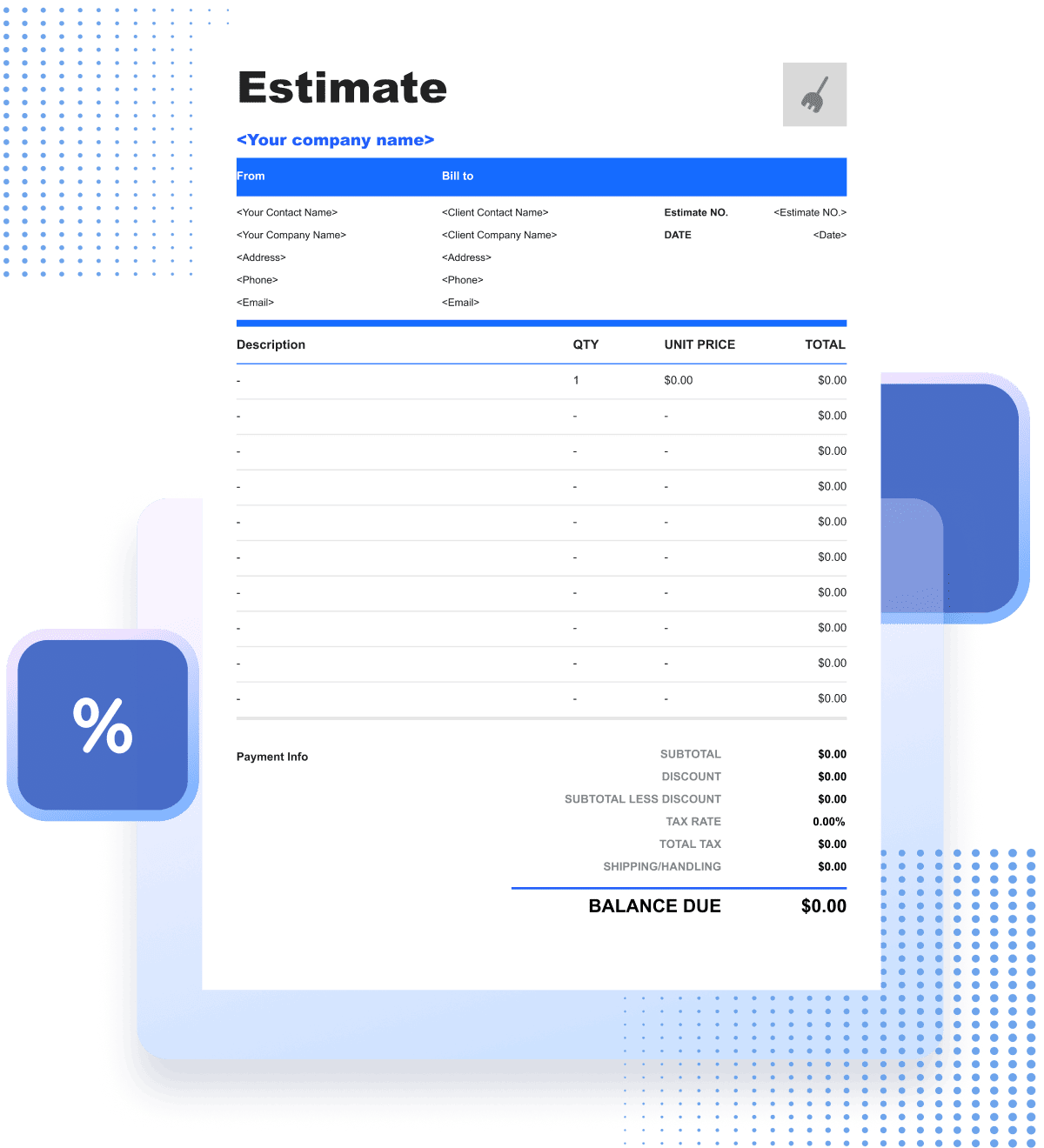
Cleaning Estimate Template
Cleaning is priced from a scope, not from a promise that everything will shine. Name the rooms or the square footage, the depth level, the frequency, who supplies the chemicals and equipment, and how the crew gets in, all under one estimate number.
Disputes in this trade are almost always about what clean meant. Writing the work room by room, with the depth level and the exclusions spelled out, gives the customer something to compare the result against and gives your office a stable base for the recurring visit or the final invoice.
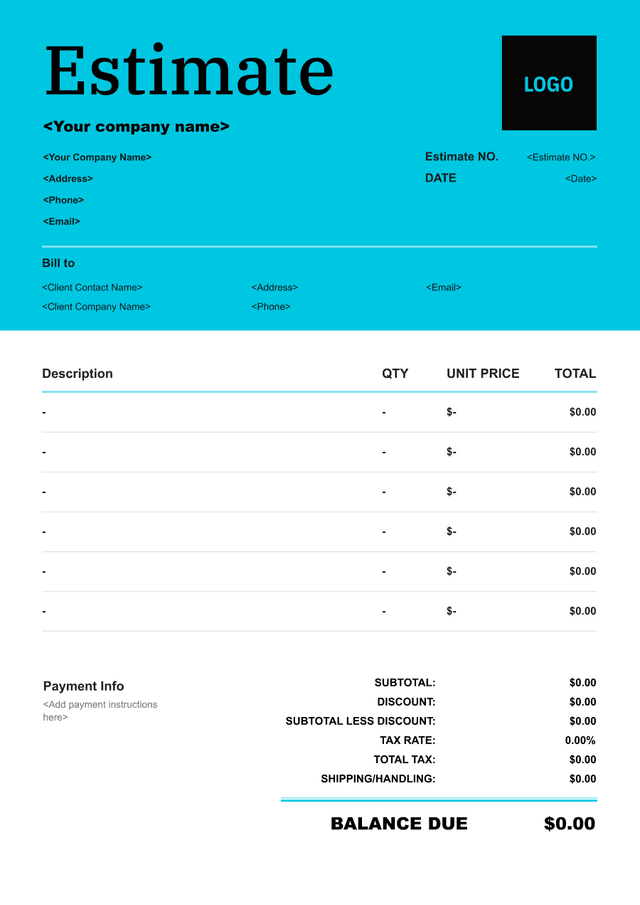


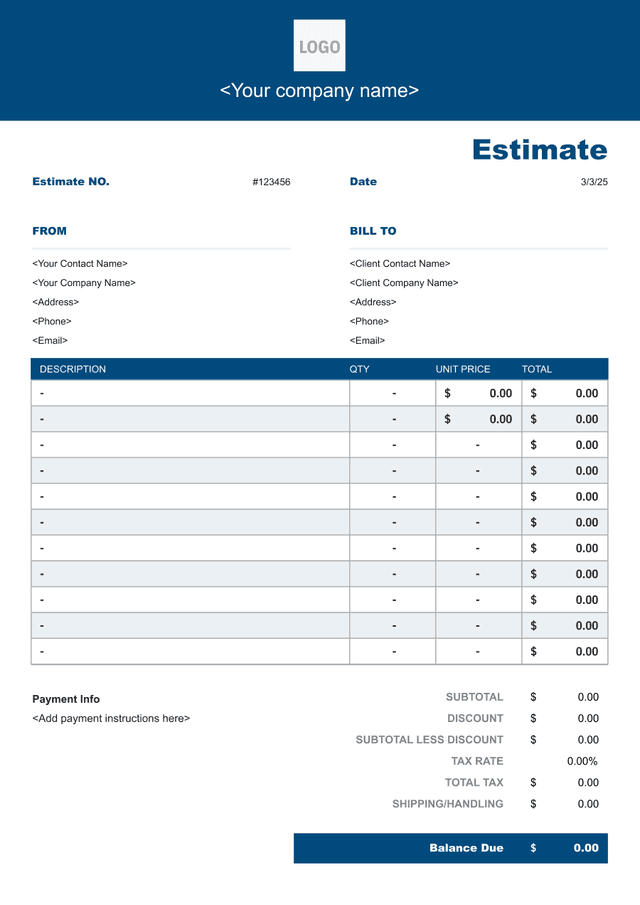
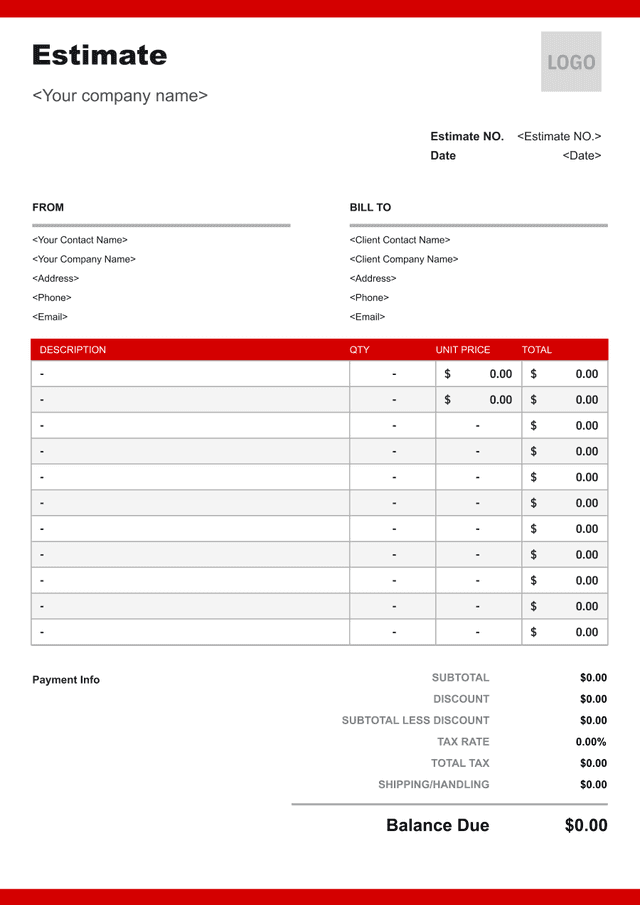
What Is a Cleaning Estimate?
A cleaning estimate is what a resident or property manager receives after a walkthrough: a price for the job as it was understood on the day, before the first visit and before any condition inside the home is fully tested. It starts from the rooms or square footage measured and adds labor hours and crew rates, supplies and equipment, any specialty service such as carpet steam cleaning or interior window glass, plus the overhead and margin your company carries.
What a walkthrough can see is limited to visible surfaces and what the occupant reports. Heavy soiling behind furniture, pet stains under a rug, grease buildup behind a range, or clutter that blocks access all change the time a room actually takes, and none of it is obvious on a first visit.
Residents read it to decide whether to book, what level of clean to choose, and how much to set aside, so it belongs next to the service agreement rather than floating on its own. Its job is to make the boundary between what is priced and what is still an assumption obvious while both sides are still friendly.
- 01
What the number represents
It prices the rooms or square footage measured at the walkthrough, the depth level chosen, and the frequency stated. It is not the final figure if the soil level or clutter turns out heavier than reported, and it is not a bill — writing that plainly on the page prevents most of the arguments that surface at invoice time.
- 02
How much detail it carries
Two visits yield two separate estimates. Off a quick walk, a per-room or per-square-foot rate with a stated depth level is appropriate; once the crew has actually cleaned the property once, each area should carry its actual time, its supply consumption, and any add-on service. Granularity should follow what the walk actually exposed of the home.
- 03
Why the total moves
A depth level that costs more than its initial assumption, a pet or clutter condition the occupant did not mention, a specialty service added after the walkthrough, and a frequency change all move it. Write each as a stated assumption with the unit and rate it covers, so the resident sees what they are approving instead of meeting it later as a surprise line.
What to Include in a Cleaning Estimate
The estimate has to identify the property and the cleaning level well enough that your office and the resident never confuse it with another job: the address, the rooms or areas covered, the depth level, and the date it was walked. Then each priced area should trace to a measurement taken, a depth level selected, a frequency chosen, or an add-on service listed.
- 01
Business and client details
Your company name, licence number, address, phone, and email, then the resident's name, the property where the cleaning happens, and the billing address if the two differ. Where the job is managed by a property company or an Airbnb host, add the management contact and the unit number, and note who authorized the walkthrough and who holds the key or access code.
- 02
Estimate number, dates, and validity
Number your estimates on a separate sequence from your invoices, and print both the issue date and the date the home was walked. Set an expiry and say what happens after it, because crew availability and supply pricing do not stay open indefinitely.
- 03
Scope of work with inclusions and exclusions
Describe the job room by room, or area by area, and say what each part includes; then list what it leaves out — appliances interiors, exterior windows, carpet steam cleaning, blinds and drapes, and areas behind heavy furniture the crew is not authorized to move. Note what the scope rested on, such as the rooms measured and the soil level observed, and where the walkthrough stopped, such as a locked room or a garage not entered. Silence reads as inclusion.
- 04
Depth level, frequency, and supplies
Name the cleaning level on each area — regular maintenance, deep clean, move-in or move-out — because the labor hours per room can double between them. State whether the job is one-time, weekly, biweekly, or monthly, and whether your company brings chemicals, vacuums, and mops or the resident supplies them, since consumables and equipment transport carry their own cost.
- 05
Specialty services and access conditions
Carpet steam extraction, interior window glass, oven and refrigerator interiors, blind cleaning, and post-construction dust removal each carry their own unit and rate apart from the room rate. Note pet households, fragile items, alarm systems, key pickup or lockbox access, and any area the crew is instructed to skip, because those conditions set the crew size and the time the visit actually takes.
- 06
Totals, payment terms, warranty, and acceptance
Finish with subtotals by area or service, consumables on their own line rather than buried in the rates, tax where it applies, and the total. Under that, the terms: payments tied to completed visits rather than to calendar dates, how an add-on or a re-clean is raised and priced, who covers damage to fragile items, how the satisfaction guarantee differs from a re-clean within 24 hours, and a signature block with printed name, date, and the version accepted.
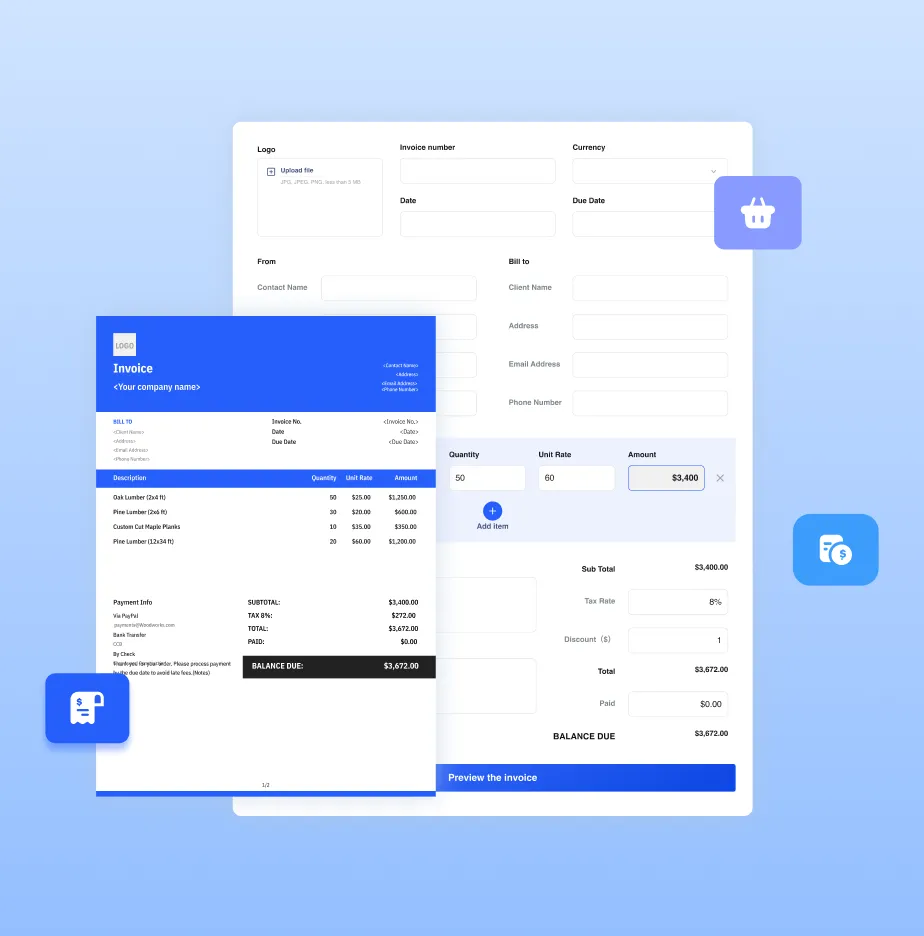
Reuse Saved Information in Invoice Zip
Use saved items and client information to create a cleaning estimate in just a few taps.
How to Break Down a Cleaning Estimate
Four passes turn a walkthrough into a price: confirm what is in the job, measure it, price it against your rates and supply costs, and check it before the resident sees it.
Confirm the scope
Walk the property and write down what you are actually pricing: which rooms or areas, what depth level the resident expects, and what you could not see. Note the soil level in kitchens and bathrooms, the pet and clutter conditions, and any locked rooms or areas the resident asked you to skip, so none of it turns up later as an unpriced surprise.
Measure the work
Measure every area yourself rather than pricing from the resident's room count, and price each area in the unit that fits it: square feet for large commercial spaces, per room for residential, hours for deep cleans and move-outs, each for ovens and refrigerators. Where the actual time cannot be known until the crew cleans it once, carry a stated range with the unit and rate it covers.
Apply resources and rates
Put crew hours and rates on each area separately from its consumables and equipment, so a depth level change can be repriced without reopening the labor. Add chemicals, microfiber, and consumables at current supply pricing, specialty services at their own unit rates, travel and access time, and the overhead and margin your company carries.
Review and issue
Read it back the way the resident will: every room priced, every depth level named, every exclusion written down. Confirm the measurements, the total, and the validity period, then issue it and say what follows: a signed service agreement and a first visit once the scope is agreed, with a numbered ticket for any add-on or re-clean after that.
Common Cleaning Estimate Line Items
- 01
Regular maintenance clean
Dusting, vacuuming, mopping, kitchen and bathroom surface cleaning, trash removal, and floor care on a recurring schedule.
Typical units: per room, square feet, per visit, hours
- 02
Deep clean
Baseboards, blinds, ceiling fans, inside cabinets and drawers, scrubbed grout, behind appliances, and detailed fixture cleaning.
Typical units: per room, square feet, hours, each
- 03
Move-in and move-out clean
Empty-property deep clean including inside all appliances, cabinets, closets, window tracks, and garage sweep for turnover readiness.
Typical units: square feet, per room, flat fees, hours
- 04
Carpet and upholstery steam cleaning
Hot water extraction, stain pretreatment, deodorizer, pet urine treatment, and upholstery cleaning by piece.
Typical units: square feet, per room, each
- 05
Window and glass cleaning
Interior window glass, tracks, sills, blinds, mirrors, and shower glass, charged separately from the room rate.
Typical units: per pane, each, square feet
- 06
Consumables, travel, and access
Chemicals, microfiber cloths, mop heads, trash bags, equipment transport, travel mileage, lockbox and key handling, and alarm coordination.
Typical units: each, flat fees, miles, hours
Key Considerations for Cleaning Estimates
- 01
Match the depth level to the actual soil condition
A regular maintenance rate applied to a home that has not been deep cleaned in a year understaffs the job and sets up the crew to fail. Walk each room, check grout lines, range hoods, baseboards, and behind toilets, and price at the depth level the soil condition actually warrants. If the resident insists on a regular rate for a deep-clean condition, note the gap in writing and carry the difference as a stated assumption.
- 02
Clarify who supplies chemicals and equipment
State on every estimate whether your company brings chemicals, vacuums, mops, and stepladders or the resident provides them. A resident who supplies their own products may hand the crew something unsuitable for the surface, and a crew that arrives without the right chemical for a stain loses the visit. Name the consumables line and its cost separately from labor so the resident sees what they are paying for.
- 03
Handle pets, fragile items, and access
Note pet households and whether animals are crated or removed during service, because a loose pet changes crew routing and adds time. Flag fragile items, artwork, and collectibles the resident does not want touched, and record how access works: lockbox code, front desk, or resident present. A crew that cannot get in still has to be paid for the trip.
- 04
Set frequency expectations and re-clean terms
Recurring clients get a lower per-visit rate because the soil level stays manageable; one-time and move-out jobs carry a higher rate because the soil has accumulated. State the frequency on the estimate, and write the satisfaction guarantee in measurable terms: a re-clean within 24 hours of the visit for any area the resident flags, not an open-ended promise. Define what falls outside it, such as areas the resident asked the crew to skip.
Cleaning Estimate, Quote, or Invoice?
Estimate
Projected cost
- Purpose
- Price the cleaning as described at the walkthrough, using your own room or square footage count, today's supply pricing, and the depth level the resident chose.
- When used
- After a walkthrough, before the first visit is booked, the service agreement is signed, or the recurring schedule is set.
- Next document
- Become a signed service agreement and a first visit once the scope is agreed, with a numbered ticket for any add-on or re-clean after that.
Quote
Defined offer
- Purpose
- Commit to one price for one defined scope, with the depth level, frequency, and supplies arrangement the resident has agreed to.
- When used
- When the depth level is set, access is confirmed, and scope, frequency, and supply responsibilities are understood on both sides.
- Next document
- Keep the signed service agreement with the job file, and log later add-ons, frequency changes, and re-cleans against it.
Invoice
Payment request
- Purpose
- Ask for what the service agreement allows at that point: a first-visit payment, a recurring balance after the visit, or an approved add-on ticket.
- When used
- When a visit is completed and the resident or property manager has signed off on the areas cleaned.
- Next document
- Record the payment, credit any deposit already held, and show the balance the resident owes for the next billing cycle.
Cleaning Estimate FAQs
Should cleaning be priced per room or by square footage?
Residential work is usually per room, because the labor in a bathroom and a bedroom is not proportional to floor area. Commercial and large open spaces price better by square footage. For a home with oversized rooms, mix the two and state which method applies to each area on the estimate.
Why does a deep clean cost more than a regular clean?
Because the labor per room is different. A deep clean adds baseboards, blinds, ceiling fans, inside cabinets, behind appliances, and scrubbed grout — each taking time the room rate does not include. A bathroom that takes 30 minutes on a maintenance visit can take 90 on a deep clean. Show the rate difference per room.
Who pays for cleaning supplies — the company or the resident?
The estimate has to say. Most professional companies bring their own chemicals, vacuums, and mops. If the resident supplies products, state in writing that the company is not responsible for damage caused by those products, and carry consumables as their own line so the resident sees what the company brings.
What happens if something is damaged or goes missing during a clean?
The service agreement should state the company's policy before the first visit: what insurance is carried, how a claim is reported, and the response timeframe. Require the resident to secure valuables before the visit, and note on the walkthrough form any items the crew was told to avoid.
Other Free Resources

Try Invoice Zip Today
Start Sending Invoices, Building Reports, Saving Office
Time and Get Paid Faster.