

Ecommerce Invoice Template
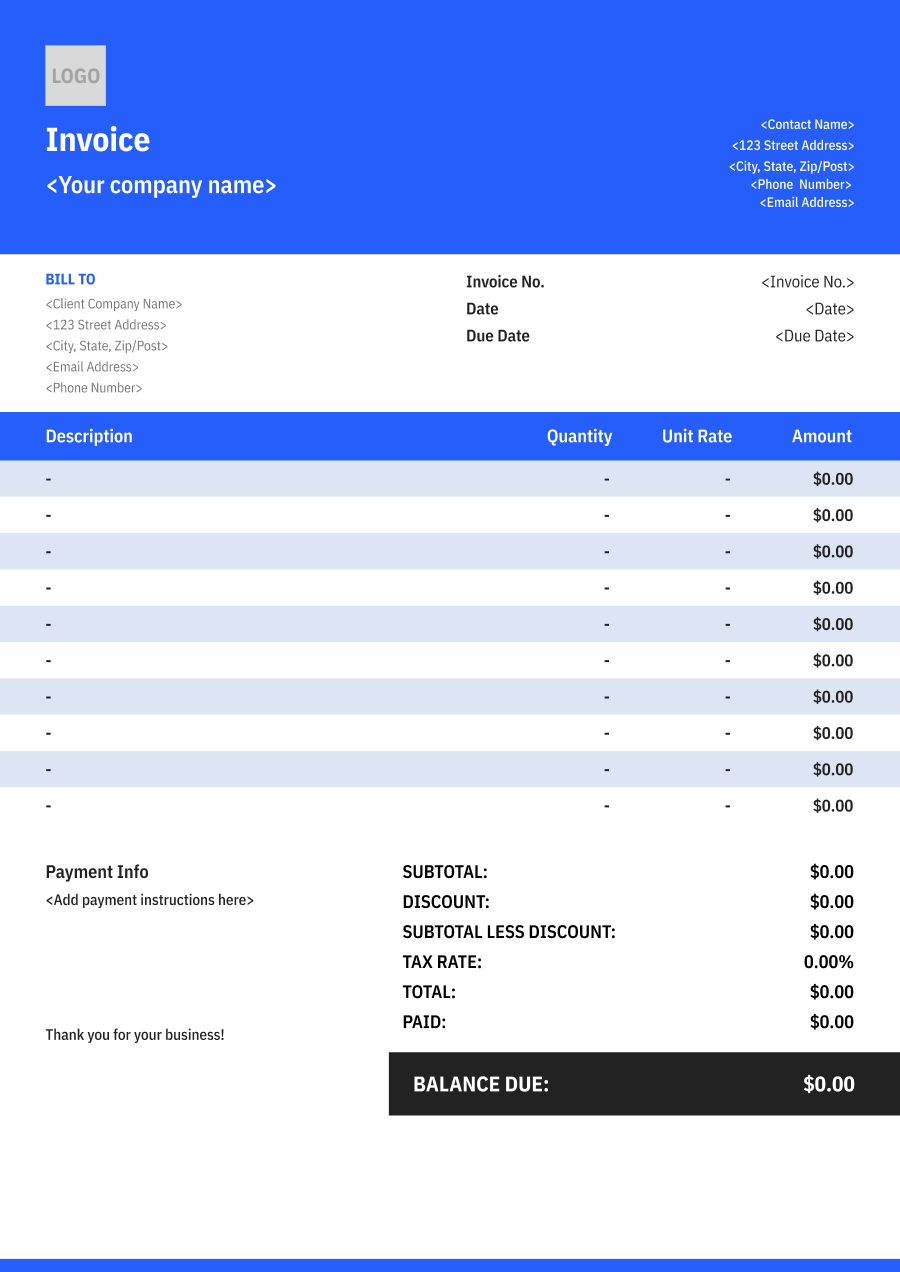
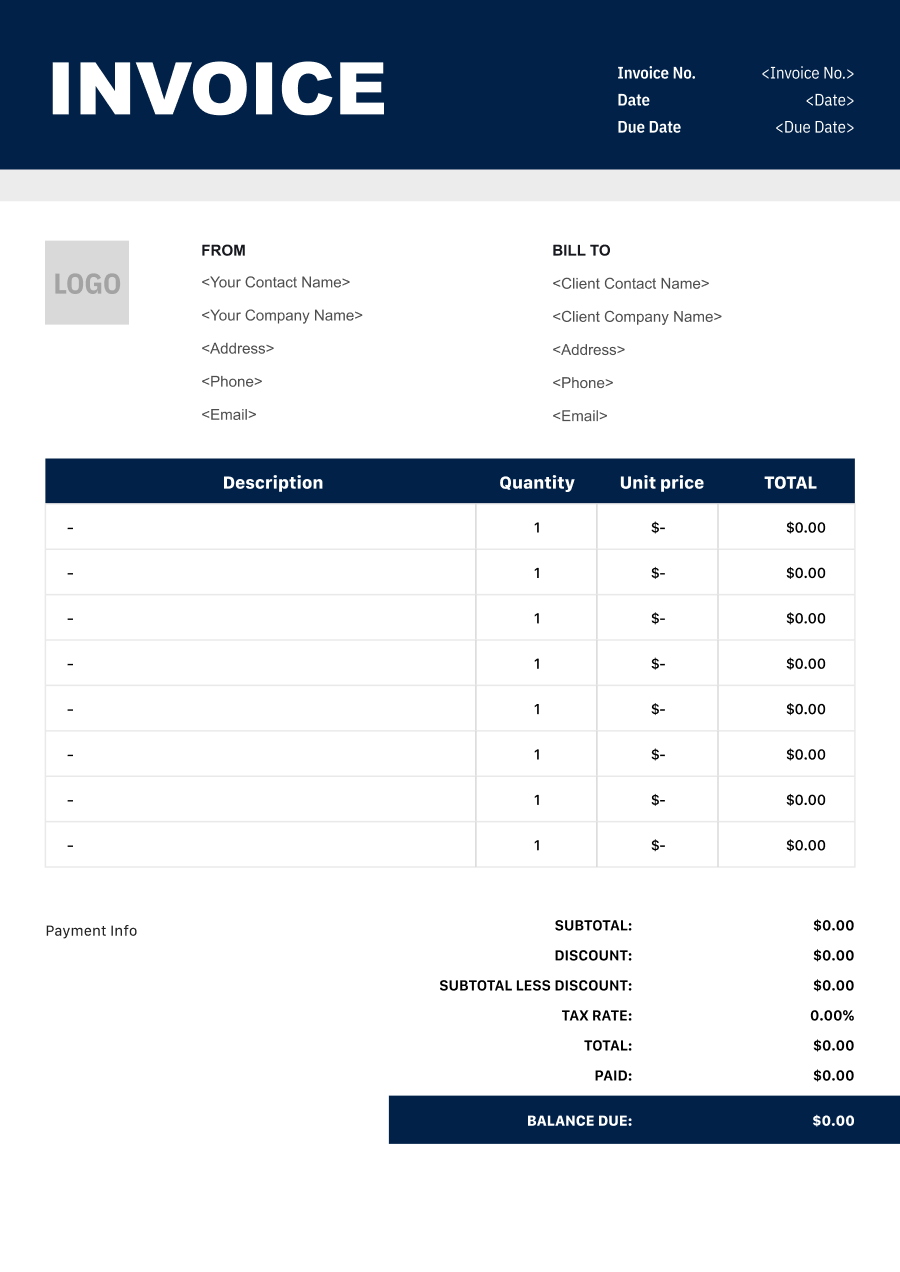
Create a professional ecommerce invoice with editable invoice templates for products, quantities, shipping, discounts, taxes, and other order charges.
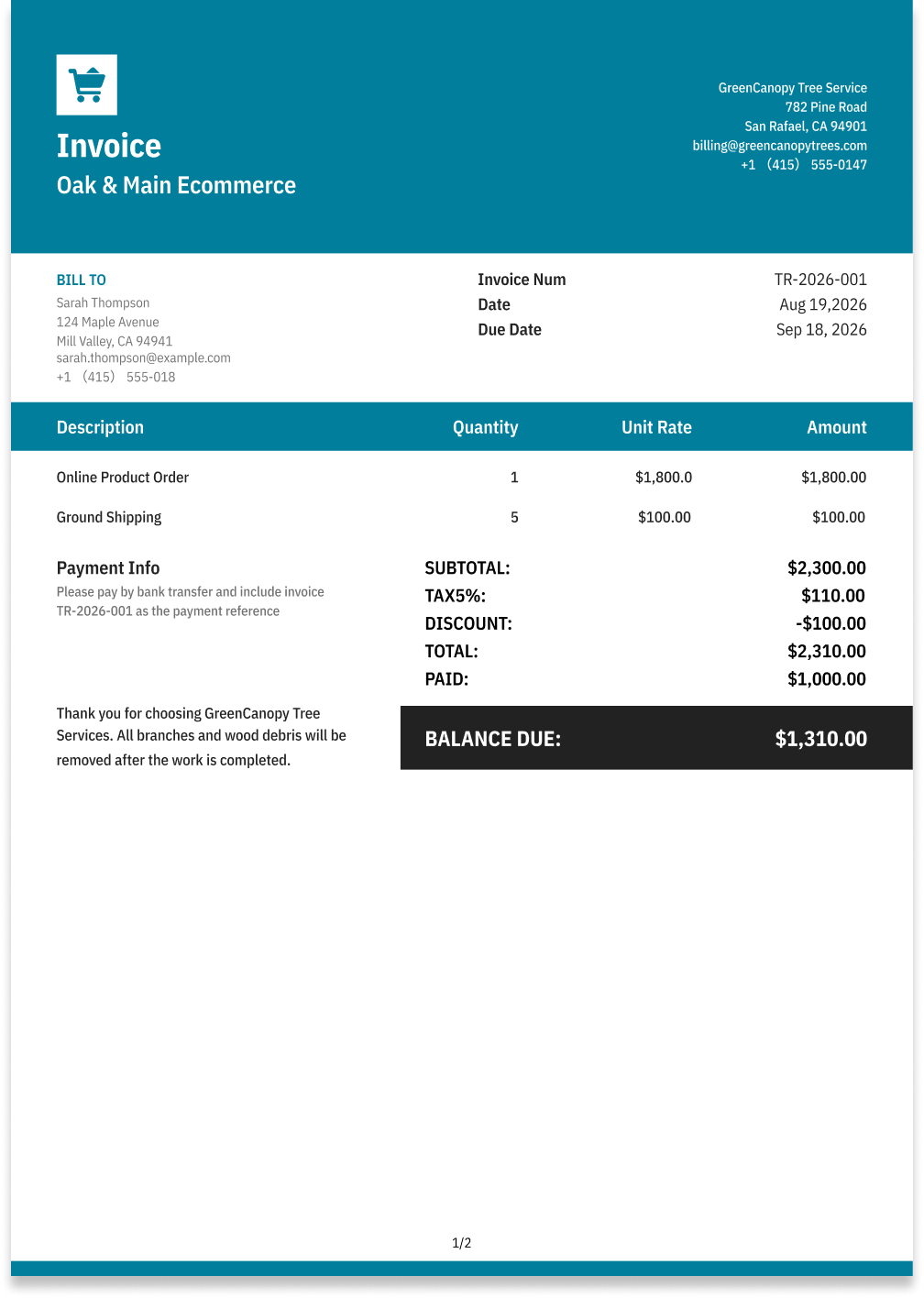
Choose the Best Invoice Template for Your Ecommerce Business


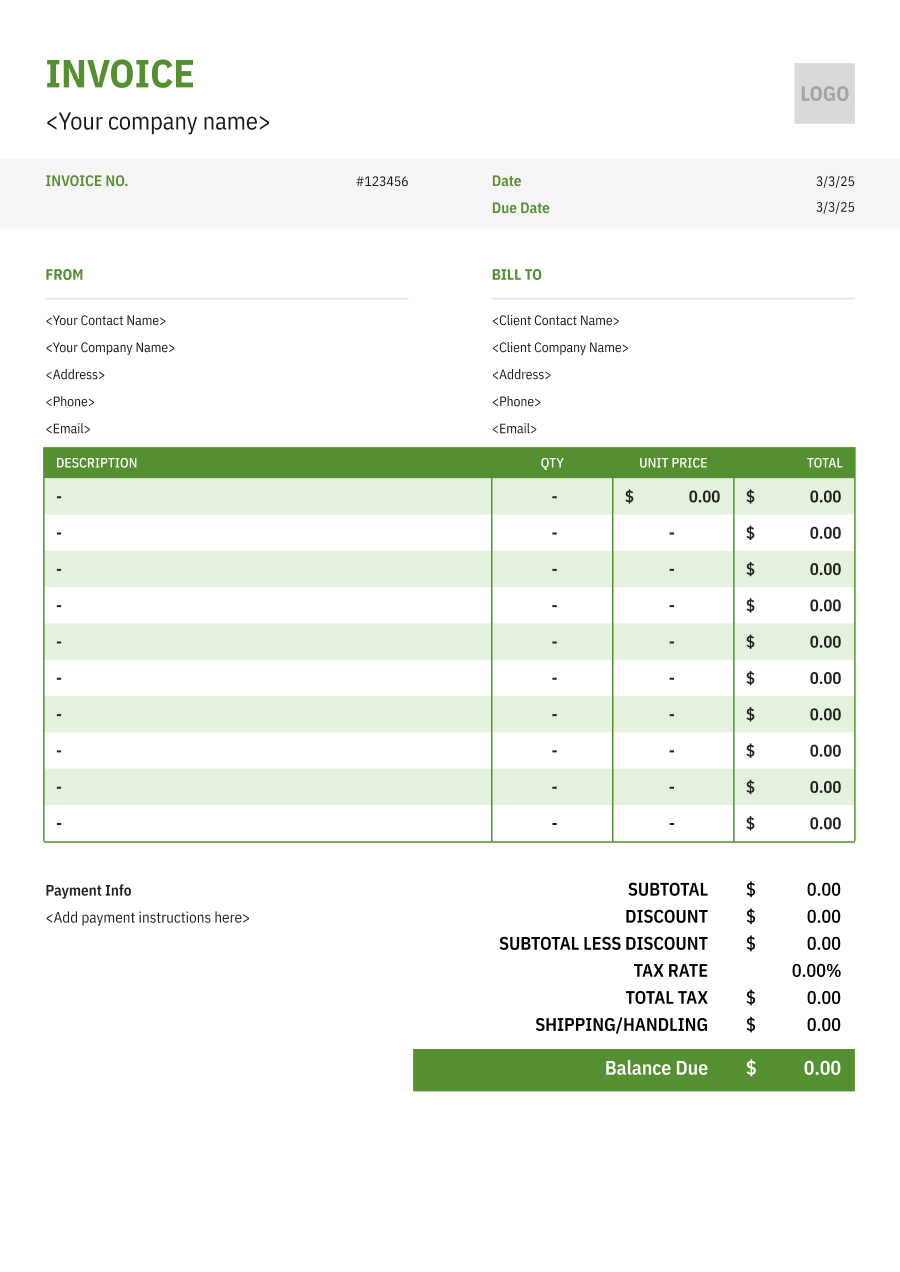
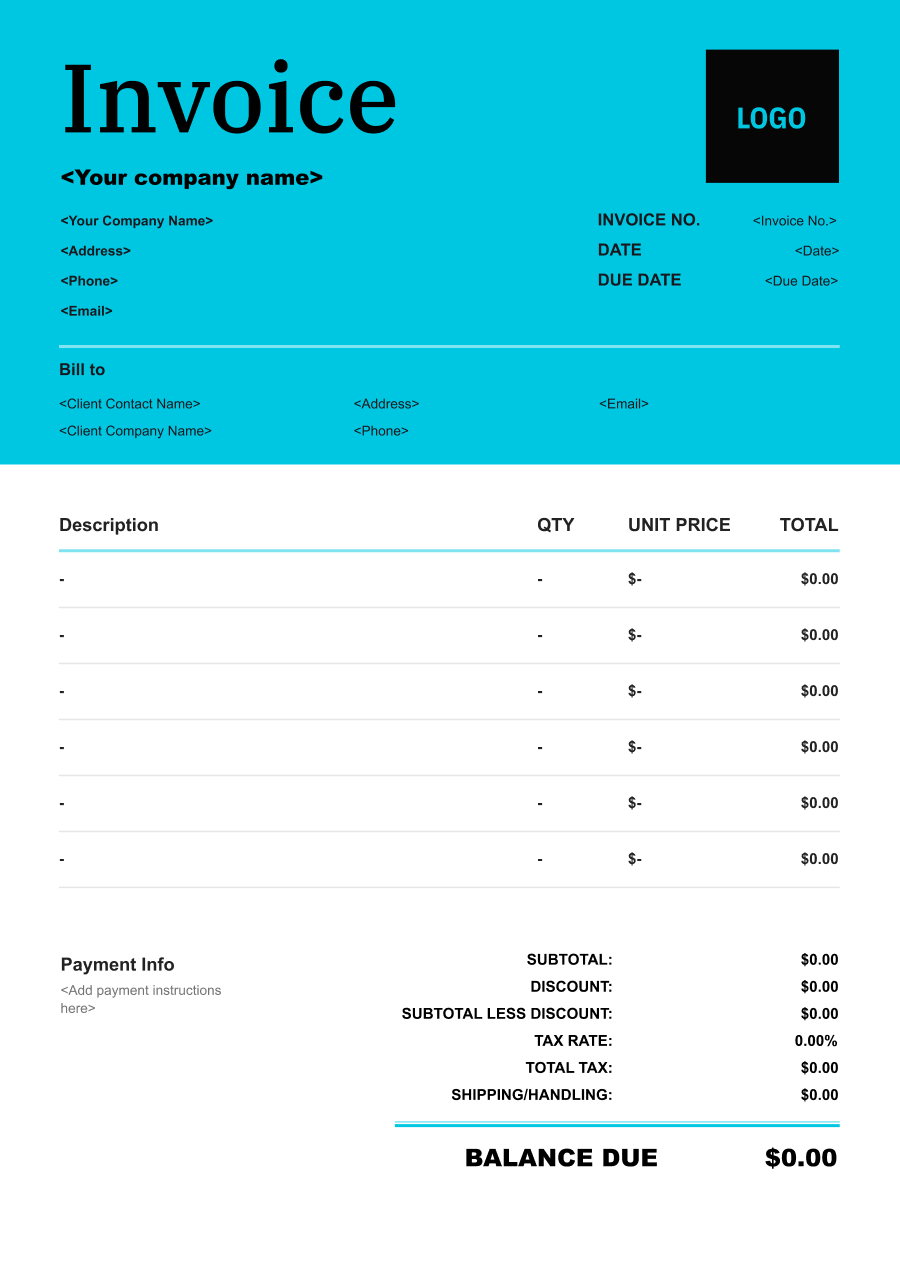
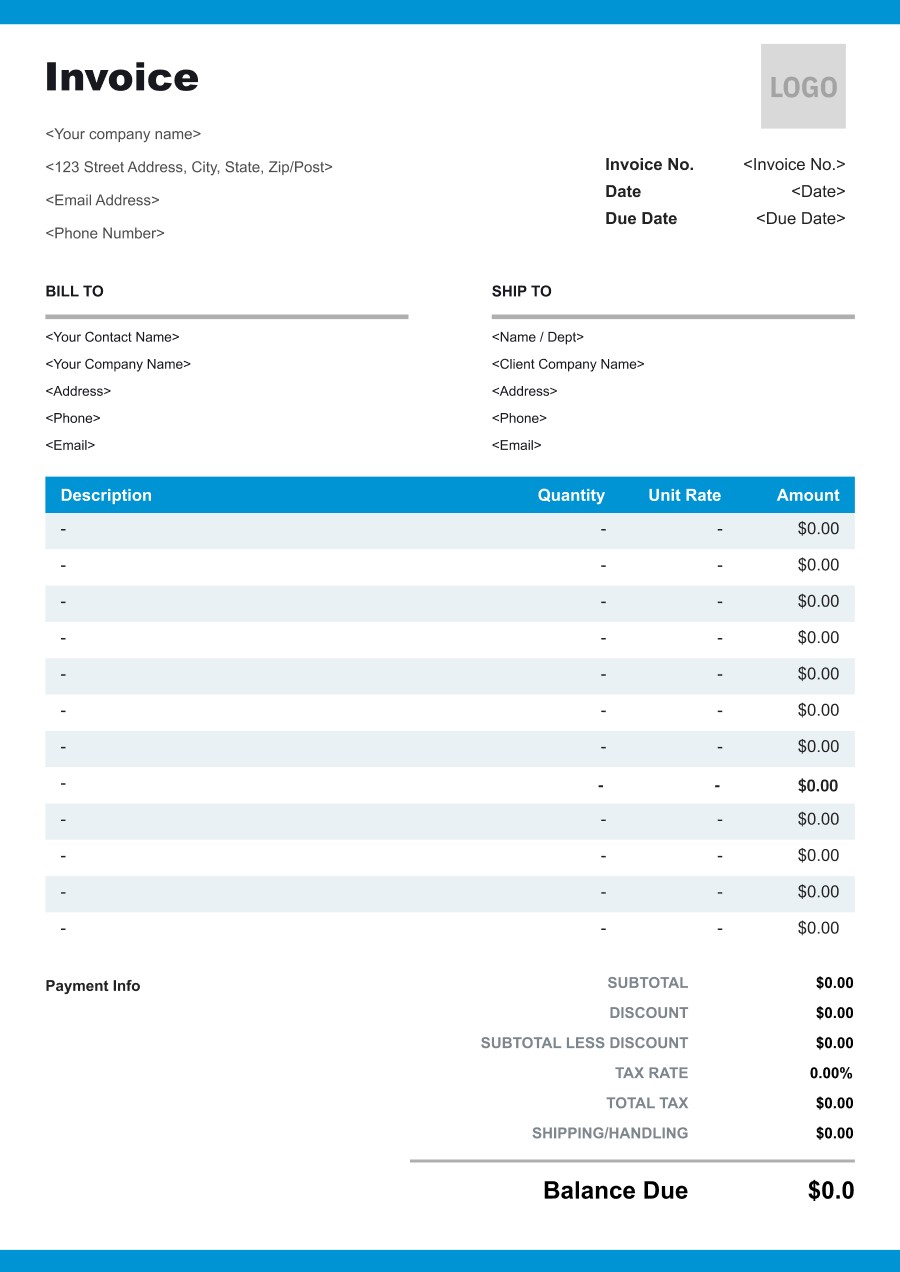
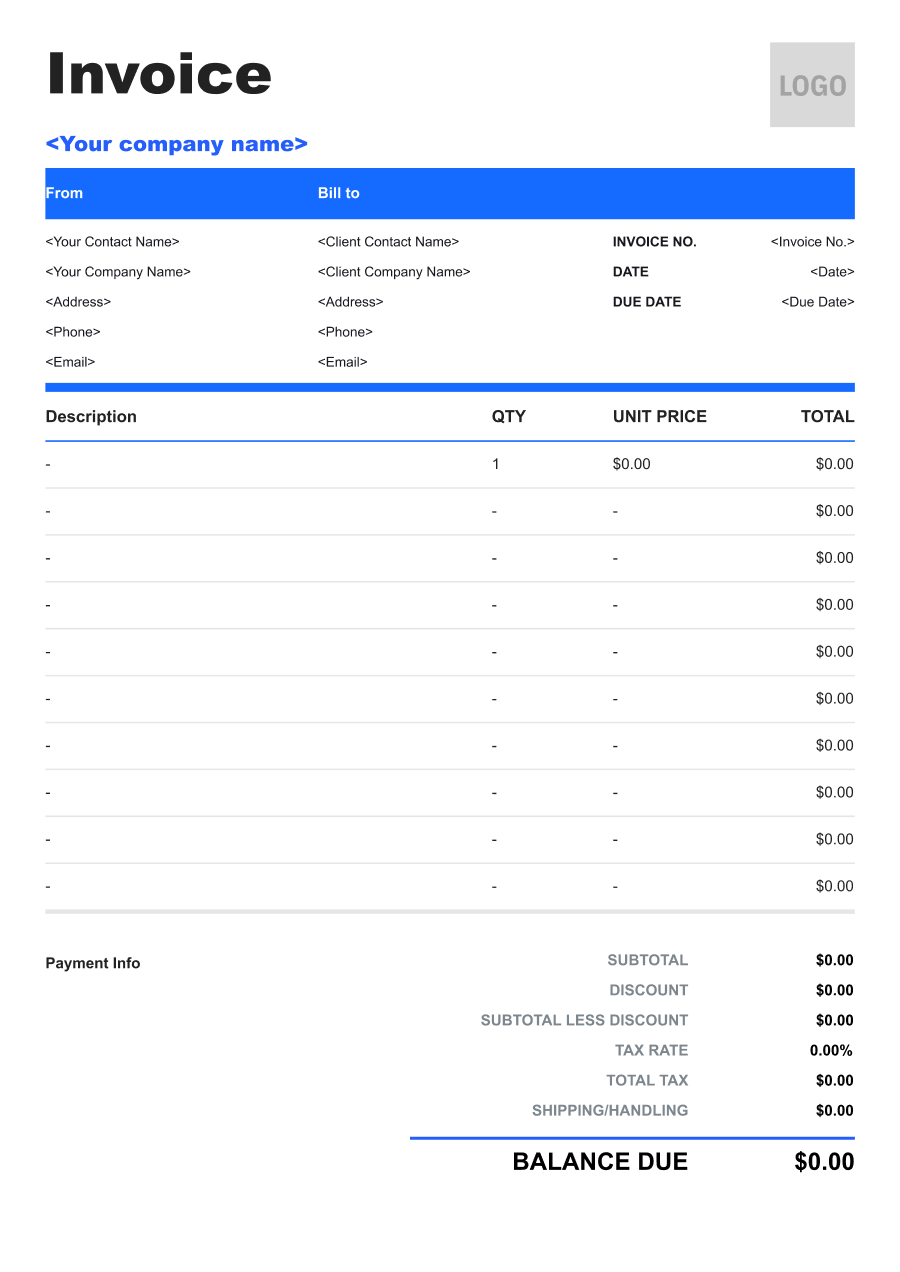
Create A Professional
Ecommerce Invoice in Minutes
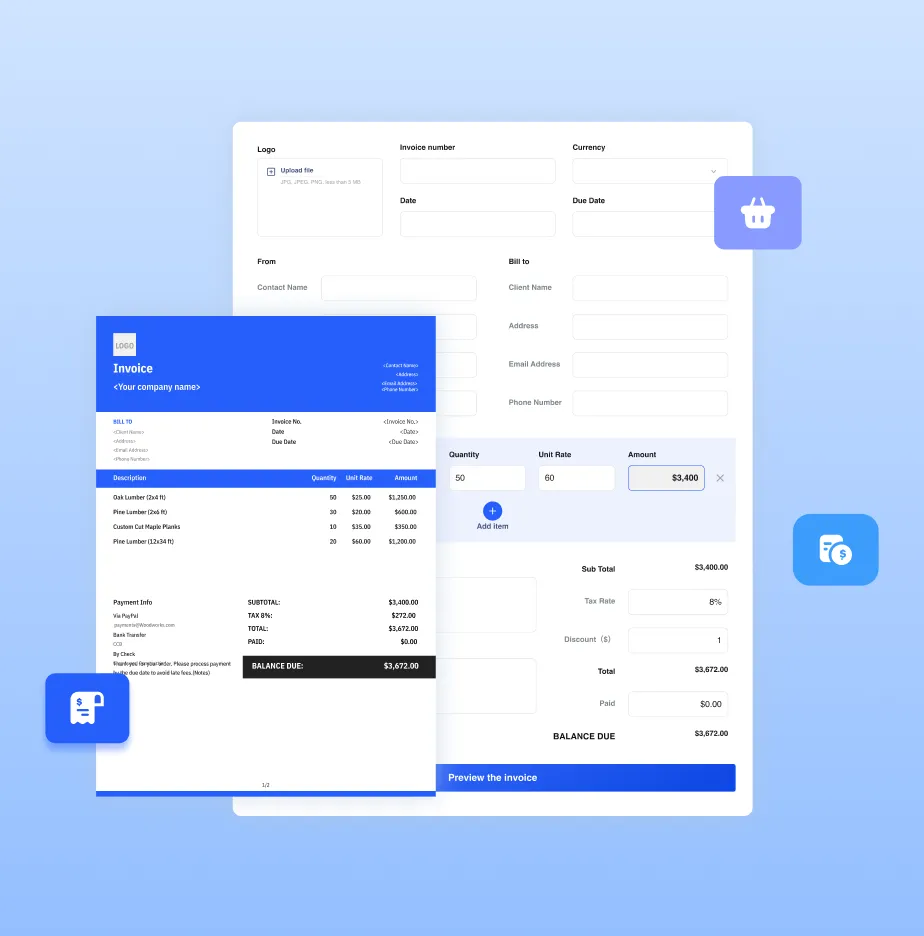
Add your ecommerce business and client details, itemize the products or services provided, and generate a professional invoice when you are ready.
1
Invoice details
Set the document identity, dates and currency.
Logo

Upload file
JPG, JPEG, PNG, less than 5 MB
Invoice number
Currency
USD
Issue date
Due date
2
Business & client
Add the details your client needs to identify both parties
From
Company Name
Contact name
Address
Email Address
Phone Number
Bill To
Client name
Address
Email Address
Phone Number
3
Products & services
Itemize what you’re charging for. Totals update automatically.
4
Totals & payment
Apply adjustments and tell your client how to pay.
Payment instructions
Notes
Sub Total
$0.00
Tax Rate
%
Discount
$
Total
$0.00
Amount paid
$
Balance Due
$0.00
What to include in Ecommerce Invoice
A clear ecommerce invoice helps prevent disputes and ensures timely payment. Use this checklist to include the essential details.
- 1
Business Header & Contact
Company name, logo, phone number, email address, and physical business location.
- 2
Client Contact Information
Client's full name or business entity name, billing address, phone number, and email.
- 3
Invoice Metadata
Unique invoice number, invoice issue date, and payment due date (e.g., Net 15 / Due upon receipt).
- 4
Cost Summary & Taxes
Subtotal for services, local sales taxes (if applicable), applied discounts, and final bolded Total Due.
- 5
Deposit & Balance Tracking
Original estimate total, pre-paid deposit deductions (e.g., 'Less Deposit Received: -$500'), and remaining net balance due.
- 6
Payment Instructions
Accepted payment methods, including direct online payment links (Credit/ACH), check mailing address, or bank transfer details.
- 7
Order & Customer Details
Include the order number, customer name, billing and shipping information, and purchase date so the invoice can be matched to the online transaction.
- 8
Product, SKU & Quantity
Identify each product with its name, SKU or product code, quantity, and unit price.
- 9
Shipping & Fulfillment Charges
Separately identify shipping, handling, expedited delivery, fulfillment, or other order-related charges.
- 10
Discounts, Taxes & Refunds
Show promotional discounts, applicable taxes, credits, refunds, and the final amount paid or due.
Common Ecommerce Services & Billing Items
How Ecommerce charges are typically structured and billed.
Common Services
What's Included
Billing Items
Product Sale
Product name or description, Quantity, Shipment details, Quantity or packages, and Service date
Product ChargesShipping/Handling
Bulk Order
Product name or description, Quantity, Discount reason, Eligible charge, and Service date
Product ChargesDiscounts
Subscription Order
Shipment details, Quantity or packages, Discount reason, Eligible charge, and Service date
Shipping/HandlingDiscounts
Shipping Service
Product name or description, Quantity, Shipment details, Quantity or packages, Taxable amount, and Tax jurisdiction or rate
Product ChargesShipping/HandlingTaxes
Custom Order
Shipment details, Quantity or packages, Taxable amount, Tax jurisdiction or rate, and Project or deliverable name
Shipping/HandlingTaxes
Express Order
Product name or description, Quantity, Discount reason, Eligible charge, Taxable amount, and Tax jurisdiction or rate
Product ChargesDiscountsTaxes
Return/Restocking
Product name or description, Quantity, Shipment details, Quantity or packages, Discount reason, and Eligible charge
Product ChargesShipping/HandlingDiscounts
Product Charges: Charges for merchandise or products sold.
Shipping/Handling: Charges for freight, packaging, fulfillment, and handling.
Discounts: Credits or discounts applied to product or order charges.
Taxes: Applicable lodging, sales, occupancy, or other taxes.
Ecommerce Invoicing Tips
Ecommerce costs vary by service scope, pricing method, and additional requirements. A detailed invoice helps customers understand every charge and reduces payment disputes.
1
Match the Invoice to the Online Order
Customers may have many orders from the same store. Best practice: prominently include the order number and keep product, quantity, and pricing information consistent with the checkout record.
2
Separate Product and Shipping Costs
Shipping may vary by order size or delivery method. Best practice: show product charges separately from shipping and handling so customers can reconcile the purchase.
3
Show Discounts Clearly
Online stores frequently use coupons, promotions, and automatic discounts. Best practice: display discounts as separate adjustments rather than silently reducing individual product prices.
4
Handle Partial Refunds Transparently
A customer may return only part of an order. Best practice: identify refunded items or amounts separately and keep the original order reference on the adjustment document.


Reusable Billing Structure in Invoice Software
Use the items above to quickly create a Ecommerce Invoice Template in Invoice Zip.
FAQs about Ecommerce Invoicing
Q: How should an ecommerce invoice handle multiple products with different quantities and prices?
A: Each product can be listed with its description, quantity, unit price, and line total. This gives the customer a clear record of exactly what was purchased.
Q: How should an ecommerce invoice show discounts, promotional codes, and shipping charges?
A: Discounts or promotional codes can be shown as separate deductions, while shipping can be listed as its own charge. This makes it easier to reconcile the final amount with the original order.
Q: How should an ecommerce invoice handle returned items or partial refunds?
A: Returned products can be reflected as separate credits or adjustments to the original invoice. The invoice can show the original purchase amount, refund, and resulting balance or amount returned.
Q: How should an ecommerce invoice handle international orders with different currencies?
A: The invoice should clearly identify the transaction currency and show product prices, shipping, and applicable charges in that currency. This helps international customers understand the total order value.
Q: How should an ecommerce invoice document tax collected on an online order?
A: Applicable sales tax or other transaction taxes can be shown separately from product prices. This makes the taxable amount and tax charged easier for the customer to identify.
Other Free Resources

Try Invoice Zip Today
Start Sending Invoices, Building Reports, Saving Office
Time and Get Paid Faster.