


Free Handyman Estimate Template
Prepare a handyman estimate that prices the tasks listed at the walkthrough, ties each line to an hourly rate or a flat per-item charge, and shows where a small job may uncover a larger one. Give the property owner a reviewable basis before any work is scheduled, materials are picked up, or a minimum service call is booked.
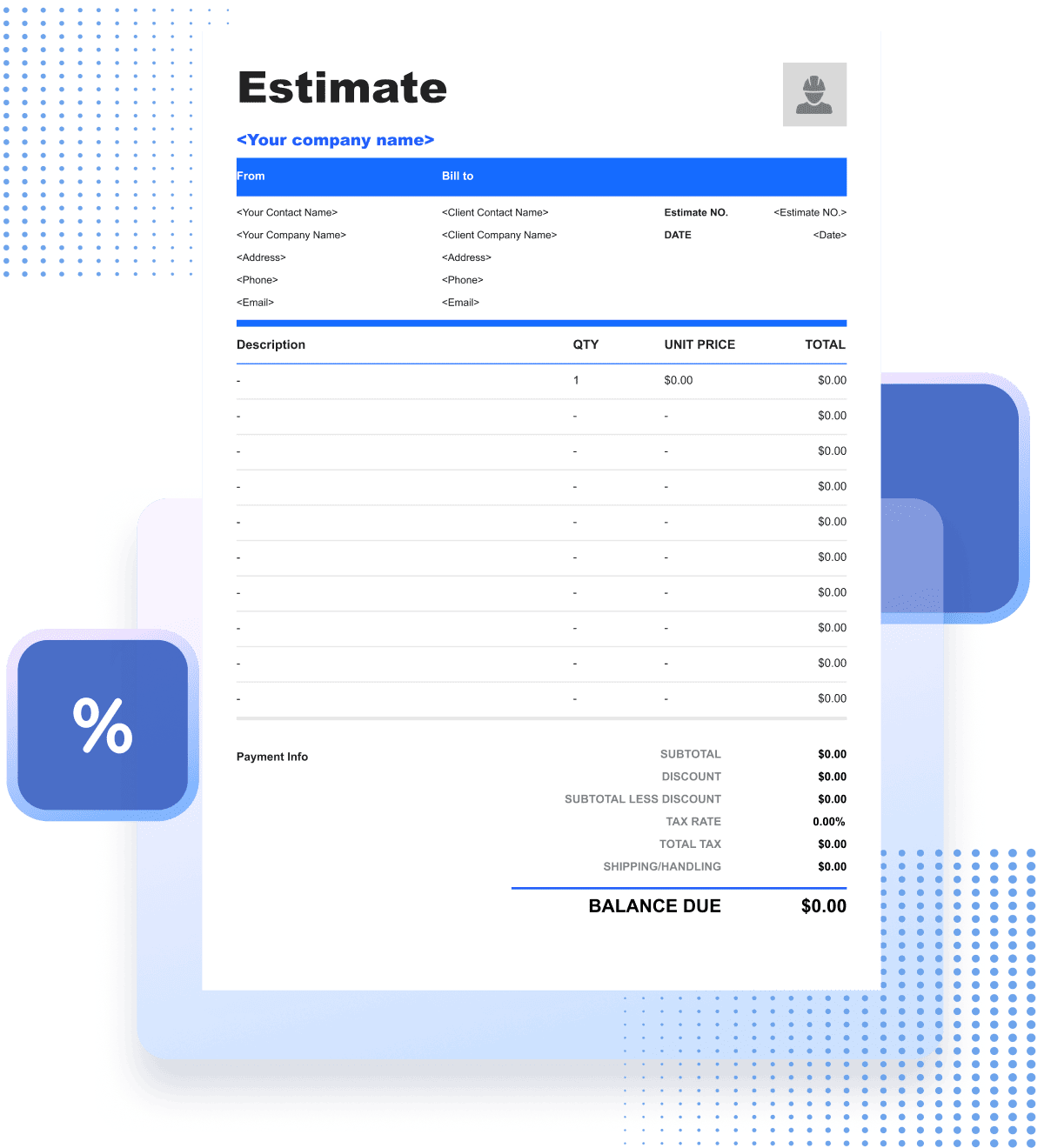
Handyman Estimate Template
A handyman estimate is usually a list rather than a project. Put each task on its own line with how it is priced, hourly, flat, or by the unit, and tie them all to one visit and one estimate number.
Small jobs get disputed over small things: whether the hardware run was included, whether the patch was painted, whether the second trip was part of the price. Writing each task separately, with its own price and its own limits, settles those questions before the work starts.
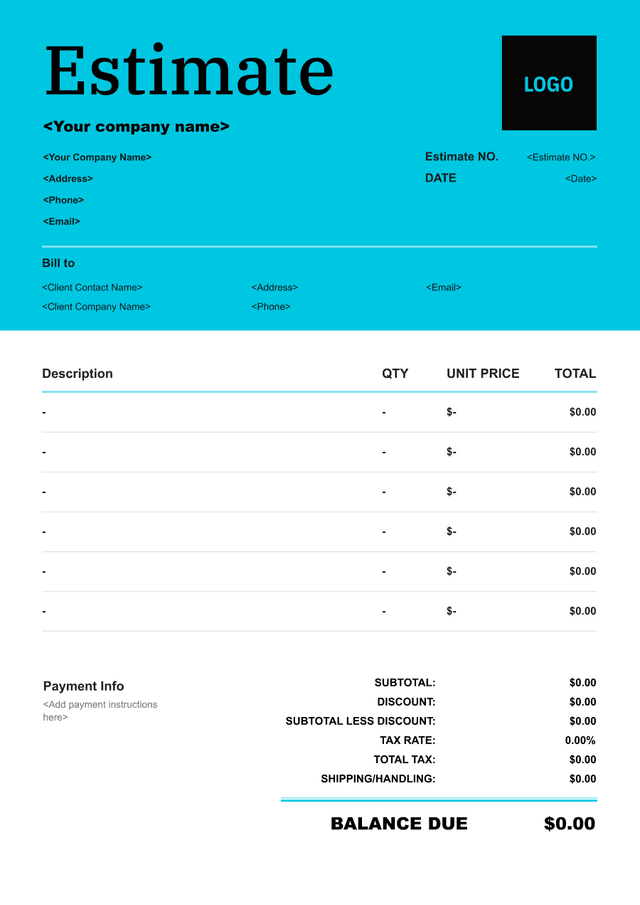


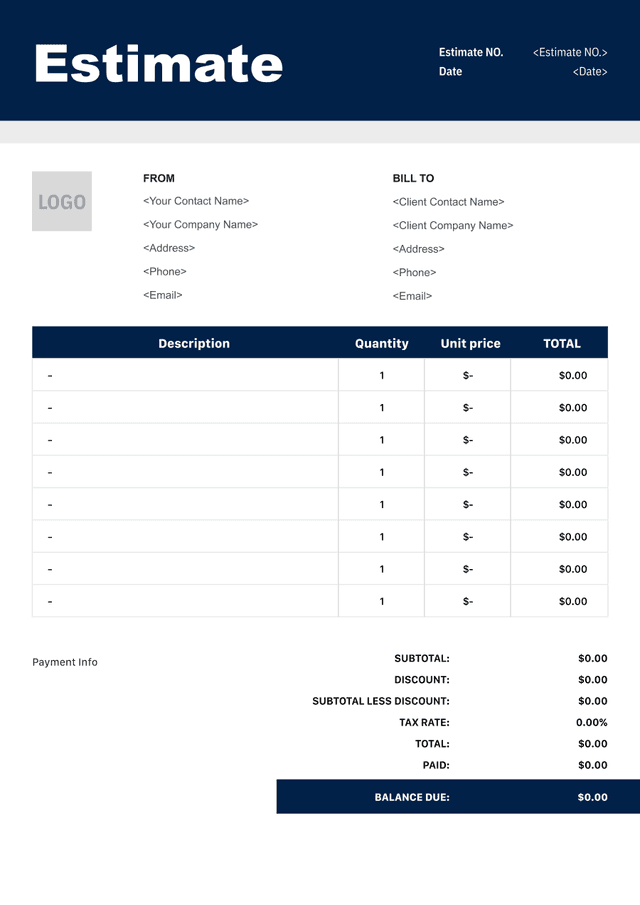
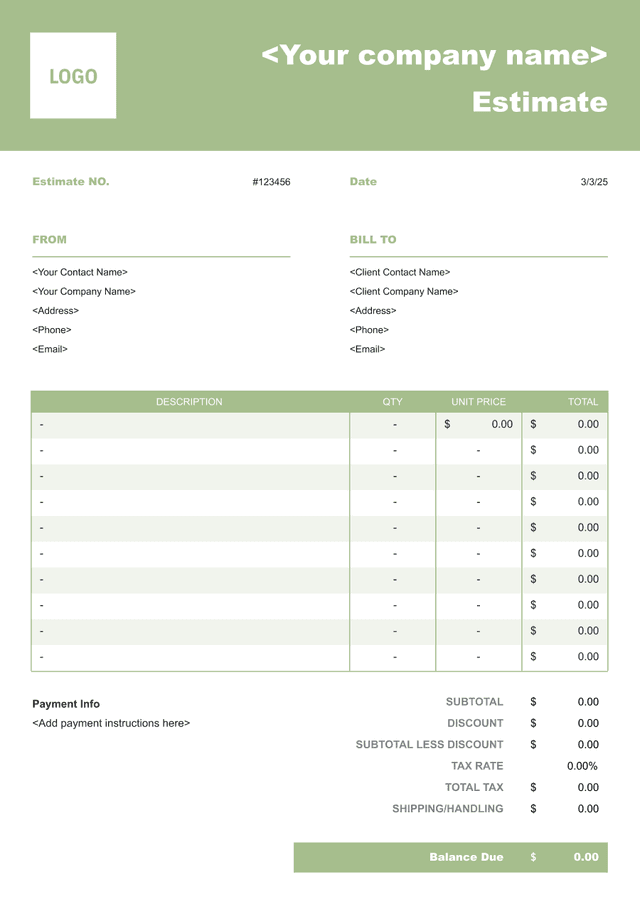
What Is a Handyman Estimate?
A handyman estimate is what a property owner receives after a walkthrough or a task list is exchanged: a price for the odd jobs described, before anything is taken apart and before materials are bought. It starts from the tasks listed, adds the hours or per-item charges each one takes, the materials and hardware each requires, the travel and pickup time, and the minimum service call the business carries.
What a walkthrough can see is what the estimate rests on. What sits behind a fixture, inside a wall, or under a floor when a cabinet is pulled or a door trim is removed can change the scope, and none of it is visible on a first visit, so the number reflects the job as described, not as it may turn out to be.
Owners read it to decide whether to go ahead, which tasks to keep on the list, and how much to set aside, so it belongs next to the work order rather than floating on its own. Its job is to make the boundary between priced tasks and pending conditions obvious while both sides are still on the same page.
- 01
What the number represents
It prices the tasks on the list as they were described at the walkthrough: the fixtures measured, the conditions observed, the hardware chosen or still to be chosen. It is not a fixed bid if the scope changes, and it is not an invoice — writing that plainly on the page prevents most of the confusion that surfaces at billing time.
- 02
How much detail it carries
A phone-described list and a walked-through punch list produce different documents. Off a walkthrough, per-item pricing and hourly ranges are appropriate; once a fixture is removed and the conditions behind it are exposed, each task should carry its materials, labor hours, and the rate. How closely the estimate tracks reality depends on how much of the work was directly observed.
- 03
Why the total moves
A task that looks like a twenty-minute bracket swap can turn into a drywall patch when the old mount pulls the wall surface with it. A condition behind a fixture, a part that is no longer available at the hardware store, and a task the owner adds on site all move the number. Carry each one as a line item with the quantity and unit price it covers, so the owner can see what is being approved rather than discovering it on the final invoice.
What to Include in a Handyman Estimate
Every line on a handyman estimate should trace to a task listed at the walkthrough, a material or hardware item, an hourly rate or a per-item charge, or a stated allowance. Before those lines, the document has to carry the identifiers that let the owner and the handyman agree they are discussing the same property and the same task list.

- 01
Business and client details
Your business name, license or registration if the state requires one, address, phone, and email, then the owner's name, the property where the work happens, and the billing address if the two differ. Note who walked the property and who authorized the task list, since the person on site is often a tenant or a property manager rather than the owner.
- 02
Estimate number, dates, and validity
Use a numbering scheme for estimates that is separate from your invoices, and print both the date the document was issued and the date the property was walked. Set an expiry and say what happens after it, because hardware pricing and the schedule a handyman holds do not stay open indefinitely, and a list priced in May may not hold in August.
- 03
Scope of work with inclusions and exclusions
Describe the job task by task and say what each one includes; then list what it leaves out — work that requires a licensed trade, owner-supplied materials, and the conditions behind fixtures that only removal will expose. Note what the scope rested on, such as the rooms walked and the photographs taken, and where the inspection stopped, such as an attic or crawlspace not accessed. Silence reads as inclusion.
- 04
Minimum service call, travel, and materials procurement
State the minimum service call charge that covers showing up, and whether it credits against the work if the owner proceeds. Add the travel time or mileage rate if the job is outside the service area, and the materials procurement fee for the time spent picking up hardware, fasteners, and consumables — because a hardware run on a small job can take longer than the install itself, and the owner should see that cost on its own line.
- 05
Licensed trade boundaries and site conditions
Call out any task on the list that the handyman cannot legally perform without a trade license — electrical panel work, plumbing line replacement, structural framing, or HVAC load calculations — and state that it falls outside the scope and needs a licensed contractor. Add the site conditions that affect the price: parking and load-in limits, unit access, occupancy during the work, and whether water or power has to be shut off, because each one changes how long a task takes.
- 06
Totals, payment terms, warranty, and acceptance
Finish with subtotals by labor and materials, the minimum service call, travel and procurement fees, tax where it applies, and the total. Under that, the terms: whether payment is due on completion or invoiced, how a task added on site is priced and authorized, what the workmanship warranty covers and for how long, whether materials carry a manufacturer warranty the owner can claim, and a signature block with printed name, date, and the version accepted.
Reuse Saved Information in Invoice Zip
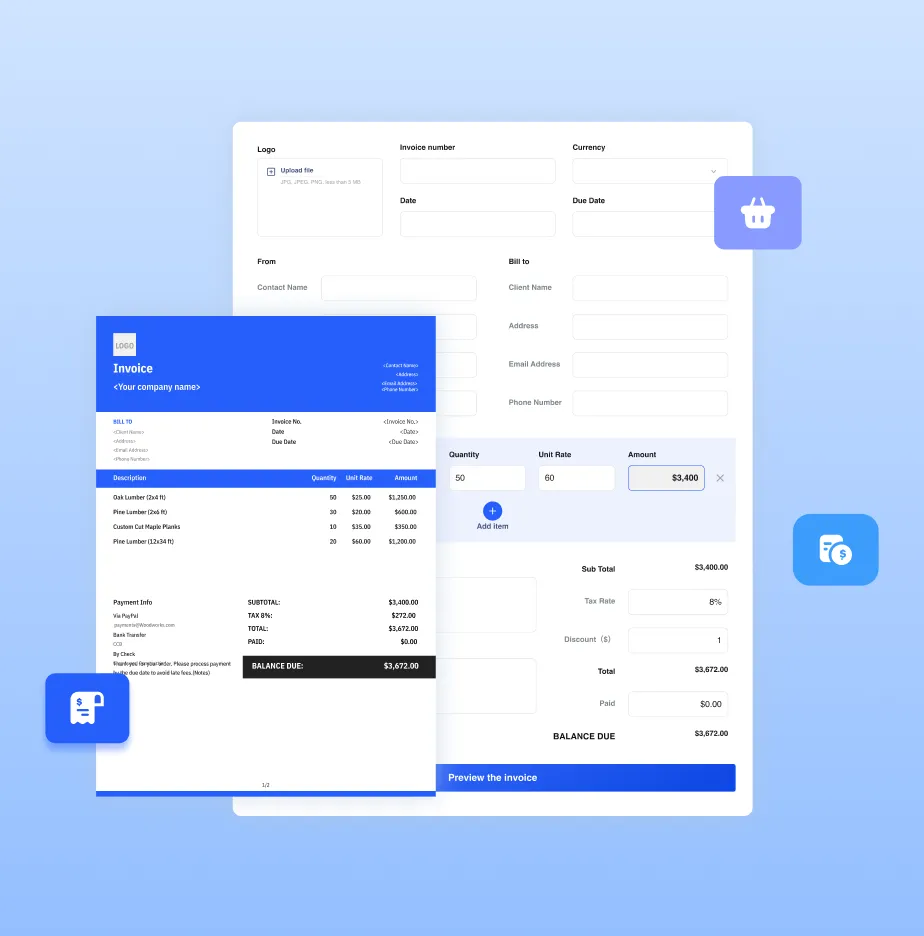
Use saved items and client information to create a handyman estimate in just a few taps.
How to Break Down a Handyman Estimate
Four passes turn a task list into a price: confirm what is on the job, size each task, price it against your rates and suppliers, and check it before the owner sees it.
Confirm the scope
Walk the property and write down what you are actually pricing: which tasks, what the owner expects each one to include, and what you could not see. Note the conditions behind fixtures, the hardware still to be chosen, and whether any task on the list crosses into work a licensed trade has to perform, so none of it turns up later as an unpriced surprise.
Measure the work
Measure each task in the unit that fits it: hours for demolition and patching, each for a fixture swap, linear feet for trim and caulk lines, square feet for drywall and paint touch-up. Where the quantity cannot be known until a fixture is removed, carry an allowance with the quantity and unit cost it covers, and state the reason it cannot be measured yet.
Apply resources and rates
Put labor hours and the hourly rate on each task separately from its materials and hardware, so a part or selection change can be repriced without reopening the labor. Add materials by grade and quantity at current hardware pricing, the minimum service call, travel and procurement time, consumables and tool wear, and the overhead and margin your business carries.
Review and issue
Read it back the way the owner will: every task priced, every allowance named, every exclusion written down. Confirm the measurements, the total, and the validity period, then issue it and say what follows: a work order once the task list is agreed, with a written add-on for anything added on site after that.
Common Handyman Estimate Line Items
- 01
Light fixtures, fans, and switches
Replace ceiling fixtures, ceiling fans, dimmers, outlets, and switch plates, including old-work box installation and drywall touch-up.
Typical units: each, labor hours
- 02
Doors, locks, and hardware
Door replacement, hinge and strike plate adjustment, deadbolt installation, door sweep, threshold, and closer adjustment.
Typical units: each, labor hours
- 03
Drywall, patching, and paint touch-up
Hole patch, texture match, caulk gaps, trim and baseboard install, paint touch-up, and wall surface prep.
Typical units: square feet, linear feet, each
- 04
Cabinets, shelving, and furniture assembly
Cabinet install or repair, shelf brackets, closet systems, furniture assembly, and anchor to wall for safety.
Typical units: each, linear feet, labor hours
- 05
Screens, weatherstrip, and exterior trim
Window screen rescreen, door sweep and weatherstrip, exterior trim repair, gutter cleaning, and siding patch.
Typical units: each, linear feet, labor hours
- 06
Travel, procurement, and minimum call
Minimum service call, travel time or mileage, hardware and materials pickup, consumables, and disposal of old materials.
Typical units: flat fees, hours, miles
Key Considerations for Handyman Estimates
- 01
Mark the licensed-trade line and do not cross it
Each state draws the line differently, but the same principle holds: if a task requires a trade license — electrical panel work, plumbing line replacement, gas lines, structural framing, or HVAC load sizing — the handyman cannot legally price it and should name it as an exclusion on the estimate. The owner needs to see that boundary before the job starts, not when an inspector or a buyer's due diligence finds it later.
- 02
Price small jobs by the unit that protects both sides
Hourly pricing suits demolition, patching, and assembly where the time is hard to predict. Per-item pricing suits a fixture swap or a deadbolt install where the scope is clean. State which basis each task uses and why, because an owner who agreed to an hourly rate for a twenty-minute bracket swap and an owner who agreed to a flat per-item charge for a two-hour cabinet install will both feel they overpaid if the basis is wrong for the task.
- 03
Account for the hardware run and the minimum call
A handyman's time is spent on the job and on the road, and both have to be priced. The minimum service call covers showing up and the first block of time; the procurement fee covers the hardware run, which on a small job can take longer than the install. Show both on their own lines rather than folding them into an inflated hourly rate, so the owner can see what they are paying for and the handyman is not working for free on the pickup.
- 04
Define site conditions and what the warranty covers
Parking limits, stair access, a unit the owner cannot vacate, and a shut-off the owner has to arrange all change how long a task takes, and the estimate should list the ones that apply. On warranty, state the length, the start date, and what it covers — the installation of the hardware, not the hardware itself, which carries a manufacturer warranty the owner claims separately. A handyman warranty that is only described as 'guaranteed' without a scope is one of the most common sources of post-job conflict.
Handyman Estimate, Quote, or Invoice?
Estimate
Projected cost
- Purpose
- Price the task list as described at the walkthrough, using your own measurements, today's hardware pricing, and the hourly or per-item rates you carry.
- When used
- After a walkthrough or a task-list exchange, before materials are bought or a day is booked.
- Next document
- Become a signed work order once the task list is agreed, with a written add-on for anything added on site after that.
Quote
Defined offer
- Purpose
- Offer one price for the task list as written, including the materials and hardware agreed with the owner and the completion date.
- When used
- When the tasks are confirmed, materials are selected, and scope and schedule are understood on both sides.
- Next document
- Keep the signed proposal with the job file, and record later task additions, material changes, and schedule shifts against it.
Invoice
Payment request
- Purpose
- Ask for what is actually due: the labor and materials at completion, an approved add-on, or the balance after a deposit.
- When used
- When the task list is finished and the owner has walked the work — or at a stage the estimate defined as a billing point.
- Next document
- Record the payment, credit any deposit already held, and show the balance the owner owes.
Handyman Estimate FAQs
Should I pay hourly or per task?
It depends on how predictable the scope is. A fixture swap with clean access is a per-item job; demolition, patching, or assembly where time is hard to estimate is better hourly, with a stated range and a cap. The estimate should name which basis each task uses and why, so a mid-job switch is repriced and authorized in writing.
How does the minimum service call work?
The minimum service call is a flat charge for showing up and the first block of time on site, typically one to two hours. The estimate should show it on its own line, state whether it credits against the work if you proceed, and say what the first included block of time is.
Who buys the materials and hardware?
Most handymen prefer to buy the materials themselves because they know the grade and fit, and can return a wrong part without idling the job. The estimate should list materials at cost plus a stated procurement fee, or at a marked-up rate — either is acceptable as long as the basis is written down.
What jobs will a handyman not take on?
Anything that requires a trade license the handyman does not hold. Electrical panel changes, new circuits, plumbing line replacement, gas lines, structural framing, HVAC load sizing, and roofing typically fall outside the scope. The estimate should name those exclusions explicitly and recommend a licensed contractor for any task that crosses the line.
Other Free Resources

Try Invoice Zip Today
Start Sending Invoices, Building Reports, Saving Office
Time and Get Paid Faster.