


Free Snow Removal Estimate Template
Prepare a snow removal estimate that prices the surfaces you walked, ties each line to a trigger depth, an equipment type, and a service window, and shows where weather the forecast cannot pin down may move the total. Give the property owner or manager a reviewable basis before the first storm, a seasonal contract, or a per-event call is set.
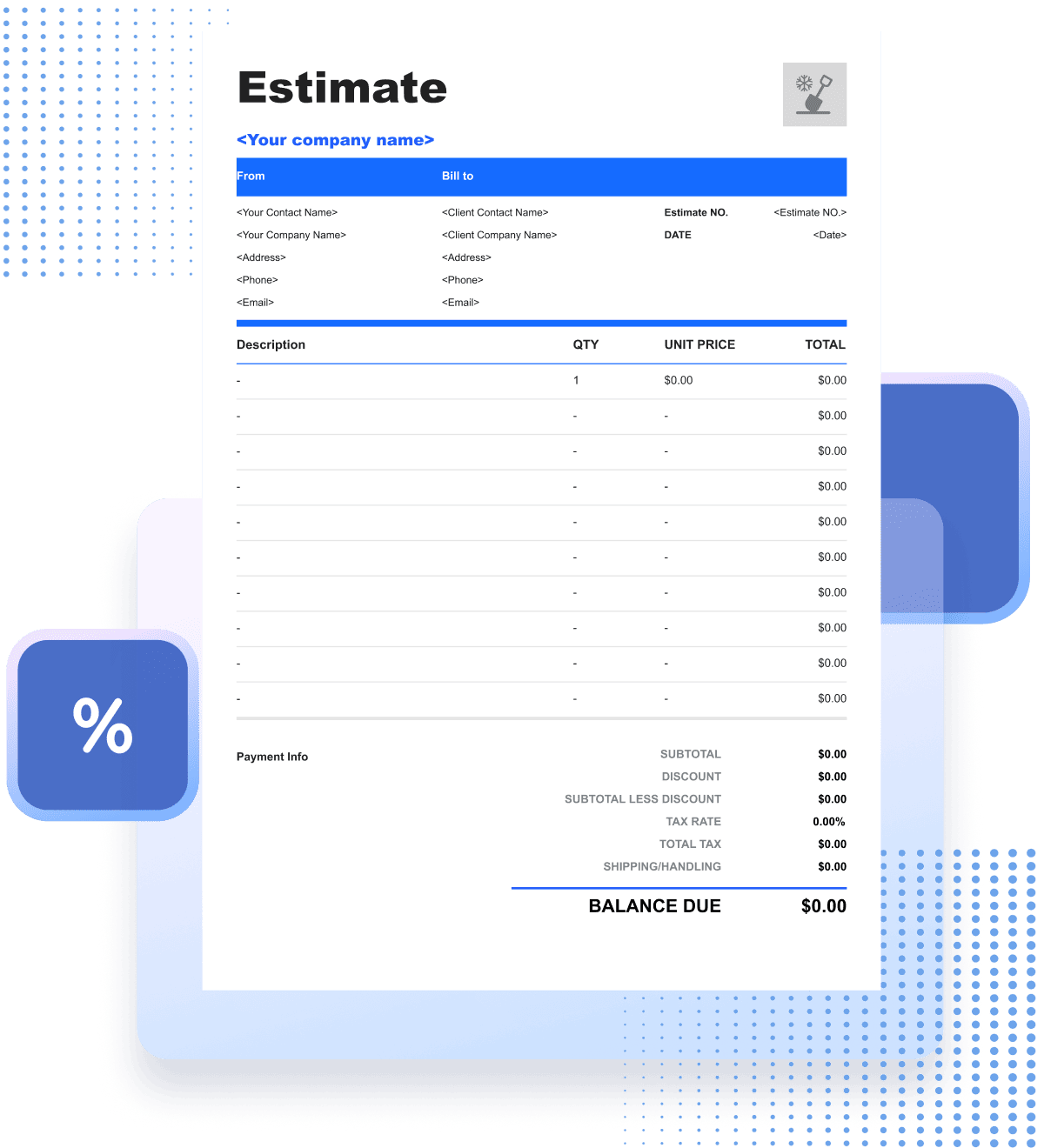
Snow Removal Estimate Template
Snow is priced by the event and by the season, and the two have to be written separately. Put the service area measured in square feet or parking spaces, the trigger depth, the service window, the de-icing and hauling rules, and the contract period under one agreement number.
No two storms cost the same and no season matches the last one. A per-event rate with a stated trigger, plus a separate line for salt and one for hauling, lets the customer see exactly what each invoice charges for and gives you something to point at when a storm runs long.
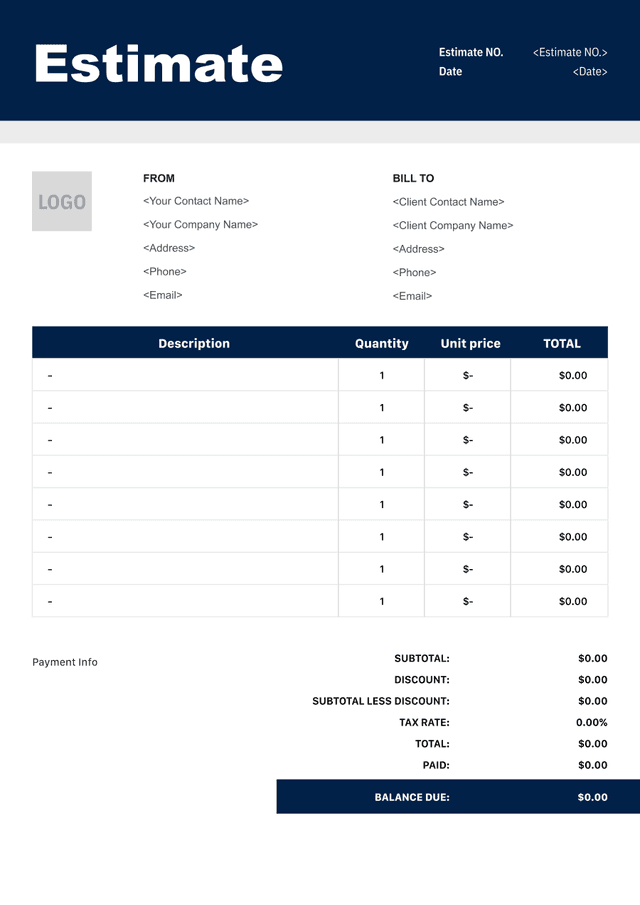


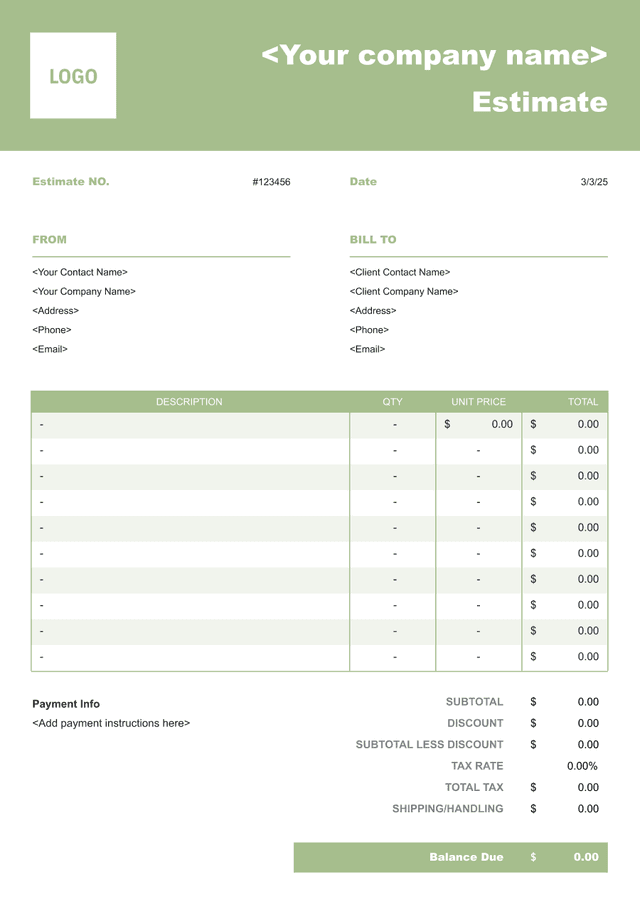
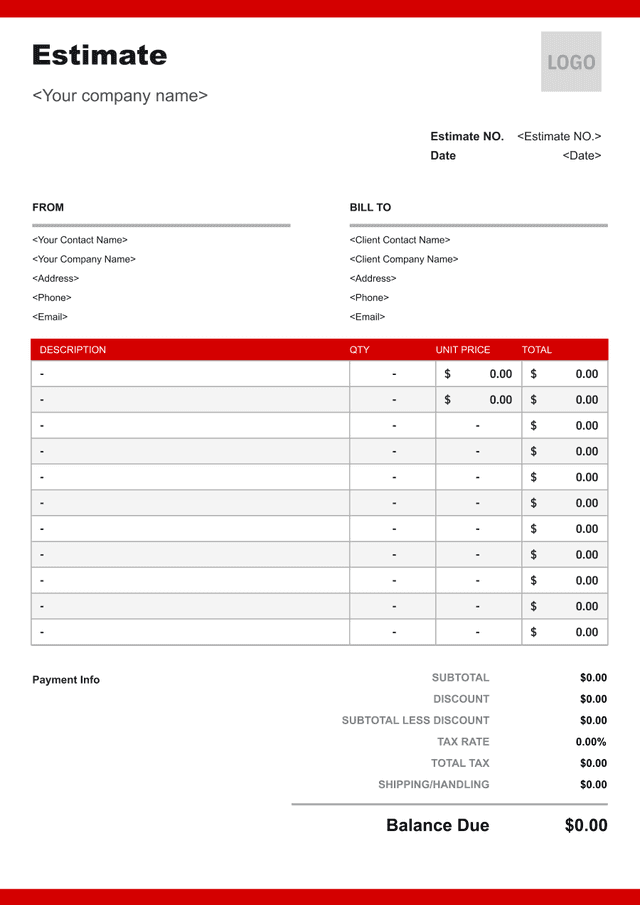
What Is a Snow Removal Estimate?
A snow removal estimate is what a property owner receives after a site walk, usually before the season starts: a price for the service as it was understood from the property and the access conditions, before any storm has actually hit. It starts from the square footage or the drive and lot count measured and adds equipment hours and operator rates, de-icing material, salt and ice melt, plus the overhead and margin your company carries.
What a pre-season walk can see is limited to surfaces and access. Storm intensity, timing relative to traffic, whether the snow turns to ice, and whether a second push is needed before the crew can leave — none of that is knowable in October, and all of it changes what the season actually costs.
Owners read it to decide whether to lock a seasonal contract or pay per event, what trigger depth to set, and how much to budget, so it belongs next to the seasonal agreement rather than floating on its own. Its job is to make the boundary between what the contract covers and what bills as a separate event obvious while both sides are still friendly.
- 01
What the number represents
It prices the surfaces measured at the site walk, the trigger depth the owner chose, and the equipment and de-icing plan stated. It is not the final figure if the season delivers more events than assumed or if ice requires a separate application, and it is not a bill — writing that plainly on the page prevents most of the arguments that surface at season-end settlement.
- 02
How much detail it carries
Two site walks produce two different documents. Off a pre-season walk, a per-event or seasonal rate with the trigger depth and service window named is appropriate; once a storm has actually been serviced, each event should carry its actual push count, material tonnage, and operator time. The detail should match how much of the season has actually been seen.
- 03
Why the total moves
A storm that exceeds the trigger depth by several inches, an ice event that requires a separate de-icing pass, a storm that hits during a priority window or a holiday, and a second push before the crew can release the site all move it. Write each as a stated assumption with the unit and rate it covers, so the owner sees what they are approving instead of meeting it later as a surprise line.
What to Include in a Snow Removal Estimate
The estimate has to identify the property and each surface well enough that your office and the owner never confuse it with another job: the address, the surfaces and access covered, the trigger depth, and the date it was walked. Then each priced surface should trace to a measurement taken, an equipment type assigned, a service window set, or a de-icing plan listed.

- 01
Business and client details
Your company name, licence number, address, phone, and email, then the owner's name, the property where the service happens, and the billing address if the two differ. Where the job is commercial or managed by an HOA, add the management contact and the lot or unit number, and note who authorized the site walk and who receives the storm-notification calls.
- 02
Estimate number, dates, and validity
Give the quote its own number and show the date it was issued, the date the site was measured, and the contract period it covers. State how long the rate holds, usually one season, and what triggers a review, such as a change to the service area or a jump in fuel and salt costs.
- 03
Scope of work with inclusions and exclusions
Describe the job surface by surface, and say what each part includes; then list what it leaves out — the roof, the backyard patio, walkways the owner handles themselves, and areas blocked by vehicles or debris. Note what the scope rested on, such as the square footage measured and the access observed, and where the walkthrough stopped, such as a rear lot not accessed or a shared drive with a neighbor's boundary. Silence reads as inclusion.
- 04
Trigger depth, service window, and priority
Name the trigger depth on each property — typically 2 inches for residential and 1 inch for commercial — because that is the line that sends the truck. State the service window for each priority level: a 4-hour response for primary drives and parking lots, a next-morning window for secondary walks and patios. Priority level decides who gets serviced first when multiple properties call in the same storm, and the owner needs to know where they stand.
- 05
Equipment, de-icing, and stacking plan
Assign the equipment per surface — plow truck for drives and lots, skid steer for large commercial, walk-behind blower for sidewalks and entry paths — because the wrong machine damages the surface or cannot fit the access. Carry de-icing material by type and coverage, salt and ice melt as separate lines, and note where stacked snow can be placed, since a property with no stacking room means hauling, and hauling is a different cost.
- 06
Totals, payment terms, warranty, and acceptance
Finish with subtotals by surface or service, de-icing material on its own line rather than buried in the rates, hauling and disposal fees where they apply, tax where it applies, and the total. Under that, the terms: whether the contract is seasonal or per-event, how an event is counted and invoiced, who carries liability for a slip-and-fall on a serviced surface, how the season-end reconciliation works if storms fall short of the assumed count, and a signature block with printed name, date, and the version accepted.
Reuse Saved Information in Invoice Zip
Use saved items and client information to create a snow removal estimate in just a few taps.
How to Break Down a Snow Removal Estimate
Four passes turn a site walk into a price: confirm what is in the job, measure it, price it against your equipment and material costs, and check it before the owner sees it.
Confirm the scope
Walk the property and write down what you are actually pricing: which surfaces, what access the equipment has, and what you could not see. Note the slopes, the obstacles that narrow the plow path, the stacking location and whether it exists, and any surfaces the owner handles themselves, so none of it turns up later as an unpriced surprise.
Measure the work
Measure every surface yourself rather than pricing from the owner's lot size, and price each surface in the unit that fits it: square feet for drives and lots, linear feet for sidewalks, each for parking spaces and entry stoops. Where the actual event count cannot be known until the season runs, carry a per-event rate with the trigger depth and service window it covers.
Apply resources and rates
Put equipment hours and operator rates on each surface separately from its de-icing material, so a storm that needs more salt does not reopen the plow labor. Add plow, blower, and skid steer time at current rates, salt and ice melt by tonnage and coverage, hauling and disposal where stacking is not possible, and the overhead and margin your company carries.
Review and issue
Read it back the way the owner will: every surface priced, every trigger depth named, every exclusion written down. Confirm the measurements, the total, and the validity period, then issue it and say what follows: a signed seasonal agreement or a per-event call once the scope is agreed, with a numbered ticket for each storm serviced after that.
Common Snow Removal Estimate Line Items
- 01
Driveway and parking lot plowing
Plow truck or skid steer clearing of asphalt and concrete drives, commercial lots, and shared access roads, including push-back and wing clearing.
Typical units: square feet, per visit, per event, each
- 02
Sidewalk and entry clearing
Walk-behind snow blower or hand shoveling for sidewalks, entry paths, stoops, ramps, and ADA-accessible routes cleared to bare surface.
Typical units: linear feet, square feet, per visit, each
- 03
De-icing and ice melt application
Rock salt, liquid brine, and ice melt spread on drives, walks, and lot entrances, with separate coverage for high-traffic and shaded areas.
Typical units: pounds, tons, square feet, per visit
- 04
Skid steer and heavy equipment
Skid steer, front-end loader, or backhoe for deep accumulation, large commercial lots, snow bank management, and stacking-row construction.
Typical units: hours, per event, square feet
- 05
Snow hauling and off-site removal
Truck transport of stacked snow to an off-site disposal location when on-site stacking space is full or not available.
Typical units: loads, hours, per event, tons
- 06
After-hours, holiday, and emergency callout
Night and weekend service, holiday surcharge, emergency response within a stated window, and second-push clearing during extended storms.
Typical units: hours, per visit, flat fees, each
Key Considerations for Snow Removal Estimates
- 01
Set the trigger depth and the service window explicitly
The trigger depth — typically 2 inches for residential and 1 inch for commercial — is what sends the truck, and it has to be on the estimate in writing. Without it, the owner calls for every dusting and the crew skips storms that crossed the line overnight. Pair the depth with a service window for each priority level, because a property on a 4-hour response during business hours and a 12-hour response overnight is a different price and a different expectation.
- 02
Carry ice and de-icing as a separate event, not a given
A storm that drops snow and leaves is one pass; a storm that drops snow, warms, and refreezes as ice is a second operation with its own material and labor. De-icing is not included in the plow line — it is a separate application with its own tonnage and coverage rate. State on the estimate whether salt, brine, or ice melt is the default, and carry each as a line so the owner sees what a freeze event costs on top of the plow.
- 03
Define stacking space and hauling triggers
On-site stacking is free hauling; a property with no stacking room means every storm's snow gets trucked off site, and that cost is not in a standard plow rate. Walk the property, identify where the snow goes, and note whether hauling is included, conditional on stacking filling up, or always required. A commercial lot that runs out of stacking space mid-season is where a fixed seasonal contract quietly turns into a loss for the contractor if hauling was not carried.
- 04
Address liability, slip-and-fall, and record-keeping
A serviced surface that someone slips on is where the property owner and the contractor both get named in a claim. State on the estimate and the service agreement what the company is responsible for — clearing to bare surface, de-icing application, and a service log — and what falls to the owner, such as areas the owner said they would handle. A timestamped service log for each visit is the document that defends a slip-and-fall claim, and the estimate should name it as part of the deliverable.
Snow Removal Estimate, Quote, or Invoice?
Estimate
Projected cost
- Purpose
- Price the season or per-event service as described at the site walk, using your own surface measurements, today's material pricing, and the trigger depth and window the owner chose.
- When used
- After a pre-season site walk, before the seasonal contract is signed or the first storm is serviced.
- Next document
- Become a signed seasonal agreement or a per-event call once the scope is agreed, with a numbered ticket for each storm serviced after that.
Quote
Defined offer
- Purpose
- Commit to one price for one defined scope, with the trigger depth, service window, and de-icing plan the owner has agreed to.
- When used
- When the trigger depth is set, priority level is confirmed, and scope, equipment, and material plan are understood on both sides.
- Next document
- Keep the signed seasonal agreement with the job file, and log each serviced event, material tonnage, and hauling against it.
Invoice
Payment request
- Purpose
- Ask for what the seasonal or per-event agreement allows: a seasonal deposit, a per-event balance after the storm, or an approved hauling or de-icing add-on.
- When used
- When a storm has been serviced and the operator log is complete — event date, push count, material applied, and time on site.
- Next document
- Record the payment, credit any seasonal deposit already held, and show the balance the owner owes at the season-end reconciliation.
Snow Removal Estimate FAQs
How much snow has to fall before the crew comes out?
The trigger depth on the service agreement decides that — typically 2 inches for residential drives and 1 inch for commercial lots. It is not the owner's call on the day of the storm. The trigger is paired with a service window and a priority level, and the owner should know their priority and window, not just the depth.
How are nights, weekends, and holidays billed?
Most seasonal contracts include a standard service window — early morning or business hours — with an after-hours or holiday surcharge. The estimate should state the standard window, the surcharge rate for nights and weekends, and what counts as a holiday. A seasonal contract at a standard-window rate does not guarantee the crew is on the lot at 2 a.m. on a holiday.
Is de-icing and salt included in the plowing price?
Usually not. Plowing moves the snow; de-icing is a separate application with its own material and tonnage. The estimate should carry de-icing as its own line with the material type and coverage rate. Some seasonal contracts bundle a set tonnage of salt and bill anything above at a per-ton rate — a year with multiple ice events can push the de-icing cost above the plowing cost.
What happens if my car is blocked by snow the crew pushed there?
The agreement should state where the crew stacks snow before the first storm. On a property with no stacking room, the crew hauls the snow off site, and hauling is a separate cost. If the owner leaves a vehicle in the drive, the crew plows around it, leaving a windrow to shovel — the agreement should state that the company is not responsible for snow pushed against vehicles left in the service area.
Other Free Resources


Try Invoice Zip Today
Start Sending Invoices, Building Reports, Saving Office
Time and Get Paid Faster.