


AUSTRALIAN INVOICE TEMPLATES · AUD · A4
Free Australian Tax Invoice Template
ABN & GST Ready
No email required · No watermark · PDF, Excel & Word formats
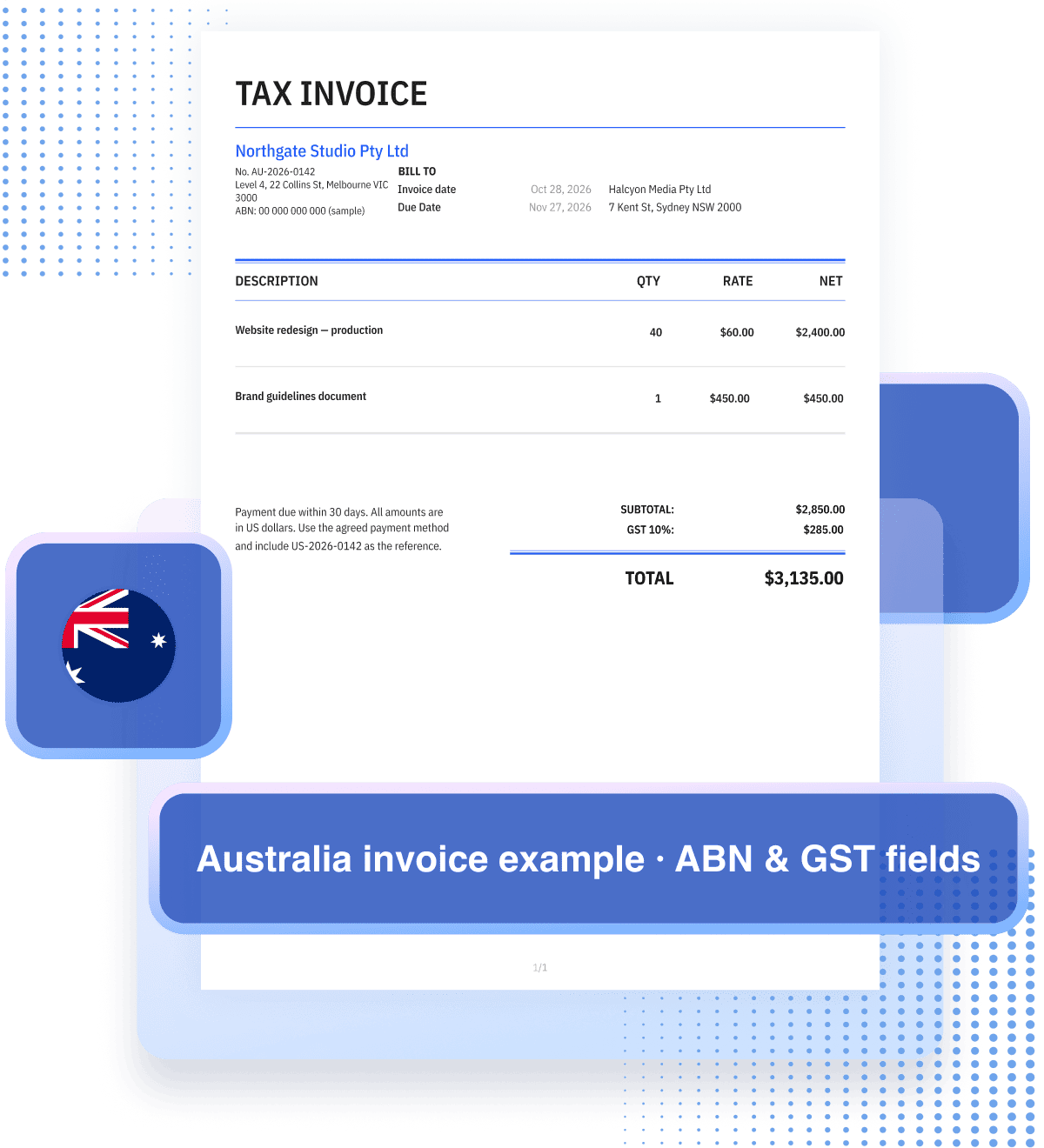
Create Invoice Online
Enter your business, customer and line items. Apply one GST rate to the whole invoice, or switch it off. Review your invoice as you type.
Create an Invoice
Fill in the fields — totals calculate as you type
1YOUR BUSINESS
2BILL TO
3ITEMS
4GST
5DISCOUNT

6PAYMENT
Amount already received from the client
7NOTES & TERMS
One GST rate applies to all items and is calculated on the subtotal after discount. Use an editable template when different items need different tax rates or treatments.
Your data stays in this browser — nothing is uploaded.
Sample details are fictional. Replace them with your own before sending.
Choose the Right Template for Your Situation
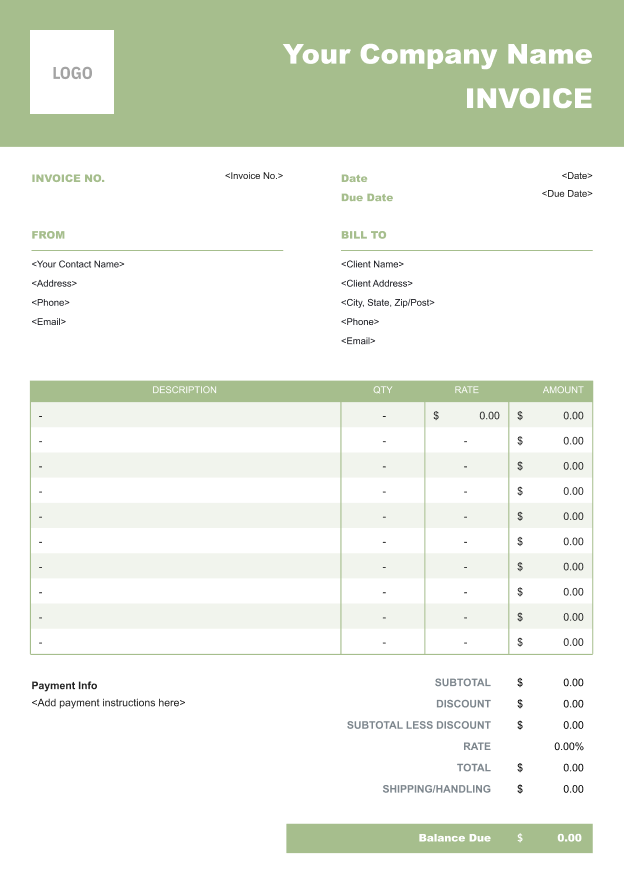


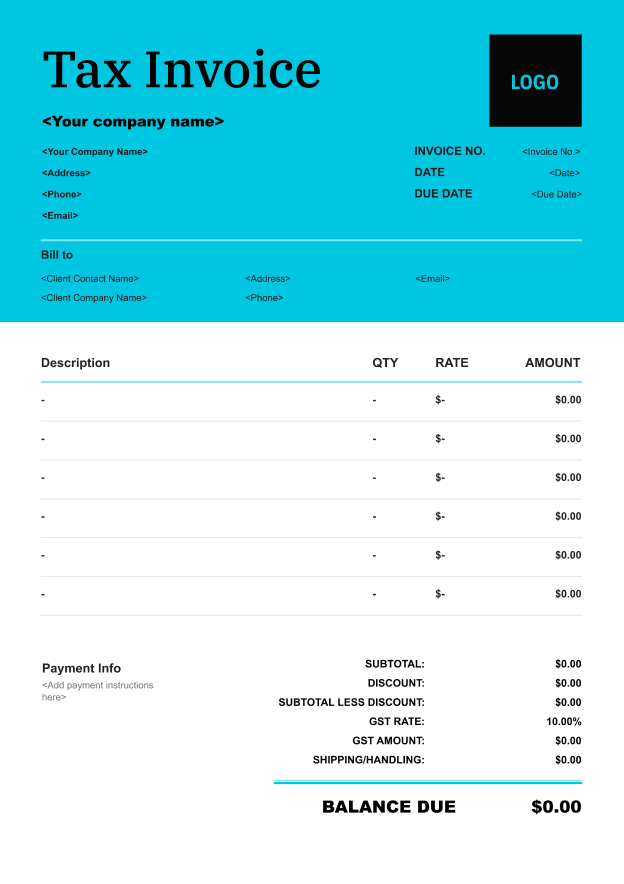
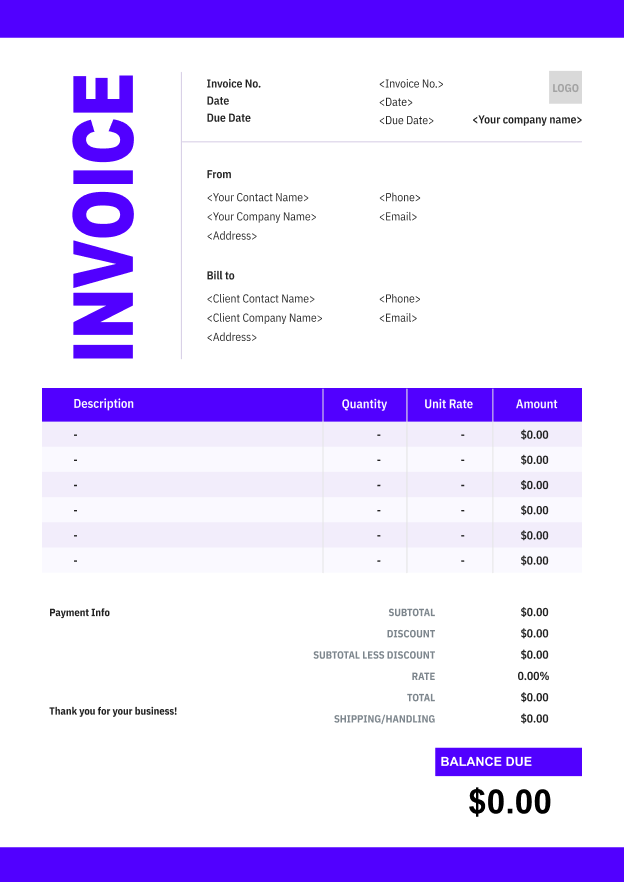
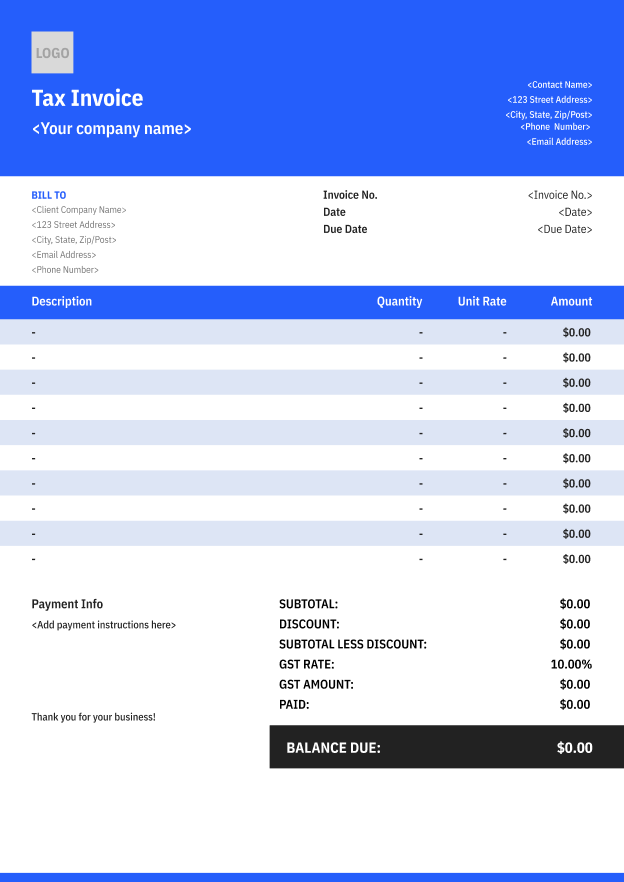
Fill It in Once. Reuse It Every Month.
What an Australian Tax Invoice Should Include
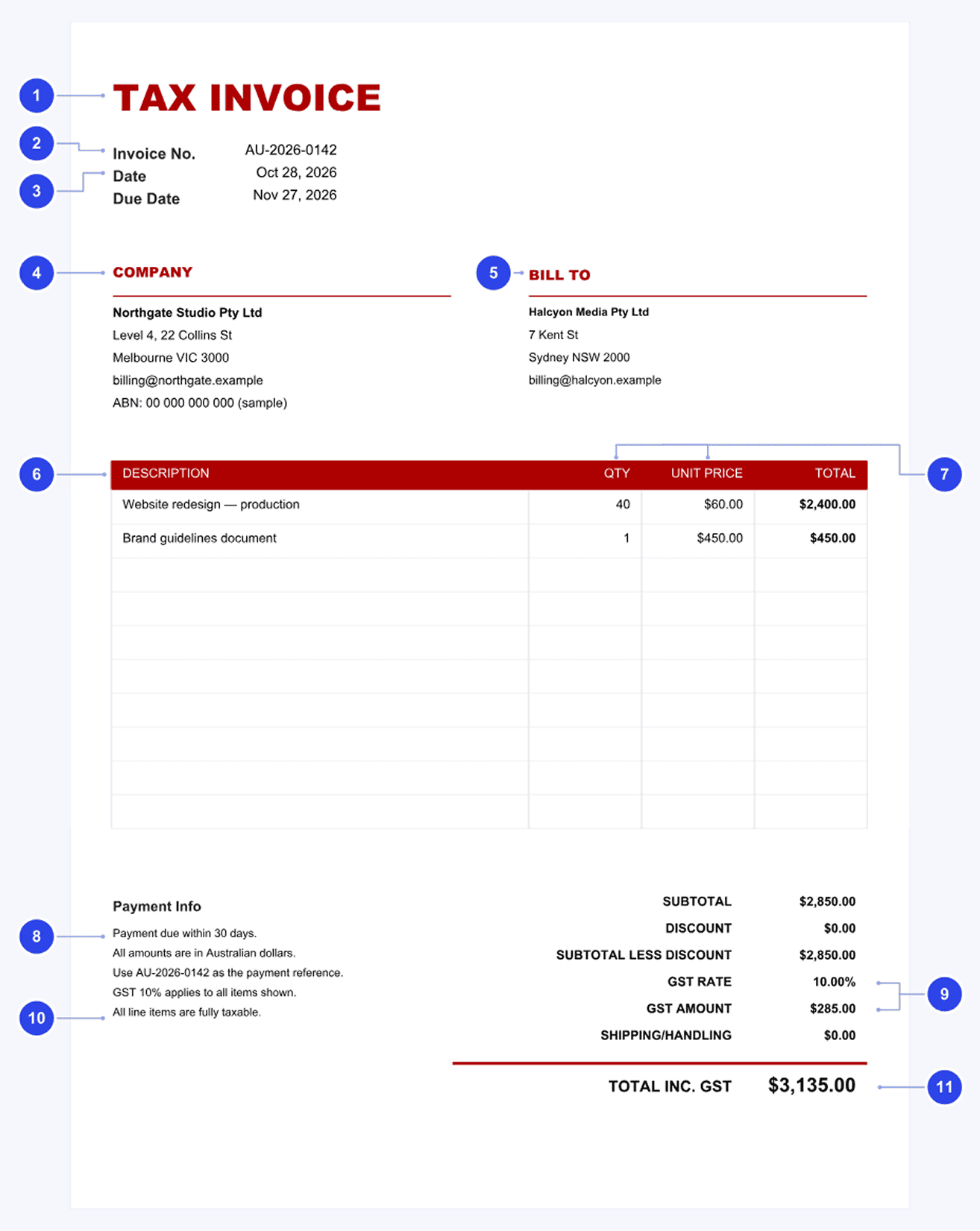
- 1
The Words “Tax Invoice”
Use a clear “Tax Invoice” heading for a GST-registered seller’s tax invoice. The document must clearly be intended as a tax invoice. If you are not GST registered, use a regular invoice and do not charge GST. - 2
Invoice Number
Recommended for tracking bills and matching payments. Use a unique reference such as AU-2026-0142. Invoice numbering is a useful business practice; it is not one of the core tax-invoice information items in the ATO list. - 3
Date of Issue
The day the invoice is issued. Keep it consistent with your records. GST reporting timing also depends on whether you account on a cash or non-cash basis. - 4
Seller Identity and ABN
Your legal name or registered business name, and your 11-digit ABN. Use an identity that can be verified against the ABN. A sole trader may use their own name or a registered business name. - 5
Buyer Identity
The buyer’s identity or ABN is required when the total price is $1,000 or more, including GST. Below that amount it is still useful to identify who you are billing. - 6
Description of Goods or Services
Clear enough to identify what was sold, e.g. “Website redesign, 40 hours”. Use descriptions your customer can match to the work or goods supplied. - 7
Quantity and Price
Show the quantity where applicable and the price of what was supplied. Hours or the extent of the work can describe a service; keep the basis of the charge clear. - 8
Payment Terms and Details
State the agreed due date and verified payment instructions, such as bank transfer with the invoice number as the reference. These practical details help the customer pay the right amount on time. - 9
GST Amount and Rate
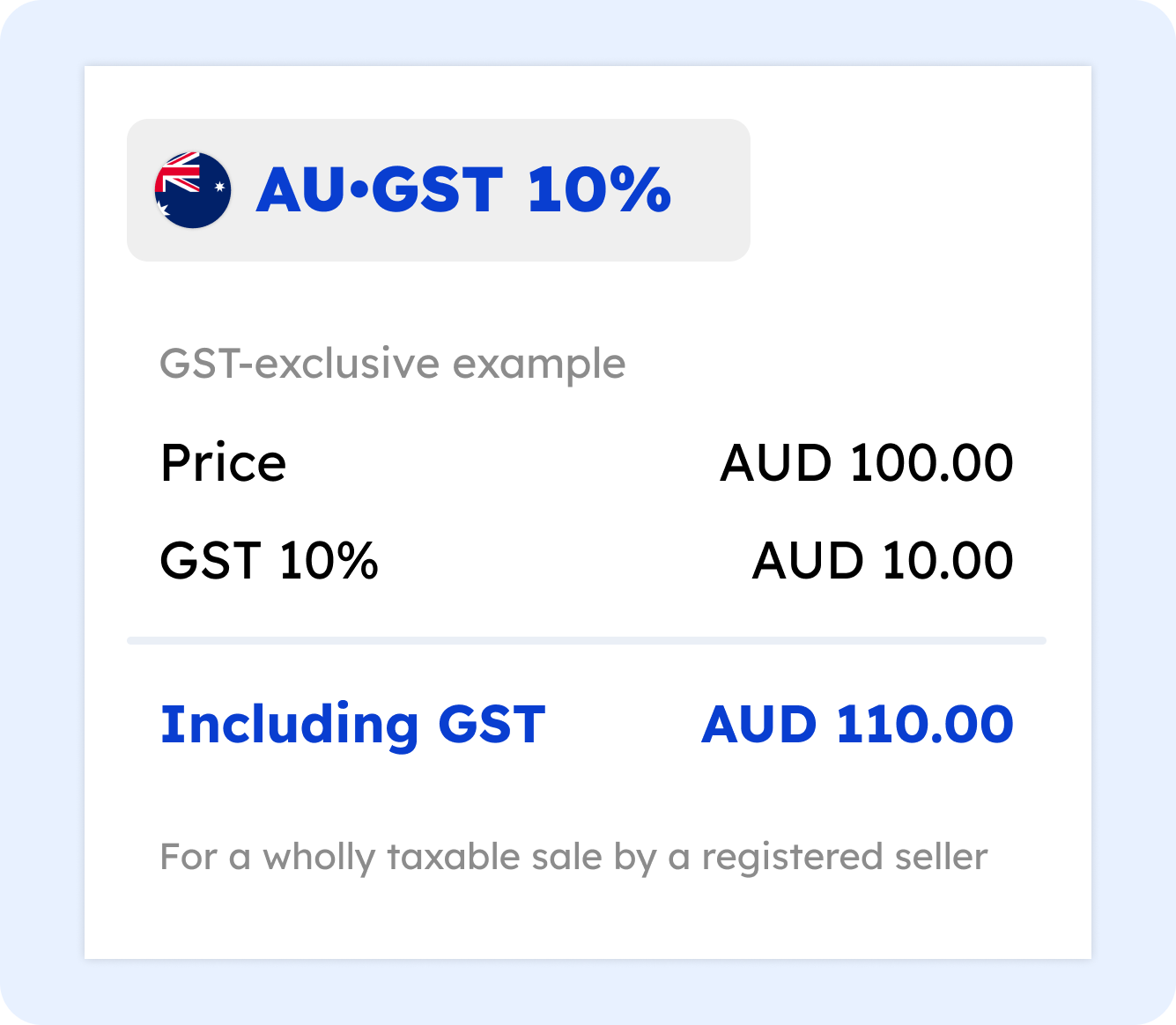
Show the GST payable clearly. For a wholly taxable sale where GST is exactly one-eleventh of the total price, an appropriate statement that the total includes GST may be used. Mixed supplies need a clear GST breakdown. - 10
Tax Treatment of Each Supply
Make it clear which supplies are taxable, GST-free or input taxed. The example says all line items are fully taxable. If treatment varies between items, identify it clearly for each item rather than relying on one unexplained 0% rate. - 11
GST-Inclusive Total
Make the price and GST treatment clear. If you show the net amount plus GST, label the final figure “Total including GST”. Show AUD when the dollar currency could be ambiguous.
Australian GST Rates and ABN Format
Check Registration and GST Treatment
Use an 11-digit ABN and confirm your GST registration before charging GST. A readable ABN uses the pattern XX XXX XXX XXX; spaces are a formatting aid, not a separate tax-invoice requirement.
- 01
Check GST registration
The usual GST-turnover threshold is $75,000, or $150,000 for non-profits. Taxi and passenger ride-sourcing services have special registration rules regardless of turnover.
- 02
Identify the supply
Use 10% for taxable supplies. GST-free supplies generally allow related GST credits; input-taxed supplies generally do not. Confirm the conditions for your particular sale.
- 03
Choose a reporting basis
Cash accounting follows payments received or made. Non-cash accounting generally attributes GST at the earlier of an invoice or payment. This timing does not change the 10% rate.
GST Treatment Reference
| Category | GST charged | Related GST credits | Examples |
|---|---|---|---|
| Taxable | 10% | Generally available for creditable purchases | Most goods, consulting, software and trade services |
| GST-free | No GST charged | Generally available | Qualifying basic food, health, education and export supplies |
| Input taxed | No GST charged | Generally unavailable; exceptions can apply | Residential rent and many financial supplies |
Check the official guidance:

Common Mistakes to Avoid
A Quick Review Can Prevent a Follow-Up

WRONG
 Using only “Invoice” for a GST-registered taxable sale
- ABN missing or copied incorrectly
- GST hidden inside a price with no explanation
- A $1,000-or-more tax invoice with no buyer identity or ABN
- Reusing the same invoice reference for a different bill
- Treating GST-free and input-taxed supplies as the same
RIGHT
 Use a clear Tax Invoice title and include the required GST information.
- Verify all 11 digits. Grouping the ABN with spaces improves readability.
- Show the GST amount clearly, or use an appropriate GST-inclusive statement when permitted.
- Include the buyer’s identity or ABN once the total including GST reaches $1,000.
- Use unique references and retain links to corrections, credits and adjustments.
- Record the actual supply treatment and check the different GST-credit consequences.
Three Australian Invoice Checks
- 01
Use the Right Invoice Type
A GST-registered supplier should clearly identify a tax invoice and include the required details. The intent of the document must be clear. If you are not GST registered, do not charge GST; use a regular invoice. Do not assume a title alone guarantees a GST credit.
- 02
GST-Free and Input Taxed Are Different
Both mean no GST is charged on the supply, but their input-credit treatment generally differs. GST-free supplies generally allow credits for related creditable purchases; input-taxed supplies generally do not. Check the classification rather than using an unexplained 0% entry.
- 03
Identify the Seller Behind the ABN
Use the supplier’s legal name or registered business name and the correct ABN. A sole trader may identify themselves by their personal name or registered business name. An invented trading label that does not identify the supplier is not sufficient.