


CANADA INVOICE TEMPLATES · CAD · A4
Free Canada Invoice Template
GST & HST Ready
No email required · No watermark · PDF, Excel & Word formats
Create Invoice Online
Enter your business, customer and line items. Apply one GST/HST rate to the whole invoice, or switch it off. Review your invoice as you type.
Create an Invoice
Fill in the fields — totals calculate as you type
1YOUR BUSINESS
2BILL TO
3ITEMS
4GST/HST
5DISCOUNT

6PAYMENT
Amount already received from the client
7NOTES & TERMS
One GST/HST rate applies to all items and is calculated on the subtotal after discount. For separate PST, RST or QST lines, use an editable template and check the applicable tax treatment.
Your data stays in this browser — nothing is uploaded.
Sample details are fictional. Replace them with your own before sending.
Choose the Right Template for Your Situation
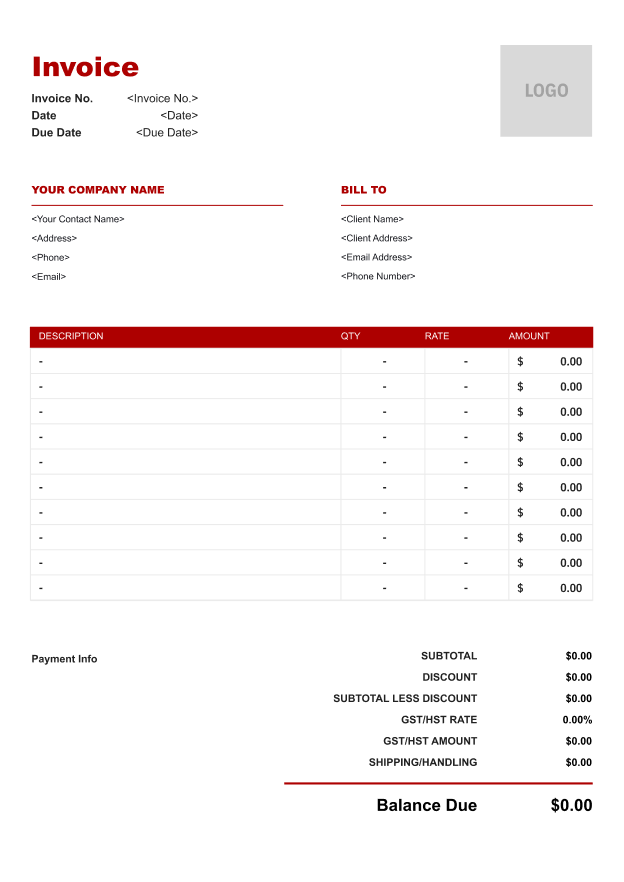


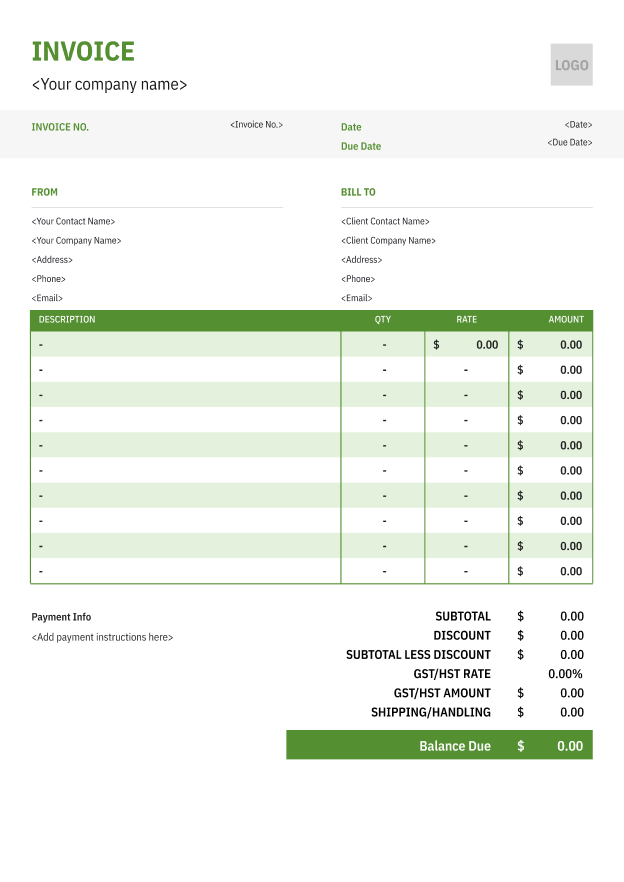
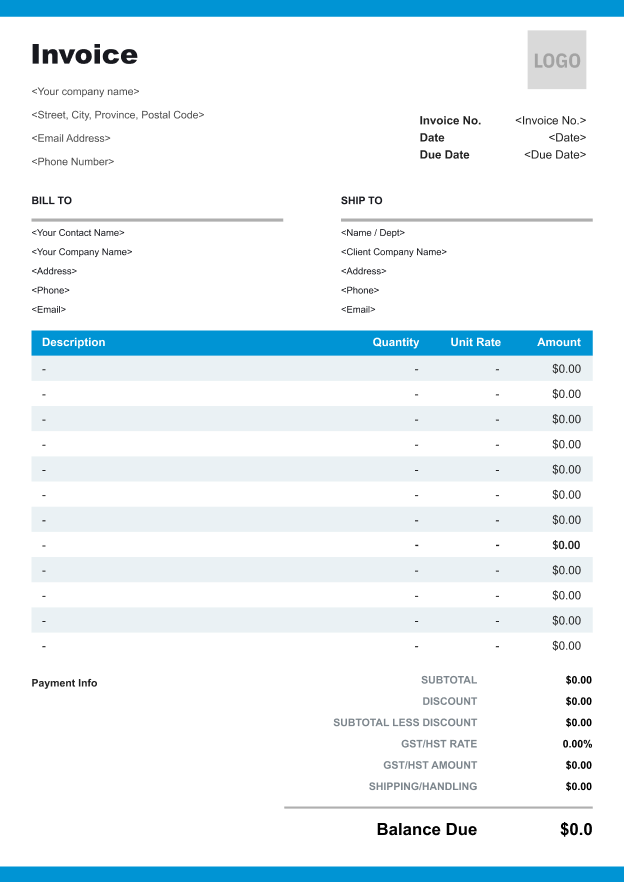
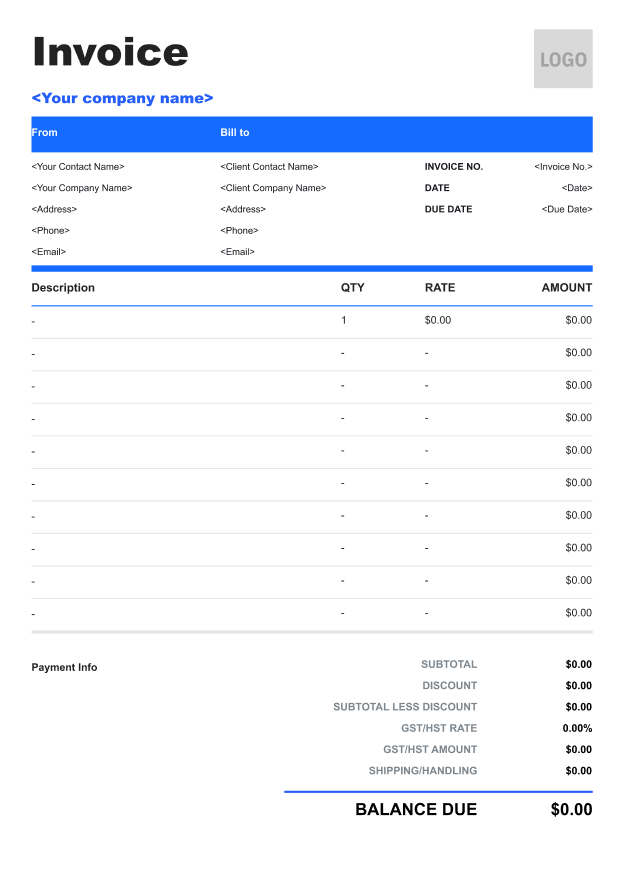
Fill It in Once. Reuse It Every Month.
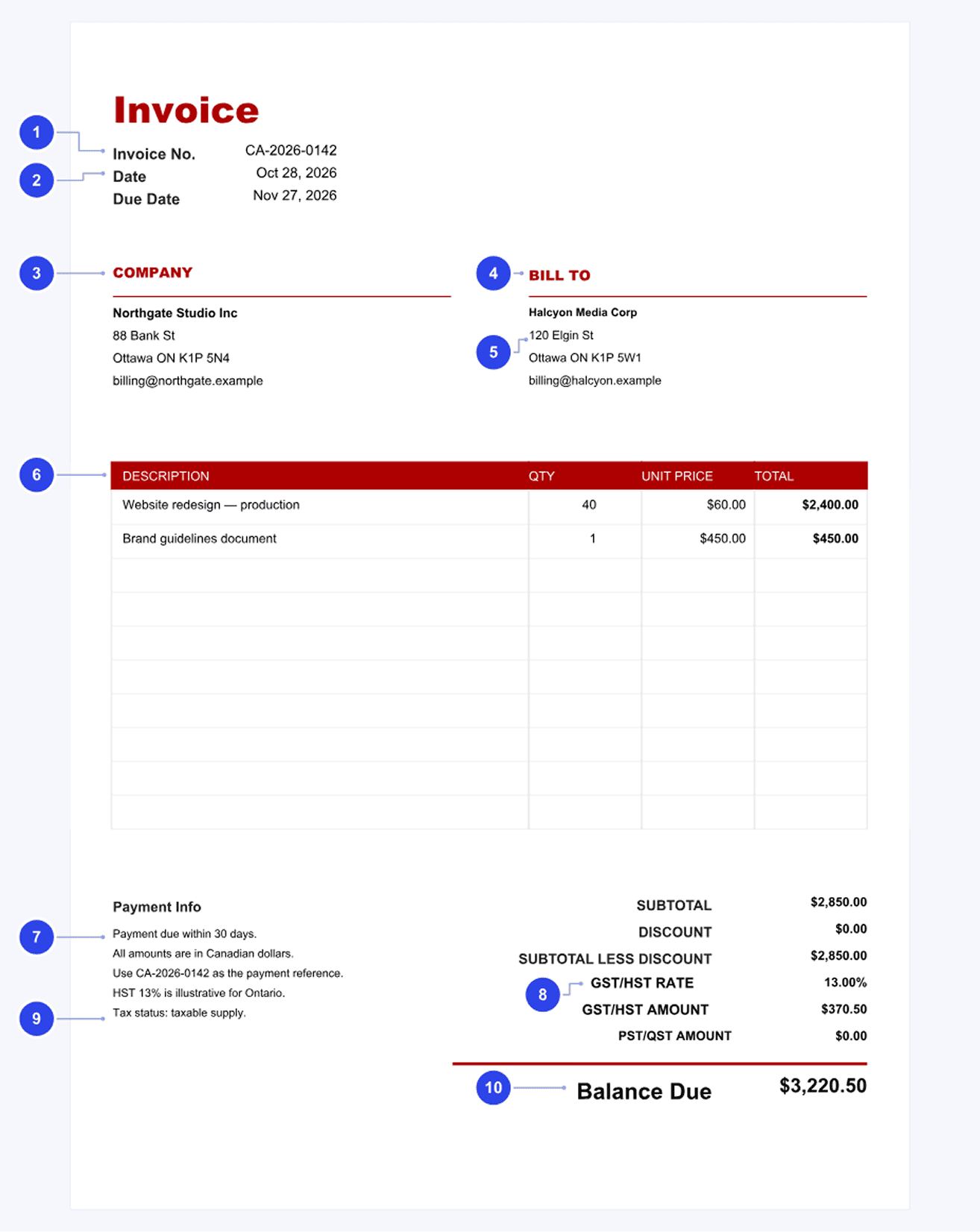
What a Canadian Invoice Should Include
- 1
Invoice Number
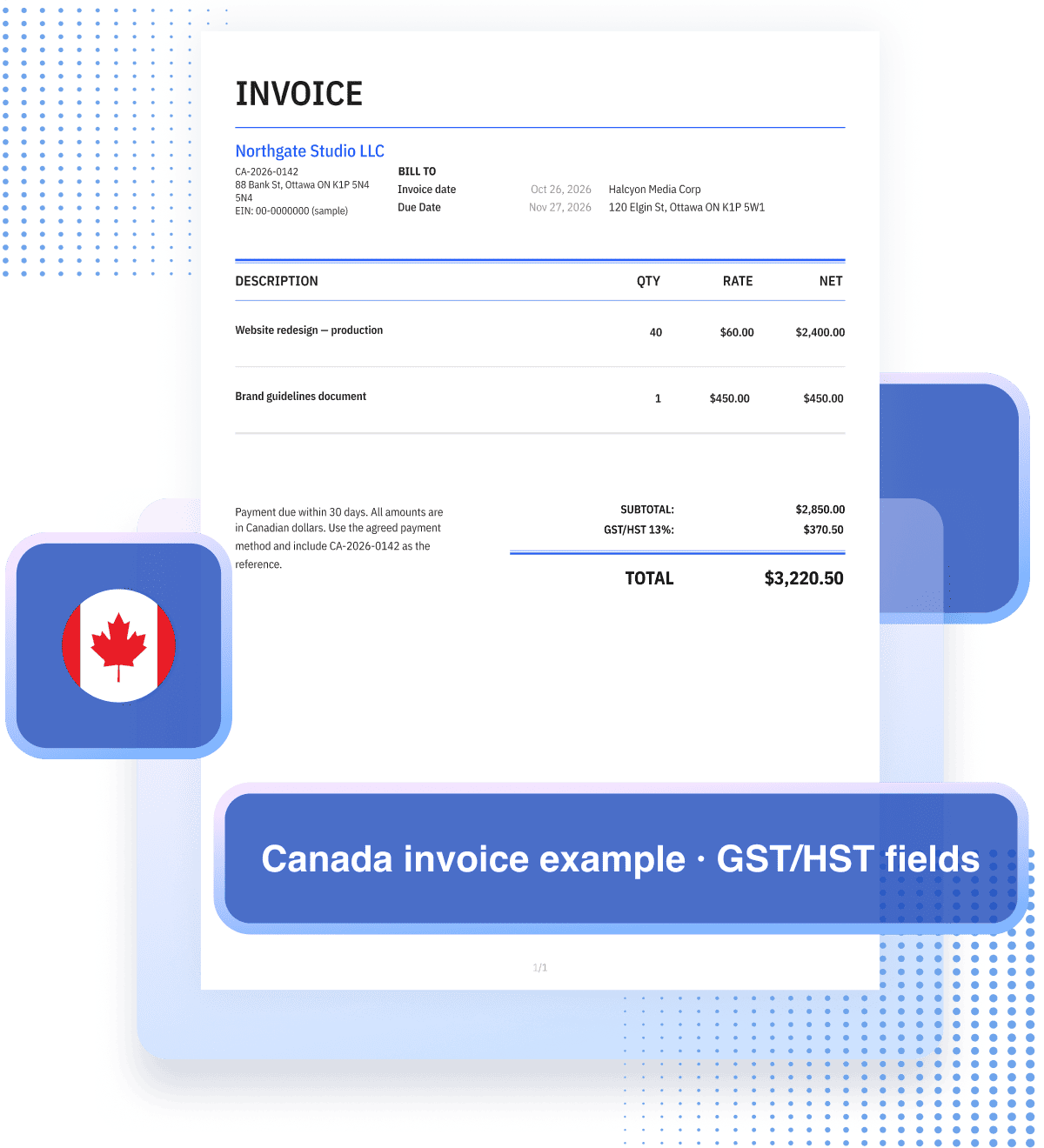
Recommended for tracking and payment references. Use a unique number such as CA-2026-0142 so you and the customer can identify the invoice. Invoice numbers are not listed in CRA’s standard ITC documentation table; additional provincial or industry rules may apply. - 2
Invoice Date
The date the invoice is issued. Use it as a clear reference for billing, records and payment terms. - 3
Supplier Name and Address
Your business name and a physical address. A sole proprietor may use their own name plus a trading name. - 4
Recipient Name
Who you are billing. For CRA ITC documentation on sales of $500 or more, include the buyer’s name, trading name or authorized agent’s name. - 5
Recipient Address
Include the recipient’s billing address. Add a different delivery address when needed to identify the transaction or apply the place-of-supply rules. - 6
Description of Goods or Services
Enough detail for the supply to be identified, e.g. “Website redesign, 40 hours @ $60/hr”. A brief description is required for CRA ITC documentation at $500 or more. - 7
Terms of Payment
Required for CRA ITC documentation when the total sale is $500 or more. State Net 30, Net 15 or due on receipt explicitly. - 8
Tax Rate and Amount per Tax
Show HST alone, or GST and any applicable PST, RST or QST separately, at their own rates. In Quebec, QST must never be blended into GST; both are calculated on the pre-GST sale price. - 9
Zero-Rated or Exempt Note
If you do not charge GST/HST, explain the applicable tax treatment. Distinguish zero-rated supplies, which remain taxable at 0%, from exempt supplies. Zero-rated supplies still form part of GST/HST reporting. - 10
Total Amount Paid or Payable
Show the total for the sale, including applicable taxes and adjustments. CRA’s standard ITC record requires this amount at every sale value. If a payment has already been received, show the invoice total, amount paid and remaining balance separately.
Canadian Tax Rates by Province and Territory
Choose the right tax lines
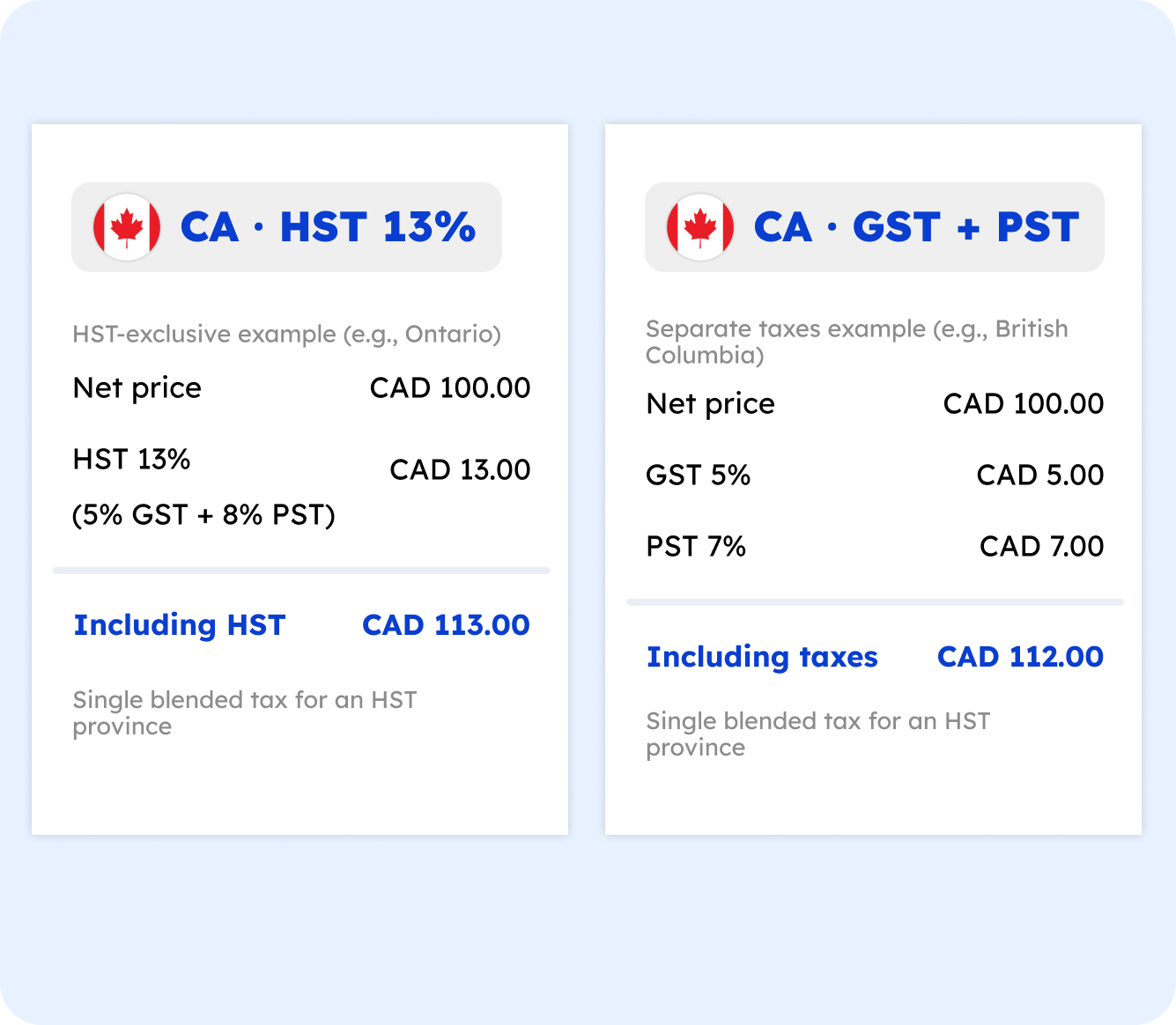
HST combines the federal and provincial parts in one rate. In GST + PST, RST or QST provinces, show the applicable taxes separately.
- 01
Find the place of supply
The applicable province depends on the goods or services and the relevant place-of-supply rules.
- 02
Check registration and taxability
Confirm which taxes you must collect. GST/HST registration and provincial registration are separate questions.
- 03
Review the calculation
Use HST alone in an HST province. Where GST and QST apply, calculate both on the pre-GST sale price.
GST/HST and Provincial Tax Rate Reference
| Province / territory | Tax system | Combined rate | How to show it on the invoice |
|---|---|---|---|
| Alberta | GST only | 5% | GST 5% |
| British Columbia | GST + PST | 12% | GST 5% and PST 7% on separate lines |
| Manitoba | GST + RST | 12% | GST 5% and RST 7% on separate lines |
| New Brunswick | HST | 15% | HST 15% as one line |
| Newfoundland & Labrador | HST | 15% | HST 15% as one line |
| Northwest Territories | GST only | 5% | GST 5% |
| Nova Scotia | HST | 14% | HST 14% as one line |
| Nunavut | GST only | 5% | GST 5% |
| Ontario | HST | 13% | HST 13% as one line |
| Prince Edward Island | HST | 15% | HST 15% as one line |
| Quebec | GST + QST | 14.975% | GST 5% and QST 9.975% on separate lines |
| Saskatchewan | GST + PST | 11% | GST 5% and PST 6% on separate lines |
| Yukon | GST only | 5% | GST 5% |
Check the official guidance:

Common Mistakes to Avoid
A Quick Review Can Prevent a Follow-Up

WRONG
 One combined tax line for GST and QST
- GST/HST number missing or truncated
- Charging your home-province rate on every invoice
- Using the old $150 invoice threshold
- Reusing an invoice number for a different bill
- Description only says “Services”
RIGHT
 Show GST and QST separately, each with its own rate and amount.
- Use the full supplier GST/HST account number when required; do not assume every account ends RT0001.
- Determine the rate under the applicable place-of-supply rules.
- At $500 or more, include the buyer’s name, description and payment terms for CRA ITC records.
- Use unique invoice references and retain related voids, credits or correction records.
- Itemise the scope, quantities or hours, and the agreed prices.
Three Canadian Invoice Checks
- 01
Quebec QST is not GST
QST is calculated on the pre-GST sale price, not on GST. Show GST and QST separately, with the relevant registration numbers where required. On $2,850.00, GST is $142.50 and QST is $284.29: total $3,276.79.
- 02
Place of supply decides the rate
The province where you are based does not automatically decide the tax rate. For goods, delivery location is often relevant. For services, the recipient’s address can be relevant, but service-specific rules and exceptions must be checked.
- 03
French invoicing in Quebec
Quebec’s Charter generally requires invoices and similar documents in French. Another language may appear if French is available on terms at least as favourable. Provide a French or appropriate bilingual invoice and check any applicable exceptions.