


Lawn Care Invoice Template
Designed for lawn care companies, landscaping businesses, and outdoor maintenance teams.
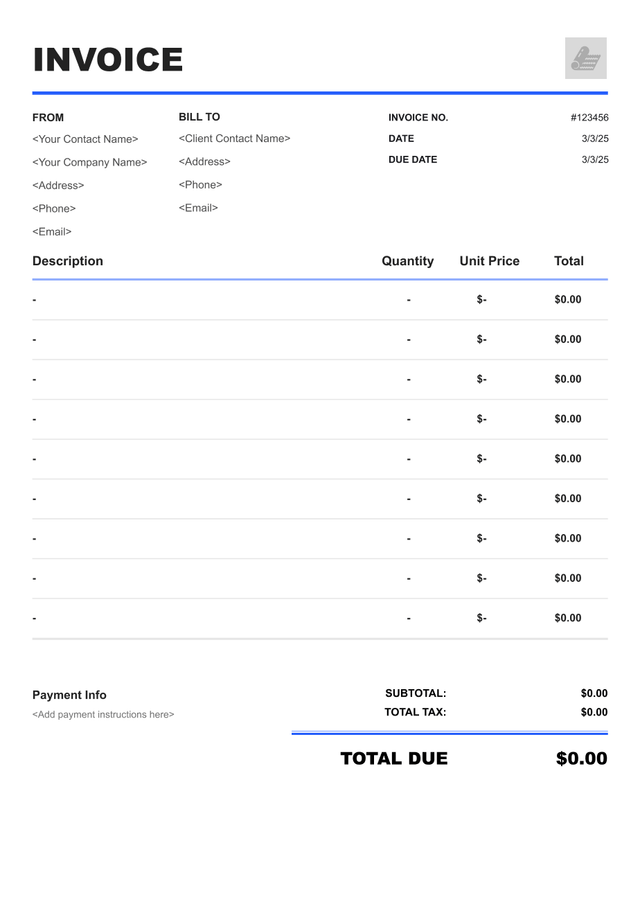
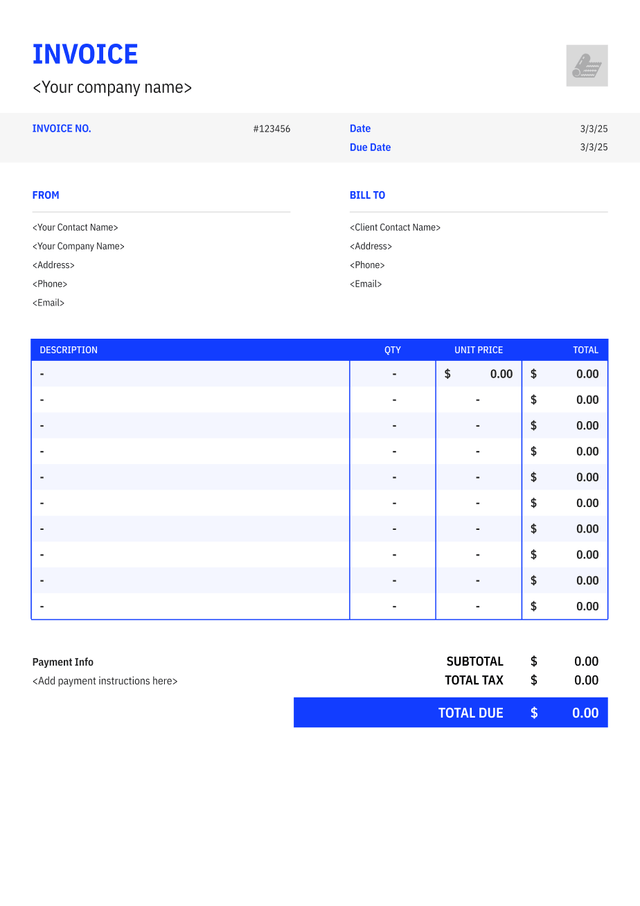
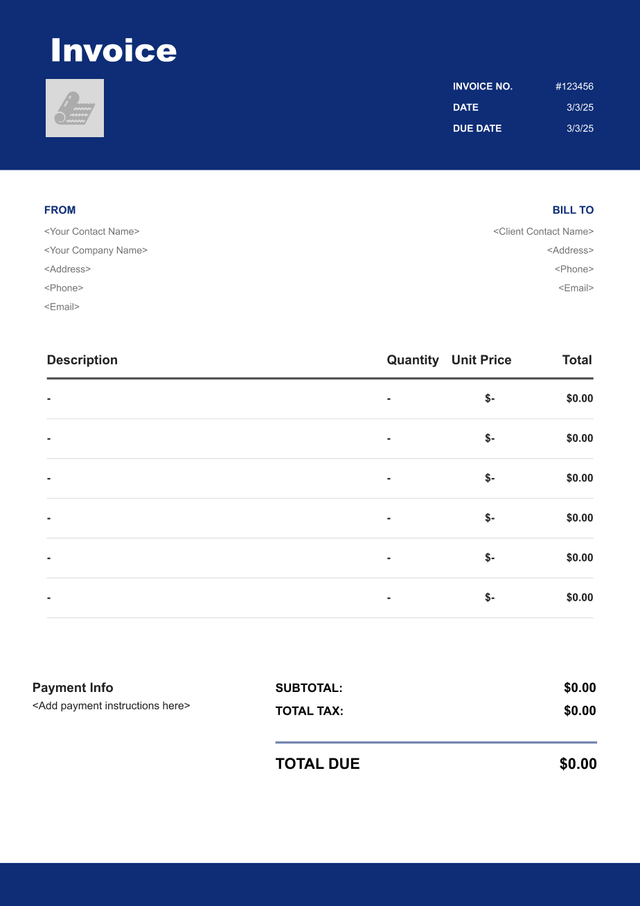
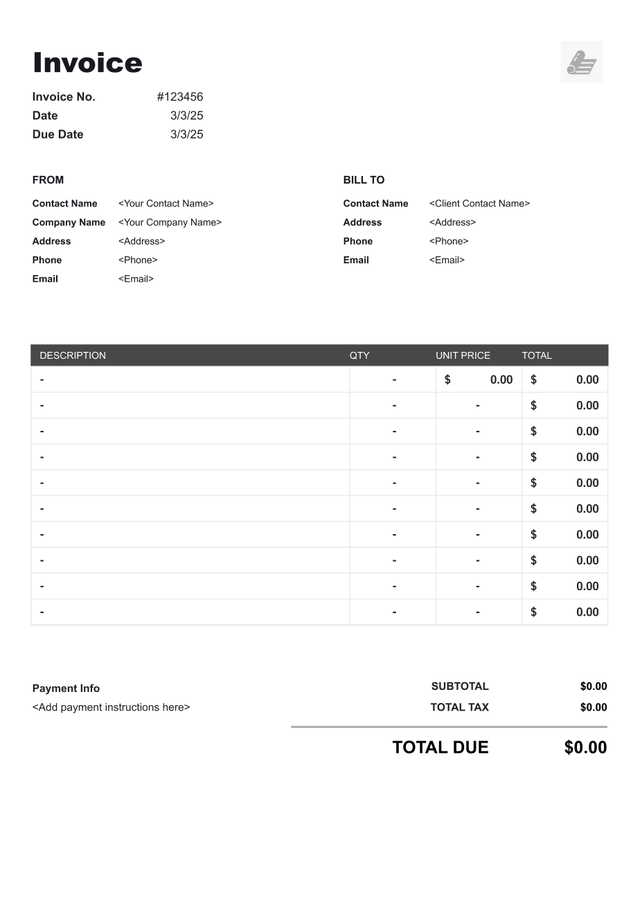
Choose the Right Lawn Care Invoice Template


What to Include on a Lawn Care Invoice
A lawn care invoice should clearly document the property, services performed, materials used, and payment details to help prevent billing disputes.
1.
Business information: Includes the lawn care company’s name, address, phone number, and email address.
2.
Client information: Includes the client’s name, address, phone number, and email address.
3.
Invoice and service details: Includes the invoice number and the date or date range when the service was performed.
4.
Service address: Identifies the property where the lawn care service was performed.
5.
Services performed: Describes the completed work, such as mowing, edging, trimming, fertilizing, aeration, or seasonal cleanup.
6.
Lawn or property size: Records the square footage or acreage of the serviced area.
7.
Service frequency: States whether the service is one-time, weekly, every two weeks, monthly, or part of a seasonal contract.
8.
Crew information: Identifies the technicians or crew members assigned to the job.
9.
Materials used: Lists fertilizers, seeds, mulch, pesticides, or other treatment materials applied, including their quantities.
10.
Work order or estimate number: Connects the invoice to the corresponding work order or estimate, if applicable.
11.
Billing items: Itemizes labor, materials, recurring lawn care services, and any additional service charges.
12.
Subtotal, taxes, and total amount due: Shows the charges before tax, the applicable tax amount, and the final amount the client must pay.
13.
Payment terms and due date: Specifies the payment deadline, accepted payment methods, and any payment instructions.
Common Lawn Care Services & Billing Items
How lawn care services are typically structured and billed.
Lawn Mowing
Regular cutting and maintenance of the lawn
Edging
Trimming and defining edges along walkways, driveways, and flower beds
Shrub & Hedge Trimming
Shaping and trimming shrubs, hedges, and bushes
Leaf Removal
Collection and removal of fallen leaves from the property
Weed Control
Application of weed-control treatments across the lawn
Fertilization
Application of fertilizer to promote lawn health and growth
Lawn Seeding
Overseeding an existing lawn or establishing a new lawn
Additional Labor
Crew work performed outside the standard service package
Green-Waste Disposal
Hauling and disposal of grass clippings, leaves, branches, and other yard debris


Reusable Billing Structure in Invoice Software
Use the items above to quickly create Lawn Care invoices in Invoice Zip.
Common Lawn Care Invoicing Mistakes
Common invoicing errors and how to avoid them in real-world lawn care jobs.
| Mistake | What Goes Wrong | How to Fix |
|---|---|---|
Service date is missing | Clients cannot confirm when the work was performed, which may delay payment or cause disputes. | Record the service date or service period on every invoice. |
Property measurements are incorrect | Incorrect square footage or acreage can result in overcharging, undercharging, or billing disputes. | Measure and verify the serviced area before calculating area-based charges. |
Material costs are omitted | Fertilizer, seed, and treatment costs may not be recovered, reducing the company’s profit. | List each material and its cost as a separate line item. |
Recurring service cycle is not stated | Clients may have difficulty matching the invoice to weekly, biweekly, monthly, or seasonal services. | Clearly state the service frequency and billing cycle on the invoice. |
Additional work is not confirmed | Clients may dispute charges for services that were not included in the original agreement. | Obtain written approval before performing and billing for additional work. |
Lawn Care Invoice Challenges and Solutions
Discover common lawn care invoicing challenges and practical ways to improve pricing accuracy, scheduling, and payment collection.
| Challenge | Solution |
|---|---|
Quoting a job sight unseen can underestimate the property size, weed conditions, terrain, or amount of work required. | Verify the property conditions before quoting and clearly state that work outside the agreed scope will incur additional charges. |
Recurring services can be difficult to manage when clients reschedule frequently or bad weather affects multiple appointments. | Use batch notifications and establish weather-delay and rescheduling rules in advance. |
Without standardized pricing, trimming, weeding, and debris-removal jobs may take longer and cost more than originally estimated. | Establish consistent pricing rules based on property size, labor hours, shrub count, treatment area, and debris volume. |
Payments received through cash, checks, Venmo, and other channels can be difficult to track and reconcile. | Provide a unified payment channel whenever possible and record the payment method, transaction reference, and payment status on each invoice. |
Last-minute cancellations can cause disputes when the service agreement does not clearly state whether a cancellation fee applies. | Establish clear cancellation terms in the service agreement and consistently follow the agreed cancellation process. |
FAQs About Lawn Care Invoicing
Q: How is lawn care typically billed?
Lawn care is usually billed per visit or according to the size of the serviced property.
- Per-visit pricing → commonly used for mowing and routine maintenance
- Area-based pricing → calculated by square footage or acreage
- Example → Weekly mowing for a 1/4-acre property = $45 per visit
Q: How is the fertilization fee calculated?
Fertilization charges are typically based on the lawn’s square footage and the cost of the materials applied.
- Record the treated area
- State the application rate
- List fertilizer materials separately
- Example → 5,000 sq. ft. × $0.03/sq. ft. + $25 in fertilizer materials = $175
Q: How should a seasonal contract be invoiced?
Seasonal contracts may be invoiced monthly or according to the service and payment cycle stated in the agreement.
- State the covered service period
- Show the number of completed visits
- Identify any services outside the contract
- Example → Four monthly mowing visits × $45 per visit = $180
Q: How are additional services billed?
Services outside the original package or agreement should appear as separate invoice line items.
- Describe the additional work
- Show the quantity, rate, and total charge
- Obtain the client’s approval before performing the work
- Example → Additional hedge trimming = $65
Q: Is it necessary to record the lawn size?
Yes. Recording the lawn size is recommended when property measurements are used to calculate charges.
- Record the square footage or acreage
- Identify the specific area that was serviced
- Verify the measurement before issuing an area-based quote
- Example → Property measured on-site: 6,200 sq. ft.
Q: Should material costs be shown separately?
Yes. Materials should be itemized separately from labor and service charges.
- Identify each material used
- Show the quantity and cost
- Separate material costs from hourly labor
- Example → Grass seed and soil amendments = $40; labor: 2 hours × $50/hour = $100
Q: What happens if a client cancels a service?
Cancellations should be handled according to the terms stated in the service agreement.
- State the required notice period
- Disclose any applicable cancellation fee
- Record the cancellation date and reason
- Example → Cancellation within 24 hours of the scheduled visit = $25 fee
Q: How can billing disputes be avoided?
Detailed service records and supporting photos help clients verify the work completed.
- Record the service date and completed tasks
- Document materials and additional work
- Attach before-and-after photos when appropriate
- Example → Before-and-after photos attached to Invoice #1042
Other Free Resources

Try Invoice Zip Today
Start Sending Invoices, Building Reports, Saving Office
Time and Get Paid Faster.