

Nonprofit Invoice Template
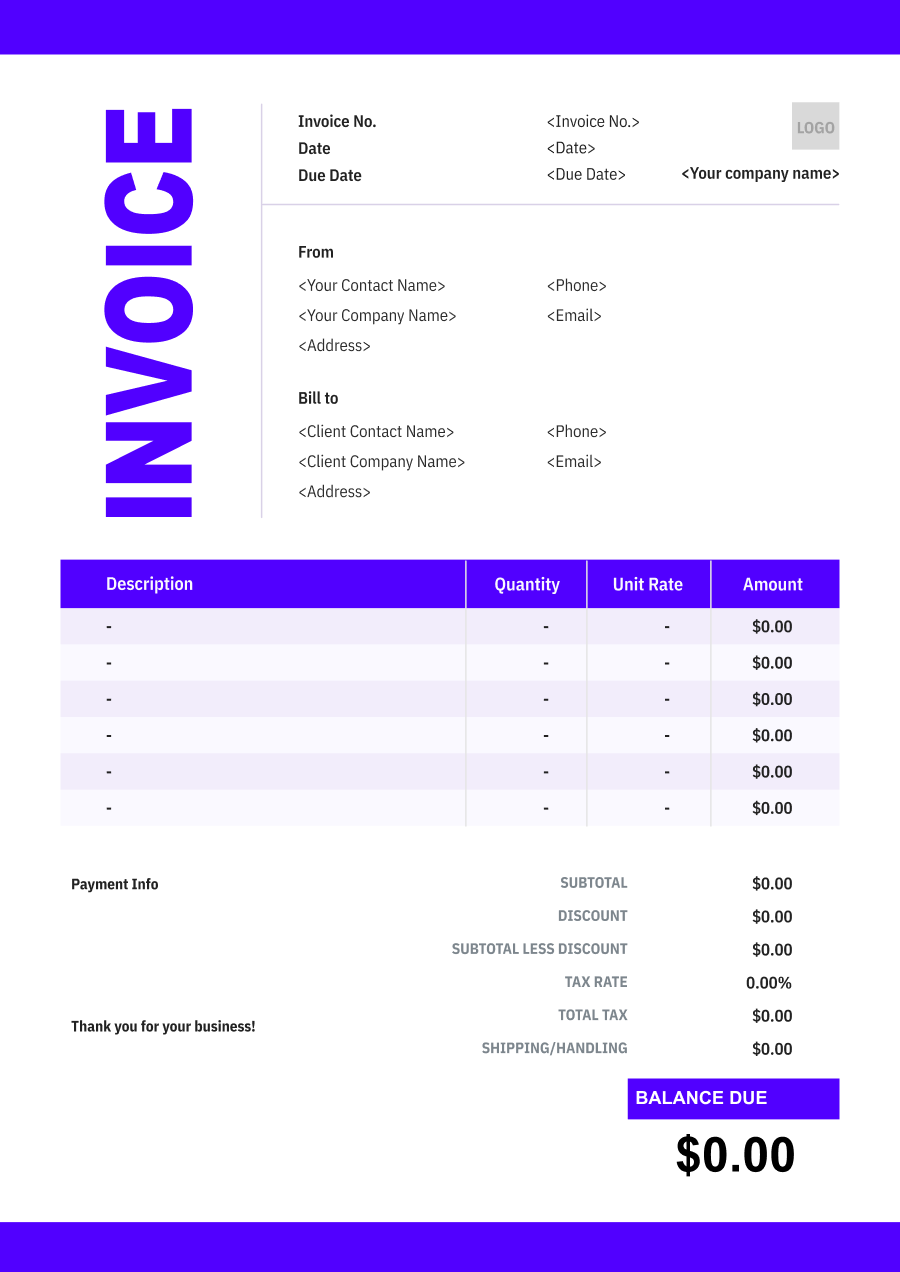
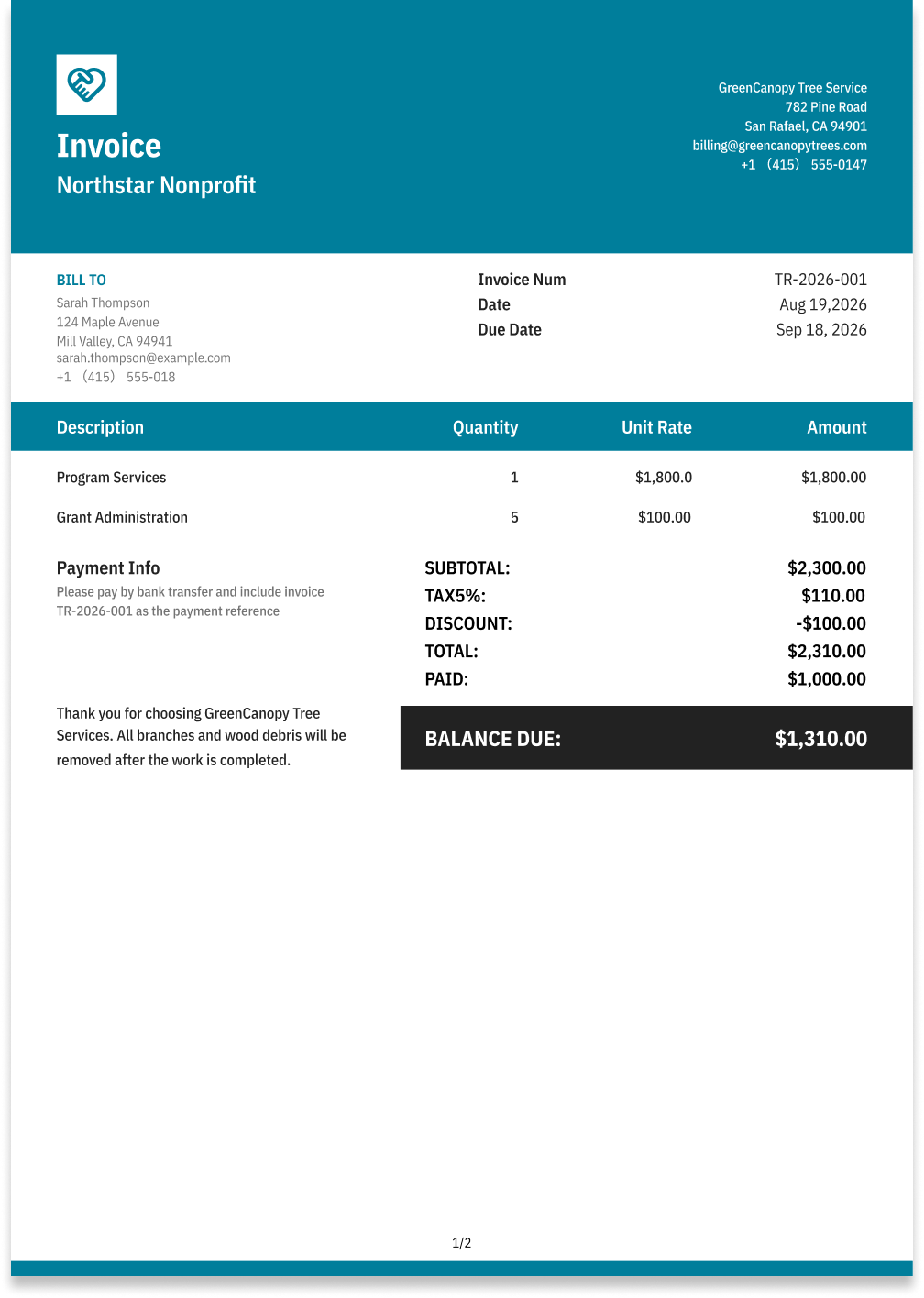
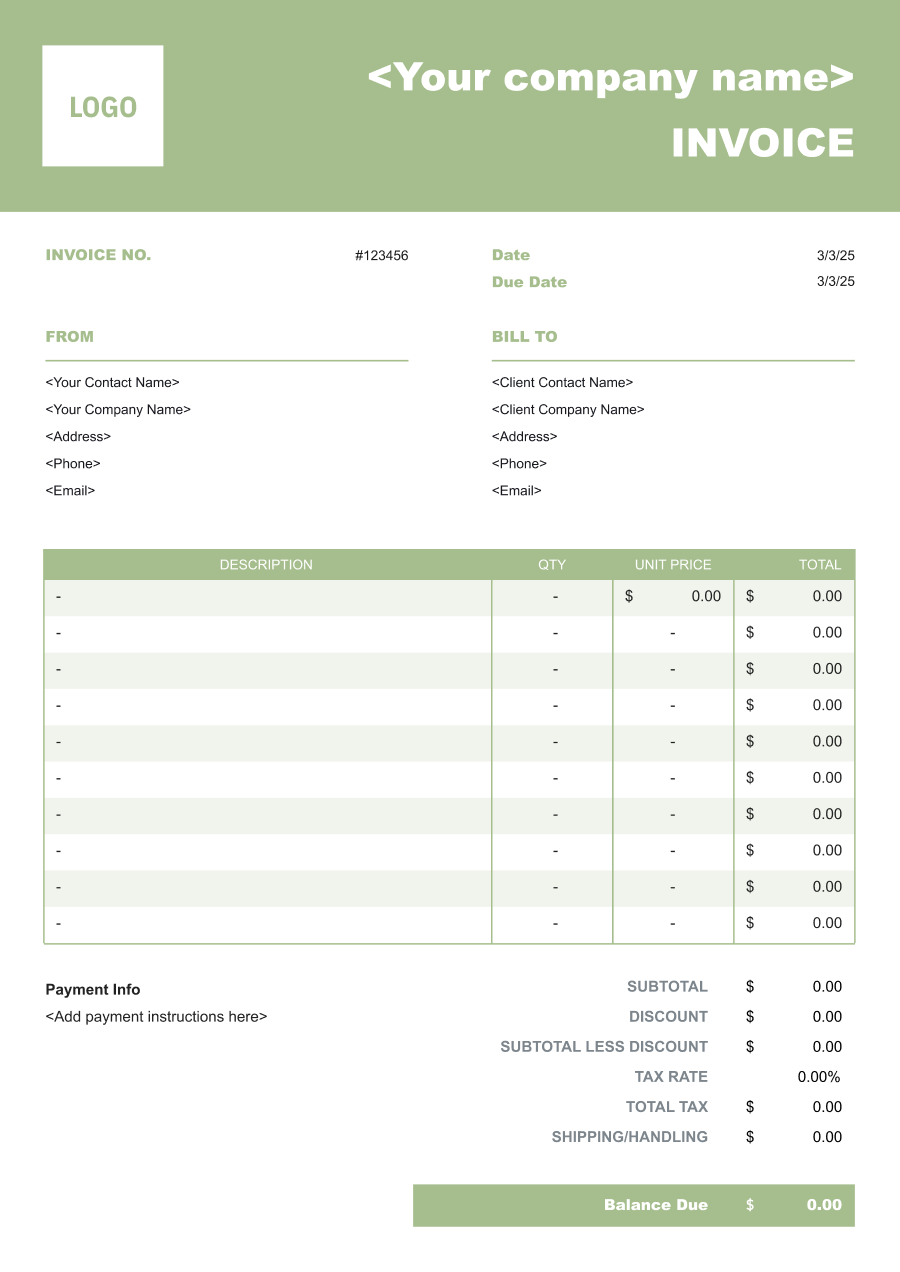
Create a professional nonprofit invoice with editable invoice templates for services, programs, events, supplies, grants, and other organizational expenses.
Choose the Best Invoice Template for Your Nonprofit Business


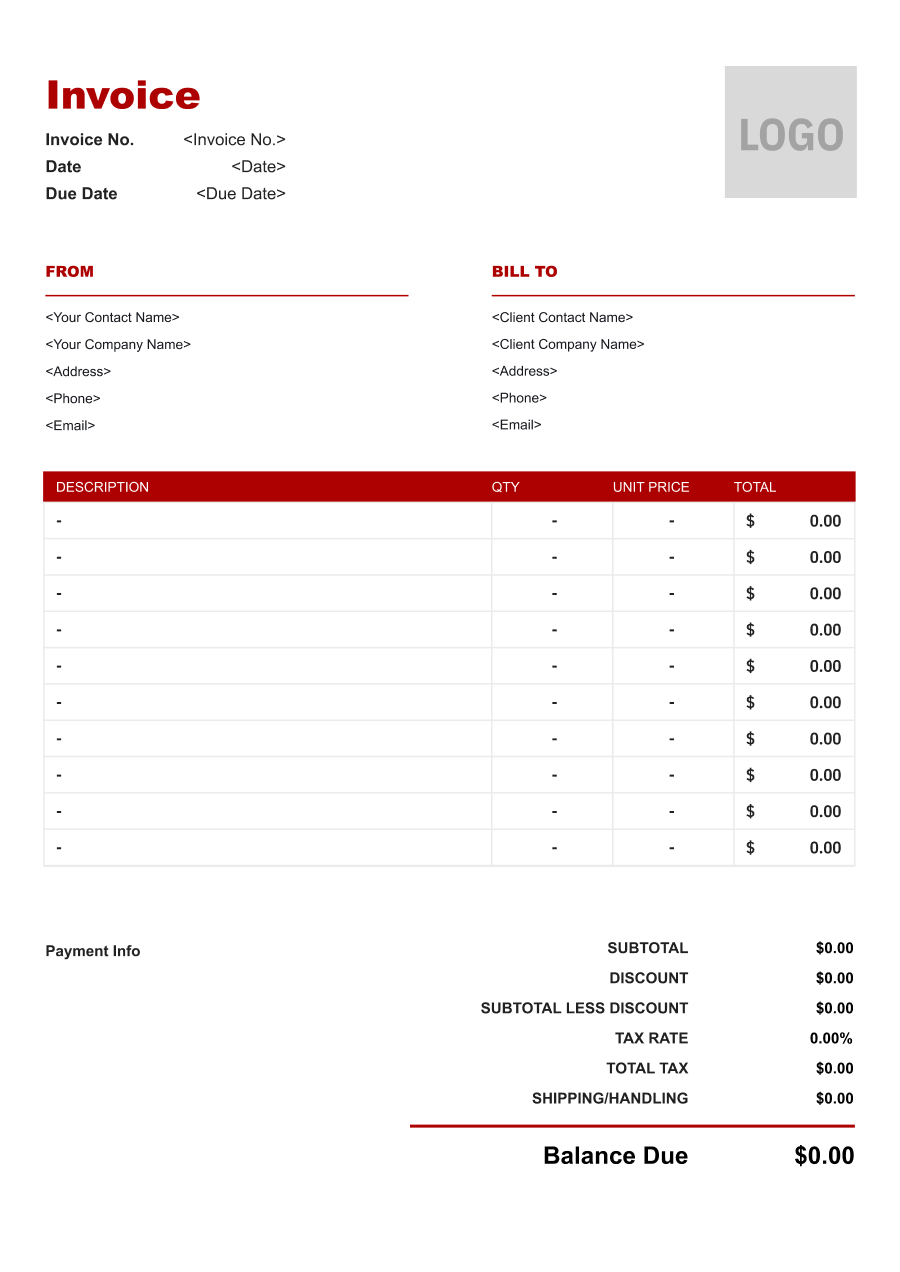
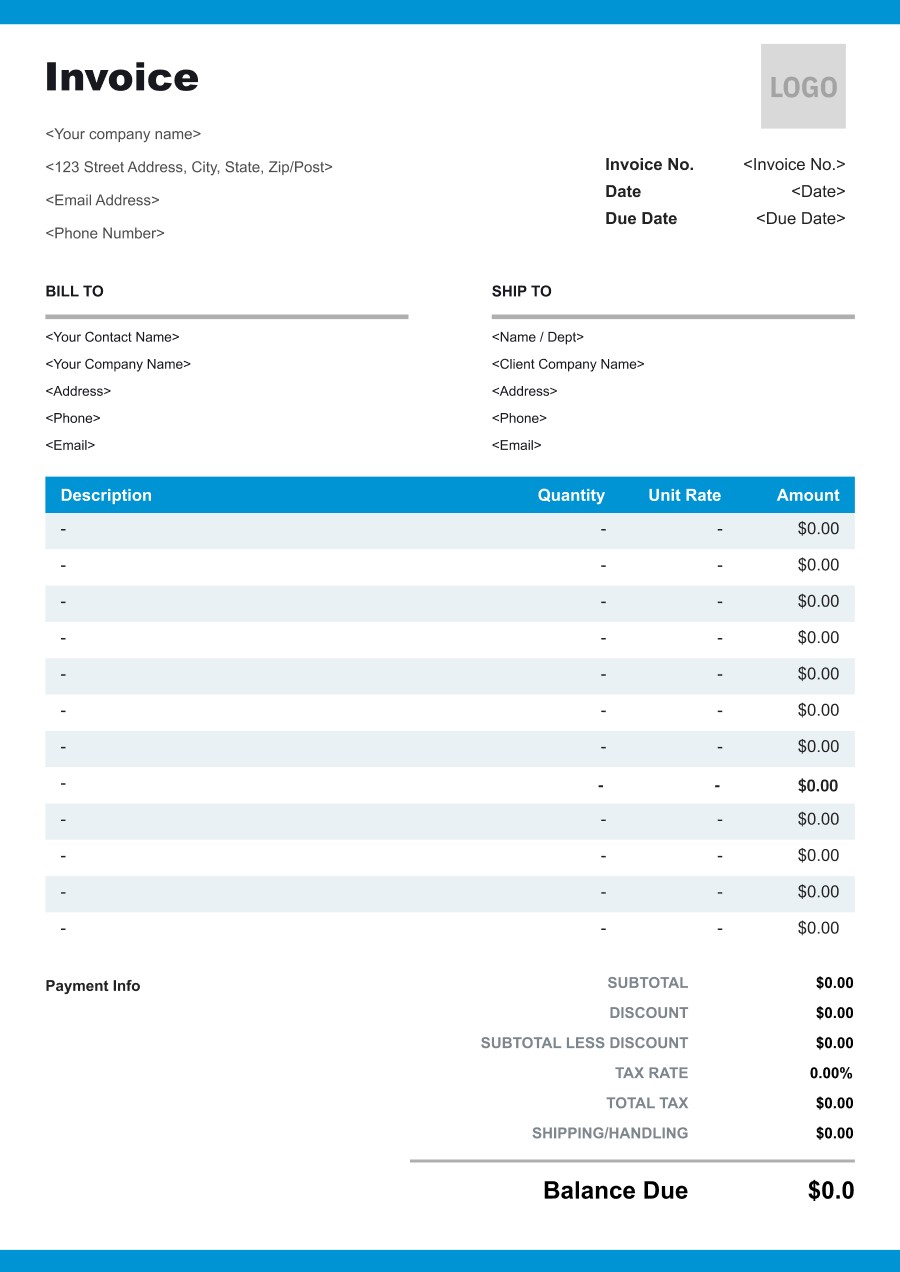
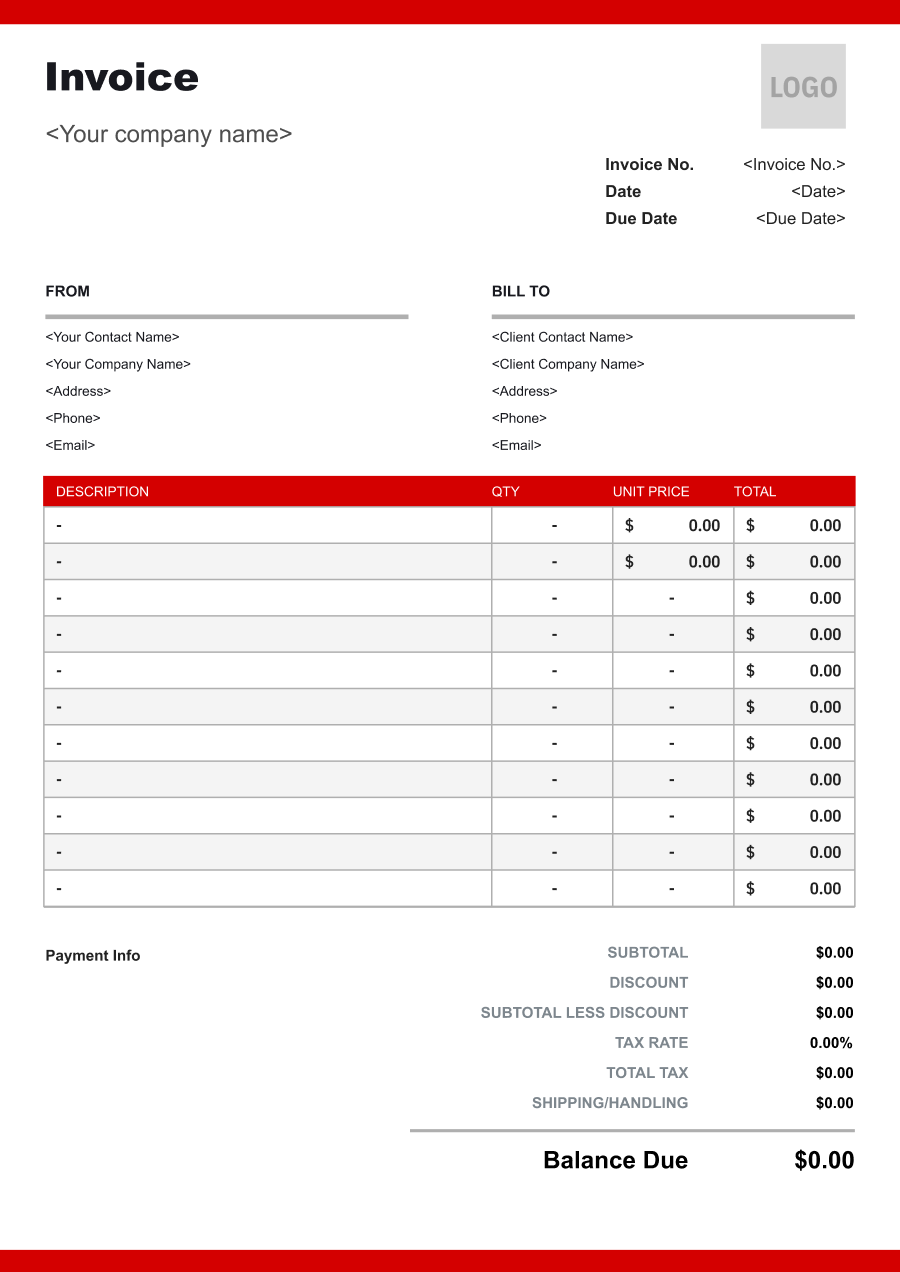
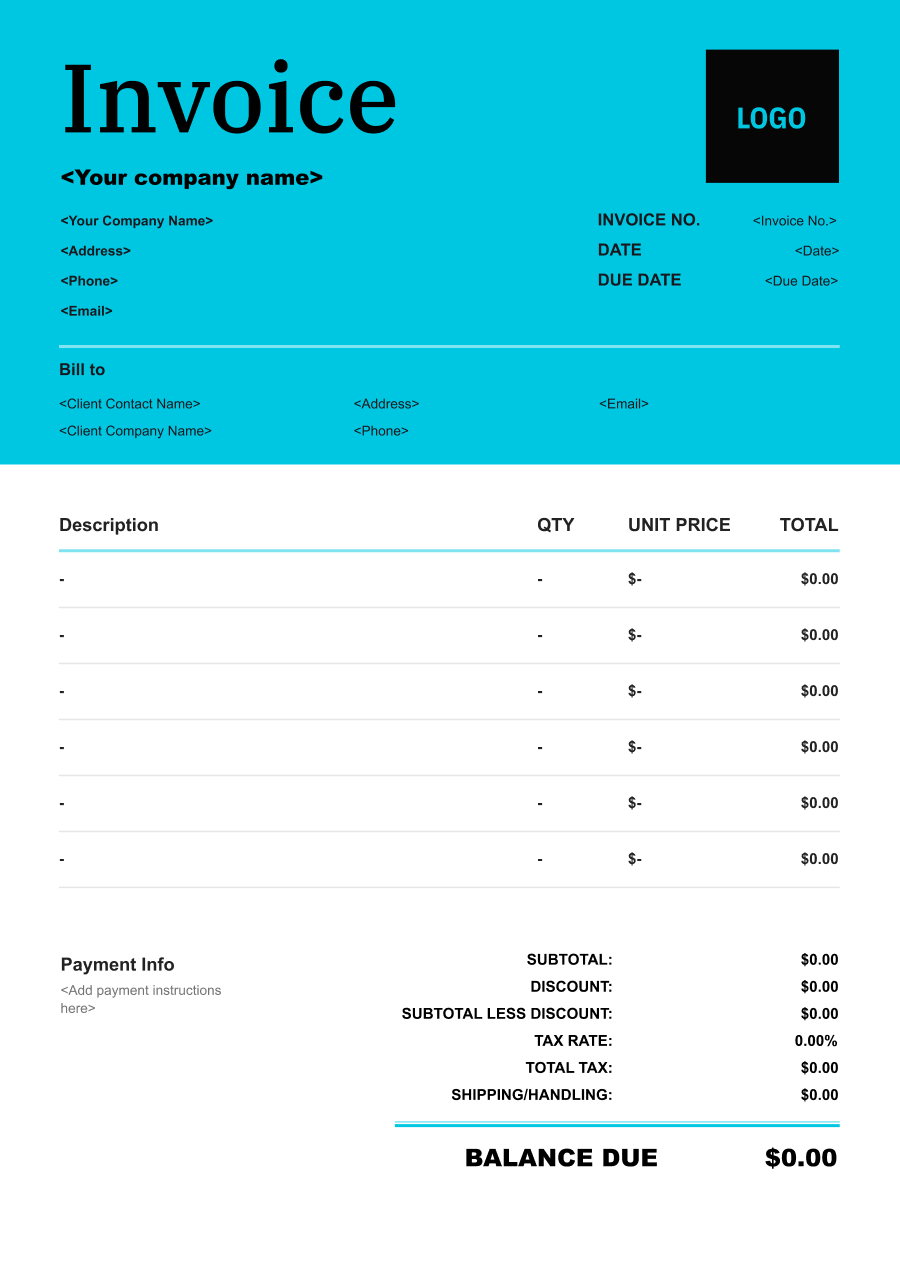
Create A Professional
Nonprofit Invoice in Minutes
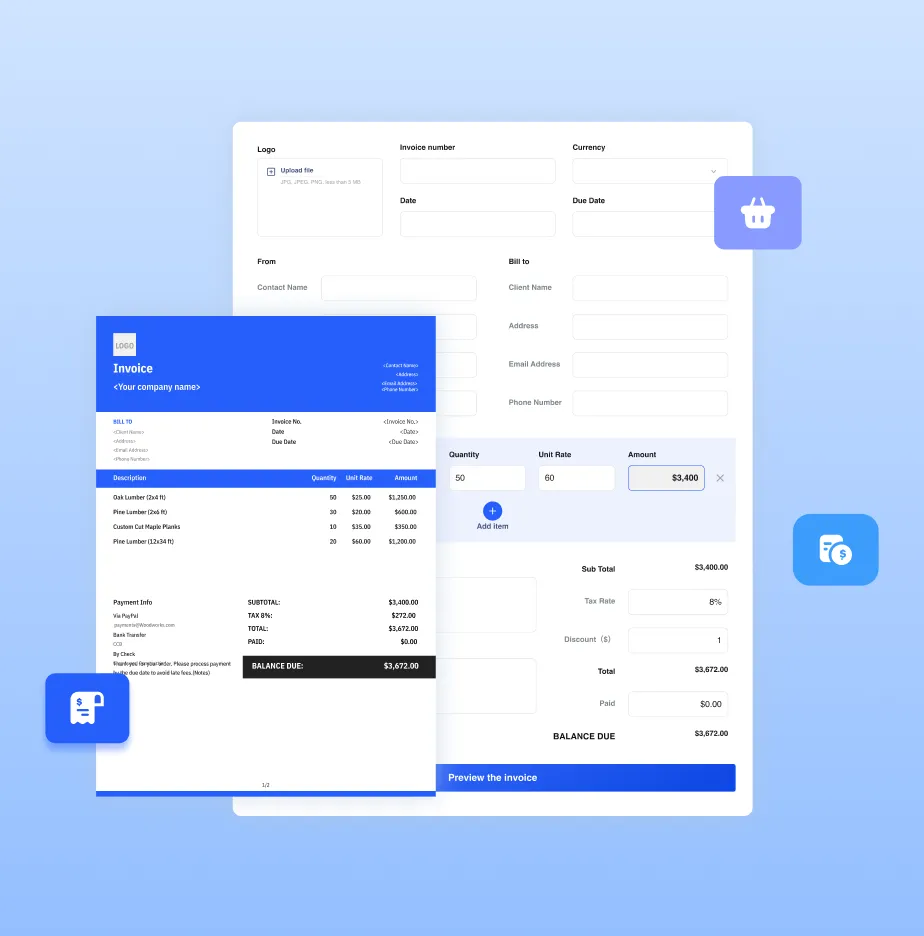
Add your nonprofit business and client details, itemize the products or services provided, and generate a professional invoice when you are ready.
1
Invoice details
Set the document identity, dates and currency.
Logo

Upload file
JPG, JPEG, PNG, less than 5 MB
Invoice number
Currency
USD
Issue date
Due date
2
Business & client
Add the details your client needs to identify both parties
From
Company Name
Contact name
Address
Email Address
Phone Number
Bill To
Client name
Address
Email Address
Phone Number
3
Products & services
Itemize what you’re charging for. Totals update automatically.
4
Totals & payment
Apply adjustments and tell your client how to pay.
Payment instructions
Notes
Sub Total
$0.00
Tax Rate
%
Discount
$
Total
$0.00
Amount paid
$
Balance Due
$0.00
What to include in Nonprofit Invoice
A clear nonprofit invoice helps prevent disputes and ensures timely payment. Use this checklist to include the essential details.
- 1
Business Header & Contact
Company name, logo, phone number, email address, and physical business location.
- 2
Client Contact Information
Client's full name or business entity name, billing address, phone number, and email.
- 3
Invoice Metadata
Unique invoice number, invoice issue date, and payment due date (e.g., Net 15 / Due upon receipt).
- 4
Cost Summary & Taxes
Subtotal for services, local sales taxes (if applicable), applied discounts, and final bolded Total Due.
- 5
Deposit & Balance Tracking
Original estimate total, pre-paid deposit deductions (e.g., 'Less Deposit Received: -$500'), and remaining net balance due.
- 6
Payment Instructions
Accepted payment methods, including direct online payment links (Credit/ACH), check mailing address, or bank transfer details.
- 7
Program or Service Details
Identify the program, event, service, grant activity, or project associated with the invoice.
- 8
Donor, Client or Funding Reference
Include the appropriate customer, donor, grant, contract, or funding reference when the invoice relates to a specific source of funding.
- 9
Program Costs & Services
Itemize services, supplies, event costs, training, consulting, or other expenses being billed rather than using a general nonprofit-service description.
- 10
Funding Restrictions & Payment Details
When relevant, identify the applicable grant, contract, purchase order, restricted funding category, and payment instructions.
Common Nonprofit Services & Billing Items
How Nonprofit charges are typically structured and billed.
Common Services
What's Included
Billing Items
Program Services
Program or service type, Dates or sessions, Crew size, Hours worked, and Service location
Program/Service FeesLabor
Consulting Services
Program or service type, Dates or sessions, Material type, Quantity used, and Service location
Program/Service FeesMaterials
Training Programs
Crew size, Hours worked, Material type, Quantity used, and Session date
LaborMaterials
Event Services
Program or service type, Dates or sessions, Crew size, Hours worked, Expense type, and Date and vendor
Program/Service FeesLaborReimbursable Expenses
Administrative Services
Crew size, Hours worked, Expense type, Date and vendor, and Service location
LaborReimbursable Expenses
Grant/Project Services
Program or service type, Dates or sessions, Material type, Quantity used, Expense type, and Date and vendor
Program/Service FeesMaterialsReimbursable Expenses
Community Outreach
Program or service type, Dates or sessions, Crew size, Hours worked, Material type, and Quantity used
Program/Service FeesLaborMaterials
Program/Service Fees: Charges for nonprofit programs, community services, or contracted service delivery.
Labor: Charges for hands-on work, technician time, crew time, or professional service hours.
Materials: Charges for job materials supplied by the contractor or handyman.
Reimbursable Expenses: Approved out-of-pocket project costs billed back to the customer.
Nonprofit Invoicing Tips
Nonprofit costs vary by service scope, pricing method, and additional requirements. A detailed invoice helps customers understand every charge and reduces payment disputes.
1
Connect Expenses to Programs
Nonprofits often manage several programs with different funding sources. Best practice: identify the program or project associated with each major charge to simplify internal accounting.
2
Separate Restricted and General Funding
Funding may have specific permitted uses. Best practice: reference the applicable grant, contract, or funding category when a billed expense must be allocated to a restricted source.
3
Use Clear Supporting References
Grantors and organizational customers may require supporting documentation. Best practice: include purchase order, grant, contract, or project references needed to verify the invoice.
4
Keep Program and Administrative Costs Distinct
Some organizations need to report program spending separately from administrative expenses. Best practice: classify applicable charges consistently to support financial reporting and grant requirements.


Reusable Billing Structure in Invoice Software
Use the items above to quickly create a Nonprofit Invoice Template in Invoice Zip.
FAQs about Nonprofit Invoicing
Q: How should a nonprofit invoice distinguish program fees from donations or contributions?
A: Program or service fees should be separated from voluntary donations or contributions. This distinction helps maintain accurate financial records and makes the purpose of each payment clear.
Q: How should a nonprofit invoice a corporate sponsor for an event or program?
A: Sponsorship services or benefits can be listed according to the sponsorship agreement, such as event recognition, promotional placement, or program support. The invoice should distinguish these charges from charitable donations.
Q: How should a nonprofit invoice membership fees or recurring program participation?
A: The invoice can identify the membership or program period and applicable recurring fee. Any optional donations or additional program charges can be shown separately.
Q: How should a nonprofit invoice reimbursable expenses paid on behalf of a partner organization?
A: Approved expenses can be listed separately from the nonprofit's service or program fees. Examples include event supplies, travel, venue costs, or materials purchased for a joint project.
Q: How should a nonprofit invoice a grant-funded project or contracted service?
A: The invoice can identify the project, funding period, completed activities, and amount being requested. Separating project charges from unrestricted donations helps maintain clearer financial records.
Other Free Resources

Try Invoice Zip Today
Start Sending Invoices, Building Reports, Saving Office
Time and Get Paid Faster.