


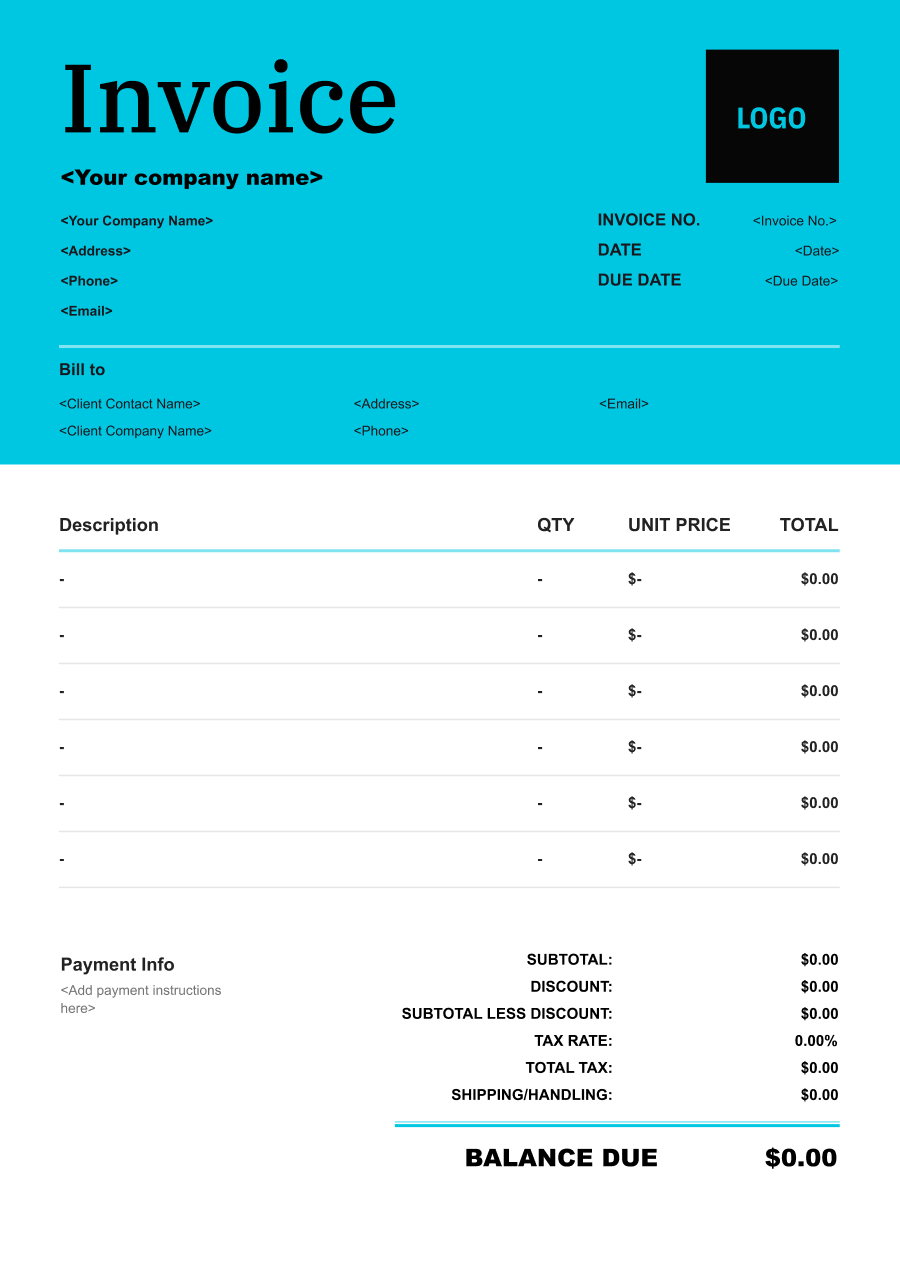
Subcontractor Invoice Template
Create a professional subcontractor invoice with editable invoice templates for labor, project tasks, materials, equipment, progress work, and agreed job charges.
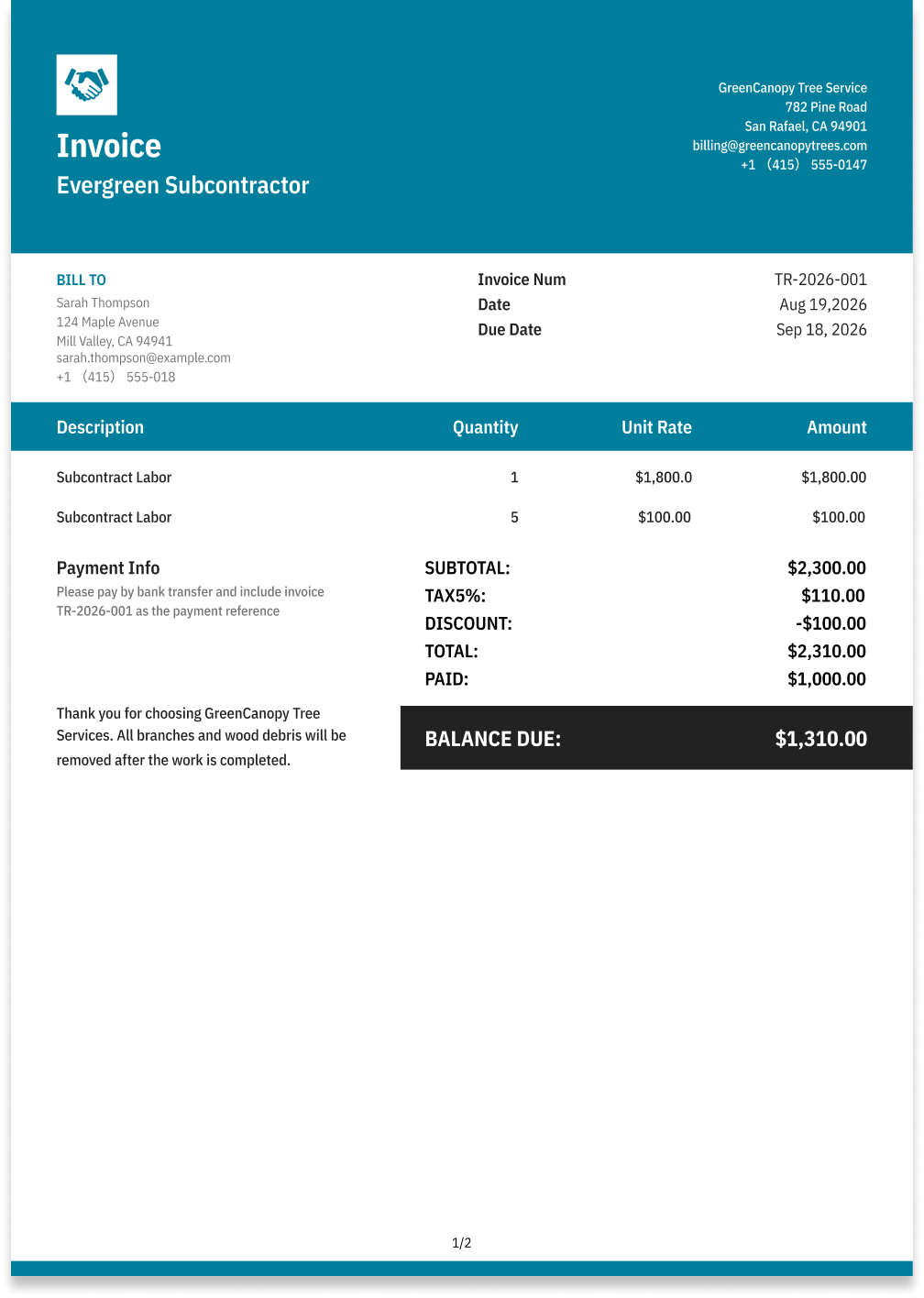
Choose the Best Invoice Template for Your Subcontractor Business


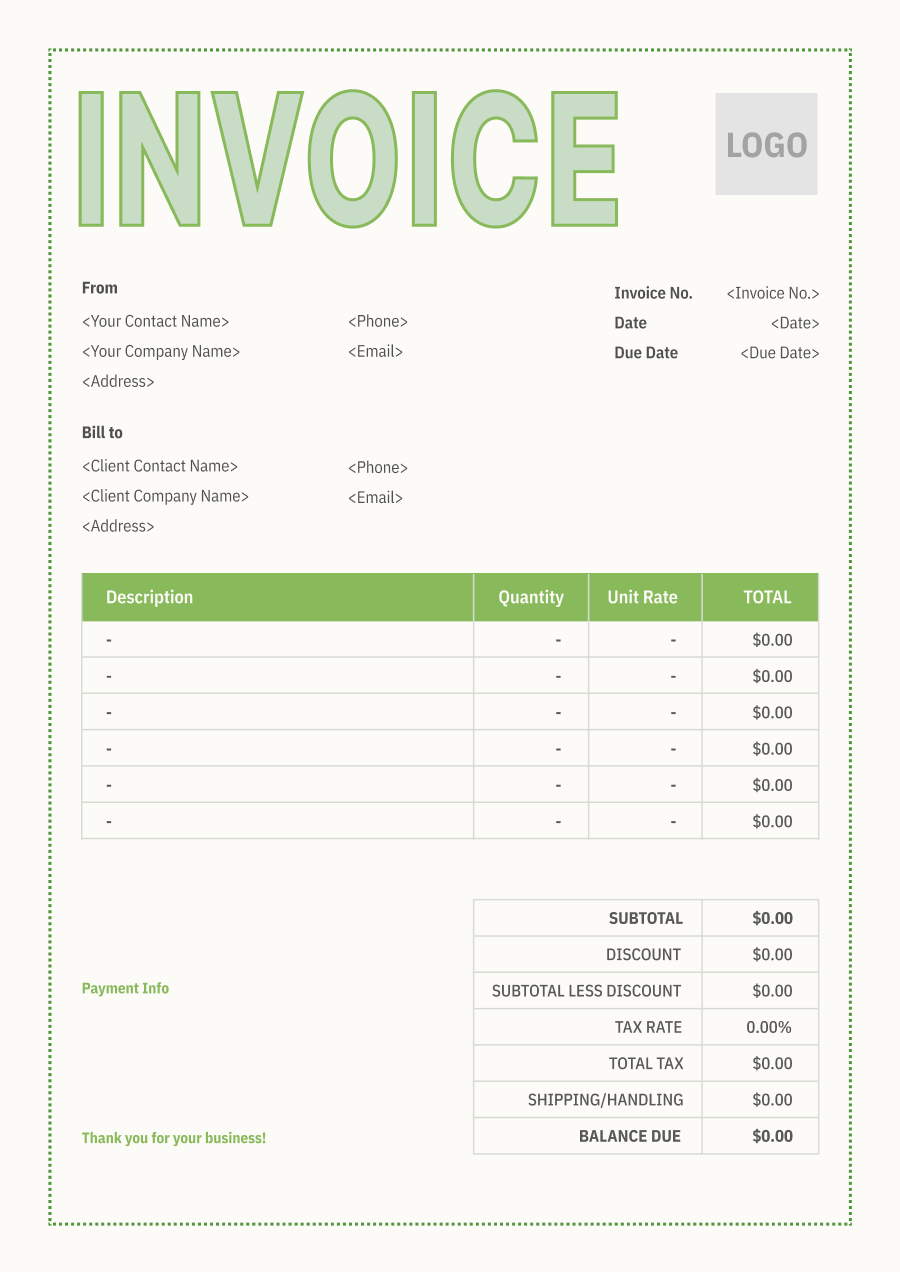
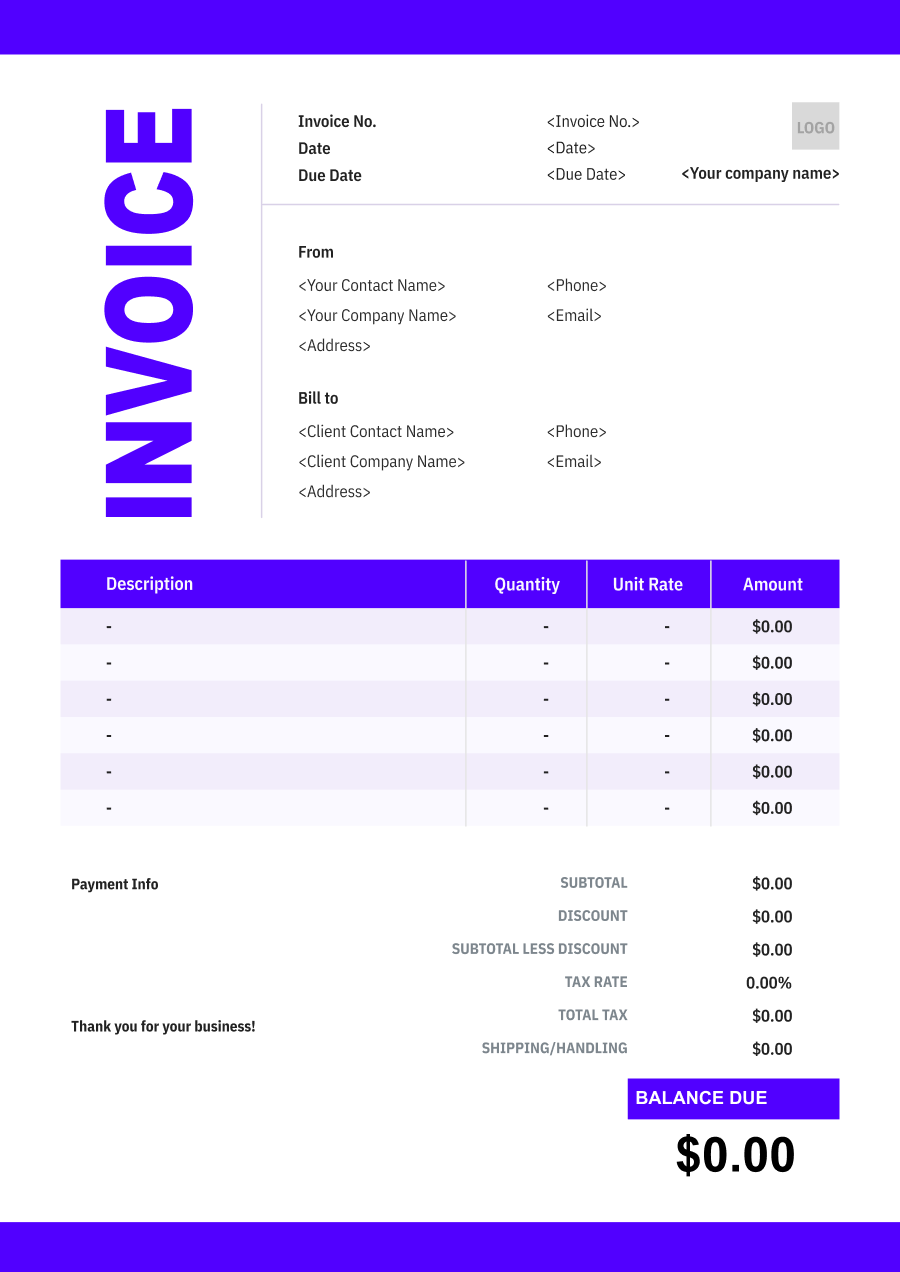
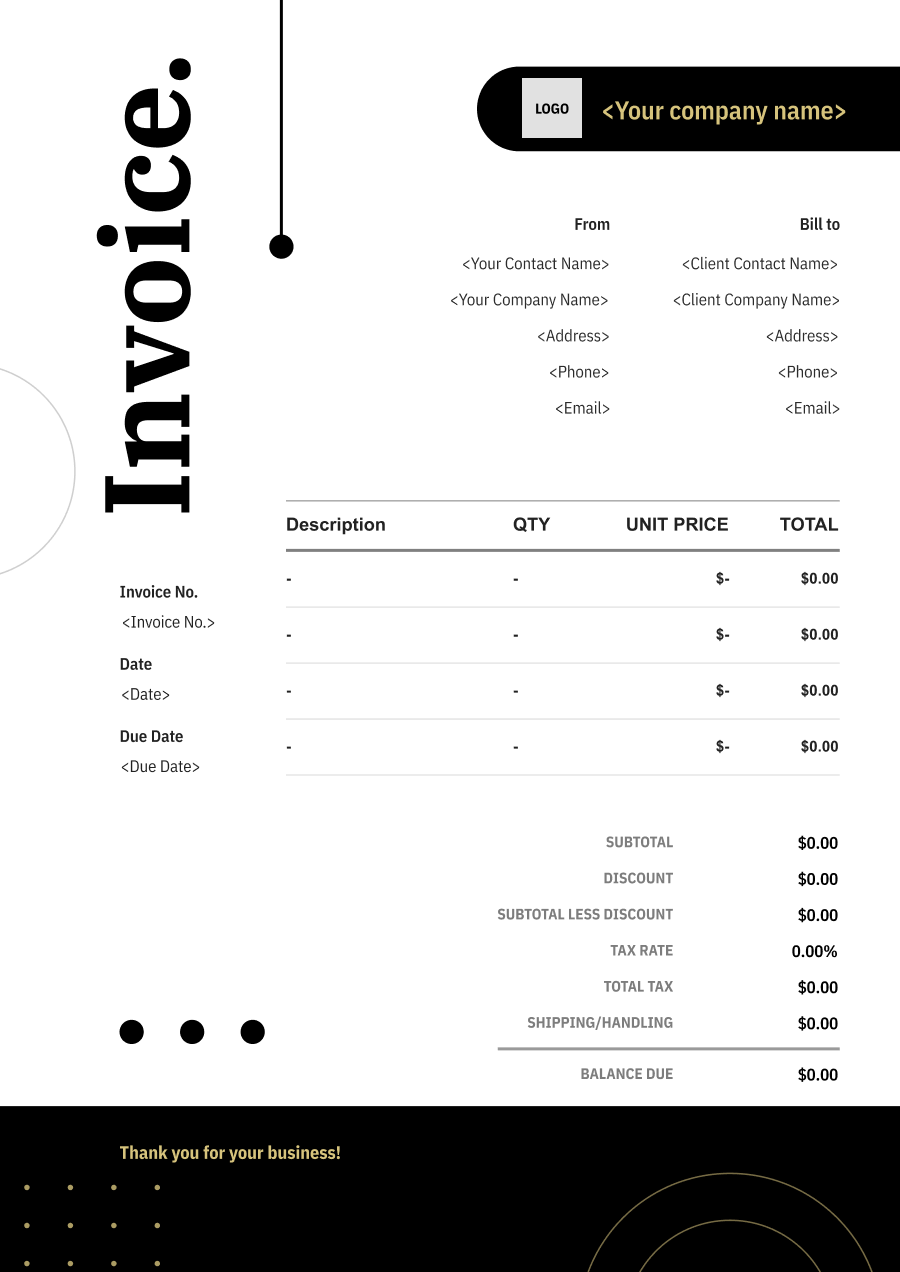
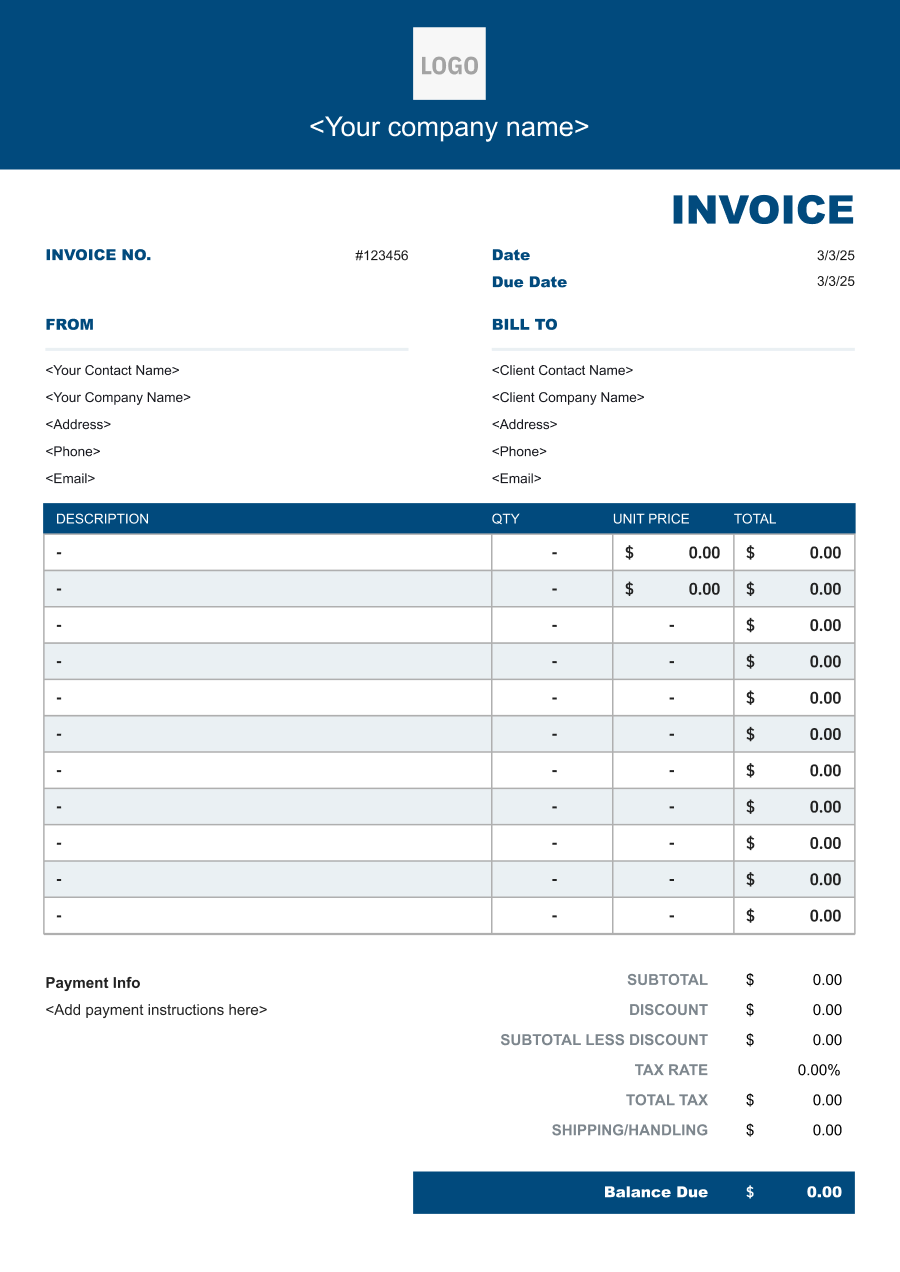
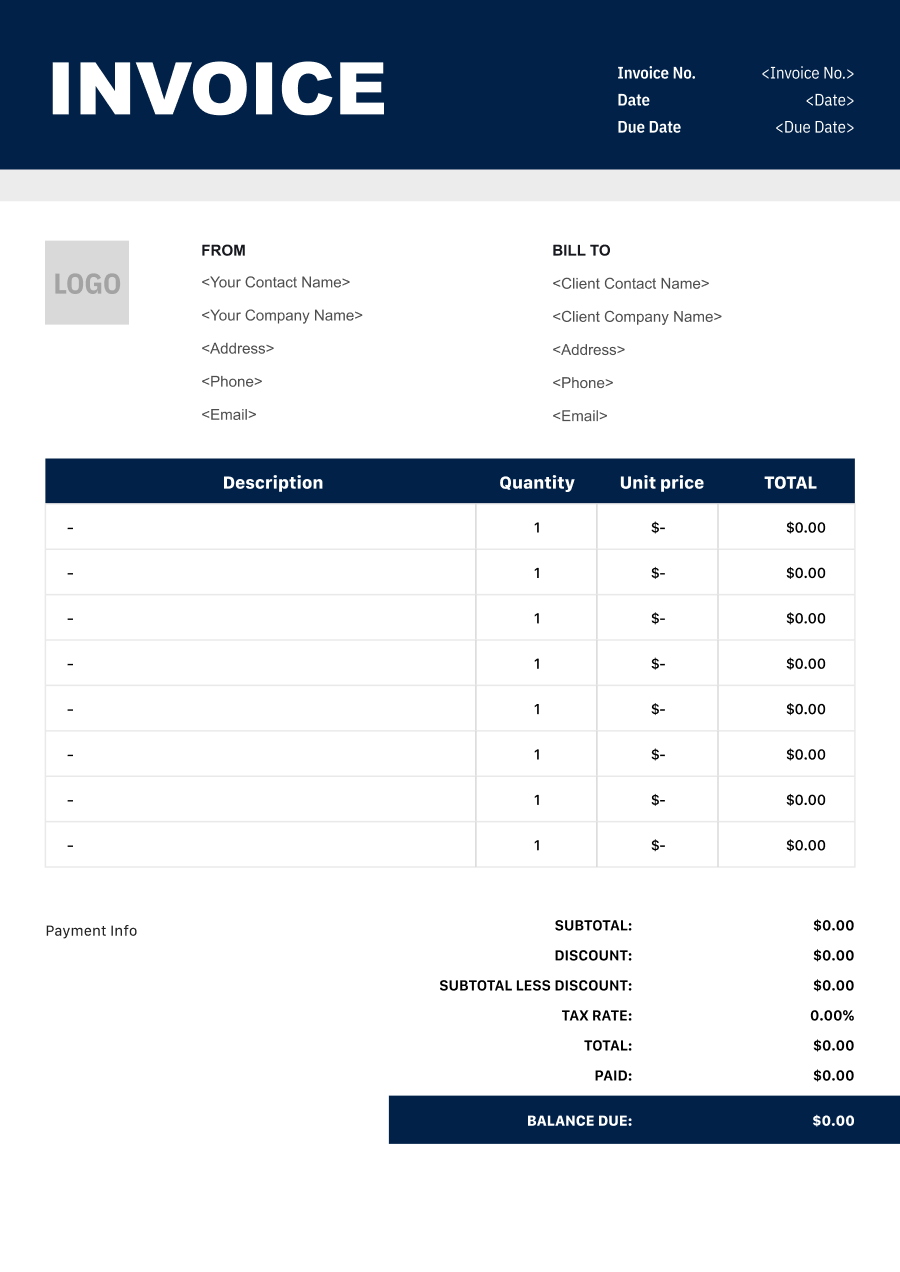
Create A Professional
Subcontractor Invoice in Minutes
Add your subcontractor business and client details, itemize the products or services provided, and generate a professional invoice when you are ready.
1
Invoice details
Set the document identity, dates and currency.
Logo

Upload file
JPG, JPEG, PNG, less than 5 MB
Invoice number
Currency
USD
Issue date
Due date
2
Business & client
Add the details your client needs to identify both parties
From
Company Name
Contact name
Address
Email Address
Phone Number
Bill To
Client name
Address
Email Address
Phone Number
3
Products & services
Itemize what you’re charging for. Totals update automatically.
4
Totals & payment
Apply adjustments and tell your client how to pay.
Payment instructions
Notes
Sub Total
$0.00
Tax Rate
%
Discount
$
Total
$0.00
Amount paid
$
Balance Due
$0.00
What to include in Subcontractor Invoice
A clear subcontractor invoice helps prevent disputes and ensures timely payment. Use this checklist to include the essential details.
- 1
Business Header & Contact
Company name, logo, phone number, email address, and physical business location.
- 2
Client Contact Information
Client's full name or business entity name, billing address, phone number, and email.
- 3
Invoice Metadata
Unique invoice number, invoice issue date, and payment due date (e.g., Net 15 / Due upon receipt).
- 4
Cost Summary & Taxes
Subtotal for services, local sales taxes (if applicable), applied discounts, and final bolded Total Due.
- 5
Deposit & Balance Tracking
Original estimate total, pre-paid deposit deductions (e.g., 'Less Deposit Received: -$500'), and remaining net balance due.
- 6
Payment Instructions
Accepted payment methods, including direct online payment links (Credit/ACH), check mailing address, or bank transfer details.
- 7
Project & Contract Reference
Identify the main project, job site, purchase order, work order, or subcontract agreement associated with the billed work.
- 8
Trade Work & Completed Scope
Describe the specific trade work completed, such as electrical, plumbing, framing, concrete, drywall, roofing, or another contracted scope.
- 9
Labor, Units or Progress
State the labor hours, completed units, percentage of work, milestone, or other quantity used to calculate the subcontractor's payment.
- 10
Materials, Retainage & Previous Payments
Show materials supplied, approved extras, retainage when applicable, previous payments, and other adjustments affecting the current amount due.
Common Subcontractor Services & Billing Items
How Subcontractor charges are typically structured and billed.
Common Services
What's Included
Billing Items
Trade Labor
Subcontractor or crew, Hours or scope, Material type, Quantity used, and Service date
Subcontract LaborMaterials
Installation Work
Subcontractor or crew, Hours or scope, Equipment type, Usage hours or rental period, and Service location
Subcontract LaborEquipment
Repair Work
Material type, Quantity used, Equipment type, Usage hours or rental period, and Service location
MaterialsEquipment
Site Work
Subcontractor or crew, Hours or scope, Material type, Quantity used, Change-order scope, and Hours or quantity
Subcontract LaborMaterialsChange-Order Work
Maintenance Work
Material type, Quantity used, Change-order scope, Hours or quantity, and Service location
MaterialsChange-Order Work
Additional Scope Work
Subcontractor or crew, Hours or scope, Equipment type, Usage hours or rental period, Change-order scope, and Hours or quantity
Subcontract LaborEquipmentChange-Order Work
Punch List Work
Subcontractor or crew, Hours or scope, Material type, Quantity used, Equipment type, and Usage hours or rental period
Subcontract LaborMaterialsEquipment
Subcontract Labor: Charges for trade or specialty labor performed by the subcontractor.
Materials: Charges for job materials supplied by the contractor or handyman.
Equipment: Charges for radios, monitoring devices, protective equipment, or other security equipment.
Change-Order Work: Charges for approved changes or additions to the original scope.
Subcontractor Invoicing Tips
Subcontractor costs vary by service scope, pricing method, and additional requirements. A detailed invoice helps customers understand every charge and reduces payment disputes.
1
Reference the Prime Contract or Work Order
General contractors may manage many subcontractors across several projects. Best practice: include the project and work-order reference so the invoice can be routed to the correct job.
2
Tie Billing to Completed Work
Progress payments should correspond to measurable work. Best practice: describe completed quantities, milestones, or percentage of completion instead of using a generic trade-service charge.
3
Separate Change Orders from Base Scope
Construction work frequently changes after the original agreement. Best practice: identify approved change orders separately from the contracted scope and reference the relevant authorization.
4
Track Retainage and Prior Billing
Subcontract payment calculations may involve retainage and previous progress invoices. Best practice: show current work, prior payments, retainage, and current balance clearly.


Reusable Billing Structure in Invoice Software
Use the items above to quickly create a Subcontractor Invoice Template in Invoice Zip.
FAQs about Subcontractor Invoicing
Q: How should a subcontractor invoice a general contractor for completed project work?
A: The invoice should identify the project, work completed, billing period or milestone, and amount due. This allows the general contractor to match the invoice to the subcontracted scope of work.
Q: How should a subcontractor invoice labor separately from materials?
A: Labor hours or project labor can be listed separately from materials such as lumber, wiring, fixtures, or other job supplies. This gives the contractor a clearer breakdown of the subcontractor's costs.
Q: How should a subcontractor bill for approved change-order work?
A: Change-order work should be listed separately from the original contracted scope. A brief description of the added work helps the general contractor match the charge to the approved project change.
Q: How should a subcontractor show retainage or amounts withheld from a construction payment?
A: The invoice can show the gross amount earned, applicable retainage, previous payments, and current amount due. This creates a clear record of the amount withheld until the contractual release conditions are met.
Q: How should a subcontractor use progress invoices on a long-term construction project?
A: Each progress invoice can identify the completed portion of the work and amount being billed. Previous invoices and payments can be shown so the contractor can track the remaining contract balance.
Other Free Resources


Try Invoice Zip Today
Start Sending Invoices, Building Reports, Saving Office
Time and Get Paid Faster.